This book is comprised of a collection of essays on extreme poverty. It focuses on what it means to live in extreme poverty, how to reach the very poor through programs and interventions, and how to make private and public institutions more responsive to their needs. This book also analyzes the relationship between extreme poverty and human rights. It places emphasis on the contribution made by the International Movement ATD Fourth World, and its founder, Joseph Wresinski, to the understanding of the very poor and what is required to fight extreme poverty.
The study explores the link between infrastructure reform and poverty observed in Latin America. It details why infrastructure investment is likely to continue to be a core component of many poverty alleviation programs. The study also stresses why and how, in most countries, infrastructure reform aimed at promoting private financing of investment needs, must be designed in ways in which poverty concerns are taken into account. It provides practical guidelines and options to ensure that the critical needs for additional infrastructure investments are met and that the strategies to address the needs of the poor are as cost effective as possible.
Despite substantial progress towards peace, economic growth, and better governance since 2003, Liberia remains one of the poorest countries in the world. The objective of this study is twofold. First it is to provide a basic diagnostic of both consumption-based poverty and human development (especially education and health) in the country using the 2007 CWIQ (Core Welfare Indicators Questionnaire) survey. Second, it is to assess the likely impact on the poor of the recent economic crisis, and especially the increase in rice prices, and to document the targeting performance of various measures taken by the government in 2008/09 to help the poor cope with the crisis. These measures included a reduction in import taxes for rice, a reform of the personal income tax, and the implementation of a cash for work temporary employment program.
The purpose of this study is to build a stronger evidence base on the role of faith-inspired, private secular, and public schools in sub-Saharan Africa using nationally representative household surveys as well as qualitative data. Six main findings emerge from the study: (1) Across a sample of 16 countries, the average market share for faith-inspired schools is at 10-15 percent, and the market share for private secular schools is of a similar order of magnitude; (2) On average faith-inspired schools do not reach the poor more than other groups; they also do not reach the poor more than public schools, but they do reach the poor significantly more than private secular schools; (3) The cost of faith-inspired schools for households is higher than that of public schools, possibly because of a lack of access to public funding, but lower than that of private secular schools; (4) Faith-inspired and private secular schools have higher satisfaction rates among parents than public schools; (5) Parents using faith-inspired schools place a stronger emphasis on religious education and moral values; (6) Students in faith-inspired and private schools perform better than those in public schools, but this may be due in part to self-selection.
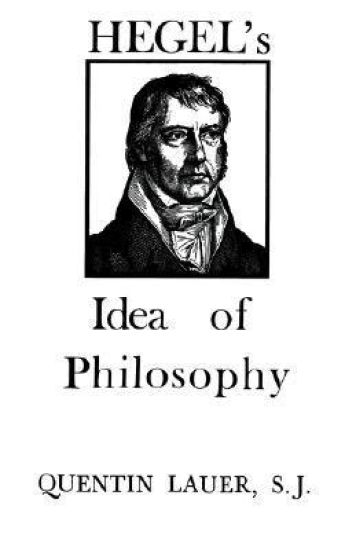
In his Introduction to the History of Philosophy, Hegel undertook to say what philosophy is; that it can be said to have a history. He treated philosophy as an organic unity, a process, to which philosophers down through the ages have made contributions. Thus in Hegel's view, the history of philosophy is inseparable from doing philosophy, and philosophy can be done only historically. Hegel engaged in a critique both of "philosophies" and of the ways of treating philosophy's history. The author's analysis, combined with his translation of a version of the Introduction not previously available, makes intelligible a mode of philosophical thinking which is highly complex and which has had an extraordinarily formative influence on contemporary thought. The result is a treatment more readily understandable to the educated reader than would be Hegel's own technical vocabulary.
This volume, with an updated Introduction, includes Professor Lauer's shorter works depicting how Hegel approached various philosophical issues. This book explores how Hegel constantly worked to overcome the rationalist intellectualism in a healthy regard for experience, to combat romantic intuitionism by focusing on a rational standard to objectivity, to avoid an empirical interpretation of experience through including spirituality of man. This book is a supporting follow-up to Professor Lauer's previous two major Hegelian publications.
This volume, with an updated Introduction, includes Professor Lauer's shorter works depicting how Hegel approached various philosophical issues. This book explores how Hegel constantly worked to overcome the rationalist intellectualism in a healthy regard for experience, to combat romantic intuitionism by focusing on a rational standard to objectivity, to avoid an empirical interpretation of experience through including spirituality of man. This book is a supporting follow-up to Professor Lauer's previous two major Hegelian publications.
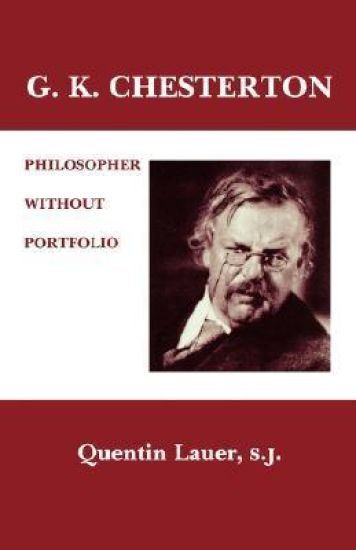
It is an indisputable fact that the credentials of Gilbert Keith Chesterton (1874–1936) were by no means those of a professional philosopher. He had no degree in the subject and he never attended a university. Nor was he widely or deeply read in the tradition of Western philosophy. He was, nonetheless, a truly philosophical thinker: convincing, persuasive, provocative, controversial. Despite all this, no one has, up to the present, devoted an entire book to the examination and analysis of his properly philosophical thinking and writing. This book attempts to range far and wide in the writings of Chesterton, perhaps even to betray him slightly by trying to systematize his thought. It is, however, not betraying Chesterton to claim that there is one central theme around which all his thinking and writing can be ordered: the theme of the grandeur of the reality of human, created in the image of God and participating in the beauty of divine creativity. His philosophy, if we want to characterize it in any one way, is a philosophy of life, of human living, with all that implies of rationality and freedom, of truth and paradox, of religion and morality, or faith and hope and love—in short, of all that makes human living spectacularly worthwhile.
Available in a new digital edition with reflowable text suitable for e-readers The first edition of this title was much acclaimed as the leading interpretation and exposition of Hegel's "Phenomenology of Spirit." This revision, based on continuing research, keeps this book in the forefront of Hegelian scholarship. The author has made additions and corrections to his reading of this, Hegel's most important work, and he provides an excellent interpretation of Hegel's language, in all of its complexity. To scholars it will remain an indispensable study and students new to Hegelian philosophy will find it approachable and clear.
Available in a new digital edition with reflowable text suitable for e-readers The first edition of this title was much acclaimed as the leading interpretation and exposition of Hegel's "Phenomenology of Spirit." This revision, based on continuing research, keeps this book in the forefront of Hegelian scholarship. The author has made additions and corrections to his reading of this, Hegel's most important work, and he provides an excellent interpretation of Hegel's language, in all of its complexity. To scholars it will remain an indispensable study and students new to Hegelian philosophy will find it approachable and clear.
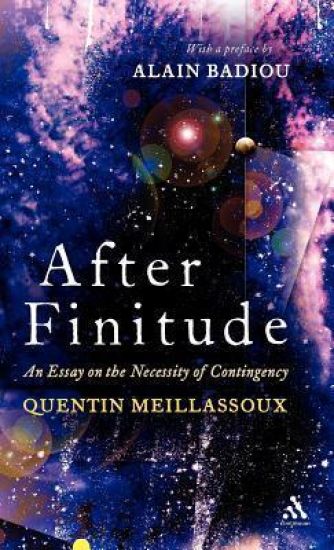
Quentin Meillassouxs remarkable debut makes a strikingly original contribution to contemporary French philosophy and is set to have a significant impact on the future of Continental philosophy. Written in a style that marries great clarity of expression with argumentative rigour, After Finitude Provides bold readings of the history of philosophy and sets out a devastating critique of the unavowed fideism at the heart of post-Kantian philosophy.Meillassoux introduces a startlingly novel philosophical alternative to the forced choice between dogmatism and critique. After Finitude proposes a new alliance between philosophy and science and calls for an unequivocal halt to the creeping return of religiosity in contemporary philosophical discourse.The exceptional lucidity and the centrality of argument in Meillassoux;s writing should appeal to Analytic as well as Continental philosophers, while his critique of fideism will be of interest to anyone preoccupied by the relation between philosophy, theology and religion
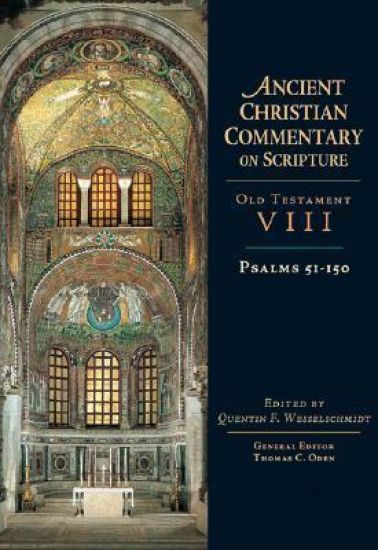
The Psalms have long served a vital role in the individual and corporate lives of Christians, expressing the full range of human emotions, including some that we are ashamed to admit. The Psalms reverberate with joy, groan in pain, whimper with sadness, grumble in disappointment, and rage with anger. The church fathers employed the Psalms widely. In liturgy they used them both as hymns and as Scripture readings. Within them they found pointers to Jesus both as Son of God and as Messiah. They also employed the Psalms widely as support for other New Testament teachings, as counsel on morals, and as forms for prayer. Especially noteworthy was their use of Psalms in the great doctrinal controversies. The Psalms were used to oppose subordinationism, modalism, Arianism, Apollinarianism, Nestorianism, Eutychianism, and Monophysitism, among others. More than fifty church fathers are cited in the Ancient Christian Commentary on Scripture volume from Ambrose to Zephyrinus. From the British Isles, Gaul, and the Iberian Peninsula, we find Hilary of Poitiers, Prudentius, John Cassian, Valerian of Cimiez, Salvian the Presbyter, Caesarius of Arles, Martin of Bruga, Braulio of Saragossa, and Bede. From Rome and Italy, we find Clement, Justin Martyr, Callistus, Hippolytus, Novatian, Rufinus, Maximus of Turin, Peter Chrysologus, Leo the Great, Cassiodorus, and Gregory the Great. Carthage and North Africa are represented by Tertullian, Cyprian, Augustine, and Fulgentius. Fathers from Alexandria and Egypt include Clement, Origen, Dionysius, Pachomius, Athanasius, Cyril, and Poemen. Constantinople and Asia Minor supply the Great Cappadocians—Basil the Great and the two Gregorys, from Nazianzus and Nyssa—plus Evagrius of Pontus and Nicetas of Remesiana. From Antioch and Syria we find Ephrem, John Chrysostom, Theodore of Mopsuestia, Theodoret of Cyr, Philoxenus of Mabbug, Sahdona, and John of Damascus. Finally, Jerusalem, Palestine and Mesopotamia are represented by Eusebius of Caesarea, Aphrahat, Cyril, Jacob of Sarug, Jerome, and Isaac of Nineveh. Readers of these selections, some of which appear here for the first time in English, will glean from a rich treasury of deep devotion and profound theological reflection.
The Psalms have long served a vital role in the individual and corporate lives of Christians, expressing the full range of human emotions, including some that we are ashamed to admit. The Psalms reverberate with joy, groan in pain, whimper with sadness, grumble in disappointment, and rage with anger. The church fathers employed the Psalms widely. In liturgy they used them both as hymns and as Scripture readings. Within them they found pointers to Jesus both as Son of God and as Messiah. They also employed the Psalms widely as support for other New Testament teachings, as counsel on morals, and as forms for prayer. Especially noteworthy was their use of Psalms in the great doctrinal controversies. The Psalms were used to oppose subordinationism, modalism, Arianism, Apollinarianism, Nestorianism, Eutychianism, and Monophysitism, among others. More than fifty church fathers are cited in the Ancient Christian Commentary on Scripture volume from Ambrose to Zephyrinus. From the British Isles, Gaul, and the Iberian Peninsula, we find Hilary of Poitiers, Prudentius, John Cassian, Valerian of Cimiez, Salvian the Presbyter, Caesarius of Arles, Martin of Bruga, Braulio of Saragossa, and Bede. From Rome and Italy, we find Clement, Justin Martyr, Callistus, Hippolytus, Novatian, Rufinus, Maximus of Turin, Peter Chrysologus, Leo the Great, Cassiodorus, and Gregory the Great. Carthage and North Africa are represented by Tertullian, Cyprian, Augustine, and Fulgentius. Fathers from Alexandria and Egypt include Clement, Origen, Dionysius, Pachomius, Athanasius, Cyril, and Poemen. Constantinople and Asia Minor supply the Great Cappadocians—Basil the Great and the two Gregorys, from Nazianzus and Nyssa—plus Evagrius of Pontus and Nicetas of Remesiana. From Antioch and Syria we find Ephrem, John Chrysostom, Theodore of Mopsuestia, Theodoret of Cyr, Philoxenus of Mabbug, Sahdona, and John of Damascus. Finally, Jerusalem, Palestine and Mesopotamia are represented by Eusebius of Caesarea, Aphrahat, Cyril, Jacob of Sarug, Jerome, and Isaac of Nineveh. Readers of these selections, some of which appear here for the first time in English, will glean from a rich treasury of deep devotion and profound theological reflection.
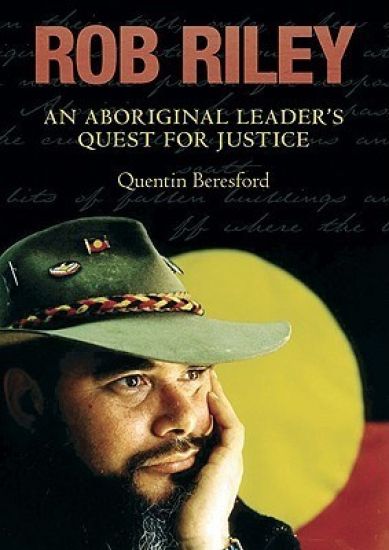
Rob Riley was at the centre of debates that polarised views on race relations in Australia: land rights, treaty, deaths in custody, self-determination, justice system, native title and the Stolen Generations. Tragically he took his own life in 1996, shocking community leaders and citizens alike. Riley's life raises profound questions about our past, our present and our future.
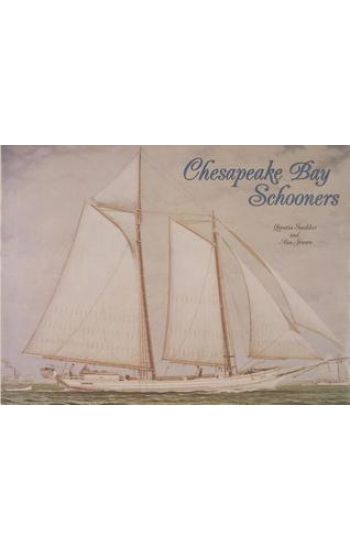
Chesapeake Bay Schooners focuses on the evolution of a uniquely American vessel from its European origins to the shipyards and waters of the bay, where it was perfected. This story of the schooners began with the handy colonial schooner, with the search for speed culminating in the creation of the graceful Baltimore clipper. These swift, sharp-built vessels of the Chesapeake gave rise to countless tales of high adventure and romance. No other book has chronicled the history of the commercial schooner, including its economic and social aspects. The authors spent hours interviewing maritime historians, and relied heavily upon those who sailed the last schooners to tell their own stories. Extensive research at private and public libraries, in photo collections, and in archives has yielded previously unpublished material and photographs to flesh out the history of this significant influence in bay commercial enterprise. But, above all, this narrative is a tribute to these often overlooked commercial vessels that were a mainstay of commerce on the bay and to the tenacity and dedication of the men and women who operated them.
The Museum of Modern Art has one of the greatest collections of 20th-century photography in the world. As one of three volumes dedicated to a new history of photography published by the Museum, this publication comprises a comprehensive catalogue of the collection post-1960s and brings much-needed new critical perspective to the most prominent artists working with the photographic medium of the late 20th and early 21st centuries. At a moment when photography is undergoing fast-paced changes and artists are seeking to redefine its boundaries in new and exciting ways, Photography at MoMA serves as an excellent resource for understanding the expanded field of contemporary photography today. The book begins with an in-depth introduction followed by eight chapters of full-color plates, each introduced by a short essay. Over 250 artists are featured, including Diane Arbus, John Baldessari, Jan Dibbets, Rineke Dijkstra, William Eggleston, Lee Friedlander, Louise Lawler, Zoe Leonard, Helen Levitt, Sigmar Polke, Cindy Sherman, Wolfgang Tillmans, Jeff Wall, Carrie Mae Weems, Hannah Wilke and Garry Winogrand, among many others.
Phil Vinson grew up in Fort Worth, fascinated by the city's visual icons: Mrs. Baird's Bakery on Summit Avenue, historic Thistle Hill, the tower at the Will Rogers Complex, the Tarrant County Courthouse, the Texas Electric smokestacks, the art-deco design of the Texas & Pacific depot, the Paddock Viaduct. He started making photographs while still in his teens but as an adult he rediscovered the visual richness of his hometown. Once he started photographing, he couldn't stop. For the past four decades, through careers as a journalist, photographer, and teacher, he has spent the weekends driving around taking pictures.Vinson has particular respect for subjects that have been around for enough years to acquire a certain dignity and nobility. Aware that the days of many of these old structures may be numbered, he has tried to document such buildings as the Seventh Street Theater before they disappeared to the wrecking ball.Fort Worth is well documented in photographs, but in many photographs Vinson has moved beyond documentation to a more intimate, personal view of the city, looking for dramatic light and compelling visual design, focusing on architectural details and graphic possibilities not obvious at a casual glance. While most of the photographs in this collection focus on Fort Worth, Vinson, who lived in Childress as a small child, is also drawn to rural or small-town subjects and includes here pictures taken on weekend drives to small communities in North and West Texas.