

Kirjahaku
Etsi kirjoja tekijän nimen, kirjan nimen tai ISBN:n perusteella.
1000 tulosta hakusanalla Quentin Labridy
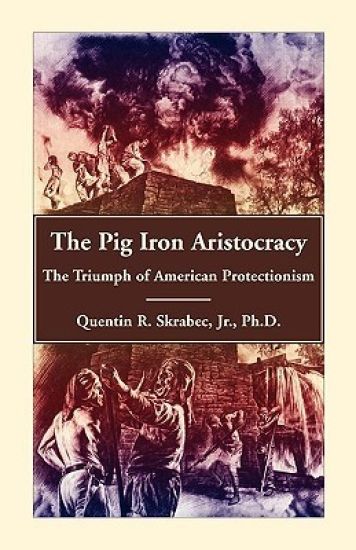
The Pig Iron Aristocracy, The Triumph of American Protectionism
Quentin R Skrabec Ph D
Heritage Books
2009
pokkari

An Essential Guide to Interpersonal Communicatio – Building Great Relationships with Faith, Skill, and Virtue in the Age of Social Media
Quentin J. Schultze; Diane M. Badzinski
Baker Academic, Div of Baker Publishing Group
2015
nidottu
Virtually every human endeavor involves interpersonal communication. Leading Christian scholar and media commentator Quentin Schultze and respected professor of communication Diane Badzinski offer a solid Christian perspective on the topic, helping readers communicate with faith, skill, and virtue in their interpersonal relationships. Designed as a companion to Schultze's successful An Essential Guide to Public Speaking, this inviting book provides biblical wisdom on critical areas of interpersonal communication: gratitude, listening, self-assessment, forgiveness, trust, encouragement, peace, and fidelity. Given the rapid rise and widespread use of social media, the book also integrates intriguing insights from the latest research on the influence of social media on interpersonal relationships. It includes engaging stories and numerous sidebars featuring practical lists, definitions, illustrations, and biblical insights.
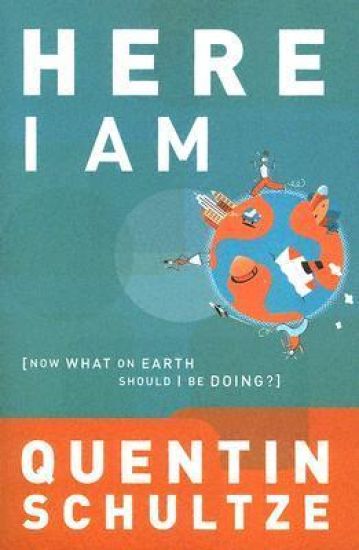
Here I Am – Now What on Earth Should I Be Doing?
Quentin J. Schultze
Baker Books, a division of Baker Publishing Group
2005
nidottu
Struggling to discern God's call is not uncommon. Many people wrestle with understanding what God has planned for them. Here I Am solves part of the mystery by distinguishing between one's shared vocation and particular life stations. Stations include jobs, situations, and relationships, and they change often. But vocation, for Christians especially, remains the same-to apply faith as caretakers of God's world.Here I Am explains how to be caring followers of Jesus in every station of life. It offers practical ways to strive for excellence, celebrate leisure, nurture community, and cultivate a legacy. This book is for students, those seeking satisfaction in their work, and anyone seeking a renewed sense of God's call. They will discover how to care about and for the world, participating in God's renewal of all things.
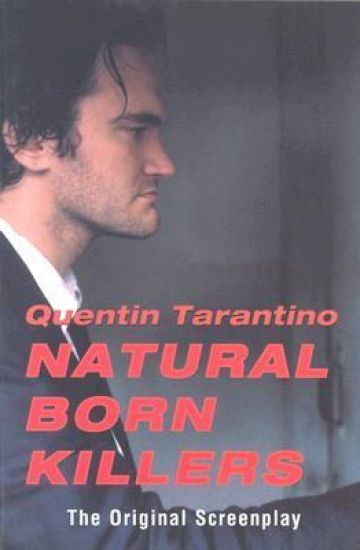
Natural Born Killers is a disturbing and brilliant indictment of violence in the media and American celebrity culture. Mickey and Mallory Knox, outlaw lovers on the run, go on a killing spree of startling viciousness -- and find themselves transformed into cult celebrities by the tabloid media. The film, directed by Oliver Stone, departed significantly from Tarantino's original screenplay, so much so that Tarantino removed his name from the screenplay credits. Now available in America for the first time, the original screenplay offers fans and film buffs of all stripes the opportunity to compare Tarantino's original vision with Stone's version of the story of Mickey and Mallory.

The story of a heist gone wrong, "Reservoir Dogs" weaves a taut and menacing path laced with bursts of absurd and unexpected humor. Tarantino won accolades around the world and earned a devoted following with his directorial debut.
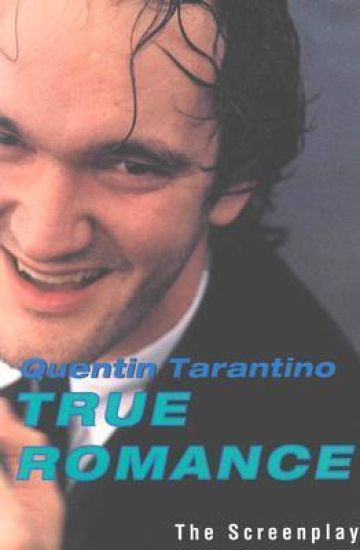
This publication of Tarantino's first screenplay, written when he was still a video-store clerk, contains the original ending and Tarantino's "answers first, questions later" structure, both of which were altered by director Tony Scott.
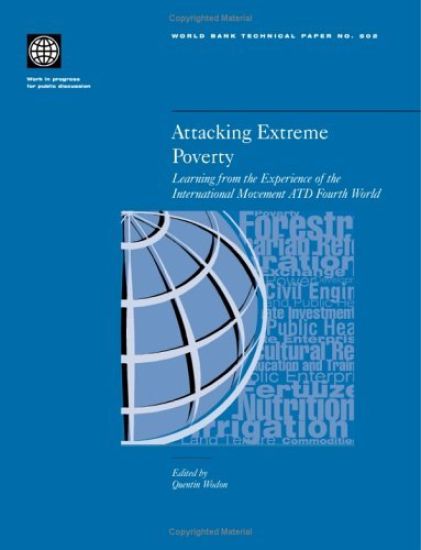
This book is comprised of a collection of essays on extreme poverty. It focuses on what it means to live in extreme poverty, how to reach the very poor through programs and interventions, and how to make private and public institutions more responsive to their needs. This book also analyzes the relationship between extreme poverty and human rights. It places emphasis on the contribution made by the International Movement ATD Fourth World, and its founder, Joseph Wresinski, to the understanding of the very poor and what is required to fight extreme poverty.
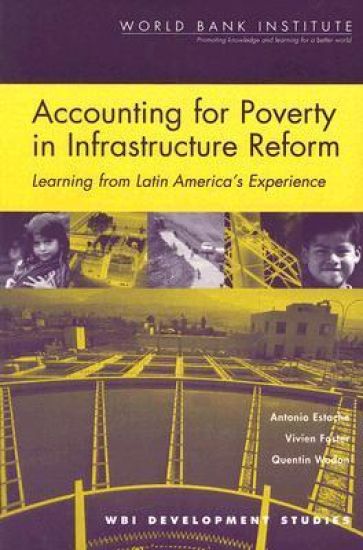
Accounting for Poverty in Infrastructure Reform
Quentin Wodon; Vivien Foster; Antonio Estache
World Bank Publications
2002
nidottu
The study explores the link between infrastructure reform and poverty observed in Latin America. It details why infrastructure investment is likely to continue to be a core component of many poverty alleviation programs. The study also stresses why and how, in most countries, infrastructure reform aimed at promoting private financing of investment needs, must be designed in ways in which poverty concerns are taken into account. It provides practical guidelines and options to ensure that the critical needs for additional infrastructure investments are met and that the strategies to address the needs of the poor are as cost effective as possible.
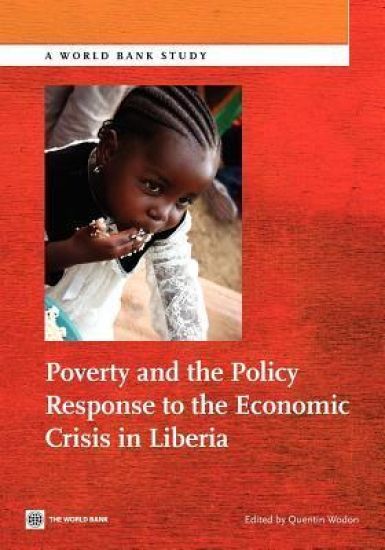
Poverty and the Policy Response to the Economic Crisis in Liberia
Quentin Wodon
World Bank Publications
2012
nidottu
Despite substantial progress towards peace, economic growth, and better governance since 2003, Liberia remains one of the poorest countries in the world. The objective of this study is twofold. First it is to provide a basic diagnostic of both consumption-based poverty and human development (especially education and health) in the country using the 2007 CWIQ (Core Welfare Indicators Questionnaire) survey. Second, it is to assess the likely impact on the poor of the recent economic crisis, and especially the increase in rice prices, and to document the targeting performance of various measures taken by the government in 2008/09 to help the poor cope with the crisis. These measures included a reduction in import taxes for rice, a reform of the personal income tax, and the implementation of a cash for work temporary employment program.
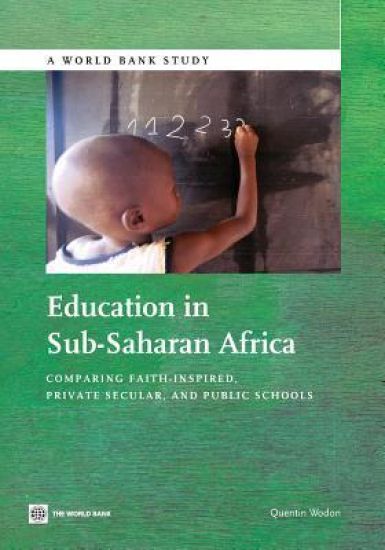
The purpose of this study is to build a stronger evidence base on the role of faith-inspired, private secular, and public schools in sub-Saharan Africa using nationally representative household surveys as well as qualitative data. Six main findings emerge from the study: (1) Across a sample of 16 countries, the average market share for faith-inspired schools is at 10-15 percent, and the market share for private secular schools is of a similar order of magnitude; (2) On average faith-inspired schools do not reach the poor more than other groups; they also do not reach the poor more than public schools, but they do reach the poor significantly more than private secular schools; (3) The cost of faith-inspired schools for households is higher than that of public schools, possibly because of a lack of access to public funding, but lower than that of private secular schools; (4) Faith-inspired and private secular schools have higher satisfaction rates among parents than public schools; (5) Parents using faith-inspired schools place a stronger emphasis on religious education and moral values; (6) Students in faith-inspired and private schools perform better than those in public schools, but this may be due in part to self-selection.
A clear summary of Husserl's often obscure and always complex writings...very instructive.-Ethics
A clear summary of Husserl's often obscure and always complex writings...very instructive.-Ethics
In his Introduction to the History of Philosophy, Hegel undertook to say what philosophy is; that it can be said to have a history. He treated philosophy as an organic unity, a process, to which philosophers down through the ages have made contributions. Thus in Hegel's view, the history of philosophy is inseparable from doing philosophy, and philosophy can be done only historically. Hegel engaged in a critique both of "philosophies" and of the ways of treating philosophy's history. The author's analysis, combined with his translation of a version of the Introduction not previously available, makes intelligible a mode of philosophical thinking which is highly complex and which has had an extraordinarily formative influence on contemporary thought. The result is a treatment more readily understandable to the educated reader than would be Hegel's own technical vocabulary.
This volume, with an updated Introduction, includes Professor Lauer's shorter works depicting how Hegel approached various philosophical issues. This book explores how Hegel constantly worked to overcome the rationalist intellectualism in a healthy regard for experience, to combat romantic intuitionism by focusing on a rational standard to objectivity, to avoid an empirical interpretation of experience through including spirituality of man. This book is a supporting follow-up to Professor Lauer's previous two major Hegelian publications.
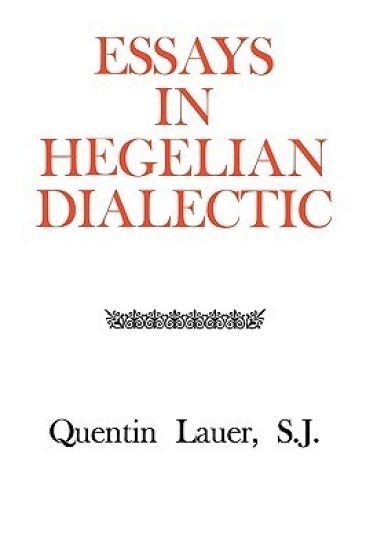
This volume, with an updated Introduction, includes Professor Lauer's shorter works depicting how Hegel approached various philosophical issues. This book explores how Hegel constantly worked to overcome the rationalist intellectualism in a healthy regard for experience, to combat romantic intuitionism by focusing on a rational standard to objectivity, to avoid an empirical interpretation of experience through including spirituality of man. This book is a supporting follow-up to Professor Lauer's previous two major Hegelian publications.
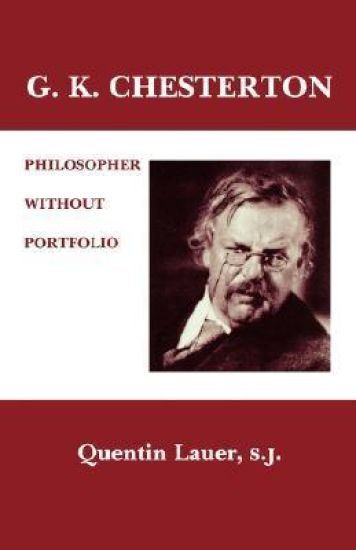
It is an indisputable fact that the credentials of Gilbert Keith Chesterton (1874–1936) were by no means those of a professional philosopher. He had no degree in the subject and he never attended a university. Nor was he widely or deeply read in the tradition of Western philosophy. He was, nonetheless, a truly philosophical thinker: convincing, persuasive, provocative, controversial. Despite all this, no one has, up to the present, devoted an entire book to the examination and analysis of his properly philosophical thinking and writing. This book attempts to range far and wide in the writings of Chesterton, perhaps even to betray him slightly by trying to systematize his thought. It is, however, not betraying Chesterton to claim that there is one central theme around which all his thinking and writing can be ordered: the theme of the grandeur of the reality of human, created in the image of God and participating in the beauty of divine creativity. His philosophy, if we want to characterize it in any one way, is a philosophy of life, of human living, with all that implies of rationality and freedom, of truth and paradox, of religion and morality, or faith and hope and love—in short, of all that makes human living spectacularly worthwhile.

Available in a new digital edition with reflowable text suitable for e-readers The first edition of this title was much acclaimed as the leading interpretation and exposition of Hegel's "Phenomenology of Spirit." This revision, based on continuing research, keeps this book in the forefront of Hegelian scholarship. The author has made additions and corrections to his reading of this, Hegel's most important work, and he provides an excellent interpretation of Hegel's language, in all of its complexity. To scholars it will remain an indispensable study and students new to Hegelian philosophy will find it approachable and clear.
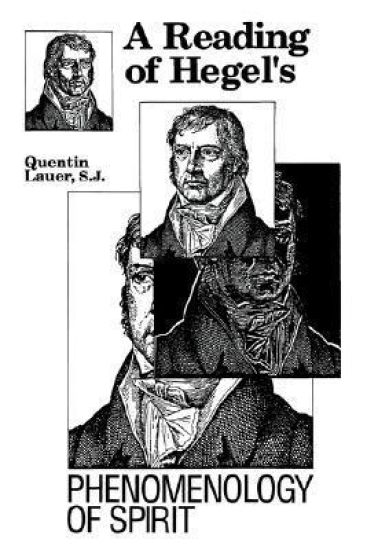
Available in a new digital edition with reflowable text suitable for e-readers The first edition of this title was much acclaimed as the leading interpretation and exposition of Hegel's "Phenomenology of Spirit." This revision, based on continuing research, keeps this book in the forefront of Hegelian scholarship. The author has made additions and corrections to his reading of this, Hegel's most important work, and he provides an excellent interpretation of Hegel's language, in all of its complexity. To scholars it will remain an indispensable study and students new to Hegelian philosophy will find it approachable and clear.
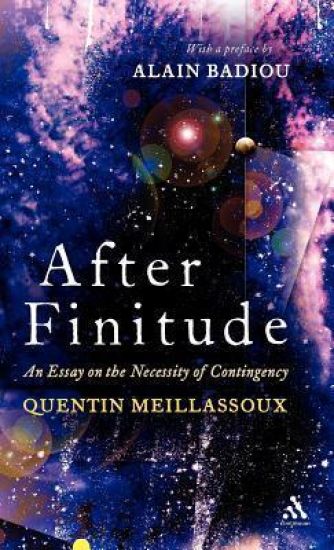
Quentin Meillassouxs remarkable debut makes a strikingly original contribution to contemporary French philosophy and is set to have a significant impact on the future of Continental philosophy. Written in a style that marries great clarity of expression with argumentative rigour, After Finitude Provides bold readings of the history of philosophy and sets out a devastating critique of the unavowed fideism at the heart of post-Kantian philosophy.Meillassoux introduces a startlingly novel philosophical alternative to the forced choice between dogmatism and critique. After Finitude proposes a new alliance between philosophy and science and calls for an unequivocal halt to the creeping return of religiosity in contemporary philosophical discourse.The exceptional lucidity and the centrality of argument in Meillassoux;s writing should appeal to Analytic as well as Continental philosophers, while his critique of fideism will be of interest to anyone preoccupied by the relation between philosophy, theology and religion