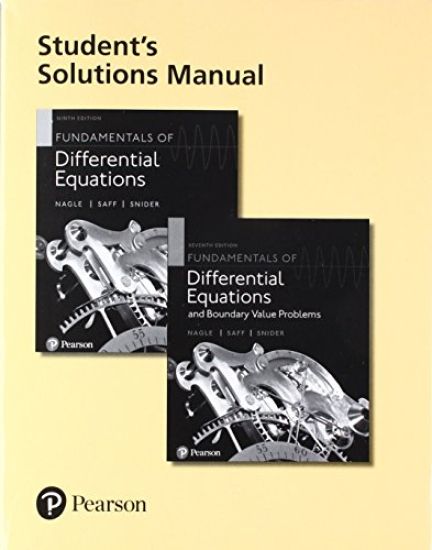
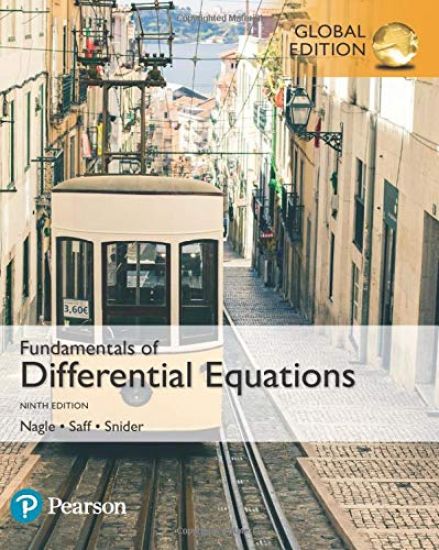
For one-semeseter sophomore- or junior-level courses in Differential Equations. Fundamentals of Differential Equations presents the basic theory of differential equations and offers a variety of modern applications in science and engineering. Also available in the version Fundamentals of Differential Equations with Boundary Value Problems, these flexible texts offer the instructor many choices in syllabus design, course emphasis (theory, methodology, applications, and numerical methods), and in using commercially available computer software.
Southern Wonder explores Alabama’s amazing biological diversity, the reasons for the large number of species in the state, and the importance of their preservation.Alabama ranks fifth in the nation in number of species of plants and animals found in the state, surpassed only by the much larger western states of California,Texas, Arizona, and New Mexico. When all the species of birds, trees, mammals, reptiles, amphibians, fishes, wildflowers, dragonflies, tiger beetles, and ants are tallied, Alabama harbors more species than 90 percent of the other states in the United States. Alabamais particularly rich in aquatic biodiversity, leading the nation in species of freshwater fishes, turtles, mussels, crayfish, snails, damselflies, and carnivorous plants. The state also hosts an exceptional number of endemic species?those not found beyond its borders?ranking seventh in the nation with 144 species. The state’s 4,533 species, with more being inventoried and discovered each year, are supported by no less than 64 distinct ecological systems?each a unique blend of soil, water, sunlight, heat, and natural disturbance regimes. Habitats include dry forests, moist forests, swamp forests, sunny prairies, grassy barrens, scorching glades, rolling dunes, and bogs filled with pitcher plants and sundews. The state also includes a region of subterranean ecosystems that are more elaborate and species rich than any other place on the continent.Although Alabama is teeming with life, the state’s prominence as a refuge for plants and animals is poorly appreciated. Even among Alabama’s citizens, few outside a small circle of biologists, advocates, and other naturalists understand the special quality of the state’s natural heritage. R. Scot Duncan rectifies this situation in Southern Wonder by providing a well-written, comprehensive overview that the general public, policy makers, and teachers can understand and use. Readers are taken on an exploratory journey of the state’s varied landscapes?from the Tennessee River Valley to the coastal dunes?and are introduced to remarkable species, such as the cave salamander and the beach mouse. By interweaving the disciplines of ecology, evolution, meteorology, and geology into an accessible whole, Duncan explains clearly why Alabama is so biotically rich and champions efforts for its careful preservation.Published in Cooperation with The Nature Conservancy.
Explore timeless questions of life, death, and the soul's journey in R.E. Sanderson's "The Life of the Waiting Soul." This meticulously republished edition delves into the intermediate state between earthly existence and eternity, examining traditional Christian perspectives on eschatology, heaven, and hell. Sanderson offers a thoughtful exploration of what awaits us beyond the veil, contemplating the soul's experience as it transitions to the afterlife. Drawing from Christian theology, this work provides insights into angelology, demonology, and the ultimate fate of humanity. Whether seeking solace, understanding, or a deeper connection to your faith, "The Life of the Waiting Soul" offers enduring reflections on death, grief, bereavement, and the eternal destiny that awaits us all.This work has been selected by scholars as being culturally important, and is part of the knowledge base of civilization as we know it.This work is in the public domain in the United States of America, and possibly other nations. Within the United States, you may freely copy and distribute this work, as no entity (individual or corporate) has a copyright on the body of the work.Scholars believe, and we concur, that this work is important enough to be preserved, reproduced, and made generally available to the public. We appreciate your support of the preservation process, and thank you for being an important part of keeping this knowledge alive and relevant.
Fundamentals of Differential Equations presents the basic theory of differential equations and offers a variety of modern applications in science and engineering. This flexible text allows instructors to adapt to various course emphases (theory, methodology, applications, and numerical methods) and to use commercially available computer software.
For one-semester sophomore- or junior-level courses in Differential Equations.An introduction to the basic theory and applications of differential equations Fundamentals of Differential Equations presents the basic theory of differential equations and offers a variety of modern applications in science and engineering. This flexible text allows instructors to adapt to various course emphases (theory, methodology, applications, and numerical methods) and to use commercially available computer software. For the first time, MyLab (TM) Math is available for this text, providing online homework with immediate feedback, the complete eText, and more.Note that a longer version of this text, entitled Fundamentals of Differential Equations and Boundary Value Problems, 7th Edition, contains enough material for a two-semester course. This longer text consists of the main text plus three additional chapters (Eigenvalue Problems and Sturm-Liouville Equations; Stability of Autonomous Systems; and Existence and Uniqueness Theory).MyLab (TM) Math is not included. Students, if MyLab Math is a recommended/mandatory component of the course, please ask your instructor for the correct ISBN. MyLab Math should only be purchased when required by an instructor. Instructors, contact your Pearson representative for more information.Reach every student by pairing this text with MyLab MathMyLab (TM) is the teaching and learning platform that empowers you to reach every student. By combining trusted author content with digital tools and a flexible platform, MyLab personalizes the learning experience and improves results for each student.
Alphabetically organized for easy access, a comprehensive health and medical resource furnishes more than ten thousand entries covering medical terminology, medical tests and procedures, drugs, diseases, therapies, vaccinations, holistic medicine, alternative treatments, and more. Original.
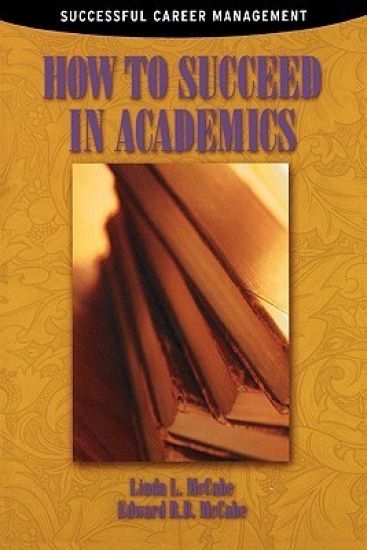
This is a how-to book for the academic life based on more than 50 years combined personal experience and 8 years of formal group mentoring as part of a workshop on these topics. The unwritten rules of university life are shared through fictional vignettes that are all too real. Secrets to successfully achieving short-term and long-term goals are provided in the progress timelines and suggested milestones. Beginning with selecting a training program and choosing a job, this book takes the student, fellow, or faculty member through the maze of academic secrecy to a new level of understanding and empowerment.
Social workers and helping professionals serve many people who draw upon religion and spirituality to find meaning, thrive, and overcome oppression and obstacles in their lives. The third edition of Spiritual Diversity in Social Work Practice provides a comprehensive framework of values, knowledge, and skills for spiritually sensitive and culturally appropriate practice with diverse religious and non-religious clients. This classic text contains forty different case examples and stories that vividly illustrate the professional values and ethical principles that guide spiritually sensitive practice. Learning activities at the end of each chapter encourage readers' personal and professional development through self-reflection, dialogue, creative expression, outreach to the community, and skill application. The book also draws connections between spiritual and cultural diversity, gender, and LGBTQI issues. It introduces beliefs, values, and social welfare applications of Buddhism, Christianity, Confucianism, Hinduism, Indigenous spiritual perspectives, Islam, Judaism, Existentialism, and Transpersonal and Deep Ecological Theories. Skills for spiritual assessment and spiritually sensitive practices include mindfulness, meditation, ritual and ceremony, forgiveness, spiritually sensitive administration, and engagement with community-based spiritual support systems. For social workers and other professional helpers committed to supporting the spiritual care of individuals, families, and communities, this definitive guide offers state-of-the-art interdisciplinary and international insights as well as practical tools that students and practitioners alike can put to immediate use.
The "new immigrants" who came from southern and eastern Europe at the turn of the century have rarely been the subject of detailed scholarly examination. In particular, Poles and other Slavic groups have usually been written about in a filiopietist manner. Edward Kantowicz fills this gap with his incisive work on Poles in Chicago. Kantowicz examines such questions as why Chicago, with the largest Polish population of any city outside of Poland, has never elected a Polish mayor. The author also examines the origins of the heavily Democratic allegiance of Polish voters. Kantowicz demonstrates that Chicago Poles were voting Democratic long before Al Smith, Franklin Roosevelt, or the New Deal. Kantowicz has made extensive use of registration lists and voting records to construct a statistical picture of Polish-American voting behavior in Chicago. He draws on church records and census records to provide a detailed description of Chicago's many Polish neighborhoods. He also has studied the city's Polish-language press as well as the few manuscript collections left by Polish-American politicians. These collections, together with data gleaned from interviews with individuals who were acquainted with these figures, are used to sketch profiles of the political leaders of Polonia's capital. Kantowicz focuses on the goals which the Polish-American community pursued in politics, the issues they deemed important, and the functions which politics served for them. He links this analysis to observations on the homeland and the reasons for which the Poles emigrated. In this context he is able to draw conclusions about the nature of the ethnic politics in general. His work will appeal to a variety of readers: urban and twentieth-century historians, political scientists, and sociologists.
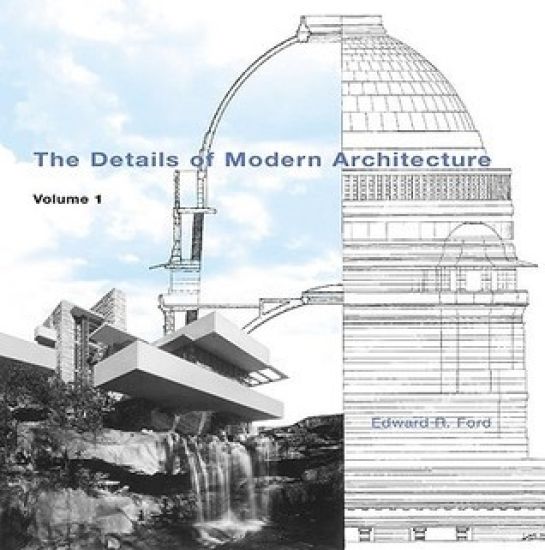
How did the great architects of this century reconcile their vision of architecture with the realities of building? This is a crucial question that every student of architecture must confront. The Details of Modern Architecture, the first comprehensive analysis of both the technical and the aesthetic importance of details in the development of architecture, provides not one answer but many.The more than 500 illustrations are a major contribution in their own right. Providing a valuable collective resource, they present the details of notable architectural works drawn in similar styles and formats, allowing comparisons between works of different scales, periods, and styles.Covering the period 1890-1932, Ford focuses on various recognized masters, explaining the detailing and construction techniques that distort, camouflage, or enhance a building. He looks at the source of each architect's ideas, the translation of those ideas into practice, and the success or failure of the technical execution. Ford examines Frank Lloyd Wright's Robie House and Fallingwater Le Corbusier's Villa Savoye, and buildings by McKim, Mead & White, Lutyens, Mies van der Rohe, and Schindler from a point of view that acknowledges the importance of tradition, precedent, style, and ideology in architectural construction. He discusses critical details from a technical and contextual standpoint, considering how they perform how they add to or detract from the building as a whole, and how some have persisted and been adapted through time.
The states of Northern Mexico-Tamaulipas, Nuevo LeÓn, Coahuila, Chihuahua, Durango, Sonora, Sinaloa, and Baja California Norte and Sur-have architecture, urbanism, and landscape design that offer numerous lessons in how to build well, but this constructed environment is largely undervalued or unknown. To make this architecture better known to a wide professional, academic, and public audience, this book presents the first comprehensive overview in either English or Spanish of the architecture, urban landscapes, and cities of Northern Mexico from the country’s emergence as a modern nation in 1821 to the present day.Profusely illustrated with color and black-and-white photographs, maps, and analytical drawings of urban cores of major cities, The Architecture and Cities of Northern Mexico systematically examines significant works of architecture in large cities and small towns in each state, from the earliest buildings in the urban core to the newest at the periphery. Edward R. Burian describes the most memorable works of architecture in each city in greater detail in terms of their spatial organization, materials, and sensory experience. He also includes a concise geographical and historical summary of the region that provides a useful background for the discussions of the works of architecture. Burian concludes the book with a brief commentary on lessons learned and possible futures for the architectural culture of the region, as well as the first comprehensive biographical listing of the architects practicing in Northern Mexico during the past two centuries.
The awesome beauty and majesty of glaciers, the world of ice which has shaped and reshaped large parts of the earth's surfaces, are presented here through more than 100 photographs and a closely integrated, informed text. Austin Post's series of aerial photographs of glaciers along the North Pacific Coast of North America and into the interior ranges of Alaska is supplemented with ground-based photographs from the Himalayas, Switzerland, Chile, and other parts of the world. The authors clearly explain the features illustrated. Their discussion of the effects of glaciers on the landscape, formation and mass balance, flow and fluctuations, moraines, ogives, and surface details is fascinating for the general reader as well as the expert.First published in 1971 and long out of print, Glacier Ice is reissued in a completely redesigned edition.
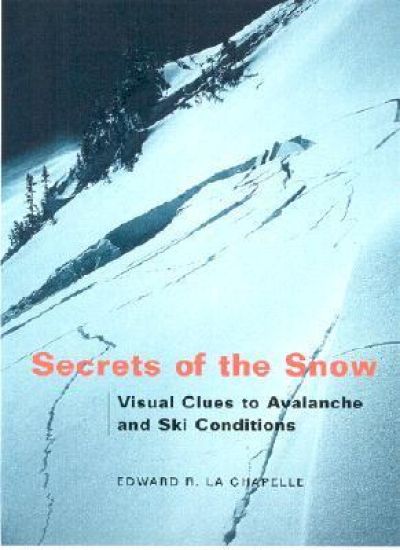
The surface of fallen snow—its contours and texture—can tell the interested observer much about the forces that shaped it and about its stability and what it is likely to do. Will it be good for skiing or for packing as a snowball? Will it slide? Is it dangerous?Secrets of the Snow is an overview of the easily visible aspects of snow in the alpine mountain landscape, serving as a companion volume to the author's Field Guide to Snow Crystals, which examines snow at the microscopic level. Describing visual snow features and textures arising from climate, wind-drift, layering, solar radiation, and melting, Secrets of the Snow explains how snow may be "read" for information on avalanche formation and suitability for winter sports.Closely linked photographs and text illustrate the shapes, forms, and textures found at the surface of winter snow covers; describe their origins in wind and weather conditions; and guide the reader in interpreting these features to predict snow behavior. Secrets of the Snow is essential for winter sports enthusiasts, mountaineers, and avalanche-safety specialists.
Twenty-three mathematical masterpieces for exploration and enlightenment“A mind-broadening experience.”—Paul J. Campbell, Mathematics Magazine How can a shape have more than one dimension but fewer than two? What is the best way to elect public officials when more than two candidates are vying for the office? Is it possible for a highly accurate medical test to give mostly incorrect results? Can you tile your floor with regular pentagons? How can you use only the first digit of sales numbers to determine if your accountant is lying? Can mathematics give insights into free will? Edward Scheinerman, an accomplished mathematician and enthusiastic educator, answers all these questions and more in this book, a collection of mathematical masterworks. In bite-sized chapters that require only high school algebra, he invites readers to try their hands at solving mathematical puzzles and provides an engaging and friendly tour of numbers, shapes, and uncertainty. The result is an unforgettable introduction to the fundamentals and pleasures of thinking mathematically.