Kirjojen hintavertailu. Mukana 12 016 292 kirjaa ja 12 kauppaa.

Kirjahaku

Etsi kirjoja tekijän nimen, kirjan nimen tai ISBN:n perusteella.

1000 tulosta hakusanalla RICHARD EDW DENNETT

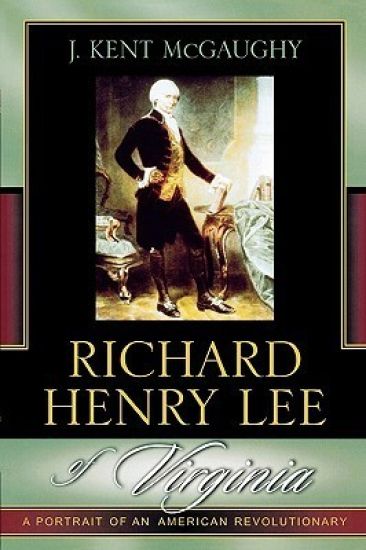
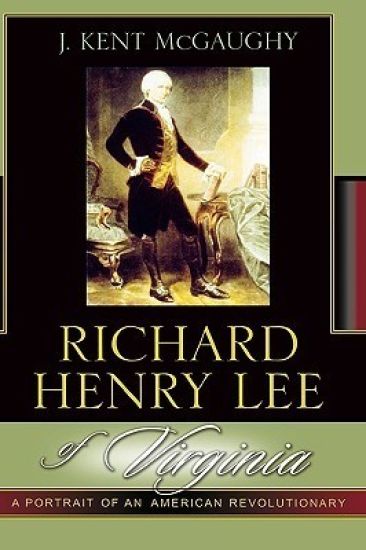
Richard Henry Lee of Virginia

Richard Henry Lee of Virginia

Kent J. McGaughy

Rowman Littlefield Publishers
2003
sidottu
Richard Henry Lee played a pivotal role during the American Revolution, yet he remains one of the most misunderstood revolutionaries. His contemporaries, as well as modern historians, deemed him a political opportunist or dismissed him as an enigma. In bridging the gap between Lee's private interests and public career, J. Kent McGaughy seeks to overturn many of the misconceptions about Lee and shows that, throughout his life, he remained dedicated to his family and public service. By separating fact from fiction and unraveling the history of Lee's life and the times in which he lived, J. Kent McGaughy brings to light not only the truth about Lee, but also the hidden history of the American Revolution.
Richard Henry Lee of Virginia

Richard Henry Lee of Virginia

Kent J. McGaughy

Rowman Littlefield Publishers
2003
nidottu
Richard Henry Lee played a pivotal role during the American Revolution, yet he remains one of the most misunderstood revolutionaries. His contemporaries, as well as modern historians, deemed him a political opportunist or dismissed him as an enigma. In bridging the gap between Lee's private interests and public career, J. Kent McGaughy seeks to overturn many of the misconceptions about Lee and shows that, throughout his life, he remained dedicated to his family and public service. By separating fact from fiction and unraveling the history of Lee's life and the times in which he lived, J. Kent McGaughy brings to light not only the truth about Lee, but also the hidden history of the American Revolution.
Richard Nixon and the Rise of Affirmative Action

Richard Nixon and the Rise of Affirmative Action

Kevin Yuill

Rowman Littlefield Publishers
2006
sidottu
Richard Nixon is hardly remembered for his civil rights policies but there is no denying that, more than any other president, he is responsible for affirmative action. Noting Nixon's hostility towards busing, his political allegiances with segregationists, and the hostility of leading civil rights figures at the time, historians and political scientists have avoided explaining why the origins of modern affirmative action lie in the Nixon era. In this enlightening and original new work, Kevin Yuill combines extensive archival research with a careful analysis of the intellectual climate of the era to examine not only the conditions that made Nixon's policy decisions possible in the 1970s but also what motivated Nixon to act in the way that he did. He argues that in order to fully understand why Nixon embraced affirmative action, one must fully take into account the shifting context of American liberalism in the 1970s. In particular, Yuill contends that although government-enforced affirmative action did not fit into the postwar, growth-oriented liberalism, it emerged as an important regulatory policy blueprint in an era increasingly characterized by diminished horizons for social policy. Nixon's efforts in moving the focus of U.S. race relations from reform to indemnifying damages, Yuill argues, at least equals his contribution to the origins of affirmative action through policy innovations. Controversial and far-reaching, Richard Nixon and the Rise of Affirmative Action brings fresh research and a much-needed reinterpretation of a crucial yet still enigmatic period, president and policy.
Richard Nixon and the Rise of Affirmative Action

Richard Nixon and the Rise of Affirmative Action

Kevin Yuill

Rowman Littlefield Publishers
2006
nidottu
Richard Nixon is hardly remembered for his civil rights policies but there is no denying that, more than any other president, he is responsible for affirmative action. Noting Nixon's hostility towards busing, his political allegiances with segregationists, and the hostility of leading civil rights figures at the time, historians and political scientists have avoided explaining why the origins of modern affirmative action lie in the Nixon era. In this enlightening and original new work, Kevin Yuill combines extensive archival research with a careful analysis of the intellectual climate of the era to examine not only the conditions that made Nixon's policy decisions possible in the 1970s but also what motivated Nixon to act in the way that he did. He argues that in order to fully understand why Nixon embraced affirmative action, one must fully take into account the shifting context of American liberalism in the 1970s. In particular, Yuill contends that although government-enforced affirmative action did not fit into the postwar, growth-oriented liberalism, it emerged as an important regulatory policy blueprint in an era increasingly characterized by diminished horizons for social policy. Nixon's efforts in moving the focus of U.S. race relations from reform to indemnifying damages, Yuill argues, at least equals his contribution to the origins of affirmative action through policy innovations. Controversial and far-reaching, Richard Nixon and the Rise of Affirmative Action brings fresh research and a much-needed reinterpretation of a crucial yet still enigmatic period, president and policy.
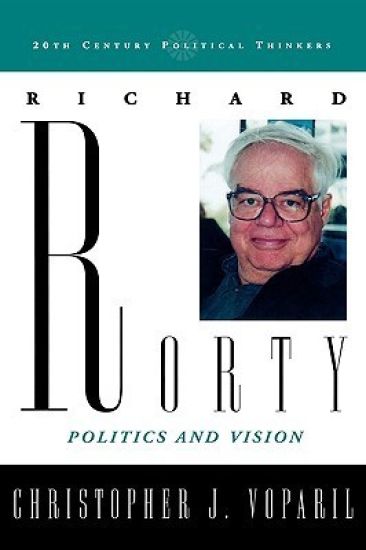
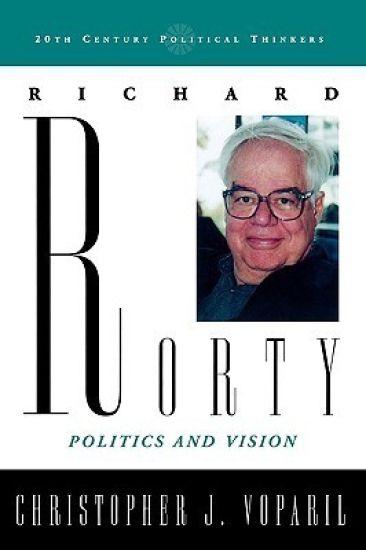
Richard Rorty

Richard Rorty

Christopher J. Voparil

Rowman Littlefield Publishers
2006
sidottu
The first full-length work devoted to Richard Rorty from the perspective of political theory, this book offers a fresh assessment of the promise of the renowned pragmatist's project. Framing Rorty's discourse as one of meaning and persuasion rather than truth and accuracy of representation, Voparil sheds new light on many of Rorty's most misunderstood and maligned stances, including his practice of 'redescription' and disavowal of 'getting it right,' as well as his embrace of the novel and 'sentimental education.' As political theory, Rorty's perspective, not unlike Sheldon Wolin's, values the imagination, the ability to come up with new metaphors and angles of vision, and is driven by a deep desire to reinvigorate a moribund and detached contemporary left. Voparil's account engages the full range of Rorty's intellectual forebears, grounding his thought in an American tradition that extends beyond the classical pragmatists to include Emerson, Whitman, Harriet Beecher Stowe, and James Baldwin, in addition to chapters that trace Rorty's connection to such diverse figures as Marx, Mill, Dickens, Isaiah Berlin, and Milan Kundera.
Richard Rorty

Richard Rorty

Christopher J. Voparil

Rowman Littlefield Publishers
2006
nidottu
The first full-length work devoted to Richard Rorty from the perspective of political theory, this book offers a fresh assessment of the promise of the renowned pragmatist's project. Framing Rorty's discourse as one of meaning and persuasion rather than truth and accuracy of representation, Voparil sheds new light on many of Rorty's most misunderstood and maligned stances, including his practice of "redescription" and disavowal of "getting it right," as well as his embrace of the novel and "sentimental education." As political theory, Rorty's perspective, not unlike Sheldon Wolin's, values the imagination, the ability to come up with new metaphors and angles of vision, and is driven by a deep desire to reinvigorate a moribund and detached contemporary left. Voparil's account engages the full range of Rorty's intellectual forebears, grounding his thought in an American tradition that extends beyond the classical pragmatists to include Emerson, Whitman, Harriet Beecher Stowe, and James Baldwin, in addition to chapters that trace Rorty's connection to such diverse figures as Marx, Mill, Dickens, Isaiah Berlin, and Milan Kundera.
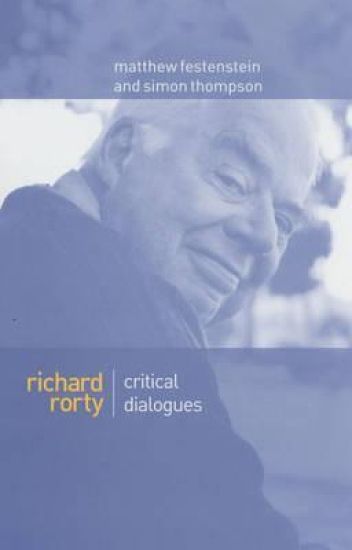
Richard Rorty

Richard Rorty

Polity Press
2001
sidottu
Richard Rorty is one of the most influential and provocative figures in contemporary intellectual life. He argues that many of philosophy's traditional concerns are redundant, and that the goal of inquiry should not be truth but human betterment. In this collection a distinguished team of scholars grapples with the implications of his writings for social and political thought. Avoiding mindless adulation or ritual denunciation, they offer careful but critical investigations of the meaning of Rorty's work for a range of important issues. Topics explored include anti-foundationalism; irony and commitment; justice; liberalism and utopianism; reason and aesthetics; humanism and anti-humanism; the Holocaust; the theory of international relations; social democracy and the pragmatist tradition. Each essay is followed by a reply written for this volume by Rorty. The volume also includes a substantial essay by Rorty on 'Justice as a Larger Loyalty'. This volume is indispensable for any reader interested in Rorty's work, or in contemporary debates in social, political or ethical theory. Contributors: Molly Cochran; Daniel Conway; Matthew Festenstein; Norman Geras; John Horton; David Owen; Richard Rorty; Kate Soper; Simon Thompson.
Richard Rorty

Richard Rorty

JOHN WILEY AND SONS LTD
2001
nidottu
In this collection a team of scholars grapple with the implications of Rorty's writings for social and political thought. Each essay is followed by a reply written for this volume by Rorty. The volume also includes a substantial essay by Rorty on "Justice as a Larger Loyalty".
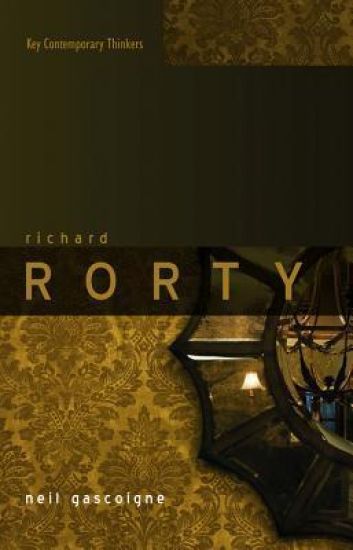
Richard Rorty

Richard Rorty

Neil Gascoigne

Polity Press
2008
sidottu
Neil Gascoigne provides the first comprehensive introduction Richard Rorty’s work. He demonstrates to the general reader and to the student of philosophy alike how the radical views on truth, objectivity and rationality expressed in Rorty’s widely-read essays on contemporary culture and politics derive from his earliest work in the philosophy of mind and language. He avoids the partisanship that characterizes much discussion of Rorty’s work whilst providing a critical account of some of the dominant concerns of contemporary thought. Beginning with Rorty’s early work on concept-change in the philosophy of mind, the book traces his increasing hostility to the idea that philosophy is cognitively privileged with respect to other disciplines. After the publication of Philosophy and the Mirror of Nature, this led to a new emphasis on preserving the moral and political inheritance of the enlightenment by detaching it from the traditional search for rational foundations. This emerging project led Rorty to champion ‘ironic’ thinkers like Foucault and Derrida, and to his attempt to update the liberalism of J. S. Mill by offering a non-universalistic account of the individual’s need to balance their own private interests against their commitments to others. By returning him to his philosophical roots, Gascoigne shows why Rorty’s pragmatism is of continuing relevance to anyone interested in ongoing debates about the nature and limits of philosophy, and the implications these debates have for our understanding of what role the intellectual might play in contemporary life. This book serves as both an excellent introduction to Rorty’s work and an innovative critique which contributes to ongoing debates in the field.
Richard Rorty

Richard Rorty

Neil Gascoigne

Polity Press
2008
nidottu
Neil Gascoigne provides the first comprehensive introduction Richard Rorty’s work. He demonstrates to the general reader and to the student of philosophy alike how the radical views on truth, objectivity and rationality expressed in Rorty’s widely-read essays on contemporary culture and politics derive from his earliest work in the philosophy of mind and language. He avoids the partisanship that characterizes much discussion of Rorty’s work whilst providing a critical account of some of the dominant concerns of contemporary thought. Beginning with Rorty’s early work on concept-change in the philosophy of mind, the book traces his increasing hostility to the idea that philosophy is cognitively privileged with respect to other disciplines. After the publication of Philosophy and the Mirror of Nature, this led to a new emphasis on preserving the moral and political inheritance of the enlightenment by detaching it from the traditional search for rational foundations. This emerging project led Rorty to champion ‘ironic’ thinkers like Foucault and Derrida, and to his attempt to update the liberalism of J. S. Mill by offering a non-universalistic account of the individual’s need to balance their own private interests against their commitments to others. By returning him to his philosophical roots, Gascoigne shows why Rorty’s pragmatism is of continuing relevance to anyone interested in ongoing debates about the nature and limits of philosophy, and the implications these debates have for our understanding of what role the intellectual might play in contemporary life. This book serves as both an excellent introduction to Rorty’s work and an innovative critique which contributes to ongoing debates in the field.
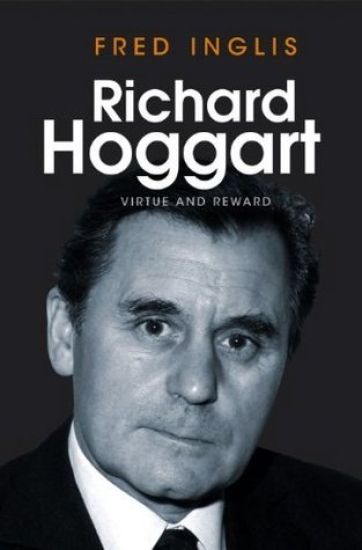
Richard Hoggart

Richard Hoggart

Fred Inglis

Polity Press
2013
sidottu
Richard Hoggart has been, perhaps, the best-known, and certainly the most affectionately acknowledged, British intellectual of the past sixty years. His great classic, The Uses of Literacy, provided for thousands of unsung working-class readers a wholly recognisable and tender account of their own coming-to-maturity and of the preciousness and the hardships of the life of the poor in pre-World War II Britain. But he was far more than narrator of a neglected class. Hoggart was also a public figure of extraordinary energy and eminence. He dominated the single most important Royal Commission on broadcasting, and single-handedly he is remembered as clinching for the defence the publication of Lady Chatterley’s Lover, after which he became a leading officer and defender of the international agency protecting the culture of the very world, UNESCO. This is the first biography of this amazing man. It seeks to tie together in a single narrative life and work, to settle Hoggart in the great happiness of a fulfilled family life and in the astonishing achievements of his public and professional career, considering each of his books in detail, and following him through the long and hard labours of his different public and academic offices. Fred Inglis tells this gripping tale of a figure of great significance to anyone who cherishes the stuff of culture, and tells it vividly and directly. It is a tale of a good man with which to edify the present, and to teach us of all that now threatens our best national (and international) forms of expression: our art, our culture, ourselves.
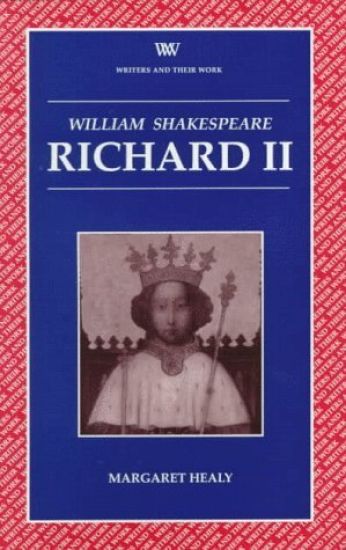
Richard II

Richard II

Margaret Healy

Northcote House Publishers Ltd
1997
pokkari
Deeply immersed in the politics of kingship, Richard II was undoubtedly one of the most controversial plays to be staged in the 1050s. This book locates Richard II firmly amidst the late-sixteenth-century heated debates between champions of absolute monarchy and advocates of a more limited, democratic style of government; debates which culminated in the 1640s in the deposition and killing of an actual monarch – Charles I. Outlining both conservative and more recent radical approaches, the political impact of the play at the time of the Essex rebellion through to the 1680s is considered. Analysis of the complex language, symbolism, and dramatic sign-systems of the play, emphasise Richard II as a play which confounds single, straightforward viewpoints. Political and gender instability go hand-in-hand in Richard II and an introduction of feminist perspectives, furthers the book’s thesis that the troubling distance between signs and what they represent is the central preoccupation of the play. Finally, the author reflects on critical and stage appropriations of the Shakespearian text since 1680, discussing important productions of Richard II over the centuries, including – in particular depth – John Barton’s for the RSC in 1973 and Deborah Warner’s 1995 production for the Royal National Theatre at The Cottesloe.
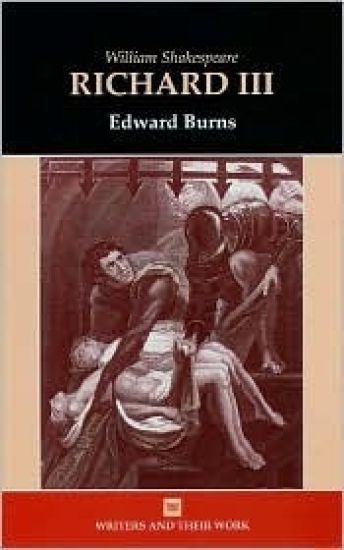
Richard III

Richard III

Edward Burns

Northcote House Publishers Ltd
2006
pokkari
Richard III has the status of a monster, in British culture, and the continuous popularity of Shakespeare’s play has done much to foster this. Deformity and distortion operate through this myth on many levels. This study is an essay in five ‘distortions’, tracking the way the play manipulates and explores fundamental human concerns; the body, history,, theatre, childhood and family and the mirrors and shadows of individual identity and self-knowledge.
Richard the Lionheart

Richard the Lionheart

Jean Flori

Edinburgh University Press
2006
sidottu
Richard I, the Lionheart, remains forever (and perhaps wrongly) the mythical king of England who preferred to wage war than to rule over his empire. The familiar epithet conveys all the principal features of his indomitable character: courage, valour, prowess, the pursuit of glory, the thirst for fame, generosity in war and peace, a sense of honour combined with a sort of haughty dignity made up of both arrogance and pride. In this book Jean Flori examines both Richard's role as prince and king in history and also analyses the different and sometimes controversial elements which, for the chroniclers of his day, helped to make Richard a true model of chivalry. Among the questions addressed are: What influences formed his character and determined his behaviour, real or assumed? Why did the image of Richard as a king who was also a knight so quickly and so soon supplant all others, creating a quasi-definitive point of reference? Why did Richard deliberately, it would appear, choose to present himself in this chivalric guise and disseminate this image of himself by what we would today call a 'media campaign', using all the methods then at his disposal, limited perhaps but by no means ineffective? Last but not least, what is the historical and ideological significance of the choice and, even more, success of this image, which has been adopted by history and disseminated by legend, an image based on historical accounts and documents in which history and legend are sometimes inextricably interwoven? Jean Flori's Richard Coeur de Lion was written to mark the eighth centenary of the death of the "knightly king". The book is a tour de force that provides the reader with a reappraisal of Richard's life as well as a study of the myth and reality of Richard's image as the personification of medieval chivalry. The first part of the book takes a straightforward chronological approach to Richard's life, from his birth in 1157, through conflict with his father, Henry II, and his brothers, to his coronation and his years of crusading and fighting the French; culminating in his death in battle in 1199. The second part analyses Richard's image in relation to medieval chivalry.
Richard the Lionheart

Richard the Lionheart

Jean Flori

Edinburgh University Press
2006
nidottu
Richard I, the Lionheart, remains forever (and perhaps wrongly) the mythical king of England who preferred to wage war than to rule over his empire. The familiar epithet conveys all the principal features of his indomitable character: courage, valour, prowess, the pursuit of glory, the thirst for fame, generosity in war and peace, a sense of honour combined with a sort of haughty dignity made up of both arrogance and pride. In this book Jean Flori examines both Richard's role as prince and king in history and also analyses the different and sometimes controversial elements which, for the chroniclers of his day, helped to make Richard a true model of chivalry. Among the questions addressed are: What influences formed his character and determined his behaviour, real or assumed? Why did the image of Richard as a king who was also a knight so quickly and so soon supplant all others, creating a quasi-definitive point of reference? Why did Richard deliberately, it would appear, choose to present himself in this chivalric guise and disseminate this image of himself by what we would today call a 'media campaign', using all the methods then at his disposal, limited perhaps but by no means ineffective? Last but not least, what is the historical and ideological significance of the choice and, even more, success of this image, which has been adopted by history and disseminated by legend, an image based on historical accounts and documents in which history and legend are sometimes inextricably interwoven? Jean Flori's Richard Coeur de Lion was written to mark the eighth centenary of the death of the "knightly king". The book is a tour de force that provides the reader with a reappraisal of Richard's life as well as a study of the myth and reality of Richard's image as the personification of medieval chivalry. The first part of the book takes a straightforward chronological approach to Richard's life, from his birth in 1157, through conflict with his father, Henry II, and his brothers, to his coronation and his years of crusading and fighting the French; culminating in his death in battle in 1199. The second part analyses Richard's image in relation to medieval chivalry.
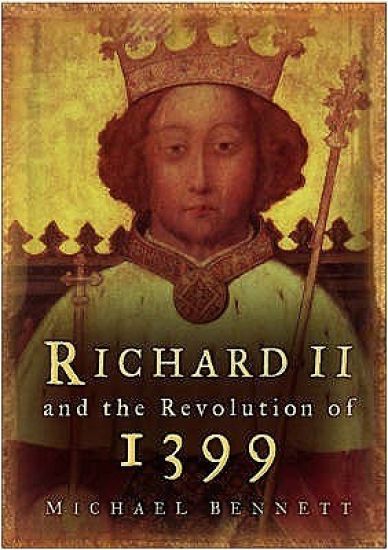
Richard II and the Revolution of 1399

Richard II and the Revolution of 1399

Michael Bennett

The History Press Ltd
2006
nidottu
Studies the last years of Richard II's reign and the circumstances of his overthrow by Henry of Bolingbroke in 1399. This work reviews Richard's early experiences, from his accession, aged only ten, through the troubled politics of the 1380s, while placing emphasis on his own insecurities and the vexed issue of the succession.
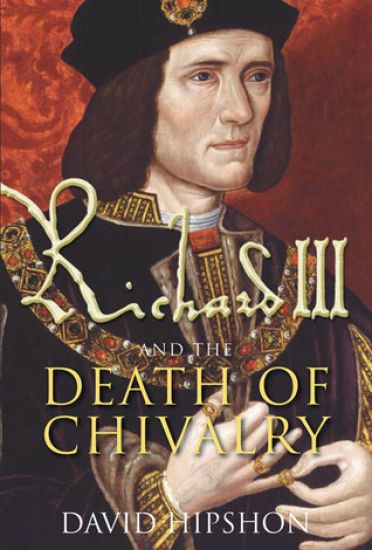
Richard III and the Death of Chivalry

Richard III and the Death of Chivalry

David Hipshon

The History Press Ltd
2009
sidottu
The conventional view of Richard III's defeat at the Battle of Bosworth Field in 1485 is that it was due to a loss of support for him after his usurpation of the throne. However, David Hipshon argues that the result might very well have been in his favour, had not his support for James Harrington in a long-running family feud with Thomas, Lord Stanley led to the latter betraying him. Bosworth was the last English battle in which the monarch relied on feudal retainers: at Stoke two years later professional mercenaries were the key to Henry VII's victory. The author examines how the power politics of the conflict between the Stanleys and the Harringtons, and Richard's motives in supprting the latter, led to the king's death on the battlefield, the succession of the Tudors to the throne of England, the 'death of chivalry' and the end of the Middle Ages.