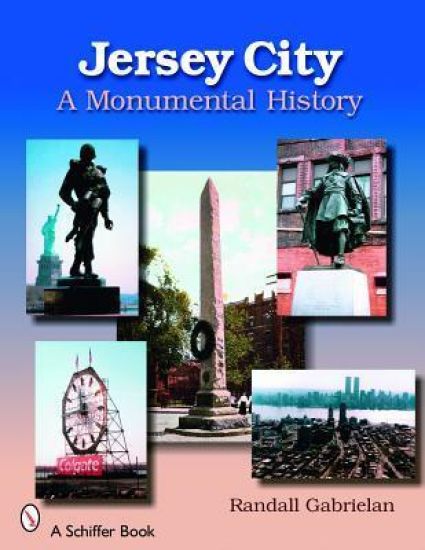
Here is an illustrated view of Jersey City, New Jersey, presented with the view that history is not some group of facts hidden in dusty tomes, but is happening all the time around us. The history and development of eight distinct sections are described: the waterfronts (North and Central), Downtown, Communipaw-Lafayette, Bergen, Journal Square, The Heights, and Greenville, from the 1600s to the present. With the help of more than 340 color and black and white photographs and other media, a fascinating vision of people, places, and change is presented; a vision that looks forward as well as back. A well-researched volume that will pique an interest in this "Monumental" city.
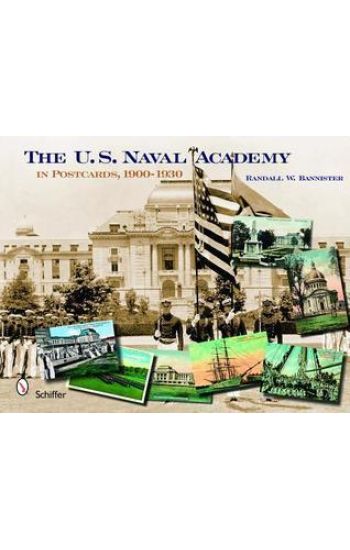
One hundred years ago, the United States Naval Academy, in Annapolis, Maryland, the cradle of Navy and Marine Corps leadership, was in the midst of the most remarkable period of growth and change in its history. Its campus, known simply as “The Yard,” was expanded and the patchwork of old and dilapidated buildings housing it was replaced with magnificent new buildings befitting an institution of its caliber. This amazing renaissance fostered a golden age at the school in academics, training, athletics, and the advent of traditions that still exist today. Through images on over 475 postcards produced between 1900 and 1930, also the golden age of picture postcards, this book lets you see what the Academy and life there were like when midshipmen with names like Nimitz, Halsey, King, Spruance, Mitscher and Burke were among its residents.
Step back in time to Long Branch’s history. With 344 color images guiding your tour, learn fresh insights and new interpretations of what made this city great and how it has changed. From Branchport, Elberon, the beachfront to Hollywood and Greater Long Branch is explored. Stroll through Seven Presidents Oceanfront Park and view the historic Franklyn Cottage, St. James Chapel, and Edgar A. West Building. Visit present-day Pier Village and Monmouth University and see how the city is still evolving. This keepsake is a must for history lovers and new and long-time residents.
A visual look at Brooklyn's history, from its rural beginnings to the present, through over 300 historic postcards and contemporary photos. The city of Brooklyn became home for generations of immigrants during the massive influx of overseas settlers in the latter 19th and early 20th centuries. They formed neighborhoods that became celebrated for their tight-knit ethnicity. Relive the early days of Brooklyn through 329 postcard and contemporary images. See where popular seashore recreation began at Coney Island, stroll through Prospect Park, cross the Brooklyn Bridge, and tour the smaller residential neighborhoods like Flatbush. With an informative and engaging text to accompany the images, trace the major demographic shifts and commercial change of Brooklyn. A great keepsake for residents past and present and a wonderful resource for historians and educators.
Tour beautiful Monmouth County, New Jersey, and see how it has evolved and developed from the early 20th century to today. With more than 400 images, comparative views show how change has impacted the county and continues to do so. Old landscapes and streetscapes from the Raritan Bayshore to the Atlantic Shore and Inner and Western Monmouth are shown both through postcards from the medium's golden age and with contemporary color images. The juxtaposed views, accompanied by engaging text, will have you feeling "you are there" as the county's rich history comes to life. This book is a great resource for historians and educators and is a wonderful keepsake for local residents and tourists.
An original work on American cities and the ongoing "urban crisis". Using the metaphor of the socially constructed organization of space, Bartlett takes a broad view of the evolution of urban America, from its historical roots to the present; he then examines the way in which current policies have responded to, and affected the organization of space (covering housing, transportation, government and other urban problems). He concludes with a look to the future of American cities, how they will impact and be impacted on by changing commercial and labor markets, by the problems of poverty and cultural change. In an epilogue, he explores possible ways to overcome the "social dilemmas", while recognizing the difficulty of this undertaking. A thoroughly unique perspective to the study of cities, this book is about how space is used in America and how it changes as the "logic of location" evolves historically. Starting with the assumption that cities are fundamentally unnatural" phenomena, it unravels the interactions of technological advances that have made them possible and policies that have given them shape.
An original work on American cities and the ongoing "urban crisis". Using the metaphor of the socially constructed organization of space, Bartlett takes a broad view of the evolution of urban America, from its historical roots to the present; he then examines the way in which current policies have responded to, and affected the organization of space (covering housing, transportation, government and other urban problems). He concludes with a look to the future of American cities, how they will impact and be impacted on by changing commercial and labor markets, by the problems of poverty and cultural change. In an epilogue, he explores possible ways to overcome the "social dilemmas", while recognizing the difficulty of this undertaking. A thoroughly unique perspective to the study of cities, this book is about how space is used in America and how it changes as the "logic of location" evolves historically. Starting with the assumption that cities are fundamentally unnatural" phenomena, it unravels the interactions of technological advances that have made them possible and policies that have given them shape.
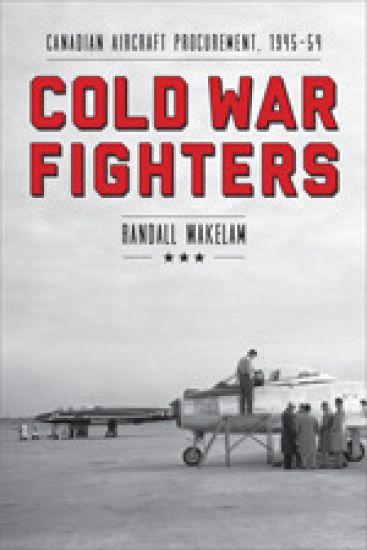
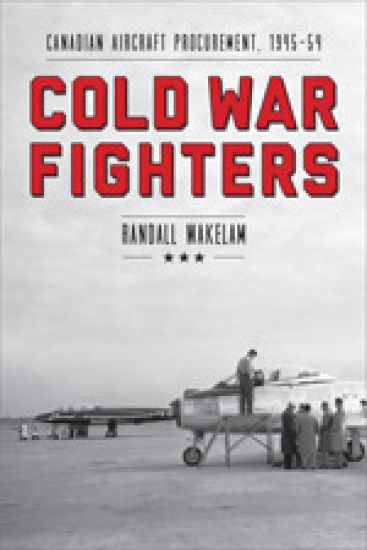
The cancellation of the CF-105 Arrow in 1959 holds such a grip on the imagination of Canadians that earlier developments in defence procurement remain in the shadows.Randall Wakelam corrects this oversight – and offers fresh insight into the AVRO saga and contemporary procurement issues – by detailing the complexities Canada's air force faced in buying fighter aircraft and by showing how the RCAF grew by leaps and bounds. Wakelam shows that cabinet members, chiefs of staff, and air marshals were forced to negotiate competing pressures to arm the air force, please allies, and save money. Their decisions resulted in the CF-100 Canuck and the F-86 Sabre, Canada's front-line defensive aircraft in the coldest years of the Cold War. Although historians assume that the Arrow arrived on the heels of these successes, Wakelam reveals that neither the air force nor the government believed AVRO could manufacture even the CF-100 on budget.
The cancellation of the CF-105 Arrow in 1959 holds such a grip on the imagination of Canadians that earlier developments in defence procurement remain in the shadows.Randall Wakelam corrects this oversight – and offers fresh insight into the AVRO saga and contemporary procurement issues – by detailing the complexities Canada's air force faced in buying fighter aircraft and by showing how the RCAF grew by leaps and bounds. Wakelam shows that cabinet members, chiefs of staff, and air marshals were forced to negotiate competing pressures to arm the air force, please allies, and save money. Their decisions resulted in the CF-100 Canuck and the F-86 Sabre, Canada's front-line defensive aircraft in the coldest years of the Cold War. Although historians assume that the Arrow arrived on the heels of these successes, Wakelam reveals that neither the air force nor the government believed AVRO could manufacture even the CF-100 on budget.
The Franco-Flemish region of medieval Flanders was a locus of important trade routes in the 13th and 14th centuries. Located in a prime position between the Holy Roman Empire and the North Sea (present-day northern Belgium), the urban centers of the region were surpassed in population only by the city-states of central and northern Italy. This positioning afforded the Flemish citizens of the region great prosperity and they formed guilds to protect their rights, regulate their working hours and standardize their wages. These guilds produced a cohesive unit of people eager to retain the rights they had gained. In 1302, French cavalry faced the determined Flemish soldiers on foot at Kortrijk (Courtrai). This book analyzes the battle that ensued, its origins, consequences and legacy. It also examines the everyday lives of the inhabitants of Flanders; urban dwellers, knights, nobles, women and others. This is the first major English-language study of the historic 14th century battle between the French and the Flemish, a conflict whose repercussions linger in modern Belgium. Instructors considering this book for use in a course may request an examination copy here.
It's been more than three decades since Harville Hendrix and Helen LaKelly Hunt -- the best-selling authors of Getting the Love You Want and Keeping the Love You Find -- created Imago Relationship Therapy. Their concept of the conscious marriage introduced a new paradigm for understanding the dynamics of couples. Since that time more than two thousand clinicians in twenty-eight countries have adopted and implemented this highly effective form of couples therapy. This groundbreaking book offers an overview of the highly successful Imago Relationship Therapy (IRT) and the relationship of IRT with preceding schools of thought such as psychoanalytic theory, family systems theories, affect theory, and self-psychology. At the heart of IRT is a three-step process involving mirroring (reflecting) the partner's feelings, validating the partner's point of view, and the expressing empathy toward the partner's feelings. Imago Relationship Therapy traces IRT's history and explosive growth and outlines the differences and similarities between Imago theory and other models of couples therapy. The book also presents some of the ideas of prominent Imago thinkers, such as the central role of connectivity and the problem of envy in committed relationships.
This book fills a significant gap in current process scholarship by providing a detailed exposition of Whitehead's and Hartshorne's social and political writings, reconstructing their ideological commitments in depth, and placing them in their historical context. It focuses on four areas of inquiry: the individual and society; the ideals of freedom, equality, and democracy; the use of coercive force within and between societies; and the theory of social progress. As each feature of their political though is examined, Morris shows how Whitehead's and Hartshorne's political commitments are reflected in their metaphysical principles.
Specification and design methodology has seen significant growth as a research area over the last decade, tracking but lagging behind VLSI design technology in general and the CAD industry in particular. The commercial rush to market tries to leverage existing technology which fuels CAD design tool development. Paralleling this is very active basic and applied research to investigate and move forward rational and effective methodologies for accomplishing digital design, especially in the field of hardware/software codesign. It is this close relationship between industry and academia that makes close cooperation between researchers and practitioners so important-and monographs like this that combine both abstract concept and pragmatic implementation deftly bridge this often gaping chasm. It was at the IEEE/ACM Eighth International Symposium on Hardware/Software Codesign where I met the author of this monograph, Dr. Randall Janka, who was presenting some of his recent dissertation research results on specification and design methodology, or as he has so succinctly defined this sometimes ambiguous concept, "the tools and rules." Where so many codesign researchers are trying to prove out different aspects of codesign and using toy applications to do so, Dr. Janka had developed a complete specification and design methodology and prototyped the infrastructure-and proven its viability, utility, and effectiveness using a demanding real-world application of a real-time synthetic aperture radar imaging processor that was implemented with embedded parallel processors.
John Calvin has been the subject of numerous studies, but most have focused on one aspect of his thought or a limited selection of his writings. This study of Calvin adopts a uniquely holistic approach. Randall Zachman begins with a brief biography and considers Calvin's own understanding of his ministry as a teacher and pastor. From this perspective, he surveys Calvin's writings and their place in the work of reforming the church--both through the training of clergy and the instruction of the laity. Zachman then considers Calvin as a theologian. In contrast to Martin Luther, Calvin sought to balance the verbal proclamation of the Word with an emphasis on the visible manifestation of God--both in creation and in Christ. This study will be of great interest to Reformed clergy and to students of the Reformation and Calvinism.
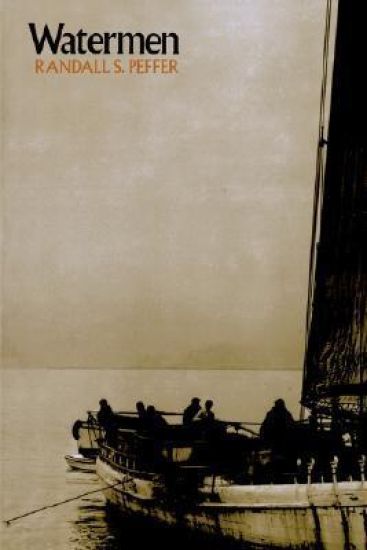
For three hundred years, generations of Tilghman Islanders have lived by harvesting the waters of Maryland's Chesapeake Bay. They are watermen, an old English term for commercial fishermen, and their lives today retain much of the spirit and simplicity that characterized their land's first Anglo-Saxon settlers. Watermen is the story of their lives told by Randy Peffer, a young writer who came to Tilghman Island to search for his ancestral roots and left a year later with the makings of this book. Watermen is a singular work, a book that will touch anyone who has ever glimpsed the peope of the Chesapeake, whether in literature or in life.
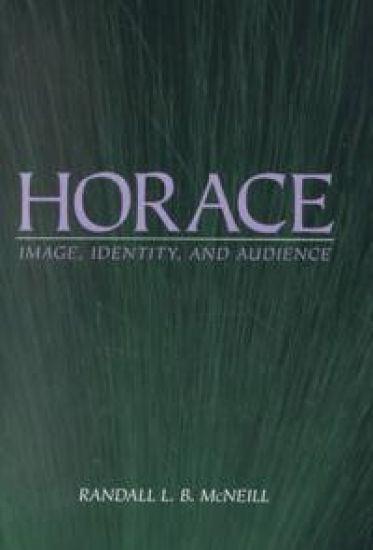
Traditional views of Horace seek to present the poet as a consistent, vivid personality who stands behind and orchestrates the diverse "Horatian" writings that have come down to us. In recent years, however, an alternate tradition suggests that there may be many Horaces, that his work is more productively read as the constant invention of rhetorical techniques sensitively attuned to the requirements of different situations and audiences. As Randall L. B. McNeill argues, any sense that readers have of the "real" Horace is clearly deceptive; Horace offers us no unguarded self-portrait, but rather a number of consciously developed characterizations to suit diverse audiences, whether patron, peers, or the public. Horace: Image, Identity, and Audience provides a wide-ranging analysis of Horace's use of self-presentation in his poetry: in his portrayal of his relationships with his patron Maecenas and with his larger readership as a whole; in his discussion of the craft of poetry and his own identity as a poet; and in his handling of contemporary Roman political events in the light of his assumed role as critic of his own society. McNeill uncovers the techniques Horace uses to depict the intricacies of his personal existence; in the book's conclusion, he explores how similar techniques were adapted by later poets such as Ovid. This volume will interest scholars of Horace, Latin poetry, rhetoric, as well as those interested in the cultural studies aspect of persona and identity.
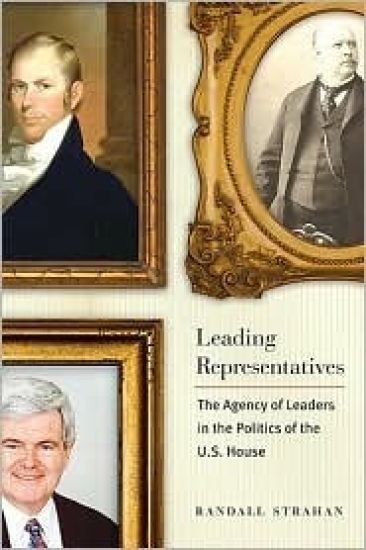
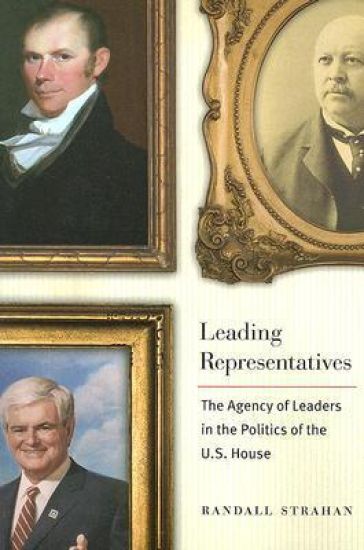
Many studies of Congress hold that congressional leaders are "agents" of their followers, ascertaining what legislators agree on and acting to advance those issues rather than stepping to the forefront to shape national policy or the institution they lead. Randall Strahan has long argued that this approach to understanding leadership is incomplete. Here he demonstrates why and explores the independent contributions leaders make in congressional politics. Leading Representatives is a study that draws on both historical and contemporary cases to show how leaders in the U.S. House have advanced changes inside Congress and in national policy. Exploring the tactics, tenure, and efficacy of the leadership of three of the most colorful and prominent Speakers of the House-Henry Clay, Thomas Reed, and Newt Gingrich-Strahan finds that these men, though separated in time and of differing thought and actions, were all leaders willing to take political risks to advance goals they cared about deeply. As a result, each acted independently of his followers to alter the political landscape. Strahan makes use of a wide range of resources, including the former representatives' papers and correspondence and interviews with Gingrich and his staffers, to demonstrate how these important leaders influenced policy and politics and where they ran aground. In expounding lessons Strahan has gleaned over two decades of studying U.S. legislative politics, Leading Representatives offers a new theoretical framework-the conditional agency perspective-that effectively links contextual perspectives as applied to congressional leadership with those emphasizing characteristics of individual leaders. This engagingly written book will be of interest to political scholars of all stripes as well as readers inclined to learn more about the history and inner workings of the House.
Many studies of Congress hold that congressional leaders are "agents" of their followers, ascertaining what legislators agree on and acting to advance those issues rather than stepping to the forefront to shape national policy or the institution they lead. Randall Strahan has long argued that this approach to understanding leadership is incomplete. Here he demonstrates why and explores the independent contributions leaders make in congressional politics. Leading Representatives is a study that draws on both historical and contemporary cases to show how leaders in the U.S. House have advanced changes inside Congress and in national policy. Exploring the tactics, tenure, and efficacy of the leadership of three of the most colorful and prominent Speakers of the House-Henry Clay, Thomas Reed, and Newt Gingrich-Strahan finds that these men, though separated in time and of differing thought and actions, were all leaders willing to take political risks to advance goals they cared about deeply. As a result, each acted independently of his followers to alter the political landscape. Strahan makes use of a wide range of resources, including the former representatives' papers and correspondence and interviews with Gingrich and his staffers, to demonstrate how these important leaders influenced policy and politics and where they ran aground. In expounding lessons Strahan has gleaned over two decades of studying U.S. legislative politics, Leading Representatives offers a new theoretical framework-the conditional agency perspective-that effectively links contextual perspectives as applied to congressional leadership with those emphasizing characteristics of individual leaders. This engagingly written book will be of interest to political scholars of all stripes as well as readers inclined to learn more about the history and inner workings of the House.