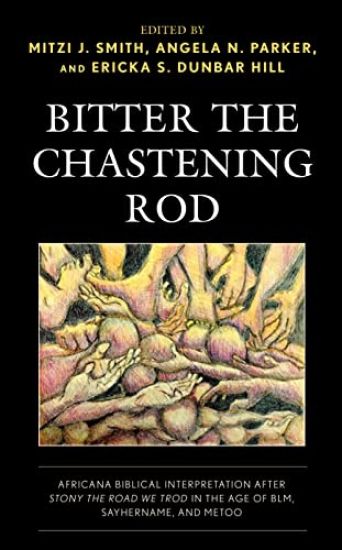
Bitter the Chastening Rod follows in the footsteps of the first collection of African American biblical interpretation, Stony the Road We Trod (1991). Nineteen Africana biblical scholars contribute cutting-edge essays reading Jesus, criminalization, the enslaved, and whitened interpretations of the enslaved. They present pedagogical strategies for teaching, hermeneutics, and bible translation that center Black Lives Matter and black culture. Biblical narratives, news media, and personal stories intertwine in critical discussions of black rage, protest, anti-blackness, and mothering in the context of black precarity.
A young man becomes the first paladin of his religion in over 200 years. He has no mentor but he does have good friends and a small voice in his head to guide him on the path. He and his friends set out to help their town but along the way a magical staff is stolen and they are pulled across the kingdom to find the thief. However the reason it was stolen may be more important than they could possibly know.
Bongo is a very spoilt boy, the son the chief of Adama. His mother loves her only child so much that she will not allow anyone to correct him, not even his father. Instead she takes Bongo to the brother in town. During their stay there, Bongo always looks for adventure, finds bad friends and falls, into great danger. When at last he and his mother return to Adama, they have both learned an important lesson which will lead them to a happier life in future.This new and interesting fiction series provides enjoyable leisure reading for boys and girls.
This book investigates the physical effects of a lightning flash on a person near the down conductor of a lightning protection system. These effects are the touch voltage, the step voltage and the side flash. For this purpose, a full-scale simulation model of the human body with a resistance of 1000 ohms was first created. In the simulation model, the body can touch the down conductor or be placed close to it. Furthermore, the specific resistance of the earth is varied. Likewise, insulating layers such as asphalt can be incorporated into the simulation model. Also, special cases like water permeable layers or water layers on an asphalt layer can be calculated. In post-processing, all relevant values can be determined, such as the energy converted in the body, the charge, the current and the voltage applied to the body. A comparison with the permissible limit values then shows for the lightning protection classes whether there is danger or not and provides information on necessary measures. There is a risk for death and injury if the down conductor is touched. However, there is also a risk of a side flash if a person is standing next to a discharge. Site isolation with dry asphalt is effective, but there is a residual risk of surface discharges. In real situations with wet asphalt, water-permeable layers or asphalt with a water layer, however, there is a great risk of death or injury. Equipotential bonding with an earthing grid is a necessary but not sufficient solution with regard to the induced voltage at negative subsequent stroke. Therefore, the situation must always be examined on a case-by-case basis with regard to the safety requirements. The only effective measure to prevent injury and death due to touch voltage is an insulating down conductor in conjunction with equipotential bonding. The measures for reducing the touch voltage, such as site insulation and equipotential bonding, basically also apply to limiting the step voltage. A risk calculation according to IEC 62305-2 gives the mean time between two events of injury and death MG = 1/RA. The tolerable risk is: RA = 0,0001 or MT = 10.000 years, equivalent to one death in 10.000 years.
This book investigates the physical effects of a lightning flash on a person near the down conductor of a lightning protection system. These effects are the touch voltage, the step voltage and the side flash. For this purpose, a full-scale simulation model of the human body with a resistance of 1000 ohms was first created. In the simulation model, the body can touch the down conductor or be placed close to it. Furthermore, the specific resistance of the earth is varied. Likewise, insulating layers such as asphalt can be incorporated into the simulation model. Also, special cases like water permeable layers or water layers on an asphalt layer can be calculated. In post-processing, all relevant values can be determined, such as the energy converted in the body, the charge, the current and the voltage applied to the body. A comparison with the permissible limit values then shows for the lightning protection classes whether there is danger or not and provides information on necessary measures. There is a risk for death and injury if the down conductor is touched. However, there is also a risk of a side flash if a person is standing next to a discharge. Site isolation with dry asphalt is effective, but there is a residual risk of surface discharges. In real situations with wet asphalt, water-permeable layers or asphalt with a water layer, however, there is a great risk of death or injury. Equipotential bonding with an earthing grid is a necessary but not sufficient solution with regard to the induced voltage at negative subsequent stroke. Therefore, the situation must always be examined on a case-by-case basis with regard to the safety requirements. The only effective measure to prevent injury and death due to touch voltage is an insulating down conductor in conjunction with equipotential bonding. The measures for reducing the touch voltage, such as site insulation and equipotential bonding, basically also apply to limiting the step voltage. A risk calculation according to IEC 62305-2 gives the mean time between two events of injury and death MG = 1/RA. The tolerable risk is: RA = 0,0001 or MT = 10.000 years, equivalent to one death in 10.000 years.
Days in Thule with rod, gun and camera is an unchanged, high-quality reprint of the original edition of 1894. Hansebooks is editor of the literature on different topic areas such as research and science, travel and expeditions, cooking and nutrition, medicine, and other genres. As a publisher we focus on the preservation of historical literature. Many works of historical writers and scientists are available today as antiques only. Hansebooks newly publishes these books and contributes to the preservation of literature which has become rare and historical knowledge for the future.
The Divining Rod - virgula divina - baculus divinatorius - water-witching is an unchanged, high-quality reprint of the original edition of 1876. Hansebooks is editor of the literature on different topic areas such as research and science, travel and expeditions, cooking and nutrition, medicine, and other genres. As a publisher we focus on the preservation of historical literature. Many works of historical writers and scientists are available today as antiques only. Hansebooks newly publishes these books and contributes to the preservation of literature which has become rare and historical knowledge for the future.