Kirjojen hintavertailu. Mukana 11 717 486 kirjaa ja 12 kauppaa.

Kirjahaku

Etsi kirjoja tekijän nimen, kirjan nimen tai ISBN:n perusteella.

1000 tulosta hakusanalla Ron Stuart

Complete Biology for Cambridge IGCSE® Workbook

Complete Biology for Cambridge IGCSE® Workbook

Ron Pickering

Oxford University Press
2016
nidottu
Directly supporting the bestselling Complete Biology for Cambridge IGCSE Third Edition, this Workbook is matched to the previous syllabus, last examination 2022. It equips students with essential practice and fully develops the sophisticated scientific skills key to achievement in assessment. The Workbook stretches high achievers with regular extension work and embeds practical skills that prepare students for Cambridge International AS & A Level.
Essential Biology for Cambridge IGCSE® Workbook

Essential Biology for Cambridge IGCSE® Workbook

Ron Pickering

Oxford University Press
2016
nidottu
The Essential Biology for Cambridge IGCSE Workbook Second Edition directly supports the Student Book to strengthen exam potential for EAL learners. It is matched to the previous IGCSE Biology syllabus, last examination 2022. It includes plenty of activities for independent practice to reinforce and enhance vital skills, so EAL students can approach their exams with confidence. Language lab activities on each page provide students with further support in scientific language needed for exam success.
The Construction of Human Kinds

The Construction of Human Kinds

Ron Mallon

Oxford University Press
2016
sidottu
Ron Mallon explores how thinking and talking about kinds of person can bring those kinds into being. Social constructionist explanations of human kinds like race, gender, and homosexuality are commonplace in the social sciences and humanities, but what do they mean and what are their implications? This book synthesizes recent work in evolutionary, cognitive, and social psychology as well as social theory and the philosophy of science, in order to offer a naturalistic account of the social construction of human kinds. Mallon begins by qualifying social constructionist accounts of representations of human kinds by appealing to evidence suggesting canalized dispositions towards certain ways of representing human groups, using race as a case study. He then turns to interpret constructionist accounts of categories as attempts to explain causally powerful human kinds by appealling to our practices of representing them, and he articulates a view in which widespread representations produce entrenched social roles that could vindicate such attempts. Mallon goes on to explore constructionist concerns with the social consequences of our representations, focusing especially on the way human kind representations can alter our behaviour and undermine our self understandings and our agency. Mallon understands socially constructed kinds as the real, sometimes stable products of our cognitive and representational practices, and he suggests that reference to such kinds can figure in our everyday and scientific practices of representing the social world. The result is a realistic, naturalistic account of how human representations might contribute to making up the parts of the social world that they represent.
Penality in the Underground

Penality in the Underground

Ron Dudai

Oxford University Press
2022
sidottu
Secret informers are often the biggest threat faced by underground rebel groups, which must respond to this challenge in order to survive. Using the IRA as a case-study, Penality in the Underground offers a systematic, in-depth analysis of this phenomenon, providing an empirical and theoretical account of the causes, forms, functions, and effects of the underground response to informers. While superficial media images tend to depict only ruthless killings, the book argues - using the lens of 'Punishment and Society' and drawing on rich interviews with IRA members and on archival sources - that groups such as the IRA develop complex systems of punishment and social control in their pursuit of informers. The book demonstrates how such systems are not only a mechanical response to a security problem, but are also shaped by other goals, risks, and imperatives, such as maintaining legitimacy, projecting a state-like image, and supporting governance efforts. This work thus identifies and explains some remarkable features of the IRA's pursuit of informers, such as the establishment of 'courts-martial', the granting of 'amnesties', the expansion of social control, the productive function of labelling 'treason' in asserting sovereignty, and the long-term consequences of the issue during transition out of conflict. By exploring the penal logics, practices, and discourses of armed rebel groups - engaged in direct struggle with the state agencies that normally carry out criminal justice - the book aims to expand the study of punishment and society and demonstrate its utility to the understanding of non-state actors.
The Construction of Human Kinds

The Construction of Human Kinds

Ron Mallon

Oxford University Press
2018
nidottu
Ron Mallon explores how thinking and talking about kinds of person can bring those kinds into being. Social constructionist explanations of human kinds like race, gender, and homosexuality are commonplace in the social sciences and humanities, but what do they mean and what are their implications? This book synthesizes recent work in evolutionary, cognitive, and social psychology as well as social theory and the philosophy of science, in order to offer a naturalistic account of the social construction of human kinds. Mallon begins by qualifying social constructionist accounts of representations of human kinds by appealing to evidence suggesting canalized dispositions towards certain ways of representing human groups, using race as a case study. He then turns to interpret constructionist accounts of categories as attempts to explain causally powerful human kinds by appealling to our practices of representing them, and he articulates a view in which widespread representations produce entrenched social roles that could vindicate such attempts. Mallon goes on to explore constructionist concerns with the social consequences of our representations, focusing especially on the way human kind representations can alter our behaviour and undermine our self understandings and our agency. Mallon understands socially constructed kinds as the real, sometimes stable products of our cognitive and representational practices, and he suggests that reference to such kinds can figure in our everyday and scientific practices of representing the social world. The result is a realistic, naturalistic account of how human representations might contribute to making up the parts of the social world that they represent.
Deliberative Peace Referendums

Deliberative Peace Referendums

Ron Levy; Ian O'Flynn; Hoi L. Kong

Oxford University Press
2021
sidottu
Peace referendums', which seek to manage conflict between warring groups, are increasingly common. Yet they remain erratic forces—liable as often to aggravate as to resolve tensions. This book argues that, despite their risks, referendums can play useful roles amid armed conflict. Drawing on a distinctive combination of the fields of deliberative democracy, constitutional theory and conflict studies, and relying on comparative examples (eg, from Algeria, Colombia, New Caledonia, Northern Ireland, Papua New Guinea, and South Africa), the book shows how peace referendums can fulfil their promise as genuine tools of conflict management.
Putting Voters in their Place

Putting Voters in their Place

Ron Johnston; Charles Pattie

Oxford University Press
2006
sidottu
Why do people living in different areas vote in different ways? Why does this change over time? How do people talk about politics with friends and neighbours, and with what effect? Does the geography of well-being influence the geography of party support? Do parties try to talk to all voters at election time, or are they interested only in the views of a small number of voters living in a small number of seats? Is electoral participation in decline, and how does the geography of the vote affect this? How can a party win a majority of seats in Parliament without a majority of votes in the country? Putting Voters in their Place explores these questions by placing the analysis of electoral behaviour into its geographical context. Using information from the latest elections, including the 2005 General Election, the book shows how both voters and parties are affected by, and seek to influence, both national and local forces. Trends are set in the context of the latest research and scholarship on electoral behaviour. The book also reports on new research findings.
Putting Voters in their Place

Putting Voters in their Place

Ron Johnston; Charles Pattie

Oxford University Press
2006
nidottu
Why do people living in different areas vote in different ways? Why does this change over time? How do people talk about politics with friends and neighbours, and with what effect? Does the geography of well-being influence the geography of party support? Do parties try to talk to all voters at election time, or are they interested only in the views of a small number of voters living in a small number of seats? Is electoral participation in decline, and how does the geography of the vote affect this? How can a party win a majority of seats in Parliament without a majority of votes in the country? Putting Voters in their Place explores these questions by placing the analysis of electoral behaviour into its geographical context. Using information from the latest elections, including the 2005 General Election, the book shows how both voters and parties are affected by, and seek to influence, both national and local forces. Trends are set in the context of the latest research andscholarship on electoral behaviour. The book also reports on new research findings.
An Unnatural History of Emerging Infections

An Unnatural History of Emerging Infections

Ron Barrett; George Armelagos (the late)

Oxford University Press
2013
sidottu
This book traces the social and environmental determinants of human infectious diseases from the Neolithic to the present day. Despite recent high profile discoveries of new pathogens, the major determinants of these emerging infections are ancient and recurring. These include changing modes of subsistence, shifting populations, environmental disruptions, and social inequalities. The recent labeling of the term "re-emerging infections" reflects a re-emergence, not so much of the diseases themselves, but rather a re-emerging awareness in affluent societies of long-standing problems that were previously ignored. An Unnatural History of Emerging Infections illustrates these recurring problems and determinants through an examination of three major epidemiological transitions. The First Transition occurred with the Agricultural Revolution beginning 10,000 years ago, bringing a rise in acute infections as the main cause of human mortality. The Second Transition first began with the Industrial Revolution; it saw a decline in infectious disease mortality and an increase in chronic diseases among wealthier nations, but less so in poorer societies. These culminated in today's "worst of both worlds syndrome" in which globalization has combined with the challenges of the First and Second Transitions to produce a Third Transition, characterized by a confluence of acute and chronic disease patterns within a single global disease ecology. This accessible text is suitable for advanced undergraduate and graduate level students and researchers in the fields of epidemiology, disease ecology, anthropology, health sciences, and the history of medicine. It will also be of relevance and use to undergraduate students interested in the history and social dynamics of infectious diseases.
Philosophy

Philosophy

Ron Mallon; Shaun Nichols

Oxford University Press Inc
2012
nidottu
Recently, the fields of empirical and experimental philosophy have generated tremendous excitement, due to unexpected results that have challenged philosophical dogma. Responding to this trend, Philosophy: Traditional and Experimental Readings is the first introductory philosophy reader to integrate cutting-edge work in empirical and experimental philosophy with traditional philosophy. Featuring coverage that is equal parts historical, contemporary, and empirical/experimental, this topically organized reader provides students with a unique introduction to both the core and the vanguard of philosophy. The text is enhanced by pedagogical tools including commentary on each reading and chapter, study questions, suggested further readings, and a glossary. An Instructor's Manual and Companion Website at www.oup.com/us/allhoff provide additional resources.
Anatomy of the Mind

Anatomy of the Mind

Ron Sun

Oxford University Press Inc
2016
sidottu
This book aims to understand human cognition and psychology through a comprehensive computational theory of the human mind, namely, a computational "cognitive architecture" (or more specifically, the CLARION cognitive architecture). The goal of this work is to develop a unified framework for understanding the human mind, and within the unified framework, to develop process-based, mechanistic explanations of a large variety of psychological phenomena. Specifically, the book first describes the essential CLARION framework and its cognitive-psychological justifications, then its computational instantiations, and finally its applications to capturing, simulating, and explaining various psychological phenomena and empirical data. The book shows how the models and simulations shed light on psychological mechanisms and processes through the lens of a unified framework. In fields ranging from cognitive science, to psychology, to artificial intelligence, and even to philosophy, researchers, graduate and undergraduate students, and practitioners of various kinds may have interest in topics covered by this book. The book may also be suitable for seminars or courses, at graduate or undergraduate levels, on cognitive architectures or cognitive modeling (i.e. computational psychology).
Starring Mandela and Cosby

Starring Mandela and Cosby

Ron Krabill

University of Chicago Press
2010
sidottu
During the worst years of apartheid, the most popular show on television in South Africa - among both blacks and whites - was "The Cosby Show". Why did people living under a system built on the idea that blacks were inferior and threatening flock to a show that portrayed African Americans as comfortably mainstream? Starring Mandela and Cosby takes up this paradox, revealing the surprising impact of television on racial politics. The South African government maintained a ban on television until 1976, and, according to Ron Krabill, they were right to be wary of its potential power. The medium, he contends, created a shared space for communication in a deeply divided nation that seemed destined for civil war along racial lines. At a time when it was illegal to publish images of Nelson Mandela, Bill Cosby became the most recognizable black man in the country - and, Krabill argues, his presence in the living rooms of white South Africans helped lay the groundwork for Mandela's release and ascension to power. Weaving together South Africa's political history and a social history of television, Krabill challenges conventional understandings of globalization, offering up new insights into the relationship between politics and the media.
Starring Mandela and Cosby

Starring Mandela and Cosby

Ron Krabill

University of Chicago Press
2010
nidottu
During the worst years of apartheid, the most popular show on television in South Africa - among both blacks and whites - was "The Cosby Show". Why did people living under a system built on the idea that blacks were inferior and threatening flock to a show that portrayed African Americans as comfortably mainstream? Starring Mandela and Cosby takes up this paradox, revealing the surprising impact of television on racial politics. The South African government maintained a ban on television until 1976, and, according to Ron Krabill, they were right to be wary of its potential power. The medium, he contends, created a shared space for communication in a deeply divided nation that seemed destined for civil war along racial lines. At a time when it was illegal to publish images of Nelson Mandela, Bill Cosby became the most recognizable black man in the country - and, Krabill argues, his presence in the living rooms of white South Africans helped lay the groundwork for Mandela's release and ascension to power. Weaving together South Africa's political history and a social history of television, Krabill challenges conventional understandings of globalization, offering up new insights into the relationship between politics and the media.
Existential Cognition

Existential Cognition

Ron McClamrock

University of Chicago Press
1995
sidottu
While the notion of the mind as information-processor - a kind of computational system - is widely accepted, many scientists and philosophers have assumed that this account of cognition shows that the mind's operations are characterizable independently of their relationship to the external world. This text challenges the internalist view of mind, arguing that intelligence, thought and action cannot be understood in isolation, but only in interaction with the outside world. Arguing that the mind is essentially embedded in the external world, the author provides a schema that allows cognitive scientists to address such problems in artificial intelligence as the "frame" problem and the issue of "bounded" rationality. Extending this schema to cover progress in other studies of behaviour, including language, vision and action, he reinterprets the importance of the organism/environment distinction. The broader philosophical question of the place of mind in the world is also considered, particularly with regard to questions of intentionality, subjectivity and phenomenology. With implications for philosophy, cognitive and computer science, artificial intelligence and psychology, this book synthesizes state-of-the-art work in philosophy and cognitive science on how the mind interacts with the world to produce thoughts, ideas and actions.
The Expert Witness in Islamic Courts

The Expert Witness in Islamic Courts

Ron Shaham

University of Chicago Press
2010
sidottu
Islam's tense relationship with modernity is one of the most crucial issues of our time. Within Islamic legal systems, with their traditional preference for eyewitness testimony, this struggle has played a significant role in attitudes toward expert witnesses. Utilizing a uniquely comparative approach, Ron Shaham here examines the evolution of the role of such witnesses in a number of Arab countries from the premodern period to the present. Shaham begins with a history of expert testimony in medieval Islamic culture, analyzing the different roles played by male experts, especially physicians and architects, and females, particularly midwives. From there, he focuses on the case of Egypt, tracing the country's reform of its traditional legal system along European lines beginning in the late nineteenth century. Returning to a broader perspective, Shaham draws on a variety of legal and historical sources to place the phenomenon of expert testimony in cultural context. A truly comprehensive resource, "The Expert Witness in Islamic Courts" will be sought out by a broad spectrum of scholars working in history, religion, gender studies, and law.
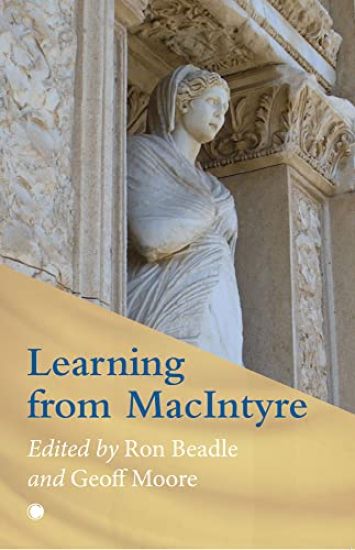
Learning from MacIntyre

Learning from MacIntyre

Ron Beadle; Geoff Moore

JAMES CLARKE CO LTD
2022
nidottu
Alasdair MacIntyre is one of the major philosophers of the late twentieth and early twenty-first century. Best known for After Virtue, first published in 1981, his output spans seven decades and has been unusually wide-ranging in its impact. As MacIntyre enters his tenth decade, this book pays tribute not just to his work, but to its influence across disciplines outside philosophy. Beginning with an intellectual biography, the chapters that follow, written by leading scholars in their fields, explore MacIntyre's contributions to theology, Thomism, moral philosophy, classical philosophy, political philosophy, Marxism, the Frankfurt School, communication, business ethics, sociology, education, law, and therapeutic method. Essential reading for scholars from across these disciplines, and for anyone who wishes to understand MacIntyre's contributions, Learning from MacIntyre not only helps readers to appreciate what we may learn from this influential thinker, but also illustrates his work's continuing significance going forward.
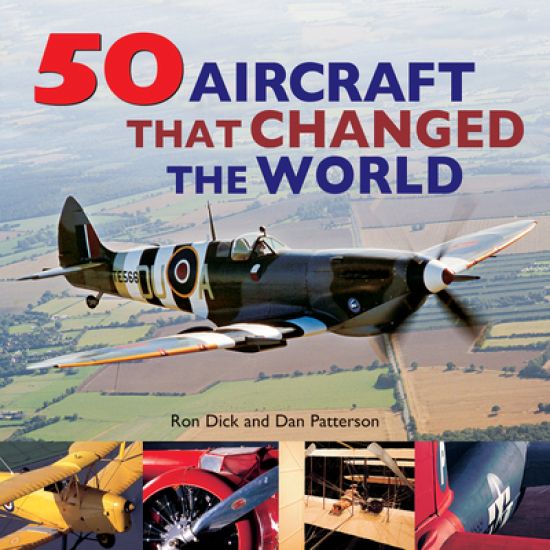
50 Aircraft That Changed the World

50 Aircraft That Changed the World

Ron Dick; Dan Patterson

Firefly Books Ltd
2020
nidottu
The flying machines that pushed the boundaries of aerospace development. “A close-up survey of 50 of arguably the most remarkable and influential aircraft in aviation history.... Beautifully presented... this book will grace the coffee table of any aviation aficionado.” —Airforce Magazine. In December of 2019, Vancouver-based airline Harbour Air took to the sky in a 1956 De Havilland Beaver retrofitted to fly on battery power. Eschewing aviation fuel and easily able to fly commuter distances, this old new plane took the first steps of 21st-century flight. 50 Aircraft That Changed the World is about exactly this type of flight revolution. Written by the authors of the widely acclaimed Aviation Century series, it profiles 50 of history’s most influential aircraft and their pilots and designers. Now an aviation classic, the book has been reformatted to a smaller size but otherwise remains the same. It begins with the 1905 Wright Flyer III, and moves on to the birth of aerial warfare in World War I, the trailblazers of the interwar years, classic World War II aircraft, the jets of the Korean and Vietnam wars, modern commercial carriers, private jets, experimental designs and new combat fighters featuring stealth technology. Featured aircraft in 50 Aircraft That Changed the World include: Fokker E.111, Charles Lindbergh’s Ryan NYP, Amelia Earhart’s Lockheed Vega, Messerschmitt Bf 109, Supermarine Spitfire, Boeing B-17, Avro Lancaster, De Havilland Mosquito, Howard Hughes’s Lockheed Constellation, Concorde, Learjet, Boeing B-52, Rutan Voyager. Hundreds of colour and archival photographs enhance the informative and entertaining text making this an ideal choice for aviation buffs.
Niagara

Niagara

Ron Brown

FIREFLY BOOKS LTD
2024
nidottu
This book takes readers beyond the lights and the sounds of the City of the Falls to venture to lesser-known but equally fascinating sites that abound across the region. The first-known European to gaze upon Niagara Falls was a Jesuit priest and explorer named Louis Hennepin in 1688. He took his somewhat exaggerated description of its size and power back to amazed Europeans. From then on, the Falls became a must-see destination for people from around the world and one of North America’s leading tourist attractions. But there is more to the Niagara region than a mighty cataract. There are the world-class hotels and casinos, the Shaw Festival, the wineries, the hydroelectric generators, the natural wonders, the historic sites, and the Welland Canal — an engineering marvel and vital transportation link. This book is the story of the falls and beyond, covering: The geological evolution of Falls; Pioneering development of Ontario’s hydroelectric power; Niagara’s wine region; Niagara’s Indigenous legacy; The War of 1812; Niagara’s Black history and heritage; Modern hotels and historic hostelries; The Niagara Parkway; Bridges across the Niagara River; The gardens of Niagara; Hiking trails and conservation areas; Casinos, hotels and midway Rides; The Shaw Festival; Historic downtown streetscapes; Niagara’s historic mansions; Lost villages and ghost towns; Niagara’s railway legacy, and more!
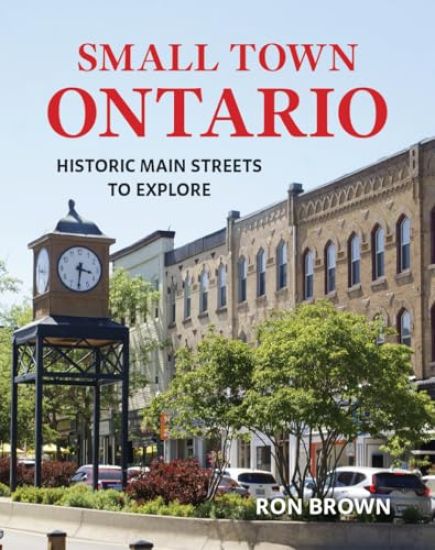
Small Town Ontario: Historic Main Streets to Explore
The main streets of Ontario's small towns provide a living, visual history of the settlement and development of the province. Small Town Ontario is a visual exploration of the most fascinating and important historic towns and the vibrant communities that live there today. Historian Ron Brown is uniquely qualified to write this guide. The author of best-selling books Backroads of Ontario, Top 170 Unusual Things to See in Ontario, Ontario's Ghost Town Heritage and Niagara: Your Guide to the Falls and Beyond, Brown has spent decades visiting, researching and writing every corner of the province he calls home. In Small Town Ontario, Brown takes you on a guided tour of the buildings, monuments, parks, bridges and roadways that comprise the best-preserved heritage streetscapes, including: Almonte Bayfield Cobourg Elora Kleinburg Niagara-on-the-Lake Port Stanley St. Mary's Unionville And many, many more Fully illustrated with the author's photographs, Small Town Ontario is an ideal book for anyone who wants to visit the most attractive remaining historic places and to learn more about Ontario's unique and lasting heritage.
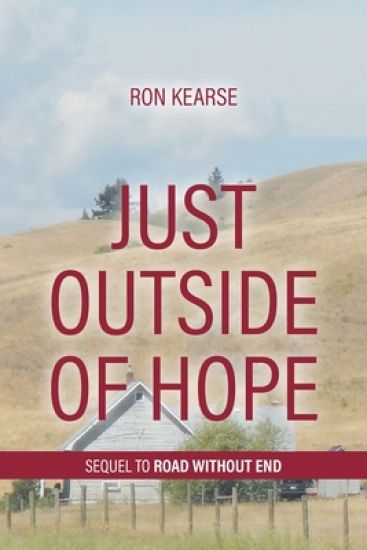
Just Outside of Hope

Just Outside of Hope

Ron Kearse

Tellwell Talent
2019
pokkari
Just Outside of Hope, the sequel to Road Without End, moves through the early years of the 1980s. It takes us from the Canadian Prairies to the pubs, bath houses and nude beaches of Vancouver, British Columbia. It is now September 1980 and ex-Lieutenant Jim Whitelaw is dealing with the guilt he feels from the fall out of a military tribunal, and lingering family issues which make things worse. But just as he feels he's getting his life together, cracks appear once more and he has to make some serious decisions. Meanwhile, in a matter of a moment, Jim's friend and sometimes lover Bert Gilhuis, finds himself trapped in a serious situation that eventually sees him set off on new adventures in Vancouver. These are two more stories in the continuing series of the lives of gay men who lived through the most exhilarating and terrifying of times.