
Kirjahaku
Etsi kirjoja tekijän nimen, kirjan nimen tai ISBN:n perusteella.
1000 tulosta hakusanalla Rowyn Adelaide
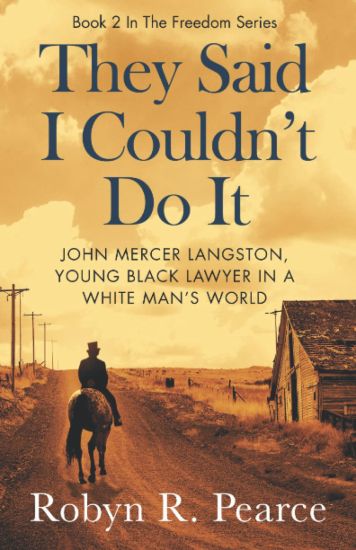
'Black boys don't need schoolin', ' said the orphan's guardian. It's 1843, Ohio. Blacks can't vote, have almost no rights, and as for going to school What's the point? But John Mercer Langston yearns to learn. His heart is set on attending college.His illiterate older brother finally relents. John enrolls at Oberlin, the most radical college in Ohio. But what can he do with that education? Be a lawyer? Ridiculous Law schools slam their doors in his face. And anyway, who would hire a black man? John and his town are a great match―fighters against ignorance, injustice, and racial persecution. Oberlin is an abolitionist town. Supports runaways. Prevents captures. Rescues captives. Has many conductors and safe houses on the Underground Railroad. Their actions bring danger from the highest in the land. A David and Goliath battle of wills erupts when John and his tiny town defy the hated Fugitive Slave Act. Legal battles rage. For ten months, September 1858 to July 1859, they remain front-page news across the nation. Over time, John Mercer Langston has faded into the folds of history. It's time to honor him again. Grab your copy now to discover inspirational John Mercer Langston's first thirty years, and help him take back his rightful place in American history as one of the outstanding black leaders of his century.

Les Aventures du Commandant Ours et de l'équipage de la Marie Grâce
Robyn [P G Rob] Handtschoewercker
Trinity Publishing (NZ) Ltd
2022
pokkari
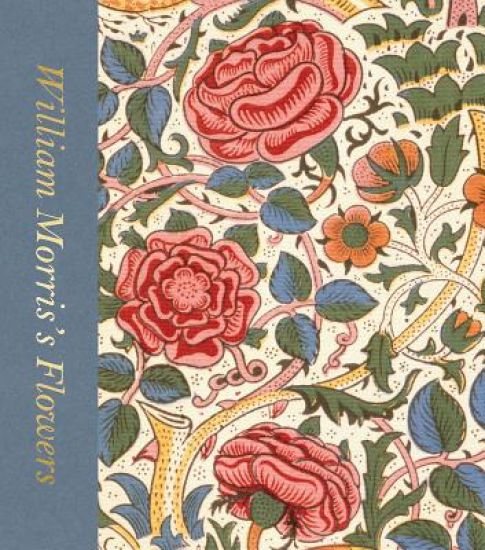
A passionate advocate of craftsmanship over mass-production, William Morris (1834– 1896) designed a huge variety of objects, but it is his highly original carpet, fabric and wallpaper patterns that have continued to capture the imagination and exert their influence on the decorative arts. Around 600 such designs are attributed to Morris, of which the vast majority are based on natural forms, including trees, plants and flowers. This beautifully designed, accessibly priced gift book offers a wealth of designs by Morris in which flowers are the principal motif, bringing together not only completed patterns but also working drawings in pen and watercolour, and examples of his pearwood, floral-pattern printing blocks. It also explores examples of the sources that inspired Morris’s flower-based designs: his own gardens at the Red House in Kent, Kelmscott Manor in Oxfordshire and elsewhere; 16th- and 17th-century herbals; illuminated medieval manuscripts; late medieval and Renaissance tapestries; and a range of decorated objects, particularly from the Islamic world, that Morris studied at the South Kensington Museum (now the V&A). Authored by Rowan Bain, curator at the William Morris Gallery in Walthamstow, north London, and lavishly illustrated with almost 100 colour illustrations, this exquisite book will both inform and delight
This 1989 book deals with the physical and chemical properties found in algae of different types.

A biography of Holland's 'philosopher-king', the 'Grand Pensionary' John de Witt (1625-72).
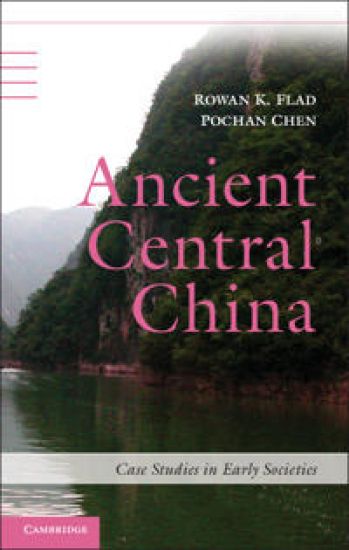
Ancient Central China provides an up-to-date synthesis of archaeological discoveries in the upper and middle Yangzi River region of China, including the Three Gorges Dam reservoir zone. It focuses on the Late Neolithic (late third millennium BC) through the end of the Bronze Age (late first millennium BC) and considers regional and interregional cultural relationships in light of anthropological models of landscape. Rowan K. Flad and Pochan Chen show that centers and peripheries of political, economic and ritual activities were not coincident, and that politically peripheral regions such as the Three Gorges were crucial hubs in interregional economic networks, particularly related to prehistoric salt production. The book provides detailed discussions of recent archaeological discoveries and data from the Chengdu Plain, Three Gorges and Hubei to illustrate how these various components of regional landscape were configured across Central China.
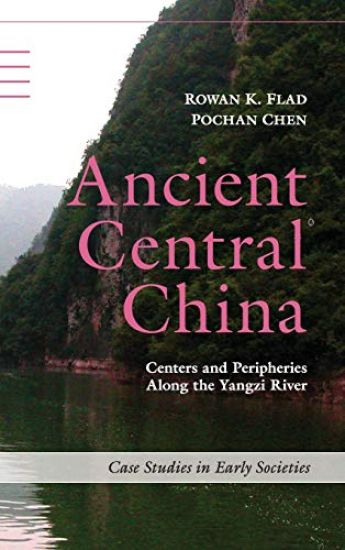
Ancient Central China provides an up-to-date synthesis of archaeological discoveries in the upper and middle Yangzi River region of China, including the Three Gorges Dam reservoir zone. It focuses on the Late Neolithic (late third millennium BC) through the end of the Bronze Age (late first millennium BC) and considers regional and interregional cultural relationships in light of anthropological models of landscape. Rowan K. Flad and Pochan Chen show that centers and peripheries of political, economic and ritual activities were not coincident, and that politically peripheral regions such as the Three Gorges were crucial hubs in interregional economic networks, particularly related to prehistoric salt production. The book provides detailed discussions of recent archaeological discoveries and data from the Chengdu Plain, Three Gorges and Hubei to illustrate how these various components of regional landscape were configured across Central China.
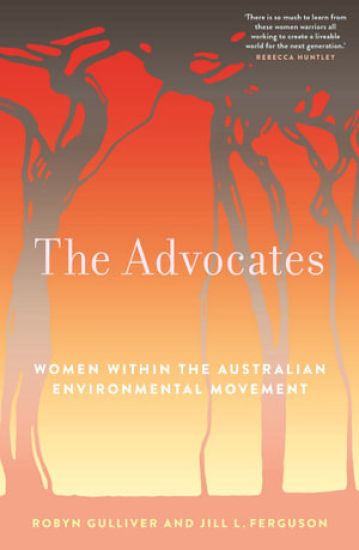
From boardrooms to blockade camps, from the lush East Gippsland forests to the golden Ningaloo Reef, the fight against environmental destruction takes place in many spaces. The Advocates tells the inside story of nine extraordinary women within the Australian environmental movement and the behind-the-scenes efforts that have helped power advocacy across Australia. Over the past fifty years these advocates have held corporations to account, cleaned up toxic waste in their own backyards, and returned biodiversity to our forests. They are not always on the frontlines of the fight or the front pages of the news, but their relentless commitment to making change is both moving and inspiring. In often unseen and unacknowledged ways these women have educated, agitated and pioneered new approaches to the many crises in the Australian environment. Told through richly detailed interviews, these stories get to the heart of why these women have dedicated their lives to environmental causes and the different ways they have persevered. The Advocates shines a light on nine women's tireless commitment to change, and what it means to be an Australian environmental advocate. These stories will inspire the next generation to find a place in that vital fight.
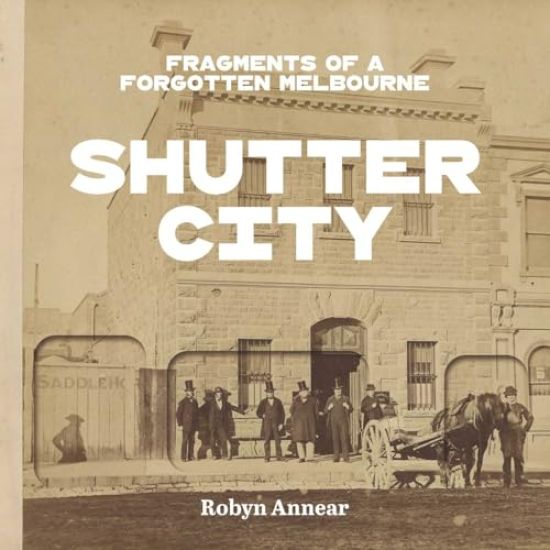
Suppose that you could travel back in time to a Melbourne city street from 150 years ago or even longer. What might meet your eye that has eluded history's gaze? Shutter City presents city street views spanning the hurly-burly decades of the 1850s to 1870s, between the gold rushes and Marvellous Melbourne. Robyn Annear peers into every shadowy corner to reveal postcard streetscapes as miraculous time-capsules, packed with hidden-in-plain-sight historical detail. Her discoveries - she calls them 'sparks' - illuminate and decode each of Shutter City's street views. Among the sightings: barbers' poles, drinking fountains, the three gilded balls of a pawnbroker's sign, gleaming white cups at a coffee stall, street-vendors' carts, neighbourhood dogs (and a cat), assorted ghosts, and ladders - lots of ladders. Let Shutter City be your time-machine and Robyn Annear your guide: her lively and insightful commentary weaves the street views and their 'sparks' into a vivid narrative of a near-forgotten Melbourne and the photographers who captured it.
The Battle For The Pacific And Other Adventures At Sea
Rowan Stevens; Yates Sterling Jr.; William J. Henderson
Kessinger Pub
2007
pokkari
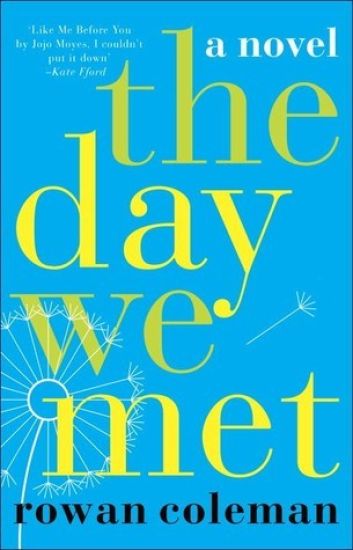
A gorgeous husband, two beautiful children, a job she lovesClaires got it all. And then some. But lately, her mother hovers more than a helicopter, her husband, Greg, seems like a stranger, and her kids are like characters in a movie. Three-year-old Esthers growing up in the blink of an eye, and twenty-year-old Caitlin, with her jet-black hair and clothes to match, looks like shes about to join a punk bandand seems to be hiding something. Most concerning, however, is the fact that Claire is losing her memory, including that of the day she met Greg.A chance meeting with a handsome stranger one rainy day sets Claire wondering whether she and Greg still belong together: She knows she should love him, but she cant always remember why. In search of an answer, Claire fills the pages of a blank book Greg gives her with private memories and keepsakes, jotting down beginnings and endings and everything in between. The book becomes the story of Claireher passions, her sorrows, her joys, her adventures in a life that refuses to surrender to a fate worse than dying: disappearing.
Catholic education is in crisis. In many contexts, it is simply no longer possible to provide the same education in faith as envisaged in the past. Faced with the widespread and radical forgetting of Christian tradition, this work models a fresh theological practice for teachers: recontextualisation. This is process opens up the meaning of texts by engaging it within a new context, as in line with Pope Francis’ repeated calls for a dialogical theology. Horner and Brown bring this practice, most familiarly used in literary studies, sharply into the study of Christian theology. In doing so, they highlight how recontextualisation enabled beliefs, symbols and practices to speak anew to successive generations. Engaging with seven challenging biblical accounts, the book shows how these texts can open onto significant issues in contemporary culture and the Church. It begins with an analysis of recontextualisation and the conceptual issues it provokes for understanding revelation and tradition. The authors then set out a process for undertaking theological recontextualisation: listening to and praying with a biblical text; engaging in critical dialogue; asking how the text is speaking to individuals and communities today and, finally, recording the recontextualisation and evaluating the process and results. Engaging with seven challenging biblical accounts, the book shows how these texts can open onto significant issues in contemporary culture and the Church. It begins with an analysis of recontextualisation and the conceptual issues it provokes for understanding revelation and tradition. The authors then set out a process for undertaking theological recontextualisation: listening to and praying with a biblical text; engaging in critical dialogue; asking how the text is speaking to individuals and communities today and, finally, recording the recontextualisation and evaluating the process and results. This is an essential read for leaders and teachers in Catholic education schools and systems.

Catholic education is in crisis. In many contexts, it is simply no longer possible to provide the same education in faith as envisaged in the past. Faced with the widespread and radical forgetting of Christian tradition, this work models a fresh theological practice for teachers: recontextualisation. This is process opens up the meaning of texts by engaging it within a new context, as in line with Pope Francis’ repeated calls for a dialogical theology. Horner and Brown bring this practice, most familiarly used in literary studies, sharply into the study of Christian theology. In doing so, they highlight how recontextualisation enabled beliefs, symbols and practices to speak anew to successive generations. Engaging with seven challenging biblical accounts, the book shows how these texts can open onto significant issues in contemporary culture and the Church. It begins with an analysis of recontextualisation and the conceptual issues it provokes for understanding revelation and tradition. The authors then set out a process for undertaking theological recontextualisation: listening to and praying with a biblical text; engaging in critical dialogue; asking how the text is speaking to individuals and communities today and, finally, recording the recontextualisation and evaluating the process and results. Engaging with seven challenging biblical accounts, the book shows how these texts can open onto significant issues in contemporary culture and the Church. It begins with an analysis of recontextualisation and the conceptual issues it provokes for understanding revelation and tradition. The authors then set out a process for undertaking theological recontextualisation: listening to and praying with a biblical text; engaging in critical dialogue; asking how the text is speaking to individuals and communities today and, finally, recording the recontextualisation and evaluating the process and results. This is an essential read for leaders and teachers in Catholic education schools and systems.
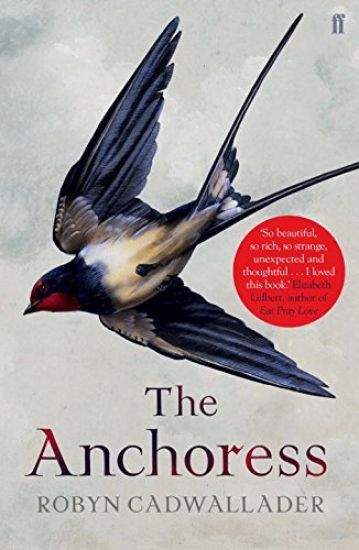
England, 1255: Sarah is only seventeen when she chooses to become an anchoress, a holy woman shut away in a small cell, measuring seven paces by nine, at the side of the village church. Fleeing the grief of losing a much-loved sister in childbirth and the pressure to marry, she decides to renounce the world, with all its dangers, desires and temptations, and to commit herself to a life of prayer and service to God. But as she slowly begins to understand, even the thick, unforgiving walls of her cell cannot keep the outside world away, and it is soon clear that Sarah's body and soul are still in great danger...Robyn Cadwallader's powerful debut novel tells an absorbing story of faith, desire, shame, fear and the very human need for connection and touch. With a poetic intelligence, Cadwallader explores the relationship between the mind, body and spirit in Medieval England in a story that will hold the reader in a spell until the very last page.
A powerful examination of how property shaped the modern world - and why it now threatens the freedoms and stability it was meant to sustain.Property carries a great promise: that it will make you rich and set you free. But it is also a weapon, an agent of displacement and exploitation, the currency of kleptocrats and oligarchs. In Britain, it has led to a new class division between those who own and those who don't. Property is a vivid, far-reaching analysis of our concept of property ownership, from 16th-century enclosures to the present day. It tells powerful stories - of life in the developer-led boomtown of Gurgaon in India, of the struggles to form Black communities in Missouri and Georgia, of a giant experiment in co-operative living in the Bronx, of the impacts of Margaret Thatcher's "property-owning democracy." Above all, Property asks how we have come to view our homes as investments - and it offers hope for how things could be better, with reform that might enable the social wealth of property to be returned to society.
'A rallying cry for a deep rethink of how we build, buy and manage homes.' ARCHITECTS' JOURNAL'A calm analysis of the concept of property ownership, its promises, successes and betrayals.' THE SPECTATOR'Moore situates property where it belongs - in the centre of virtually every aspect of our lives.' SUNDAY TIMESWherever you are on property's wheel of chance, you are likely to be powerfully affected by it. Perhaps you have changed your life in search of a place you can afford. Or maybe you are a homeowner who worries about a crash in prices. Or perhaps you have found you are shut out of the magic kingdom of ownership and forced into paying high rents to indifferent landlords. This is a powerful examination of how property came to shape the modern world - and why it now threatens the freedom and stability it was meant to sustain.
POETRY BOOK SOCIETY RECOMMENDATIONLiving Weapon 'is in conversation with a vast cast of historic forebears who enliven Phillips's examination of the meaning, morality and musicality of poetry, his 'living weapon'. . . and he is an eloquent and persuasive converser.' Kate Caoimhe Arthur, PN ReviewLiving Weapon is a love song to the imagination, a new blade of light homing in on our political moment. A winged man plummets from the troposphere, four police officers enter a phone store, concrete pavements hang overhead. Phillips ruminates on violins and violence, on hatred and pleasure, on turning forty-three, even on the end of existence itself. His poetry reveals the limitations of our vocabulary, showing that our platitudes are inadequate to the brutal times we find ourselves in. And yet, through interrogation of allegory and symbol, names and things, time and musicality, a language of grace and urgency is found. For still our lives go on, and these are poems of survival as much as indictment. Living Weapon is a piercing, flaring collection from 'a virtuoso poetic voice' (Granta).
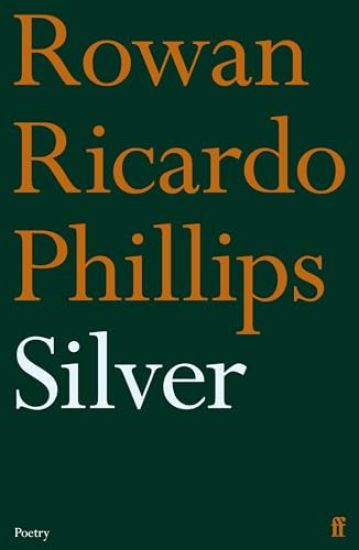
A work that reminds us of the singular and glorious power of poetry in our complex world.Silver is a collection that shines with a guiding principle, that poetry: 'part physics, part faith, part void', can be found wherever it is looked for. Virtuosic in style, sharing the dexterity of the legendary Argentinian footballer, Lionel Messi, who is conjured in its pages, the poems shape-shift through blank verse, elegy, terza rima and rap. Phillips is confident in his unconfidence: 'Not the meaning,' he writes, 'but the meaningfulness of this mystery we call life'. The poems are luminous and dreamlike in their evocations of time and place, held in the light of a silvery moon that gives them their alluring strangeness and vibrancy.