The 18th century was a wealth of knowledge, exploration and rapidly growing technology and expanding record-keeping made possible by advances in the printing press. In its determination to preserve the century of revolution, Gale initiated a revolution of its own: digitization of epic proportions to preserve these invaluable works in the largest archive of its kind. Now for the first time these high-quality digital copies of original 18th century manuscripts are available in print, making them highly accessible to libraries, undergraduate students, and independent scholars.Rich in titles on English life and social history, this collection spans the world as it was known to eighteenth-century historians and explorers. Titles include a wealth of travel accounts and diaries, histories of nations from throughout the world, and maps and charts of a world that was still being discovered. Students of the War of American Independence will find fascinating accounts from the British side of conflict. ++++The below data was compiled from various identification fields in the bibliographic record of this title. This data is provided as an additional tool in helping to insure edition identification: ++++British LibraryT134646With an index.Dublin: printed for Laurence Flin, and Ann Watts, 1763. 2], xxii,258, 18]p.; 12
Susan Bogert Warner (July 11, 1819 - March 17, 1885), was an American evangelical writer of religious fiction, children's fiction, and theological works.Pen name, Elizabeth Wetherell. Born in New York City, she wrote, under the name of "Elizabeth Wetherell", thirty novels, many of which went into multiple editions. However, her first novel, The Wide, Wide World (1850), was the most popular. It was translated into several other languages, including French, German, and Dutch. Other than Uncle Tom's Cabin, it was perhaps the most widely circulated story of American authorship. Other works include Queechy (1852), The Law and the Testimony, (1853), The Hills of the Shatemuc, (1856), The Old Helmet (1863), and Melbourne House (1864). In the nineteenth century, critics admired the depictions of rural American life in her early novels. American reviewers also praised Warner's Christian and moral teachings, while London reviewers tended not to favor her didacticism. Early twentieth-century critics classified Warner's work as "sentimental" and thus lacking in literary value. In the later twentieth century, feminist critics rediscovered The Wide, Wide World, discussing it as a quintessential domestic novel and focusing on analyzing its portrayal of gender dynamics. Some of her works were written jointly with her younger sister Anna Bartlett Warner, who sometimes wrote under the pseudonym "Amy Lothrop". The Warner sisters also wrote famous children's Christian songs. Susan wrote "Jesus Bids Us Shine" while Anna was author of the first verse of the well-known children's song "Jesus Loves Me", which she wrote at Susan's request. Both sisters became devout Christians in the late 1830s. After their conversion, they became confirmed members of the Mercer Street Presbyterian church, although in later life, Warner became drawn into Methodist circles. The sisters also held Bible studies for the West Point cadets. When they were on military duty, the cadets would sing "Jesus Loves Me." The popularity of the song was so great that upon Warner's death, she was buried in the West Point Cemetery. Warner could trace her lineage back to the Puritans on both sides. Her father was Henry Warner, a New York City lawyer originally from New England, and her mother was Anna Bartlett, from a wealthy, fashionable family in New York's Hudson Square. When Warner was a young child, her mother died, and her father's sister Fanny came to live with the Warners. Although Henry Warner had been a successful lawyer, he lost most of his fortune in the Panic of 1837 and in subsequent lawsuits and poor investments. The family had to leave their mansion at St. Mark's Place in New York and move to an old Revolutionary War-era farmhouse on Constitution Island, near West Point, NY. In 1849, seeing little change in their family's financial situation, Susan and Anna started writing to earn income. Susan Warner died in Highland Falls, New York and is buried in the West Point Cemetery.
Mary Barton is the first novel by English author Elizabeth Gaskell, published in 1848. The story is set in the English city of Manchester between 1839 and 1842, and deals with the difficulties faced by the Victorian working class. It is subtitled "A Tale of Manchester Life". Plot summary: The novel begins in Manchester, where we are introduced to the Bartons and the Wilsons, two working-class families. John Barton is a questioner of the distribution of wealth and the relations between rich and poor. Soon his wife dies-he blames it on her grief over the disappearance of her sister Esther. Having already lost his son Tom at a young age, Barton is left to raise his daughter, Mary, alone and now falls into depression and begins to involve himself in the Chartist, trade-union movement. Chapter 1 takes place in countryside where Moss Side is now. Mary takes up work at a dressmaker's (her father having objected to her working in a factory) and becomes subject to the affections of hard-working Jem Wilson and Harry Carson, son of a wealthy mill owner. She fondly hopes, by marrying Carson, to secure a comfortable life for herself and her father, but immediately after refusing Jem's offer of marriage she realises that she truly loves him. She therefore decides to evade Carson, planning to show her feelings to Jem in the course of time. Jem believes her decision to be final, though this does not change his feelings for her. Meanwhile, Esther, a "street-walker," returns to warn John Barton that he must save Mary from becoming like her. He simply pushes her away, however, and she's sent to jail for a month on the charge of vagrancy. Upon her release she talks to Jem with the same purpose. He promises that he will protect Mary and confronts Carson, eventually entering into a fight with him, which is witnessed by a policeman passing by. Not long afterwards, Carson is shot dead, and Jem is arrested for the crime, his gun having been found at the scene. Esther decides to investigate the matter further and discovers that the wadding for the gun was a piece of paper on which is written Mary's name. She visits her niece to warn her to save the one she loves, and after she leaves Mary realises that the murderer is not Jem but her father. She is now faced with having to save her lover without giving away her father. With the help of Job Legh (the intelligent grandfather of her blind friend Margaret), Mary travels to Liverpool to find the only person who could provide an alibi for Jem - Will Wilson, Jem's cousin and a sailor, who was with him on the night of the murder. Unfortunately, Will's ship is already departing, so that, after Mary chases after the ship in a small boat, the only thing Will can do is promise to return in the pilot ship and testify the next day. During the trial, Jem learns of Mary's great love for him. Will arrives in court to testify, and Jem is found "not guilty". Mary has fallen ill during the trial and is nursed by Mr Sturgis, an old sailor, and his wife. When she finally returns to Manchester she has to face her father, who is crushed by his remorse. He summons John Carson, Harry's father, to confess to him that he is the murderer. Carson is still set on justice, but after turning to the Bible he forgives Barton, who dies soon afterwards in Carson's arms. Not long after this Esther comes back to Mary's home, where she, too, soon dies. Jem decides to leave England, where, his reputation damaged, it would be difficult for him to find a new job. The novel ends with the wedded Mary and Jem, their little child, and Mrs Wilson living happily in Canada. News comes that Margaret has regained her sight and that she and Will, soon to be married, will visit.... Elizabeth Cleghorn Gaskell, (n e Stevenson; 29 September 1810 - 12 November 1865), often referred to as Mrs Gaskell, was an English novelist and short story writer.
This study considers how John Lyly's characters who are allegorical representations of Elizabeth validate the queen, but at the same time raise troubling issues as to her true nature. Theodora Jankowski looks at both the light and the dark side of the Elizabeth character in each of Lyly's court plays, while at the same time considering how that allegory works in terms of the various issues Lyly debates within the plays. She reveals the fraught nature of John Lyly's relationship to Queen Elizabeth. He was not the first creative artist to introduce subversive undercurrents in entertainments designed to flatter the queen. However, Jankowski demonstrates how Lyly, while praising the queen and accepting her beneficence, simultaneously manages to present his audiences with the "dark queen", the opposite side of the positive image of the Queen of England.
Title: The Double Coronet. A novel. By the author of "My First Season," i.e. Elizabeth S. Sheppard], etc.Publisher: British Library, Historical Print EditionsThe British Library is the national library of the United Kingdom. It is one of the world's largest research libraries holding over 150 million items in all known languages and formats: books, journals, newspapers, sound recordings, patents, maps, stamps, prints and much more. Its collections include around 14 million books, along with substantial additional collections of manuscripts and historical items dating back as far as 300 BC.The FICTION & PROSE LITERATURE collection includes books from the British Library digitised by Microsoft. The collection provides readers with a perspective of the world from some of the 18th and 19th century's most talented writers. Written for a range of audiences, these works are a treasure for any curious reader looking to see the world through the eyes of ages past. Beyond the main body of works the collection also includes song-books, comedy, and works of satire. ++++The below data was compiled from various identification fields in the bibliographic record of this title. This data is provided as an additional tool in helping to insure edition identification: ++++ British Library Sheppard, Elizabeth Sara; 1856. 2 vol.; 8 . 12631.f.8.
Title: The Double Coronet. A novel. By the author of "My First Season," i.e. Elizabeth S. Sheppard], etc.Publisher: British Library, Historical Print EditionsThe British Library is the national library of the United Kingdom. It is one of the world's largest research libraries holding over 150 million items in all known languages and formats: books, journals, newspapers, sound recordings, patents, maps, stamps, prints and much more. Its collections include around 14 million books, along with substantial additional collections of manuscripts and historical items dating back as far as 300 BC.The NOVELS OF THE 18th & 19th CENTURIES collection includes books from the British Library digitised by Microsoft. The collection includes major and minor works from a period which saw the development and triumph of the English novel. These classics were written for a range of audiences and will engage any reading enthusiast. ++++The below data was compiled from various identification fields in the bibliographic record of this title. This data is provided as an additional tool in helping to insure edition identification: ++++ British Library Anonymous; Sheppard, Elizabeth Sara; 1856. 2 vol.; 8 . 12631.f.8.
The 18th century was a wealth of knowledge, exploration and rapidly growing technology and expanding record-keeping made possible by advances in the printing press. In its determination to preserve the century of revolution, Gale initiated a revolution of its own: digitization of epic proportions to preserve these invaluable works in the largest archive of its kind. Now for the first time these high-quality digital copies of original 18th century manuscripts are available in print, making them highly accessible to libraries, undergraduate students, and independent scholars.Medical theory and practice of the 1700s developed rapidly, as is evidenced by the extensive collection, which includes descriptions of diseases, their conditions, and treatments. Books on science and technology, agriculture, military technology, natural philosophy, even cookbooks, are all contained here.++++The below data was compiled from various identification fields in the bibliographic record of this title. This data is provided as an additional tool in helping to insure edition identification: ++++National Library of MedicineN016534With a half-title.London: printed for A. Morley, 1760. 4],42p.; 8
Susan Bogert Warner (July 11, 1819 - March 17, 1885), was an American evangelical writer of religious fiction, children's fiction, and theological works.Pen name, Elizabeth Wetherell. Born in New York City, she wrote, under the name of "Elizabeth Wetherell", thirty novels, many of which went into multiple editions. However, her first novel, The Wide, Wide World (1850), was the most popular. It was translated into several other languages, including French, German, and Dutch. Other than Uncle Tom's Cabin, it was perhaps the most widely circulated story of American authorship. Other works include Queechy (1852), The Law and the Testimony, (1853), The Hills of the Shatemuc, (1856), The Old Helmet (1863), and Melbourne House (1864). In the nineteenth century, critics admired the depictions of rural American life in her early novels. American reviewers also praised Warner's Christian and moral teachings, while London reviewers tended not to favor her didacticism. Early twentieth-century critics classified Warner's work as "sentimental" and thus lacking in literary value. In the later twentieth century, feminist critics rediscovered The Wide, Wide World, discussing it as a quintessential domestic novel and focusing on analyzing its portrayal of gender dynamics. Some of her works were written jointly with her younger sister Anna Bartlett Warner, who sometimes wrote under the pseudonym "Amy Lothrop". The Warner sisters also wrote famous children's Christian songs. Susan wrote "Jesus Bids Us Shine" while Anna was author of the first verse of the well-known children's song "Jesus Loves Me", which she wrote at Susan's request. Both sisters became devout Christians in the late 1830s. After their conversion, they became confirmed members of the Mercer Street Presbyterian church, although in later life, Warner became drawn into Methodist circles. The sisters also held Bible studies for the West Point cadets. When they were on military duty, the cadets would sing "Jesus Loves Me." The popularity of the song was so great that upon Warner's death, she was buried in the West Point Cemetery. Warner could trace her lineage back to the Puritans on both sides. Her father was Henry Warner, a New York City lawyer originally from New England, and her mother was Anna Bartlett, from a wealthy, fashionable family in New York's Hudson Square. When Warner was a young child, her mother died, and her father's sister Fanny came to live with the Warners. Although Henry Warner had been a successful lawyer, he lost most of his fortune in the Panic of 1837 and in subsequent lawsuits and poor investments. The family had to leave their mansion at St. Mark's Place in New York and move to an old Revolutionary War-era farmhouse on Constitution Island, near West Point, NY. In 1849, seeing little change in their family's financial situation, Susan and Anna started writing to earn income. Susan Warner died in Highland Falls, New York and is buried in the West Point Cemetery.
Christopher Houston Carson (December 24, 1809 - May 23, 1868), better known as Kit Carson, was an American frontiersman. He was a mountain man (fur trapper), wilderness guide, Indian agent, and U.S. Army officer. Carson became a frontier legend in his own lifetime via biographies and news articles. Exaggerated versions of his exploits were the subject of dime novels. Carson left home in rural present-day Missouri at age 16 to become a mountain man and trapper in the West. In the 1830s, he accompanied Ewing Young on an expedition to Mexican California and joined fur trapping expeditions into the Rocky Mountains. He lived among and married into the Arapaho and Cheyenne tribes. In the 1840s, he was hired as a guide by John C. Fremont. Fremont's expedition covered much of California, Oregon, and the Great Basin area. Fremont mapped and wrote reports and commentaries on the Oregon Trail to assist and encourage westward-bound American pioneers. Carson achieved national fame through Fremont's accounts of his expeditions. Under Fremont's command, Carson participated in the uprising against Mexican rule in California at the beginning of the Mexican-American War. Later in the war, Carson was a scout and courier, celebrated for his rescue mission after the Battle of San Pasqual and for his coast-to-coast journey from California to Washington, DC to deliver news of the conflict in California to the U.S. government. In the 1850s, he was appointed as the Indian agent to the Ute Indians and the Jicarilla Apaches. During the American Civil War, Carson led a regiment of mostly Hispanic volunteers from New Mexico on the side of the Union at the Battle of Valverde in 1862. When the Confederate threat to New Mexico was eliminated, Carson led forces to suppress the Navajo, Mescalero Apache, and the Kiowa and Comanche Indians. Carson was breveted a Brigadier General and took command of Fort Garland, Colorado. He was there only briefly: poor health forced him to retire from military life. Carson was married three times and had ten children. The Carson home was in Taos, New Mexico. Carson died at Fort Lyon, Colorado, of an aortic aneurysm on May 23, 1868. He is buried in Taos, New Mexico, next to his third wife Josefa Jaramillo.............. Elizabeth Eleanor Greatorex (1854-1917) was an American painter and illustrator.... John Stevens Cabot Abbott (September 19, 1805 - June 17, 1877), an American historian, pastor, and pedagogical writer, was born in Brunswick, Maine to Jacob and Betsey Abbott. Early life: He was a brother of Jacob Abbott, and was associated with him in the management of Abbott's Institute, New York City, and in the preparation of his series of brief historical biographies. Dr. Abbott graduated at Bowdoin College in 1825, prepared for the ministry at Andover Theological Seminary, and between 1830 and 1844, when he retired from the ministry in the Congregational Church, preached successively at Worcester, Roxbury and Nantucket, all in Massachusetts. Literary career: Owing to the success of a little work, The Mother at Home, he devoted himself, from 1844 onwards, to literature. He was a voluminous writer of books on Christian ethics, and of popular histories, which were credited with cultivating a popular interest in history. He is best known as the author of the widely popular History of Napoleon Bonaparte (1855), in which the various elements and episodes in Napoleon's career are described. Abbott takes a very favourable view towards his subject throughout. Also among his principal works are: History of the Civil War in America (1863-1866), and The History of Frederick II, Called Frederick the Great (New York, 1871). He also did a forward to a book called Life of Boone by W.M. Bogart, about Daniel Boone in 1876. In general, except that he did not write juvenile fiction, his work in subject and style closely resembles that of his brother, Jacob Abbott....
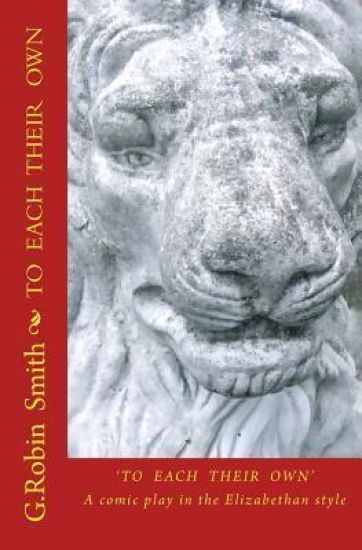
THIS IS THE FIRST EDITION. Seek the 2nd Edition for the greatly improved version. The plot elements that Shakespeare employed for his plays were used - and reused - for a reason. Shipwrecks, nobles disguised as servants and magical objects were stock and trade for what the audience wanted to see and common metaphors for what they would understand. Such tropes provided a key to translating the story to a packed house of groundlings and nobles. By taking those elements familiar in 'The Tempest' '12th Night', 'Errors' and more, rearranging them into a new constellation of ideas, a fresh picture has been drawn - "To Each Their Own". Three servants, thrown onto the shore of their master's enemies, must pretend to be noble. Their masters, mistaken for servants, must pretend to know how to labor. Three husband-seeking daughters add to the confusion when the masters and their servants must pretend to be things they are not to stay alive. Love, Hate, Jealousy and a Golden Lion of Death help discover the perfect truth of the way things are. "To Each Their Own" is a play written to be slipped into the canon at The Globe Theatre in Shakespeare's time. The play is filled with mistaken identities, fumbling antics, touching tales and a soaring, understandable language full of poetry and meaning. Welcome to the 2nd Elizabethan Age, with a work that would fit on the First Elizabeth's Stage. If you like 'Shakespeare In Love', 'Stage Beauty', 'Yes', 'Rosencrantz & Guildenstern Are Dead', then make "To Each Their Own" your own. "To Each Their Own" is meant for performance, but is quite readable as a story. To be performed, about 14 actors are necessary with minimum set and maximum imagination. Unless, like the character Anto, you cry "O' kill me now before an actor play " you will enjoy enacting this work - in your mind or with friends.
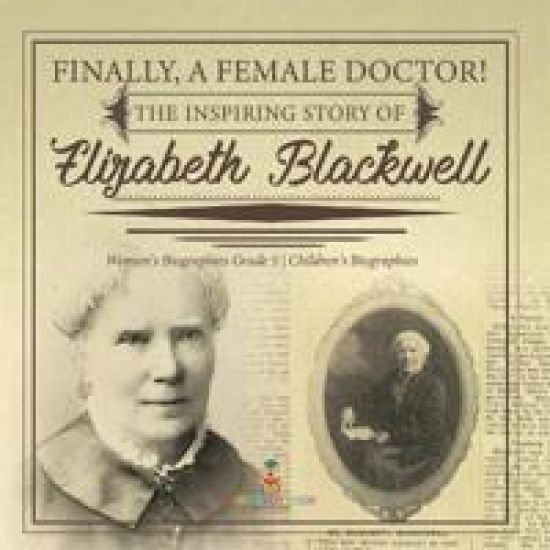
Be inspired by the story of Elizabeth Blackwell, the first woman doctor in the United States. Blackwell worked her to make the field of medicine accessible to women during a time when women's rights was still being tackled. How did she change the medical field? Learn about her story by reading this book today.


![A High Little World and What Happened There. [A Novel. by Elizabeth S. Fletcher, Afterwards Watson.]](/covers/9781240879380.jpg)
![A High Little World and What Happened There. [a Novel. by Elizabeth S. Fletcher, Afterwards Watson.]](/covers/9781240879557.jpg)
![The Double Coronet. a Novel. by the Author of "My First Season," [I.E. Elizabeth S. Sheppard], Etc.](/covers/9781241388003.jpg)
![The Double Coronet. a Novel. by the Author of My First Season, [I.E. Elizabeth S. Sheppard], Etc.](/covers/9781241406844.jpg)