
Kirjahaku
Etsi kirjoja tekijän nimen, kirjan nimen tai ISBN:n perusteella.
1000 tulosta hakusanalla S. Rob
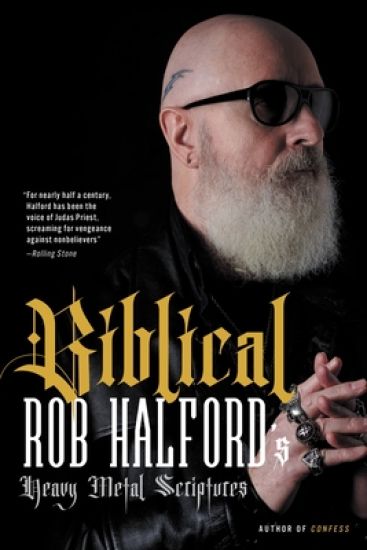
The Metal God, himself, Rob Halford--lead vocalist of Judas Priest and author of the critically acclaimed and reader-beloved autobiography, Confess--delivers yet again, now with the bible of hard rock and heavy metal, all in his enlightening, hilarious, and one-of-a-kind voice. Rob Halford has long been known for his legendary voice. As the front man of Judas Priest, his vocals have been tremendous, and tremendously influential. In 2020, he brought his voice to the page with a glorious autobiography. Fans and readers loved Halford's frank and open narrative, as well as his terrific insight and sense of humor. In an ideal follow-up, Halford runs his lively eye over all facets of the hard rock history and the heavy metal world. Biblical is an encyclopedia and manifesto in which Halford shares his opinions, memories, and anecdotes regarding every element of the rock and roll work and lifestyle from tours to tattoos, riffs to riders, and drugs to devil horns. In Halford's relaxed and honest tone, the book mixes serious and in-depth pieces with whimsical reflections on lessons learned during his fifty years of a life in music. Biblical is a handed-down-from-on-high holy tome that transports fans behind the scenes and back into their record collections, to the almighty ways of rock.

Robert's Rules In Plain English
Doris P Zimmerman
HarperCollins Publishers (Australia) Pty Ltd
2005
nidottu
A user-friendly guide to parliamentary procedure explains how to run a meeting effectively, outlining basic rules in straightforward language while providing complementary sample dialogues and coverage of electronic meetings and Internet usage. Reprint. 40,000 first printing.
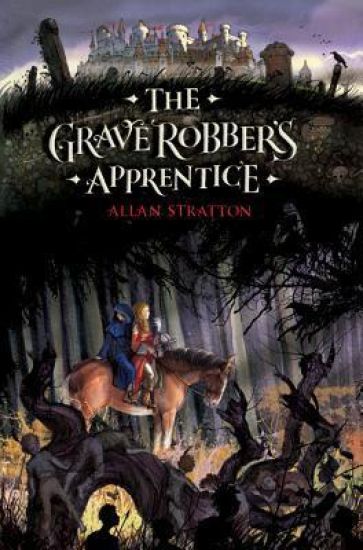
Hans doesn't know who he is or where he came from. When he was a baby, he washed ashore in a wooden box and was adopted by the conniving grave robber, Knobbe the Bent. Now fate has thrown him together with Angela von Schwanenberg, a young countess fleeing for her life from the evil Archduke Arnulf and his dreaded Necromancer. Together, these friends are on a daring quest to discover Hans' true identity and to save Angela's parents from the archduke.Join Hans and Angela on their grand adventure as they ride through the depths of the great forest, sled down a mountain in a coffin, and sneak along the secret passageways of the archduke's palace. The Grave Robber's Apprentice is a world of highwaymen, hermits, and dancing bears; and of a boy separated from his family by the sea.In this world anything is possible with luck and imagination--even for a grave robber's apprentice.

Renowned Flash wizard and innovator Robert Penner reveals the fascinating programming and design concepts behind his signature creations. Detailing his groundbreaking designs, this book showcases Penner’s work that merges math and design with Flash. You'll get an inside look at his sophisticated and unique approach to design--which incorporates advanced ActionScript programming--and discover exclusive techniques associated with some of the most groundbreaking interactive designs ever created.
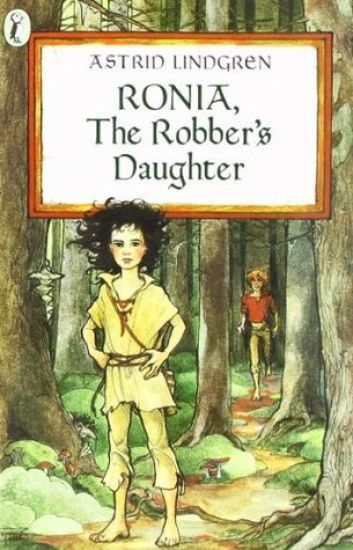
Read the book that inspired Studio Ghibli's series, Ronja the Robber's Daughter A thrilling adventure crafted by the author of Pippi Longstocking On the night Ronia was born, a thunderstorm raged over the mountain, but in Matt's castle and among his band of robbers there was only joy - for Matt now had a spirited little black-haired daughter. Soon Ronia learns to dance and yell with the robbers, but it is alone in the forest that she feels truly at home. Then one day Ronia meets Birk, the son of Matt's arch-enemy. Soon after Ronia and Birk become friends the worst quarrel ever between the rival bands erupts, and Ronia and Berk are right in the middle.

Ronja the Robber's Daughter Illustrated Edition
Astrid Lindgren
Oxford University Press
2018
pokkari
Ronja, the robber's daughter, causes mayhem by befriending the son of her father's sworn enemy. Together Ronja and Birk explore the magical forest they have fled to and must fend for themselves in the hope that one day they can return home.

Breaking Robert's Rules
Lawrence E. Susskind; Jeffrey L. Cruickshank
Oxford University Press Inc
2006
nidottu
Robert's Rules of Order, written more than 150 years ago by a military man, are no longer relevant. America needs a new guide that spells out how to work together effectively in groups of all kinds, one that takes account of recent developments in the field of consensus building and dispute resolution. Enter the concensus-building approach, as introduced and explained in a step-by-step approach using realistic scenarios, by Susskind and Cruickshank.

Breaking Robert's Rules
Lawrence E. Susskind; Jeffrey L. Cruikshank
Oxford University Press Inc
2006
sidottu
Every day in communities across America hundreds of committees, boards, church groups, and social clubs hold meetings where they spend their time engaged in shouting matches and acrimonious debate. Whether they are aware of it or not, the procedures that most such groups rely on to reach decisions were first laid out as Robert's Rules more than 150 years ago by an officer in the U.S. Army's Corps of Engineers. Its arcane rituals of parliamentary procedure and majority rule usually produce a victorious majority and a very dissatisfied minority that expects to raise its concerns, again, at the next possible meeting. Breaking Robert's Rules clearly spells out how any group can work together effectively. After briefly explaining the problems created by Robert's Rules, the guide outlines the five key steps toward consensus building, and addresses the specific problems that often get in the way of a group's progress. Appendices include a basic one page "Handy Guide" that can be distributed at meetings and a case study demonstrating how the ideas presented in the book can also be applied in a corporate context. Written in a non-technical and engaging style, and containing clear ideas and instructions that anyone can understand and use, this one-of-a-kind guide will prove an essential tool for any group desperate to find ways of making their meetings more effective. In addition, neighborhood associations, ad hoc committees, social clubs, and other informal groups lacking a clear hierarchy will find solid advice on how to move forward without resorting to "majority rules" or bickering over who will take leadership positions. Bound to become a classic, Breaking Robert's Rules will change the way you hold meetings forever, paving the way for efficiency, efficacy, and peaceful decision making.
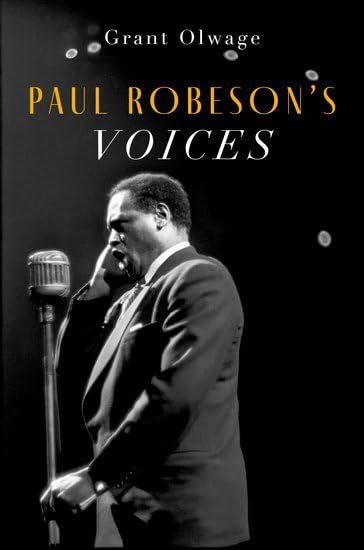
Paul Robeson's Voices is a meditation on Robeson's singing, a study of the artist's life in song. Music historian Grant Olwage examines Robeson's voice as it exists in two broad and intersecting domains: as sound object and sounding gesture, specifically how it was fashioned in the contexts of singing practices, in recital, concert, and recorded performance, and as subject of identification. Olwage asks: how does the voice encapsulate modes of subjectivity, of being? Combining deep archival research with musicological theory, this book is a study of voice as central to Robeson's sense of self and his politics. Paul Robeson's Voices charts the dialectal process of Robeson's vocal and self-discovery, documenting some of the ways Robeson's practice revised the traditions of concert singing in the first half of the twentieth century and how his voice manifested as resistance.
Paul Robeson's Voices is a meditation on Robeson's singing, a study of the artist's life in song. Music historian Grant Olwage examines Robeson's voice as it exists in two broad and intersecting domains: as sound object and sounding gesture, specifically how it was fashioned in the contexts of singing practices, in recital, concert, and recorded performance, and as subject of identification. Olwage asks: how does the voice encapsulate modes of subjectivity, of being? Combining deep archival research with musicological theory, this book is a study of voice as central to Robeson's sense of self and his politics. Paul Robeson's Voices charts the dialectal process of Robeson's vocal and self-discovery, documenting some of the ways Robeson's practice revised the traditions of concert singing in the first half of the twentieth century and how his voice manifested as resistance.
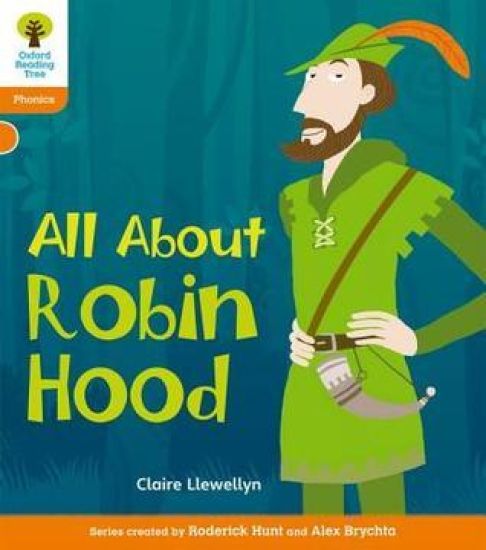
Oxford Reading Tree: Level 6: Floppy's Phonics Non-Fiction: All About Robin Hood
Claire Llewellyn
Oxford University Press
2011
nidottu
Floppy's Phonics Non-fiction allow children to practise their decoding and literacy skills in the context of exciting non-fiction books, which include a variety of text types and topics, and support from Biff, Chip, Kipper and Floppy.Books contain inside cover notes to support children in their reading. Help with childrens reading development is also available at www.oxfordowl.co.uk.There are 6 Floppy's Phonics Non-fiction titles available at Level 6: Grow a Pumpkin: This book tells you how to grow a pumpkin - and what to do with it when you have grown it!Visit Paris! Is Paris a good place to visit? Read about one family's trip to Paris, and make up your own mind!All About Robin Hood: Was Robin Hood a real person, or was he just a legend?The Ragged School: Find out about school life long ago. look out - the teachers were very strict!Olympic Dreams: Find out about the Olympics - a fantastic festival of sport!Giant Animals: Find out about the world's biggest animals - from giant spiders and moths to elephants and whales!
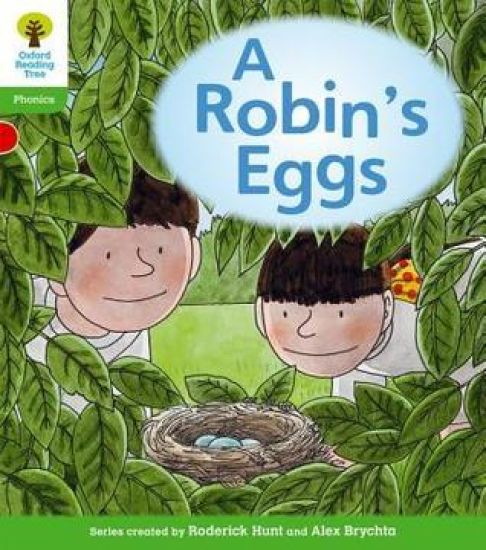
Oxford Reading Tree: Level 2: Floppy's Phonics Fiction: A Robin's Eggs
Roderick Hunt; Kate Ruttle
Oxford University Press
2011
nidottu
Engaging decodable stories fully aligned to Letters and Sounds enable your pupils to practise their phonics skills with their favourite characters. Written by Roderick Hunt MBE and illustrated by Alex Brychta, award-winning creators of the Oxford Reading Tree. Six engaging stories at Level 2 provide focused practice of phonics at Letters and Sounds Phase 3. Books contain inside cover notes to support children in their reading. Help with childrens reading development is also available at www.oxfordowl.co.uk. There are 6 Floppy's Phonics Fiction titles available at Level 2: The Zip: Will Dad fit into his wet kit? Posh Shops: Biff, Chip and Kipper shop for Mum. Jack: Jack runs at Floppy. Bang the Gong: Mum is fed up! Quiz: Biff has a quiz. A Robin's Eggs: Biff and Chip see a robin's eggs in a bush.

Roberts & Zuckerman's Criminal Evidence
Paul Roberts; Adrian Zuckerman
Oxford University Press
2022
sidottu
Roberts and Zuckerman's Criminal Evidence is the eagerly-anticipated third of edition of the market-leading text on criminal evidence, fully revised to take account of developments in legislation, case-law, policy debates, and academic commentary during the decade since the previous edition was published. With an explicit focus on the rules and principles of criminal trial procedure, Roberts and Zuckerman's Criminal Evidence develops a coherent account of evidence law which is doctrinally detailed, securely grounded in a normative theoretical framework, and sensitive to the institutional and socio-legal factors shaping criminal litigation in practice. The book is designed to be accessible to the beginner, informative to the criminal court judge or legal practitioner, and thought-provoking to the advanced student and scholar: a textbook and monograph rolled into one. The book also provides an ideal disciplinary map and work of reference to introduce non-lawyers (including forensic scientists and other expert witnesses) to the foundational assumptions and technical intricacies of criminal trial procedure in England and Wales, and will be an invaluable resource for courts, lawyers and scholars in other jurisdictions seeking comparative insight and understanding of evidentiary regulation in the common law tradition.
Roberts & Zuckerman's Criminal Evidence
Paul Roberts; Adrian Zuckerman
Oxford University Press
2022
nidottu
Roberts and Zuckerman's Criminal Evidence is the eagerly-anticipated third of edition of the market-leading text on criminal evidence, fully revised to take account of developments in legislation, case-law, policy debates, and academic commentary during the decade since the previous edition was published. With an explicit focus on the rules and principles of criminal trial procedure, Roberts and Zuckerman's Criminal Evidence develops a coherent account of evidence law which is doctrinally detailed, securely grounded in a normative theoretical framework, and sensitive to the institutional and socio-legal factors shaping criminal litigation in practice. The book is designed to be accessible to the beginner, informative to the criminal court judge or legal practitioner, and thought-provoking to the advanced student and scholar: a textbook and monograph rolled into one. The book also provides an ideal disciplinary map and work of reference to introduce non-lawyers (including forensic scientists and other expert witnesses) to the foundational assumptions and technical intricacies of criminal trial procedure in England and Wales, and will be an invaluable resource for courts, lawyers and scholars in other jurisdictions seeking comparative insight and understanding of evidentiary regulation in the common law tradition.

Robinson's Paradigms and Exercises in Syriac Grammar
J. F. Coakley
Oxford University Press
2013
nidottu
T. H. Robinson's Paradigms and exercises in Syriac Grammar was first published in 1915 to meet the need for 'something of an elementary nature which should be of value to the student who takes up Syriac for the first time'. Since then, the book has met this need for generations of students. The fifth edition of 2002 remains the grammar of choice for many teachers of Syriac classes as well as for students learning by themselves. The present revision, drawing on ten more years of university teaching experience and students' comments, clarifies some of the grammatical explanations and exercises. Improvements to the fonts and a larger format make for easier reading. As before, the West Syriac script and grammatical tradition are followed in the body of the lessons, and appendices introduce reading in the other (estrangela and Eastern) scripts. The book remains a plain and friendly introduction to this important language.
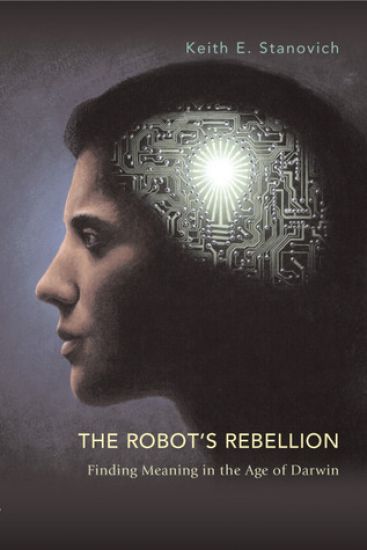
The idea that we might be robots is no longer the stuff of science fiction; decades of research in evolutionary biology and cognitive science have led many esteemed thinkers and scientists to the conclusion that, following the precepts of universal Darwinism, humans are merely the hosts for two replicators (genes and memes) that have no interest in us except as conduits for replication. Accepting and now forcefully responding to this disturbing idea that precludes the possibilities of morality or free will, among other things, Keith Stanovich here provides the tools for the "robot's rebellion," a program of cognitive reform necessary to advance human interests over the limited interest of the replicators. He shows how concepts of rational thinking from cognitive science interact with the logic of evolution to create opportunities for humans to structure their behavior to serve their own ends. These evaluative activities of the brain, he argues, fulfill the need that we have to ascribe significance to human life. Only by recognizing ourselves as robots, argues Stanovich, can we begin to construct a concept of self based on what is truly singular about humans: that they gain control of their lives in a way unique among life forms on Earth - through rational self-determination.
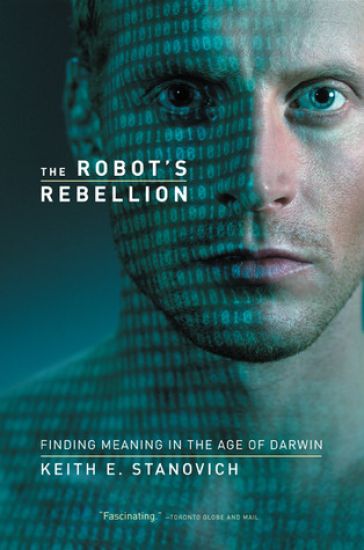
The idea that we might be robots is no longer the stuff of science fiction; decades of research in evolutionary biology and cognitive science have led many esteemed thinkers and scientists to the conclusion that, following the precepts of universal Darwinism, humans are merely the hosts for two replicators (genes and memes) that have no interest in us except as conduits for replication. Accepting and now forcefully responding to this disturbing idea that precludes the possibilities of morality or free will, among other things, Keith Stanovich here provides the tools for the "robot's rebellion," a program of cognitive reform necessary to advance human interests over the limited interest of the replicators. He shows how concepts of rational thinking from cognitive science interact with the logic of evolution to create opportunities for humans to structure their behavior to serve their own ends. These evaluative activities of the brain, he argues, fulfill the need that we have to ascribe significance to human life. Only by recognizing ourselves as robots, argues Stanovich, can we begin to construct a concept of self based on what is truly singular about humans: that they gain control of their lives in a way unique among life forms on Earth - through rational self-determination.

All of Heath and Robins' inventions are well... well intentioned, but they don't really work. Not properly anyway. So, when they give their mother a birthday present to help with the housework, they realise that it's one invention too many
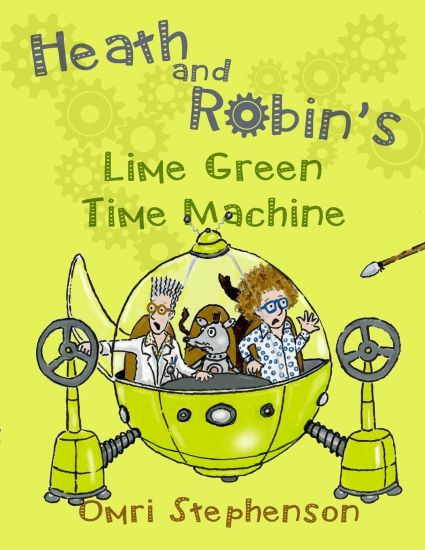
Heath and Robin have created something that not even their Mum knows about - a time machine The trouble is, having visited the distant past, they accidentally bring an uninvited guest back to their own time - and it's not even house trained. Will Heath and Robin keep time travelling, or create an invention that everyone can enjoy?