Kirjojen hintavertailu. Mukana 12 083 983 kirjaa ja 12 kauppaa.

Kirjahaku

Etsi kirjoja tekijän nimen, kirjan nimen tai ISBN:n perusteella.

1000 tulosta hakusanalla Seth Lerer

A Long Way from Disney

A Long Way from Disney

Seth Jacob Harwood

Porter Circle Books
2012
pokkari
These stories introduce Adam Berkman, a young man growing up in a world far removed from the depictions of American families he sees on television and in the movies. Like Boston to Orlando, Adam finds that his life is indeed a long way from Disney.Tender, haunting and astutely observed, this novel-in-stories follows Adam Berkman as he comes of age in racially charged 1980s Boston while his parents marriage crumbles. As he grows up, he finds himself facing the same challenges in his own relationships.
Clarkesworld Issue 90

Clarkesworld Issue 90

Seth Dickinson; Thoraiya Dyer; Juliette Wade

Clarkesworld Magazine
2014
nidottu
Clarkesworld is a Hugo Award-winning science fiction and fantasy magazine. Each month we bring you a mix of fiction (new and classic works), articles, interviews and art.Our March 2014 issue contains: Original Fiction by Seth Dickinson ("Morrigan in the Sunglare"), Thoraiya Dyer ("Human Strandings and the Role of the Xenobiologist") and Juliette Wade ("Suteta Mono de wa Nai").Classic stories by Mary Rosenblum ("The Egg Man") and Ursula K. Le Guin ("Mountain Ways").Non-fiction by Mark Cole ("A Sympathy of Light and Shadow: Science Fiction, Gothic Horror and How They Met"), an interview with James Cambias, an Another Word column by Jason Heller, and an editorial by Neil Clarke.
Writing Technology in Meiji Japan

Writing Technology in Meiji Japan

Seth Jacobowitz

Harvard University, Asia Center
2016
sidottu
Writing Technology in Meiji Japan boldly rethinks the origins of modern Japanese language, literature, and visual culture from the perspective of media history. Drawing upon methodological insights by Friedrich Kittler and extensive archival research, Seth Jacobowitz investigates a range of epistemic transformations in the Meiji era (1868–1912), from the rise of communication networks such as telegraph and post to debates over national language and script reform. He documents the changing discursive practices and conceptual constellations that reshaped the verbal, visual, and literary regimes from the Tokugawa era. These changes culminate in the discovery of a new vernacular literary style from the shorthand transcriptions of theatrical storytelling (rakugo) that was subsequently championed by major writers such as Masaoka Shiki and Natsume Soseki as the basis for a new mode of transparently objective, “transcriptive” realism. The birth of modern Japanese literature is thus located not only in shorthand alone, but within the emergent, multimedia channels that were arriving from the West. This book represents the first systematic study of the ways in which media and inscriptive technologies available in Japan at its threshold of modernization in the late nineteenth to early twentieth century shaped and brought into being modern Japanese literature.
Writing Technology in Meiji Japan

Writing Technology in Meiji Japan

Seth Jacobowitz

Harvard University, Asia Center
2020
nidottu
Writing Technology in Meiji Japan boldly rethinks the origins of modern Japanese language, literature, and visual culture from the perspective of media history. Drawing upon methodological insights by Friedrich Kittler and extensive archival research, Seth Jacobowitz investigates a range of epistemic transformations in the Meiji era (1868–1912), from the rise of communication networks such as telegraph and post to debates over national language and script reform. He documents the changing discursive practices and conceptual constellations that reshaped the verbal, visual, and literary regimes from the Tokugawa era. These changes culminate in the discovery of a new vernacular literary style from the shorthand transcriptions of theatrical storytelling (rakugo) that was subsequently championed by major writers such as Masaoka Shiki and Natsume Soseki as the basis for a new mode of transparently objective, “transcriptive” realism. The birth of modern Japanese literature is thus located not only in shorthand alone, but within the emergent, multimedia channels that were arriving from the West. This book represents the first systematic study of the ways in which media and inscriptive technologies available in Japan at its threshold of modernization in the late nineteenth to early twentieth century shaped and brought into being modern Japanese literature.
Permission Marketing

Permission Marketing

Seth Godin

Simon Schuster Ltd
1999
sidottu
The founder of Yoyodyne explains how marketing specialists can shape messages to promote a willing acceptance by consumers and offers advice on how to enhance marketing effectiveness by building long-term relationships with customers, creating trust, building brand awareness, and more. 40,000 first printing. Tour.
The Silver Lining

The Silver Lining

Seth R. Reice

Princeton University Press
2003
pokkari
Floods, fires, volcanic eruptions, earthquakes, hurricanes--we are quick to call them "natural disasters." But are they? Did the great fires that swept Yellowstone in 1988 devastate the park, or did they just ravage our image of the park as a fixed, unchanging national treasure? This lucid, lively book reveals the shortsightedness behind conceiving of such events as disastrous to nature. Indeed, Seth Reice contends, such thinking has led to policies that have done the environment more harm than good--the U.S. Forest Service's campaign against natural forest fires and the Army Corps of Engineers' flood prevention program are examples. He points out ways in which we can better address the wide range of environmental problems humanity faces at the dawn of the new millennium. Reice argues, in terms refreshingly nontechnical yet scientifically sound, that the traditional, equilibrium paradigm--according to which "stability" produces healthier ecosystems than does sudden, sweeping change--is fundamentally flawed. He describes a radically different model of how nature operates, one that many ecologists and population biologists have come to understand in recent years: a concept founded on the premise that disturbances help create and maintain the biodiversity that benefits both the ecosystem and ourselves. Reice demonstrates that ecosystems need disturbances to accomplish indispensable tasks such as the production of clean air and water. He recommends changes in environmental management to incorporate the essential role of natural disturbances. This book shows that every tornado's funnel cloud, every forest fire's billowing cloud of smoke, has tremendous benefits for the ecosystem it impacts. As anyone concerned with man's impact on the environment will appreciate, this is the cloud's real silver lining.
Imperialism and Jewish Society

Imperialism and Jewish Society

Seth Schwartz

Princeton University Press
2004
pokkari
This provocative new history of Palestinian Jewish society in antiquity marks the first comprehensive effort to gauge the effects of imperial domination on this people. Probing more than eight centuries of Persian, Greek, and Roman rule, Seth Schwartz reaches some startling conclusions--foremost among them that the Christianization of the Roman Empire generated the most fundamental features of medieval and modern Jewish life. Schwartz begins by arguing that the distinctiveness of Judaism in the Persian, Hellenistic, and early Roman periods was the product of generally prevailing imperial tolerance. From around 70 C.E. to the mid-fourth century, with failed revolts and the alluring cultural norms of the High Roman Empire, Judaism all but disintegrated. However, late in the Roman Empire, the Christianized state played a decisive role in "re-Judaizing" the Jews. The state gradually excluded them from society while supporting their leaders and recognizing their local communities. It was thus in Late Antiquity that the synagogue-centered community became prevalent among the Jews, that there re-emerged a distinctively Jewish art and literature--laying the foundations for Judaism as we know it today. Through masterful scholarship set in rich detail, this book challenges traditional views rooted in romantic notions about Jewish fortitude. Integrating material relics and literature while setting the Jews in their eastern Mediterranean context, it addresses the complex and varied consequences of imperialism on this vast period of Jewish history more ambitiously than ever before. Imperialism in Jewish Society will be widely read and much debated.
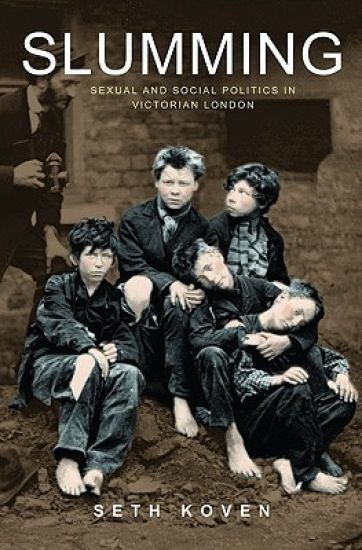
Slumming

Slumming

Seth Koven

Princeton University Press
2006
pokkari
In the 1880s, fashionable Londoners left their elegant homes and clubs in Mayfair and Belgravia and crowded into omnibuses bound for midnight tours of the slums of East London. A new word burst into popular usage to describe these descents into the precincts of poverty to see how the poor lived: slumming. In this captivating book, Seth Koven paints a vivid portrait of the practitioners of slumming and their world: who they were, why they went, what they claimed to have found, how it changed them, and how slumming, in turn, powerfully shaped both Victorian and twentieth-century understandings of poverty and social welfare, gender relations, and sexuality. The slums of late-Victorian London became synonymous with all that was wrong with industrial capitalist society. But for philanthropic men and women eager to free themselves from the starched conventions of bourgeois respectability and domesticity, slums were also places of personal liberation and experimentation. Slumming allowed them to act on their irresistible "attraction of repulsion" for the poor and permitted them, with society's approval, to get dirty and express their own "dirty" desires for intimacy with slum dwellers and, sometimes, with one another. Slumming elucidates the histories of a wide range of preoccupations about poverty and urban life, altruism and sexuality that remain central in Anglo-American culture, including the ethics of undercover investigative reporting, the connections between cross-class sympathy and same-sex desire, and the intermingling of the wish to rescue the poor with the impulse to eroticize and sexually exploit them. By revealing the extent to which politics and erotics, social and sexual categories overflowed their boundaries and transformed one another, Koven recaptures the ethical dilemmas that men and women confronted--and continue to confront--in trying to "love thy neighbor as thyself."
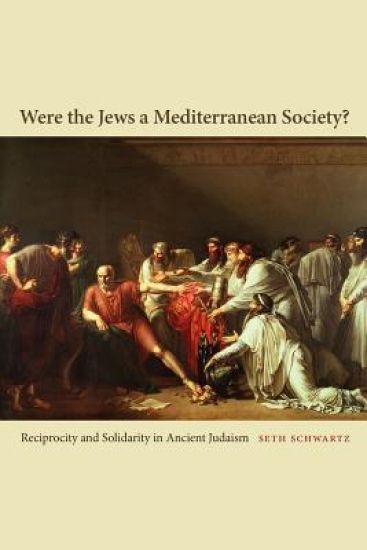
Were the Jews a Mediterranean Society?

Were the Jews a Mediterranean Society?

Seth Schwartz

Princeton University Press
2012
pokkari
How well integrated were Jews in the Mediterranean society controlled by ancient Rome? The Torah's laws seem to constitute a rejection of the reciprocity-based social dependency and emphasis on honor that were customary in the ancient Mediterranean world. But were Jews really a people apart, and outside of this broadly shared culture? Were the Jews a Mediterranean Society? argues that Jewish social relations in antiquity were animated by a core tension between biblical solidarity and exchange-based social values such as patronage, vassalage, formal friendship, and debt slavery. Seth Schwartz's examinations of the Wisdom of Ben Sira, the writings of Josephus, and the Palestinian Talmud reveal that Jews were more deeply implicated in Roman and Mediterranean bonds of reciprocity and honor than is commonly assumed. Schwartz demonstrates how Ben Sira juxtaposes exhortations to biblical piety with hard-headed and seemingly contradictory advice about coping with the dangers of social relations with non-Jews; how Josephus describes Jews as essentially countercultural; yet how the Talmudic rabbis assume Jews have completely internalized Roman norms at the same time as the rabbis seek to arouse resistance to those norms, even if it is only symbolic. Were the Jews a Mediterranean Society? is the first comprehensive exploration of Jewish social integration in the Roman world, one that poses challenging new questions about the very nature of Mediterranean culture.
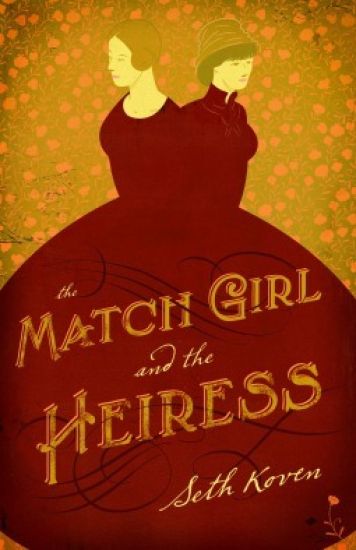
The Match Girl and the Heiress

The Match Girl and the Heiress

Seth Koven

Princeton University Press
2015
sidottu
Nellie Dowell was a match factory girl in Victorian London who spent her early years consigned to orphanages and hospitals. Muriel Lester, the daughter of a wealthy shipbuilder, longed to be free of the burden of money and possessions. Together, these unlikely soulmates sought to remake the world according to their own utopian vision of Christ's teachings. The Match Girl and the Heiress paints an unforgettable portrait of their late-nineteenth-century girlhoods of wealth and want, and their daring twentieth-century experiments in ethical living in a world torn apart by war, imperialism, and industrial capitalism. In this captivating book, Seth Koven chronicles how each traveled the globe--Nellie as a spinster proletarian laborer, Muriel as a well-heeled tourist and revered Christian peacemaker, anticolonial activist, and humanitarian. Koven vividly describes how their lives crossed in the slums of East London, where they inaugurated a grassroots revolution that took the Sermon on the Mount as a guide to achieving economic and social justice for the dispossessed. Koven shows how they devoted themselves to Kingsley Hall--Gandhi's London home in 1931 and Britain's first "people's house" founded on the Christian principles of social sharing, pacifism, and reconciliation--and sheds light on the intimacies and inequalities of their loving yet complicated relationship. The Match Girl and the Heiress probes the inner lives of these two extraordinary women against the panoramic backdrop of shop-floor labor politics, global capitalism, counterculture spirituality, and pacifist feminism to expose the wounds of poverty and neglect that Christian love could never heal.
The Match Girl and the Heiress

The Match Girl and the Heiress

Seth Koven

Princeton University Press
2016
pokkari
Nellie Dowell was a match factory girl in Victorian London who spent her early years consigned to orphanages and hospitals. Muriel Lester, the daughter of a wealthy shipbuilder, longed to be free of the burden of money and possessions. Together, these unlikely soulmates sought to remake the world according to their own utopian vision of Christ's teachings. The Match Girl and the Heiress paints an unforgettable portrait of their late-nineteenth-century girlhoods of wealth and want, and their daring twentieth-century experiments in ethical living in a world torn apart by war, imperialism, and industrial capitalism. In this captivating book, Seth Koven chronicles how each traveled the globe--Nellie as a spinster proletarian laborer, Muriel as a well-heeled tourist and revered Christian peacemaker, anticolonial activist, and humanitarian. Koven vividly describes how their lives crossed in the slums of East London, where they inaugurated a grassroots revolution that took the Sermon on the Mount as a guide to achieving economic and social justice for the dispossessed. Koven shows how they devoted themselves to Kingsley Hall--Gandhi's London home in 1931 and Britain's first "people's house" founded on the Christian principles of social sharing, pacifism, and reconciliation--and sheds light on the intimacies and inequalities of their loving yet complicated relationship. The Match Girl and the Heiress probes the inner lives of these two extraordinary women against the panoramic backdrop of shop-floor labor politics, global capitalism, counterculture spirituality, and pacifist feminism to expose the wounds of poverty and neglect that Christian love could never heal.