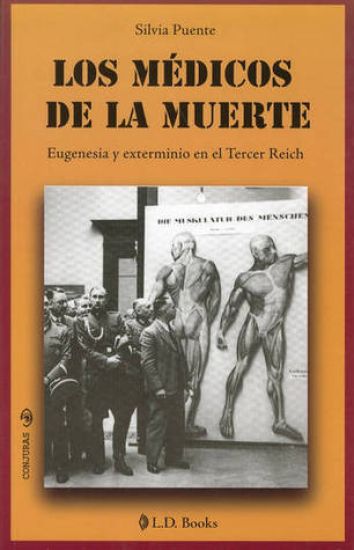
En 1945, las tropas aliadas redujeron a cenizas el sue o del Tercer Reich. Ingleses, estadounidenses y sovi ticos, sobre todo, se encontraron con el horror. El mundo tom conciencia no s lo de las masivas matanzas y torturas, sino de las aberraciones que cometieron incontables m dicos en aras de una supuesta ciencia, que tornaba animales de laboratorio a seres humanos considerados inferiores. La autora pasa revista a hechos y protagonistas de sucesos que no pueden dejarse en el olvido.
certo. Nunca estaremos s s. Seremos pelo menos sempre dois: o leitor, com a sua imagina o e a recria o que faz dos poemas que l , e o escritor. Por isso, traz as asas, que eu levo algumas palavras. Encontro no s tio do costume...
Les recettes propos es dans ce livre sont des exemples de repas pour accompagner la m thode Metabolic PROFIL(R), une m thode innovante de prise en charge du surpoids et de l'ob sit chez l'adulte. La m thode consiste en un programme nutritionnel individualis et un accompagnement par un professionnel de sant . Contrairement d'autres r gimes, ce livre de recettes ne constitue pas la m thode de r duction de poids de metabolic PROFIL(R), il a t con u pour soutenir les patients bien appliquer leur plan de nutrition.
Neun Kurzgeschichten zum Mitfiebern, Gruseln und wohlig Erschauern DAS BILD - eine alte Fotografie scheint ein Eigenleben zu entwickeln FANGSCHUSS - ... was du nicht willst, das man dir tu ... NACHTWESEN - ein unheimliches Gesch pf treibt nachts sein Unwesen ACH WIE GUT ... - zwei Freunde erleben auf einer Bergh tte das Grauen ZEICHEN - ... aus dem Jenseits? PANISCH - Sind Tr ume wirklich nur Sch ume? IM HIER UND JETZT - Manchmal sollte man mit seinen W nschen vorsichtig sein. VERH NGNIS - Selbst die allt glichsten Dinge k nnen sich als fatal erweisen. RABENV GEL - ... haben ein gutes Ged chtnis.
Cinepoiesis, or cinema of poetry, strikes us as a strange combination, a phrase we initially read as an oxymoron. Poetry is often associated with the abstract and the evocative, while cinema suggests the concrete and the visible. Yet, various visual media use strong and often contradictory images, whose symbolic force and visual impact stimulate the public’s attention. Abstract and emblematic images surround us, and the poetic nature of these images lies in the way they speak beyond their apparent limits and stimulate connections on a subjective level. A prosaic world like the contemporary one, though, no longer seems to hold a place for poetry. We are inundated by the need to tell and to be told, the need to build our lives through narratives. But it is precisely here, in this contemporary landscape, that the cinema of poetry attempts to establish a space for itself, exchanging the productive and industrial apparatus for the poetic stimulus of a sensory experience. A Grammar of Cinepoiesis is a theoretical and practical guide to the cinema of poetry, to its tools and forms. It examines how the language of a “cinema of poetry” works both in its theoretical foundations and in its modes of representation, and how it takes shape in the exemplary practice of Italian authors such as Pier Paolo Pasolini, Michelangelo Antonioni, Federico Fellini, and the more recent Franco Piavoli and Matteo Garrone.
Cinepoiesis, or cinema of poetry, strikes us as a strange combination, a phrase we initially read as an oxymoron. Poetry is often associated with the abstract and the evocative, while cinema suggests the concrete and the visible. Yet, various visual media use strong and often contradictory images, whose symbolic force and visual impact stimulate the public’s attention. Abstract and emblematic images surround us, and the poetic nature of these images lies in the way they speak beyond their apparent limits and stimulate connections on a subjective level. A prosaic world like the contemporary one, though, no longer seems to hold a place for poetry. We are inundated by the need to tell and to be told, the need to build our lives through narratives. But it is precisely here, in this contemporary landscape, that the cinema of poetry attempts to establish a space for itself, exchanging the productive and industrial apparatus for the poetic stimulus of a sensory experience. A Grammar of Cinepoiesis is a theoretical and practical guide to the cinema of poetry, to its tools and forms. It examines how the language of a “cinema of poetry” works both in its theoretical foundations and in its modes of representation, and how it takes shape in the exemplary practice of Italian authors such as Pier Paolo Pasolini, Michelangelo Antonioni, Federico Fellini, and the more recent Franco Piavoli and Matteo Garrone.
The Influence of the European Culture on Hemingway’s Fiction is an essential companion to all those who study Hemingway. The study deals with how Hemingway depicts Europe in his fiction, not necessarily from a biographical point of view, as most critical books have dealt with, but how he assimilates to the culture of Europe, how he portrays the different aspects of that culture in food, music, customs, architecture, and literature. This study views Hemingway’s stories and novels through a new lens by applying new critical developments, emergent approaches, and transnational studies to aid in a fuller understanding of Hemingway. Europe for Hemingway was a land of discovery, and one cannot study his major novels without analyzing this passion for these lands. The Europe that Hemingway experienced and recorded in his writing serves as an important element in his fiction, becoming “the other,” an alien culture that was sufficiently different from his American roots. Yet this otherness serves first to fulfill his psychological needs to learn and become one of the initiated through suffering—whether it involves himself or the loss of other people around him.
F r die Studentin Jennifer Lichtenfels steht fest: Ihr neuer Nachbar Damian Scott, ein Musiker, ist ein Mensch, dem sie aus dem Weg gehen wird. Unh flich, arrogant und eiskalt - so lernt sie ihn kennen, und so verh lt er sich auch weiterhin - allen gegen ber. Als Saskia, Jennifers m nnerverschlingende Schwester, ihren aktuellen Liebhaber Leon Weiler, gegen Scott auswechselt, l sst sich die Distanz zu ihm nicht mehr aufrechterhalten. Es kommt zu unerfreulichen Begegnungen, die Jennifer, die sich inzwischen mit Leon angefreundet hat, in ihrer Meinung ber den Musiker nur best rken. Eines Nachts erreicht die Aversion zwischen Jennifer und Scott ihren H hepunkt. Manchmal frech, manchmal heiter, manchmal traurig - so pr sentiert sich die Liebesgeschichte um Jennifer, Leon und Damian. Ein Buch f r Junge und Junggebliebene. F r alle, die ein Herz f r starke Gef hle haben.
This moving and impassioned picture book about the iconic Queen of Tejano music, Selena Quintanilla, that will embolden young readers to find their passion and make the impossible, possible Selena Quintanilla's music career began at the age of nine when she started singing in her family's band. She went from using a hairbrush as a microphone to traveling from town to town to play gigs. But Selena faced a challenge: People said that she would never make it in Tejano music, which was dominated by male performers. Selena was determined to prove them wrong. Born and raised in Texas, Selena didn't know how to speak Spanish, but with the help of her dad, she learned to sing it. With songs written and composed by her older brother and the fun dance steps Selena created, her band, Selena Y Los Dinos, rose to stardom A true trailblazer, her success in Tejano music and her crossover into mainstream American music opened the door for other Latinx entertainers, and she became an inspiration for Latina girls everywhere.
La vida de Selena sirve de inspiraci n para las chicas latinas. Ella simboliza el poder de la familia, la determinaci n y el orgullo de las ra ces. Su xito anima a todas las chicas a so ar y les recuerda que luchen por alcanzar sus metas, sin importar qui nes son o cu les son esas metas. La carrera musical de Selena Quintanilla empez a los nueve a os, cuando comenz a cantar en la banda familiar. Pas de usar un cepillo para el pelo como micr fono a tocar en conciertos de ciudad en ciudad. Pero se enfrent a un desaf o: dec an que nunca tendr a xito en la m sica tejana, dominada por artistas masculinos. Selena estaba decidida a demostrar que no ten an raz n. Selena naci y se cri en Texas. No creci hablando espa ol pero aprendi a cantar en ese idioma con ayuda de su padre. La banda Selena y Los Dinos salt al estrellato gracias a las canciones escritas y compuestas por su hermano mayor y a las divertidas coreograf as que ella creaba. Selena fue una verdadera pionera: su xito en la m sica tejana y su mezcla con la m sica estadounidense popular brind oportunidades a otros artistas latinos, y la convirti en inspiraci n para las chicas latinas de todo el mundo. Este intenso y conmovedor libro ilustrado sobre Selena Quintanilla, la ic nica reina de la m sica tejana, va a inspirar a los lectores j venes a encontrar lo que les apasiona y hacer posible lo imposible.
Estos versos fueron escritos pensando en todas las mujeres que han vivido el amor.Mujeres fr giles, mujeres fuertes. Las que aman sin medida entreg ndolo todo y tambi n las que esperan que llegue el amor con la seguridad de que llegar pronto.Mujeres mal amadas, mujeres bien amadas: las que sufren y las que gozan con el amor.Mujeres ingenuas y so adoras y otras muy seguras de s mismas, que consiguen lo que desean.Para todas ustedes: De Amores y Desamores.Silvia Otero Linares
Heart Cry, Mothering Through Trauma and Grief is a journey into the unexpected crises that hit Silvia Saldana suddenly and brutally. Follow her as she leads you through a bizarre farm accident that took her youngest child down. Learn how she coped as she watched one child dying physically and her other two emotionally. This is a powerful "can't put the book down" true story of Silvia's struggle with life and death staring her in the face as she waits long unbearable days to see some hope for her injured child. It's filled with uneasy parenting questions she had on dealing with her other two children. Feel the tension buildup as she describes her two abusive marital experiences. With a load of fear and isolation gripping her spirit, Silvia shows us solutions and direction that helped to calm her in one of the most horrendous storms of her life.Through Silvia's inspiring story you will discover...-- How to tackle the dark trauma that may settle over your own family.-- What to do with those "Why?" questions all of us ask during a crises.-- How to have a spiritual journey that will last a lifetime.-- Where to find peace in the mist of chaos.-- What to do with the fear of losing a child.-- How to deal with isolation in traumatic situations.-- What to do in domestic abuse cases.-- How to learn the solution in dealing with life's twists and turns; small or great.Included in this new revised edition of Heart Cry is an epilogue where Silvia takes you into the current status of her adult children. She will describe in detail another present curve ball that life has thrown into her family's field.No matter what stage of life you're in, or how old you are, dealing with life's issues is a daily step by step process. Silvia shares a teaching she recently heard that God will be with you through the storm or He will calm the storm around you, either way we can be assured that we are never battling the tempests alone.
Cuando Joan se da cuenta, en una fr a noche de marzo, de que el maltrecho cuerpo ensangrentado que tiene ante sus narices no es otro que el suyo, decide averiguar, cueste lo que cueste, qu le ha llevado a terminar sus breves y aburridos d as vestido como un imb cil, tirado en el suelo de una nave industrial en desuso, rodeado de extra os s mbolos y con la nica compa a de un ser poco dado a encontrarse en medio de una ciudad. La intensa luz al final del t nel vel los ltimos d as de la pel cula de su vida y no recuerda nada que le pueda dar siquiera una pista sobre la causa de su muerte. Si quiere respuestas tendr que pegarse como una lapa a Perales, el poli que lleva su caso y a trav s del cual podr , entre cruas n y cruas n, dar una contestaci n a sus preguntas y descansar tranquilo el resto de la eternidad.
L'ampia opera di Silvia Iannello, dal titolo "Il mondo di Dostoevskij - La sua tormentata esistenza, le sue opere immortali, i suoi eroi disperati", che consta di due volumi, costituisce un tentativo unico e molto impegnativo di raccogliere praticamente "tutto" su Dostoevskij. Essa comprende la biografia accurata e dettagliata dell'autore russo, gli aspetti filosofici e letterari dei suoi testi, alcuni importanti problemi e temi a lui cari (gioco d'azzardo, alcolismo, parricidio, suicidio, nichilismo, caritas e pietas) e una sintesi dei suoi romanzi, grandi e piccoli, lunghi e brevi (naturalmente ai "grandi capolavori" stato dato pi spazio). Nel libro viene dato il giusto risalto alla sua straordinaria capacit di psicologo delle profondit del mistero umano. Egli , infatti, capace di scavare dentro il male dell'animo umano, e di raccontare la difficolt dell'uomo di essere libero e di dover scegliere (secondo Dostoevskij la libert per l'uomo un peso tremendo da sopportare). Nonostante tutto, Dostoevskij non mai pessimista e conserva la sua fede nell'essere umano, la cui esistenza una lotta continua, un doloroso alternarsi tra cadute e resurrezioni, e la cui vita talora cos compromessa da precipitare nell'abisso, che pu sembrare senza possibilit di risalita. Ma anche allora - come Al sa (il pi piccolo dei Karamazov, buono e compassionevole) - il cuore intravede una strada di cristallo, e all'orizzonte splende il sole. Per qualsiasi uomo - in qualsiasi momento o situazione, anche la pi disperata - una salvezza sempre possibile. Di ogni romanzo viene fornita un'ampia introduzione che ne illustra le caratteristiche generali. Quindi, viene riportata una selezione antologica, costituita da numerosissime citazioni dei brani pi salienti e significativi di ciascuna opera, legati tra loro da riassunti critici. In tal modo il lettore pu godere di una sintesi dei testi realizzata attraverso le parole dello stesso Dostoevskij. Alla fine di ogni opera vengono presentati sia un commento critico dell'autrice, sia i giudizi e le valutazioni dei maggiori critici del grande scrittore russo. Quanto ai racconti brevi, meno conosciuti, essi vengono esposti in forma di brevi riassunti che, tuttavia, tentano di conservare il "senso" e l'atmosfera che l'autore ha voluto esprimere. Alla fine della parte generale, dedicata alla biografia e agli aspetti filosofici e letterari dei vari romanzi, e prima di iniziare l'analisi delle singole opere, sono inserite 34 pagine di foto e immagini, per un totale di 132 figure, per rendere familiari gli ambienti, i visi e le espressioni sia di Dostoevskij che delle sue donne (la fidanzata, la moglie e l'amante). Spazio stato dato anche agli intellettuali del suo tempo e agli scrittori o artisti da lui citati (presentati nell'ordine con cui compaiono nel testo), allo scopo di suggerire atmosfere, di contestualizzare l'autore e la sua opera nel suo tempo e di accontentare la curiosit dei lettori che spesso desiderano conoscere aspetto e lineamenti dei grandi autori di cui amano le parole. D'altra parte, i volti hanno un loro linguaggio nascosto che parla di esistenze e di sogni. Ho fatto pertanto un'accurata ricerca, elaborando un vasto materiale pittorico e fotografico non sempre ben conosciuto. Credo che due motivi particolari rendano questo testo interessante e ne consiglino la lettura. In primo luogo, esso presenta l'opera integrale di Dostoevskij in una forma semplificata, adatta ai ragazzi che oggi ignorano questo grandissimo autore, che deve essere assolutamente letto e conosciuto. In secondo luogo, esso costituisce una sorta di Reader's Digest "nobile e rigoroso" (perch fa largo uso delle parole stesse di Dostoevskij), che risponde alle esigenze di accuratezza degli studenti, dei docenti e degli studiosi di Letteratura russa o di Materie slave.
L'ampia opera di Silvia Iannello, dal titolo "Il mondo di Dostoevskij - La sua tormentata esistenza, le sue opere immortali, i suoi eroi disperati", che consta di due volumi, costituisce un tentativo unico e molto impegnativo di raccogliere praticamente "tutto" su Dostoevskij. Essa comprende la biografia accurata e dettagliata dell'autore russo, gli aspetti filosofici e letterari dei suoi testi, alcuni importanti problemi e temi a lui cari (gioco d'azzardo, alcolismo, parricidio, suicidio, nichilismo, caritas e pietas) e una sintesi dei suoi romanzi, grandi e piccoli, lunghi e brevi (naturalmente ai "grandi capolavori" stato dato pi spazio). Nel libro viene dato il giusto risalto alla sua straordinaria capacit di psicologo delle profondit del mistero umano. Egli , infatti, capace di scavare dentro il male dell'animo umano, e di raccontare la difficolt dell'uomo di essere libero e di dover scegliere (secondo Dostoevskij la libert per l'uomo un peso tremendo da sopportare). Nonostante tutto, Dostoevskij non mai pessimista e conserva la sua fede nell'essere umano, la cui esistenza una lotta continua, un doloroso alternarsi tra cadute e resurrezioni, e la cui vita talora cos compromessa da precipitare nell'abisso, che pu sembrare senza possibilit di risalita. Ma anche allora - come Al sa (il pi piccolo dei Karamazov, buono e compassionevole) - il cuore intravede una strada di cristallo, e all'orizzonte splende il sole. Per qualsiasi uomo - in qualsiasi momento o situazione, anche la pi disperata - una salvezza sempre possibile. Di ogni romanzo viene fornita un'ampia introduzione che ne illustra le caratteristiche generali. Quindi, viene riportata una selezione antologica, costituita da numerosissime citazioni dei brani pi salienti e significativi di ciascuna opera, legati tra loro da riassunti critici. In tal modo il lettore pu godere di una sintesi dei testi realizzata attraverso le parole dello stesso Dostoevskij. Alla fine di ogni opera vengono presentati sia un commento critico dell'autrice, sia i giudizi e le valutazioni dei maggiori critici del grande scrittore russo. Quanto ai racconti brevi, meno conosciuti, essi vengono esposti in forma di brevi riassunti che, tuttavia, tentano di conservare il "senso" e l'atmosfera che l'autore ha voluto esprimere. Alla fine della parte generale, dedicata alla biografia e agli aspetti filosofici e letterari dei vari romanzi, e prima di iniziare l'analisi delle singole opere, sono inserite 34 pagine di foto e immagini, per un totale di 132 figure, per rendere familiari gli ambienti, i visi e le espressioni sia di Dostoevskij che delle sue donne (la fidanzata, la moglie e l'amante). Spazio stato dato anche agli intellettuali del suo tempo e agli scrittori o artisti da lui citati (presentati nell'ordine con cui compaiono nel testo), allo scopo di suggerire atmosfere, di contestualizzare l'autore e la sua opera nel suo tempo e di accontentare la curiosit dei lettori che spesso desiderano conoscere aspetto e lineamenti dei grandi autori di cui amano le parole. D'altra parte, i volti hanno un loro linguaggio nascosto che parla di esistenze e di sogni. Ho fatto pertanto un'accurata ricerca, elaborando un vasto materiale pittorico e fotografico non sempre ben conosciuto. Credo che due motivi particolari rendano questo testo interessante e ne consiglino la lettura. In primo luogo, esso presenta l'opera integrale di Dostoevskij in una forma semplificata, adatta ai ragazzi che oggi ignorano questo grandissimo autore, che deve essere assolutamente letto e conosciuto. In secondo luogo, esso costituisce una sorta di Reader's Digest "nobile e rigoroso" (perch fa largo uso delle parole stesse di Dostoevskij), che risponde alle esigenze di accuratezza degli studenti, dei docenti e degli studiosi di Letteratura russa o di Materie slave.