Kirjojen hintavertailu. Mukana 12 016 292 kirjaa ja 12 kauppaa.

Kirjahaku

Etsi kirjoja tekijän nimen, kirjan nimen tai ISBN:n perusteella.

1000 tulosta hakusanalla Stevan

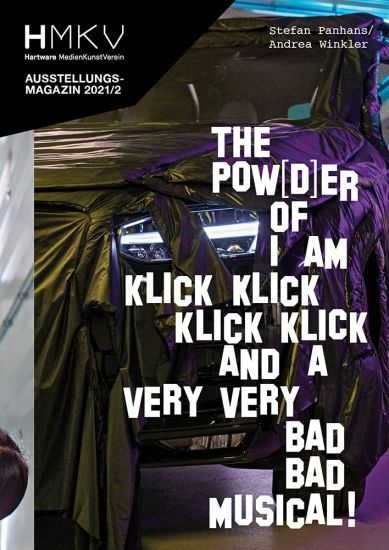
Stefan Panhans / Andrea Winkler: The Pow(d)er of I Am Klick Klick Klick Klick and a very very bad bad musical!
The title of the catalogue of works by the artist duo Stefan Panhans (Germany) and Andrea Winkler (Switzerland) is a nod to the rhetoric used by evangelical megachurches in the United States that preach a market-oriented, neoliberal ideology of individual self-optimisation under the guise of Christian pastoral care. The artists’ works touch on electric SUVs, communication with forms of artificial intelligence, racism in everyday life, celebrity cults, stereotypes, computer games, the “uncanny valley,” and other post-digital feedback loops between humans and virtual worlds, but also on the precarious condition of cultural sector workers. Panhans and Winkler are masters at using a broad spectrum of artistic genres and media, such as novels, texts, performances, installations, miniseries, musicals, sculptures, objects, films, videos, and dance. Their video installations can be subsumed under what is known as “expanded cinema”: the displayed objects, which also appear in the videos, are presented in a way that allows the films to expand into the surrounding space, drawing viewers into the artwork. Text in English and German.

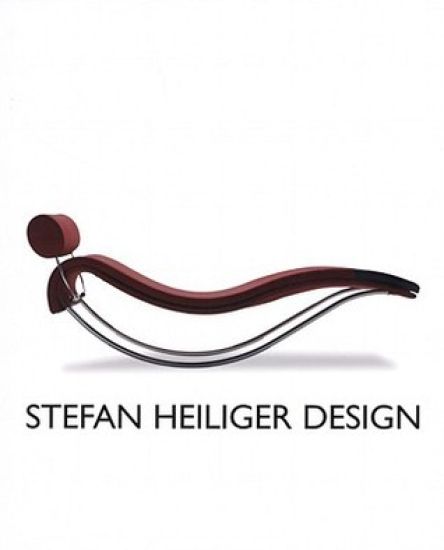
Stefan Heiliger Design

Stefan Heiliger Design

Volker Fishcher

Edition Axel Menges
2006
sidottu
Text in German and English. Stefan Heiliger is one of the most prominent product designers in Europe, known for his -- often mechanically assisted -- recliners, easy chairs and couches. He has designed strategic ergonomic, social and comfort transitions between 'sitting-lying' and 'lying-sitting' more than almost any other designer. In his work diverse influences come together: first, familial heritage, his father Bernhard Heiliger's sculptural sensibilities; second, experiences gained during his studies at the famous Ulm School of Design, and during his time with Wilhelm Wagenfeld; and, last but not least, professional experience as a designer for Daimler-Benz in Stuttgart. The formal vocabularies that Heiliger uses in his recliners, easy chairs and couches have an inner relationship with his sports-car and coupé designs. The saucy radii, parables, hyperbolas and circular segments, the rhomboids, tetrahedrons and bevelled ovals witness a trust in the emotional, even erotic power of curvatures that may stem from automobile design. Also, the metaphors of frozen speed, which invariably characterise Heiliger's functional chairs, justify the term 'boldismo'. It seems evident that Heiliger is as much an emotional functionalist as he is a sculpturally thinking pragmatist. Heiliger, who has also passed down his talent and experience to students as a design professor for almost three decades, has compiled a decidedly contemporary vocabulary with new forms of spectacular body shells for the subject area 'comfort seating'. Today, he provides interior design products for the biomorphic 'blob architecture' in a congenial way without any fixation on axial orientations or rectangularities. The present publication document and interprets Stefan Heiliger's uvre and places it into a historical design context.
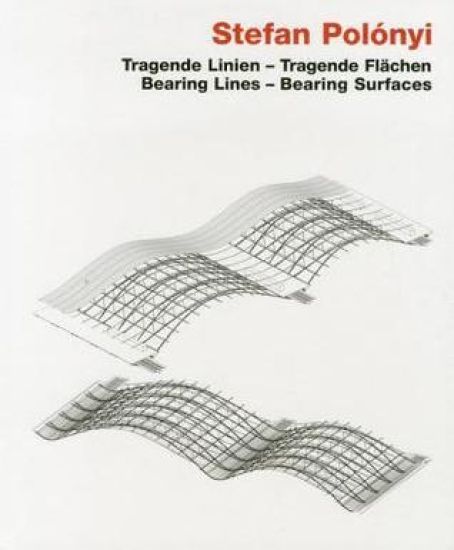
Stefan Polónyi

Stefan Polónyi

Ursula Kleefisch-Jobst; Peter Köddermann; Katrin Lichtenstein; Wolfgang Sonne

Edition Axel Menges
2012
sidottu
Text in English & German. Since the 1950s Stefan Polónyi has realised a large number of buildings of all kinds from his Cologne office, working with famous architects all over the world. In his view, load-bearing structure, form and function have to form an indissoluble entity, and thus create an aesthetic appearance: beauty feeds on structural consistency. Very few civil engineers have made claims of this kind. Architects who have worked with Polónyi see this ambitious claim as something that has enriched their own design process. First of all Polónyi, working with Josef Lehmbrock and Fritz Schaller, developed bold folded structures and shells for church buildings, and this at a time before statical calculations were not done by computer, but a lot of things still had to be tried out in model form. Polónyi co-operated closely with Oswald Mathias Ungers on the Galleria for the Frankfurter Messe, among other projects. He made the flying roof for Axel Schultes' Kunstmuseum Bonn possible, supported by a row of irregularly placed columns, and also the undulating metal ceiling in the auditorium of Rem Koolhaas' Nederlands Dans Theater and the umbrella-like roofing for the approach tracks in Cologne's main station. Polónyi's bridges, built from the 1990s in the Ruhr District, have become landmarks in the meantime with their red curved tubes as a structural and aesthetic element. Today he creates his bridges as buildings over the river, so-called Living Bridges. Polónyi's wide range of professional experience had a considerable bearing on his teaching at Berlin and Dortmund Technical Universities. Working with architects Harald Deilmann and Josef Paul Kleihues, Polónyi established the "Dortmund Model for the Building Sciences". It provides joint training for architects and civil engineers in a single faculty. The present book is appearing to accompany the exhibition of the same name in the "Dortmunder U". The essays address specific aspects of Polónyi's work. So Karl-Eugen Kurrer and Ulrich Pfammatter look at the development of structural analysis and the resultant distinction drawn between the professional territories of the civil engineer and the architect. Patrik Schumacher, partner in Zaha Hadid's practice, represents a current position in terms of co-operation between the two disciplines. Katrin Lichtenstein's account of the Dortmund Model and Atilla Ötes' view of the current study situation consider the effect on training and teaching. Sonja Hnilica analyses the folding systems and shells in the church projects, and Polónyi presents his bridges, including the designs for the Living Bridges.
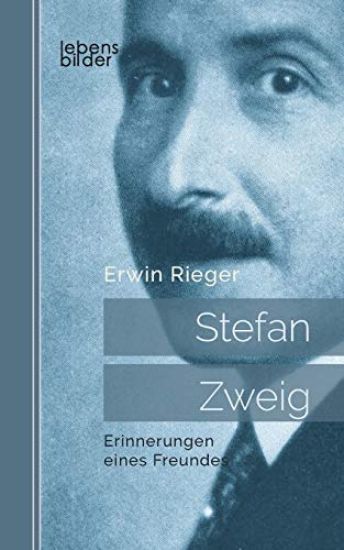
Stefan Zweig

Stefan Zweig

Erwin Rieger

Edition Lebensbilder
2017
pokkari
Die erste Zweig-Biografie kam von seinem Freund: Erwin Rieger lernt den osterreichischen Schriftsteller Stefan Zweig im Jahre 1918 in der Schweiz kennen und arbeitet gemeinsam fur ihn an verschieden Projekten. Vierzehn Jahre vor Zweigs Freitod erzahlt er in dieser Biografie von Zweigs Kindheit, seiner Reiseleidenschaft, seinem Kulturpessimismus und seiner schriftstellerischen Entwicklung. Zweigs Werke wie die "Schachnovelle," "Die Welt von Gestern" oder "Sternstunden der Menschheit" erreichen bis heute ein breites Publikum. Die vorliegende Biografie ist die brillant beobachtete Charakterstudie eines Zeitgenossen und Freundes.