Kirjojen hintavertailu. Mukana 11 244 527 kirjaa ja 12 kauppaa.

Kirjahaku

Etsi kirjoja tekijän nimen, kirjan nimen tai ISBN:n perusteella.

1000 tulosta hakusanalla Stuart Croft

Maria Stuart

Maria Stuart

Open Book Publishers
2020
sidottu
Maria Stuart, described as Schiller's most perfect play, is a finely balanced, inventive account of the last day of the captive Queen of Scotland, caught up in a great contest for the throne of England after the death of Henry VIII and over the question of England's religious confession. Hope for and doubt about Mary's deliverance grow in the first two acts, given to the Scottish and the English queen respectively, reach crisis at the center of the play, where the two queens meet in a famous scene in a castle park, and die away in acts four and five, as the action advances to its inevitable end. The play is at once classical tragedy of great fineness, costume drama of the highest order-a spectacle on the stage-and one of the great moments in the long tradition of classical rhetoric, as Elizabeth's ministers argue for and against execution of a royal prisoner. Flora Kimmich's new translation carefully preserves the spirit of the original: the pathos and passion of Mary in captivity, the high seriousness of Elizabeth's ministers in council, and the robust comedy of that queen's untidy private life. Notes to the text identify the many historical figures who appear in the text, describe the political setting of the action, and draw attention to the structure of the play.Roger Paulin's introduction discusses the many threads of the conflict in Maria Stuart and enriches our understanding of this much-loved, much-produced play. Maria Stuart is the last of a series of five new translations of Schiller's major plays, accompanied by notes to the text and an authoritative introduction.
Mary Stuart

Mary Stuart

Friedrich Schiller

Oberon Books Ltd
2016
nidottu
Two queens. One in power. One in prison. It's all in the execution.Schiller's political tragedy takes us behind the scenes of British history's famous rivalry between Elizabeth I and Mary Queen of Scots. Written in verse and based on historical sources, Schiller's play imagines the queens' lives - one in court, the other in prison - surrounded by staff and servants. Their imagined meeting, before Mary's execution, is passionate and enthralling. Robert Icke's lean version condenses the action, cutting the cast to twelve, whilst retaining the play's symmetrical structure and tense atmosphere. In an exciting twist, the first production had two actors learn the roles of both queens, and their roles were decided at each performance by the toss of a coin. Adding a further duality to the play, this also allowed the first word of the evening to anticipate its ending:'Heads'.
John Stuart Mill and Epistemic Democracy

John Stuart Mill and Epistemic Democracy

Ivan Cerovac

BLOOMSBURY PUBLISHING PLC
2022
sidottu
John Stuart Mill and Epistemic Democracy explores the epistemic, or cognitive, character of democratic institutional practices and the protection of basic liberties in Mill's political thought. Mapping Mill's theory of representative democracy and critically engaging Mill's more controversial issues, Ivan Cerovac identifies the epistemic criteria within these proposals and uses them as a basis for unifying Mill's political thought. The book addresses the epistemic role of wide democratic participation on the one hand and institutional mechanisms used to filter the public will—such as political representation, plural voting proposals, partisanship, division of epistemic and political labor—on the other, and it analyzes how Mill tries to resolve the conflict between political and epistemic values. Characterizing Mill as both a political instrumentalist and an epistemic democrat, Cerovac sets Mill's theory in a broader explanatory framework and compares it with contemporary accounts of epistemic justification. Emphasizing Mill's normative considerations regarding franchise and the exercise of political power over others, this book discusses how to implement the epistemic ideal in real-world politics. It will be a fascinating read for anyone interested in democratic decision-making.
John Stuart Mill and Epistemic Democracy

John Stuart Mill and Epistemic Democracy

Ivan Cerovac

LEXINGTON BOOKS
2024
nidottu
John Stuart Mill and Epistemic Democracy explores the epistemic, or cognitive, character of democratic institutional practices and the protection of basic liberties in Mill's political thought. Mapping Mill's theory of representative democracy and critically engaging Mill's more controversial issues, Ivan Cerovac identifies the epistemic criteria within these proposals and uses them as a basis for unifying Mill's political thought. The book addresses the epistemic role of wide democratic participation on the one hand and institutional mechanisms used to filter the public will—such as political representation, plural voting proposals, partisanship, division of epistemic and political labor—on the other, and it analyzes how Mill tries to resolve the conflict between political and epistemic values. Characterizing Mill as both a political instrumentalist and an epistemic democrat, Cerovac sets Mill's theory in a broader explanatory framework and compares it with contemporary accounts of epistemic justification. Emphasizing Mill's normative considerations regarding franchise and the exercise of political power over others, this book discusses how to implement the epistemic ideal in real-world politics. It will be a fascinating read for anyone interested in democratic decision-making.
John Stuart Mill

John Stuart Mill

Reeves Richard

Atlantic Books
2008
nidottu
A young activist and highly-educated Cambridge Union debater, Mill would become in time the highest-ranked English thinker of the nineteenth century, the author of the landmark essay On Liberty and one of the most passionate reformers and advocates of his revolutionary, opinionated age. As a journalist he fired off a weekly article on Irish land reform as the people of that nation starved, as an MP he introduced the first vote on women's suffrage, fought to preserve free-speech and opposed slavery, and, in his private life, pursued for two decades a love affair with another man's wife. To understand Mill and his contribution, Richard Reeves explores his life and work in tandem. His book is a riveting and authoritative biography of a man raised to promote happiness, whose life was spent in the pursuit of truth and liberty for all.
Brendan Stuart Burns

Brendan Stuart Burns

Ian Massey

LUND HUMPHRIES PUBLISHERS LTD
2025
sidottu
Brendan Stuart Burns (b.1963) is a leading Welsh painter who draws inspiration from the natural world of his native country and beyond. Providing, for the first time, an overview of the artist's career to date, this important publication traces his work's evolution towards full artistic maturity. Addressing key aspects of Burns' oeuvre, such as the materiality of the work and its relationship to the environment, the book discusses the wider philosophical framework which underpins his painting while also considering its historical and contemporary influences. Written in close collaboration with the artist, Ian Massey’s authoritative account of Burns’ impressive career is essential reading for all those interested in contemporary British painting and new visual interpretations of landscape.
The Stuart Court in Exile and the Jacobites

The Stuart Court in Exile and the Jacobites

Eveline Cruickshanks

BLOOMSBURY PUBLISHING PLC
1995
sidottu
In recent years Jacobitism has become a subject of growing interst to historians amid academic controversy over various aspects of the subject. The least-known phase of Jacobitism, although in many ways the most important, is the period 1689 to 1718, when the Stuart court in exile was at Saint-Germain-en-Laye, the residence of the kings of France until Louis XIV built Versailles. This collection of essays illuminates the early development of Jacobitism, placing the movement in a coherent historical context. The volume includes an introduction by Edward Corp on the Stuart court and an essay by Eveline Cruickshanks on the importance of Jacobitism in Britain and its links with the exiled court. Other essays discuss Jacobite ideology and the Jacobite press; the internal workings and external relations of the exiled court; the abortive invasion of England in 1692; and Jacobite exiles - comparable in numbers and influence to the Hugeunots in England - in France.
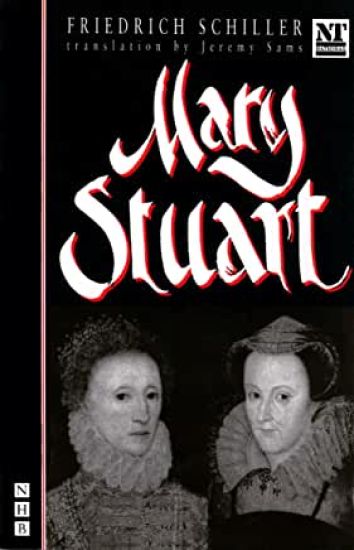
Mary Stuart

Mary Stuart

Friedrich Schiller

Nick Hern Books
1996
nidottu
Schiller's grand historical tragedy, a battle of wits between Mary Queen of Scots and her captor, Queen Elizabeth I. Mary has been held prisoner for nineteen years by her cousin, Elizabeth I, who has condemned her to death, but is reluctant to be seen to carry out the sentence. Leicester, Elizabeth's favorite and Mary's ex-lover, engineers a meeting of the two Queens - an encounter which never took place in historical fact - from which Mary emerges triumphant but doomed. Friedrich Schiller's play Mary Stuart (Maria Stuart in the original German) had its premiere in Weimar, Germany, in June 1800. This English version by Jeremy Sams was first staged at the National Theatre, London, in 1996.
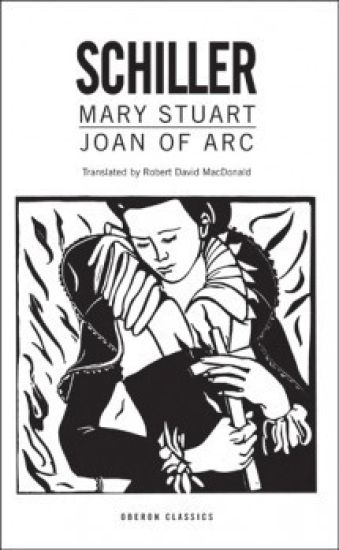
Mary Stuart/Joan of Arc

Mary Stuart/Joan of Arc

Friedrich Schiller

Oberon Books Ltd
1999
nidottu
These two tragedies, written at the peak of Schiller's career as a dramatist, contain his most telling, and touching, portrayals of women. His heroines are propelled, by birth or a sense of divine mission, into exalted political positions, where their qualities as human beings, and particularly as women, are put to the severest tests, from which they emerge triumphant, but doomed. Schiller's breadth of sentiment, combined with his consummate stagecraft, and Shakespearean mastery of verse and nobility of language, ensure his position as Germany's greatest dramatist, and these translations, prepared for, and performed by Glasgow's famous Citizens Company, should go far to ensure his long overdue acceptance in Britain as a master of the European Theatre.
M5 Stuart Light Tank Crew Manual

M5 Stuart Light Tank Crew Manual

War Department

Periscope Film, LLC
2011
pokkari
The Light Tank M3 and M5, known as the General Stuart, was the first tank used by American forces in armored combat during WWII. Like its predecessor the M2A4, the Stuart was armed with a 37mm M5 main gun. It also carried up to five Browning machine guns and 7500 rounds of ammunition. The M3 version sported radial aero-engines, replaced in the M5 with smoother, cooler twin Cadillac automobile engines. The M5 also featured improved sloped armor and had the driver's hatches moved up top. In the European Theater, where enemy armored vehicles were plentiful, the Stuart's weak main gun meant that it served primarily in cavalry and infantry support roles. In the Pacific, where enemy armor was less of a threat and close support was a necessity, the Stuart's maneuverability proved a valuable asset. Over 25,000 Stuarts and variants were produced during the war, and they eventually served in the armies of over thirty countries including the Soviet Union, India and Republic of China Army. A few continue in active service military today.Intended as a general purpose manual for the platoon leader, tank commander and crew, this 1944 War Department FM 17-68 field manual shows how to achieve efficient execution of mounted and dismounted action, and precision and speed in service of the weapon. Originally restricted, this manual was declassified long ago and is here reprinted in book form. Care has been taken to preserve the integrity of the text.
John Stuart Mill

John Stuart Mill

Mauro Cardoso Simoes

Globabsouth Press
2016
nidottu
John Stuart Mill um dos autores fundamentais e imprescind veis do pensamento social e pol tico moderno. Fundamental, porque soube como poucos enfrentar, com profundidade anal tica e ao mesmo tempo com eleg ncia mpar, os grandes problemas da tradi o e dar-lhes uma resposta altura de seu tempo. Imprescind vel, porque os problemas que elencou continuam a ser, basicamente, os de nosso tempo, de tal modo que quem quiser compreend -los como merecem, n o tem como evitar um retorno a Stuart Mill, ainda que de uma perspectiva cr tica. O presente livro uma colet nea de estudos que endere a precisamente essa quest o. Seu autor, que exerce a doc ncia na Universidade Estadual de Campinas ministrando disciplinas de tica e filosofia nos cursos da nova Faculdade de Ci ncias Aplicadas daquela institui o, demonstra em cada um desses estudos um impressionante dom nio - pouco comum em solo brasileiro - da extensa produ o milliana, inclusive de sua correspond ncia. o que lhe d compet ncia e confian a para engajar-se em alguns dos debates mais intrincados em torno dessa produ o, discutindo de igual para igual com v rios expoentes da comunidade acad mica internacional. Sua familiaridade com esses debates, seu mapeamento ao longo do livro e a disposi o para aprimor -los com sua contribui o original, por si s s j recomendariam sua leitura.
Thomas Stuart Town Cat

Thomas Stuart Town Cat

Cindy W Hollingsworth

PC Junior
2020
pokkari
Thomas Stuart is a formerly feral cat that found his way to Stuart, Virginia, in the foothills of the Blue Ridge Mountains. There he was noticed by Erica and Stephanie who work in Attorney Christopher A. Corbett's law office in downtown Stuart. The Law Trio welcomed Thomas into their office with open arms. The striped tabby enjoys lying on the legal papers, playing with his toys and sprawling in a variety of positions in his hammock bed from which he eyes clients in whom he takes an interest, and entertaining everyone with his antics. Each day Thomas strolls to a variety of businesses in Stuart for extra chin rubs and back scratches. He's well loved by the citizens of the town. In Thomas's book, the author Cindy W. Hollingsworth has included delightful poems throughout the story that detail Thomas's adventures. Indeed the stars aligned perfectly to bring Thomas to Stuart, Virginia, to The Law Trio and the town folk there who love him. "Yes indeed, the tabby has been one lucky cat. Or was it the citizens of the town of Stuart who were lucky?"
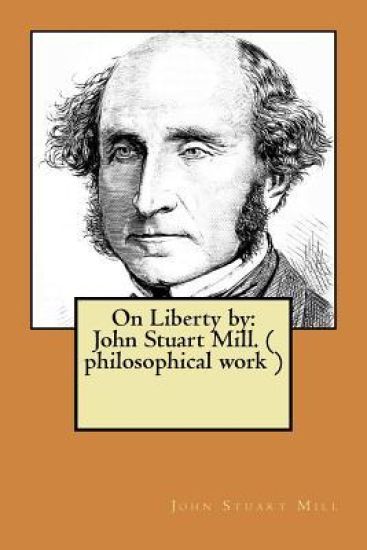
Autobiography (1874) by: John Stuart Mill

Autobiography (1874) by: John Stuart Mill

John Stuart Mill

Createspace Independent Publishing Platform
2017
nidottu
John Stuart Mill (20 May 1806 - 8 May 1873) was an English philosopher, political economist and civil servant. One of the most influential thinkers in the history of liberalism, he contributed widely to social theory, political theory and political economy. Dubbed "the most influential English-speaking philosopher of the nineteenth century", Mill's conception of liberty justified the freedom of the individual in opposition to unlimited state and social control. Mill was a proponent of utilitarianism, an ethical theory developed by his predecessor Jeremy Bentham, and contributed significantly to the theory of the scientific method.
Socialism .By: John Stuart Mill

Socialism .By: John Stuart Mill

John Stuart Mill

Createspace Independent Publishing Platform
2017
nidottu
John Stuart Mill (20 May 1806 - 8 May 1873) was an English philosopher, political economist and civil servant. One of the most influential thinkers in the history of liberalism, he contributed widely to social theory, political theory and political economy. Dubbed "the most influential English-speaking philosopher of the nineteenth century", Mill's conception of liberty justified the freedom of the individual in opposition to unlimited state and social control. Mill was a proponent of utilitarianism, an ethical theory developed by his predecessor Jeremy Bentham, and contributed significantly to the theory of the scientific method.
Autobiography: John Stuart Mill

Autobiography: John Stuart Mill

John Stuart Mill

Createspace Independent Publishing Platform
2017
nidottu
Autobiographyby John Stuart MillJohn Stuart Mill (20 May 1806 - 8 May 1873) was an English philosopher, political economist and civil servant. One of the most influential thinkers in the history of liberalism, he contributed widely to social theory, political theory and political economy. Dubbed "the most influential English-speaking philosopher of the nineteenth century," Mill's conception of liberty justified the freedom of the individual in opposition to unlimited state and social control.It seems proper that I should prefix to the following biographical sketch some mention of the reasons which have made me think it desirable that I should leave behind me such a memorial of so uneventful a life as mine. I do not for a moment imagine that any part of what I have to relate can be interesting to the public as a narrative or as being connected with myself. But I have thought that in an age in which education and its improvement are the subject of more, if not of profounder, study than at any former period of English history, it may be useful that there should be some record of an education which was unusual and remarkable, and which, whatever else it may have done, has proved how much more than is commonly supposed may be taught, and well taught, in those early years which, in the common modes of what is called instruction, are little better than wasted.