Kirjojen hintavertailu. Mukana 12 390 323 kirjaa ja 12 kauppaa.

Kirjahaku

Etsi kirjoja tekijän nimen, kirjan nimen tai ISBN:n perusteella.

1000 tulosta hakusanalla Walter Lippmann

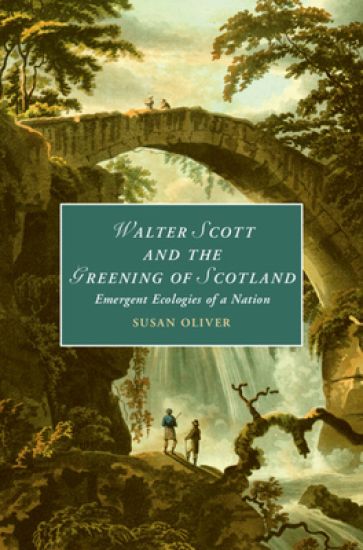
Walter Scott and the Greening of Scotland

Walter Scott and the Greening of Scotland

Susan Oliver

Cambridge University Press
2021
sidottu
The work of Walter Scott, one of the most globally influential authors of the nineteenth century, provides us with a unique narrative of the changing ecologies of Scotland over several centuries and writes this narrative into the history of environmental literature. Farmed environments, mountains, moors and forests along with rivers, shorelines, islands and oceans are explored, situating Scott's writing about shared human and nonhuman environments in the context of the emerging Anthropocene. Susan Oliver attends to changes and losses acting in counterpoint to the narratives of 'improvement' that underpin modernization in land management. She investigates the imaginative ecologies of folklore and local culture. Each chapter establishes a dialogue between ecocritical theory and Scott as storyteller of social history. This is a book that shows how Scott challenged conventional assumptions about the permanency of stone and the evanescence of air; it begins with the land and ends by looking at the stars.
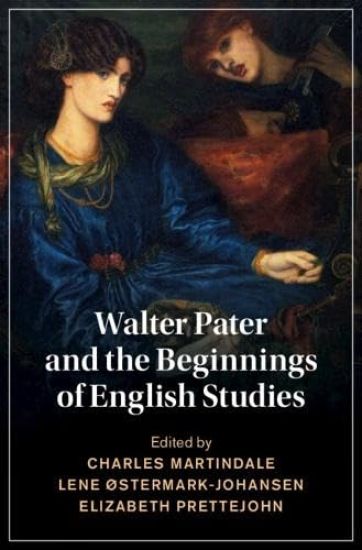
Walter Pater and the Beginnings of English Studies
Walter Pater's significance for the institutionalization of English studies at British universities in the nineteenth century is often overlooked. Addressing the importance of his volume Appreciations (1889) in placing English literature in both a national and an international context, this book demonstrates the indebtedness of the English essay to the French tradition and brings together the classic, the Romantic, the English and the European. With essays on drama, prose, and poetry, from Shakespeare and Browne, to Lamb, Coleridge, Wordsworth and Pater's contemporaries Rossetti and Morris, Appreciations exemplifies ideals of aesthetic criticism formulated in Pater's first book, Studies in the History of the Renaissance (1873). Subjectivity pervades Pater's essays on the English authors, while bringing out their exceptional qualities in a manner reaching far into twentieth-century criticism. This title is part of the Flip it Open Programme and may also be available Open Access. Check our website Cambridge Core for details.
Walter Scott and the Greening of Scotland

Walter Scott and the Greening of Scotland

Susan Oliver

Cambridge University Press
2023
pokkari
The work of Walter Scott, one of the most globally influential authors of the nineteenth century, provides us with a unique narrative of the changing ecologies of Scotland over several centuries and writes this narrative into the history of environmental literature. Farmed environments, mountains, moors and forests along with rivers, shorelines, islands and oceans are explored, situating Scott's writing about shared human and nonhuman environments in the context of the emerging Anthropocene. Susan Oliver attends to changes and losses acting in counterpoint to the narratives of 'improvement' that underpin modernization in land management. She investigates the imaginative ecologies of folklore and local culture. Each chapter establishes a dialogue between ecocritical theory and Scott as storyteller of social history. This is a book that shows how Scott challenged conventional assumptions about the permanency of stone and the evanescence of air; it begins with the land and ends by looking at the stars.
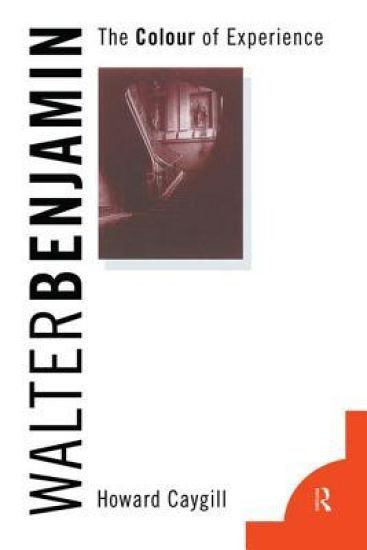
Walter Benjamin

Walter Benjamin

Howard Caygill

Routledge
2016
sidottu
This book analyzes the development of Walter Benjamin's concept of experience in his early writings showing that it emerges from an engagement with visual experience, and in particular the experience of colour. It represents Benjamin as primarily a thinker of the visual field.
Walter Pater: an Imaginative Sense of Fact
First Published in 1981. Pater is certainly the least widely read and understood of any of the Victorian critics and creative writers, though there are signs of a coming revival of interest in him. Each of the discussions included in this issue devoted to Pater touches, in some significant way, on his "imaginative sense of fact," on his struggle with the objective ‘givens’ of experience (ideas or individuals), and on his efforts to co-opt or turn that Other into a reordered reflection of his own image.
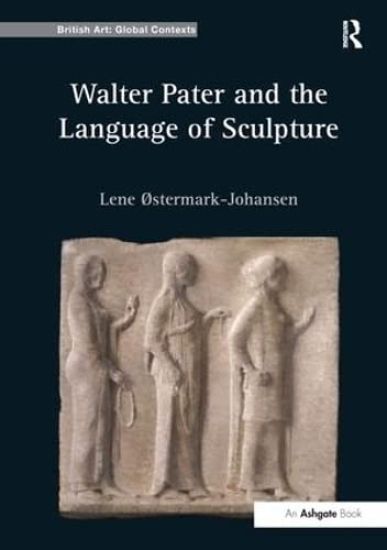
Walter Pater and the Language of Sculpture

Walter Pater and the Language of Sculpture

Lene Østermark-Johansen

Routledge
2016
nidottu
Walter Pater and the Language of Sculpture is the first monograph to discuss the Victorian critic Walter Pater's attitude to sculpture. It brings together Pater's aesthetic theories with his theories on language and writing, to demonstrate how his ideas of the visual and written language are closely interlinked. Going beyond Pater's views on sculpture as an art form, this study traces the notion of relief (rilievo) and hybrid form in Pater, and his view of the writer as sculptor, a carver in language. Alongside her treatment of rilievo as a pervasive trope, Lene Østermark-Johansen also employs the idea of rivalry (paragone) more broadly, examining Pater's concern with positioning himself as an art critic in the late Victorian art world. Situating Pater within centuries of European aesthetic theories as never before done, Walter Pater and the Language of Sculpture throws new light on the extraordinary complexity and coherence of Pater's writing: The critic is repositioned solidly within Victorian art and literature.
Walter the Chancellor’s The Antiochene Wars
First published in 1999, this edition of Walter the Chancellor’s account of the wars of the Antiochenes against the Muslims in the early twelfth century is a vivid first-hand account of a dramatic yet less well-known period in the history of the northern Crusader states, and an important balance to the more usual focus on Jerusalem. As a highly-placed Antiochene official, Walter was able to write the most authoritative account of the principality's fortunes and internal workings, and his book also sheds light on the relationship between Latin settlement in the Levant and contemporary Western perceptions of Islam and Eastern Christianity. Here it has for the first time been translated into English (from the Latin edition of H. Hagenmeyer). It is prefaced by a substantial introduction, discussing the author and his work in the context of the history and historiography of the Latin settlement, and is followed by a selection of comparative sources.Walter the Chancellor’s history will be of interest both to students of the Crusades and to a wider readership for its perspective on life in a medieval frontier society.
Walter the Chancellor’s The Antiochene Wars
First published in 1999, this edition of Walter the Chancellor’s account of the wars of the Antiochenes against the Muslims in the early twelfth century is a vivid first-hand account of a dramatic yet less well-known period in the history of the northern Crusader states, and an important balance to the more usual focus on Jerusalem. As a highly-placed Antiochene official, Walter was able to write the most authoritative account of the principality's fortunes and internal workings, and his book also sheds light on the relationship between Latin settlement in the Levant and contemporary Western perceptions of Islam and Eastern Christianity. Here it has for the first time been translated into English (from the Latin edition of H. Hagenmeyer). It is prefaced by a substantial introduction, discussing the author and his work in the context of the history and historiography of the Latin settlement, and is followed by a selection of comparative sources.Walter the Chancellor’s history will be of interest both to students of the Crusades and to a wider readership for its perspective on life in a medieval frontier society.
Walter Scott and the Historical Imagination
First published in 1979. This study explores the main critical issues that arise out of a modern reading of Scott’s work, and treats the major novels in detail. It tackles the questions of Scott’s place in literary history and his problems in pioneering the historical novel. As well as examining the greater novels of the Scottish series, the author also deals with the relation between historical fiction and reality, with reference to the Waverley Novels, and Scott’s own attitude to history. Also discussed are some of the possible reasons for Scott’s failure to depict conflicts in his contemporary society. This book would be of interest to students of literature.