Kirjojen hintavertailu. Mukana 12 016 292 kirjaa ja 12 kauppaa.

Kirjahaku

Etsi kirjoja tekijän nimen, kirjan nimen tai ISBN:n perusteella.

1000 tulosta hakusanalla ART WIEDERHOLD

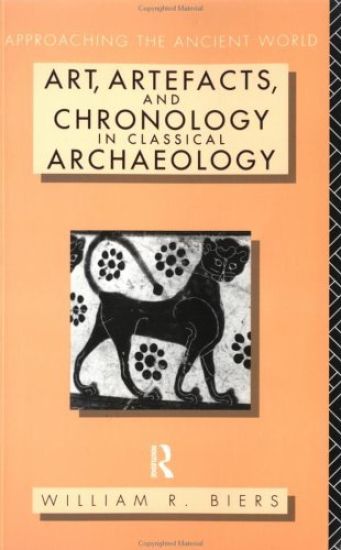
Art, Artefacts and Chronology in Classical Archaeology
The museums of the world are full of statues and other artefacts of the Greeks and the Romans. All are given a date. But how are these dates arrived at. What is the evidence? This study provides the student with an introduction and explanation of the ways scholars date the archaeological remains of classical antiquity. Specific examples from architecture, sculpture, and painting are presented, and the differnt methods of dating them are explained. These are supplemented with many original photographs and drawings. Old, and not so old problems in chronology are thus investigated and new theories reviewed from a fresh perspective.
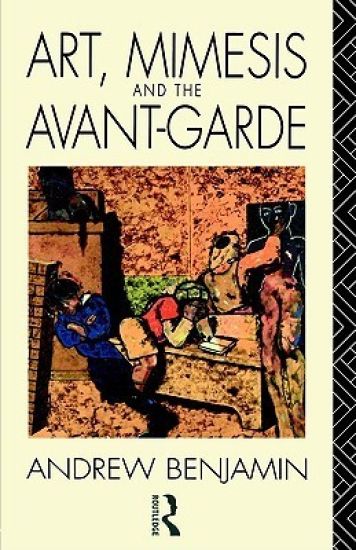
Art, Mimesis and the Avant-Garde

Art, Mimesis and the Avant-Garde

Andrew Benjamin

Routledge
1991
nidottu
This book explores the relationship between art and philosophy. Andrew Benjamin argues for a reworking of the task of philosophy in terms of the centrality of ontology. It is in relation to this centrality, understood through the differences between modes of being, that art, mimesis and the avant-garde come to be presented. A fundamental part of this book is the original interpretations of important contemporary painters and their paintings: Lucian Freud's self-portraits, Francis Bacon's use of mirrors, R.B. Kitaj and Jewish identity, Anselm Kiefer and iconoclasm. Apart from painting, Benjamin considers architecture, literature and the philosophical writings of Walter Benjamin and Descartes in elaborating the various aspects of ontological difference. The theory of the avant-garde which is developed in the book, in which the avant-garde is a philosophical category rather than a historical marker, is a major contribution to art criticism. It brings the worlds of contemporary art criticism and contemporary philosophy closer together.
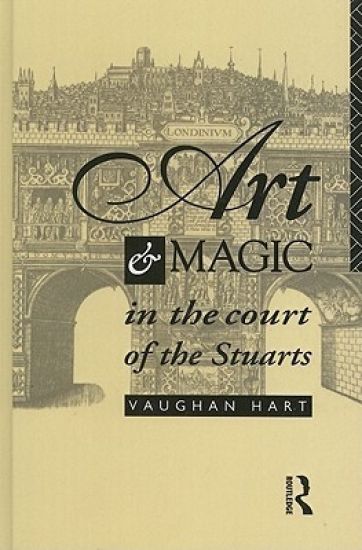
Art and Magic in the Court of the Stuarts
Spanning from the inauguration of James I in 1603 to the execution of Charles I in 1649, the Stuart court saw the emergence of a full expression of Renaissance culture in Britain. Hart examines the influence of magic on Renaissance art and how in its role as an element of royal propaganda, art was used to represent the power of the monarch and reflect his apparent command over the hidden forces of nature. Court artists sought to represent magic as an expression of the Stuart Kings' divine right, and later of their policy of Absolutism, through masques, sermons, heraldry, gardens, architecture and processions. As such, magic of the kind enshrined in Neoplatonic philosophy and the court art which expressed its cosmology, played their part in the complex causes of the Civil War and the destruction of the Stuart image which followed in its wake.
Art and Music: Therapy and Research
This is the first comprehensive overview of the present state of research in art therapy and music therapy in the UK. It challenges assumptions about research in these areas, and makes use of research models from art history and music analysis as well as the more orthodox psychological and medical models used in clinical work. Informative and reassuring for those interested in undertaking research, the book gives lively accounts of the personal process of the art therapy and music therapy researcher. It presents the reader with many original ideas and strategies, and will be an invaluable reference book for practitioners and students of art therapy and music therapy, as well as for health professionals who work with them.
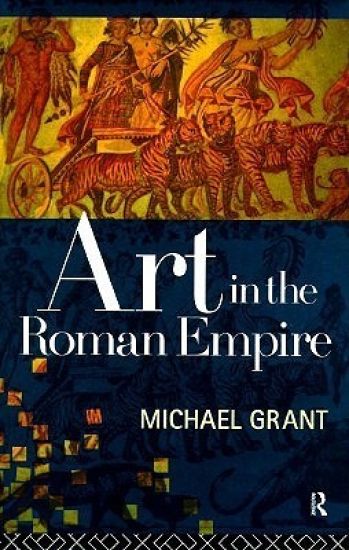
Art in the Roman Empire

Art in the Roman Empire

Michael Grant

Routledge
1995
sidottu
Michael Grant has specially selected some of the most significant examples of painting, portraits, architecture, mosaic, jewellery and silverware, to give a unique insight into the functions and manifestations of art in the Roman Empire. Art in the Roman Empire shows how many of the most impressive masterpieces were produced outside Rome, on the frontiers of its enormous empire.
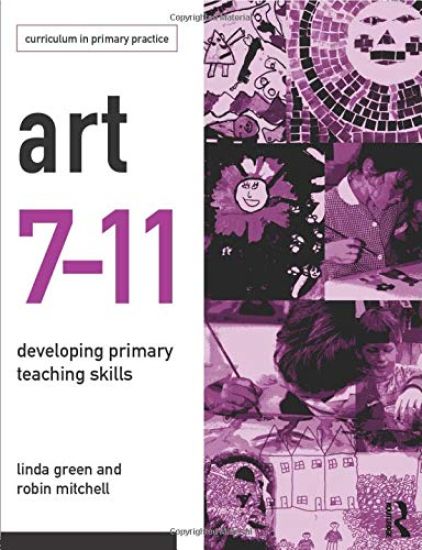
Art 7-11

Art 7-11

Linda Green; Robin Mitchell

Routledge
1997
nidottu
Aimed at non-specialist primary teachers, this book offers support for the two attainment targets of the national cuuriculum in art: investigating and making, and knowledge and understanding. It uses examples and materials to explore various areas of children's development in art making and understanding, and also aims to equip teachers with strategies for developing their own understanding and appreciation of the subject. Units included cover such areas as: * children's motivation to make art * developing co-operative work with artists in schools * learning about art from other cultures * learning about art from different historical periods * 2D and 3D art * assessing children's art
Art and Liberation

Art and Liberation

Herbert Marcuse

Routledge
2006
sidottu
The role of art in Marcuse’s work has often been neglected, misinterpreted or underplayed. His critics accused him of a religion of art and aesthetics that leads to an escape from politics and society. Yet, as this volume demonstrates, Marcuse analyzes culture and art in the context of how it produces forces of domination and resistance in society, and his writings on culture and art generate the possibility of liberation and radical social transformation.The material in this volume is a rich collection of many of Marcuse’s published and unpublished writings, interviews and talks, including ‘Lyric Poetry after Auschwitz’, reflections on Proust, and Letters on Surrealism; a poem by Samuel Beckett for Marcuse’s eightieth birthday with exchange of letters; and many articles that explore the role of art in society and how it provides possibilities for liberation.This volume will be of interest to those new to Marcuse, generally acknowledged as a major figure in the intellectual and social milieus of the 1960s and 1970s, as well as to the specialist, giving access to a wealth of material from the Marcuse Archive in Frankfurt and his private collection in San Diego, some of it published here in English for the first time.A comprehensive introduction by Douglas Kellner reflects on the genesis, development, and tensions within Marcuse’s aesthetic, while an afterword by Gerhard Schweppenhäuser summarizes their relevance for the contemporary era.
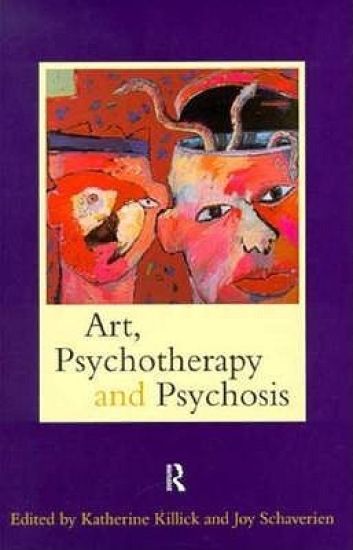
Art, Psychotherapy and Psychosis
Art, Psychotherapy and Psychosis reveals the unique role of art therapy in the treatment of psychosis. Illustrating their contributions with clinical material and artwork created by clients, experienced practitioners describe their work in a variety of settings. Writing from different theoretical standpoints they reflect the current creative diversity within the profession and its links with psychotherapy, psychoanalysis, analytical psychology and psychiatry.In part I specific issues involved in working with psychosis are explored. These include discussion of the therapeutic relationship, the process of symbolisation, the nature and meaning of art made by psychotic patients and the interplay between words and pictures. Part II recounts the history of art therapy and psychosis, tracing its origins in art, to its present-day role as a respected treatment in psychiatric, community and therapeutic settings.Art, Psychotherapy and Psychosis extends the existing theory, develops analytical approaches in art psychotherapy and offers innovative perspectives for students and practitioners on the treatment of borderline states as well as psychosis.
Art, Psychotherapy and Psychosis
Art, Psychotherapy and Psychosis reveals the unique role of art therapy in the treatment of psychosis. Illustrating their contributions with clinical material and artwork created by clients, experienced practitioners describe their work in a variety of settings. Writing from different theoretical standpoints they reflect the current creative diversity within the profession and its links with psychotherapy, psychoanalysis, analytical psychology and psychiatry.In part I specific issues involved in working with psychosis are explored. These include discussion of the therapeutic relationship, the process of symbolisation, the nature and meaning of art made by psychotic patients and the interplay between words and pictures. Part II recounts the history of art therapy and psychosis, tracing its origins in art, to its present-day role as a respected treatment in psychiatric, community and therapeutic settings.Art, Psychotherapy and Psychosis extends the existing theory, develops analytical approaches in art psychotherapy and offers innovative perspectives for students and practitioners on the treatment of borderline states as well as psychosis.
Art, Space and the City

Art, Space and the City

Malcolm Miles

Routledge
1997
sidottu
Public art - the making, management and mediation of art outside its conventional location in museums and galleries, and the livable city - a concept involving user-centred strategies for urban planning and design, are both socially produced but have emerged from different fields and tend to be discussed in isolation. This book applies a range of critical perspectives which have emerged from different disciplines - art criticism, urban design, urban sociology, geography and critical theory - to examine the practice of art for urban public spaces, seeing public art from positions outside those of the art world to ask how it might contribute to possible urban futures. Exploring the diversity of urban politics, the functions of public space and its relation to the structures of power, the roles of professionals and users in the construction of the city, the gendering of space and the ways in which space and citizen are represented, the book explains how these issues are as relevant to architecture, urban design and urban planning as they are to public art. Drawing on a wealth of images from across the UK and Europe and the USA, in particular, the author questions the effectiveness of public art in achieving more convivial urban environments, whilst retaining the idea that imagining possible futures is as much part of a democratic society as using public space.
Art, Space and the City

Art, Space and the City

Malcolm Miles

Routledge
1997
nidottu
Public art - the making, management and mediation of art outside its conventional location in museums and galleries, and the livable city - a concept involving user-centred strategies for urban planning and design, are both socially produced but have emerged from different fields and tend to be discussed in isolation. This book applies a range of critical perspectives which have emerged from different disciplines - art criticism, urban design, urban sociology, geography and critical theory - to examine the practice of art for urban public spaces, seeing public art from positions outside those of the art world to ask how it might contribute to possible urban futures. Exploring the diversity of urban politics, the functions of public space and its relation to the structures of power, the roles of professionals and users in the construction of the city, the gendering of space and the ways in which space and citizen are represented, the book explains how these issues are as relevant to architecture, urban design and urban planning as they are to public art. Drawing on a wealth of images from across the UK and Europe and the USA, in particular, the author questions the effectiveness of public art in achieving more convivial urban environments, whilst retaining the idea that imagining possible futures is as much part of a democratic society as using public space.
Art Psychotherapy Groups
A growing number of art therapists are also trained in group analytic psychotherapy. This book explores the new theories and models for practice arising from the merging of these two disciplines. Contributors ask whether a model can be applied universally to art therapy group work with diverse client groups. They present in-depth case studies looking at work with the following:- * children * drug and alcohol abusers * forensic patients * patients on acute psychiatric wards * the cognitively-impaired elderly * institutionalised patients moving into the community A common theme which emerges is that the physical use of art materials and the space of the art room offer a possibility for communication of feelings which is not possible in purely verbal groups. This allows clients who would not normally be considered for group therapy to benefit from a psychodynamic group process.
Art Psychotherapy Groups
A growing number of art therapists are also trained in group analytic psychotherapy. This book explores the new theories and models for practice arising from the merging of these two disciplines. Contributors ask whether a model can be applied universally to art therapy group work with diverse client groups. They present in-depth case studies looking at work with the following:- * children * drug and alcohol abusers * forensic patients * patients on acute psychiatric wards * the cognitively-impaired elderly * institutionalised patients moving into the community A common theme which emerges is that the physical use of art materials and the space of the art room offer a possibility for communication of feelings which is not possible in purely verbal groups. This allows clients who would not normally be considered for group therapy to benefit from a psychodynamic group process.
Art in Greece

Art in Greece

W. Deonna; A. de Ridder

Routledge
1997
sidottu
Originally published between 1920-70,The History of Civilization was a landmark in early twentieth century publishing. It was published at a formative time within the social sciences, and during a period of decisive historical discovery. The aim of the general editor, C.K. Ogden, was to summarize the most up to date findings and theories of historians, anthropologists, archaeologists and sociologists. This reprinted material is available as a set or in the following groupings: * Prehistory and Historical Ethnography Set of 12: 0-415-15611-4: £800.00 * Greek Civilization Set of 7: 0-415-15612-2: £450.00 * Roman Civilization Set of 6: 0-415-15613-0: £400.00 * Eastern Civilizations Set of 10: 0-415-15614-9: £650.00 * Judaeo-Christian Civilization Set of 4: 0-415-15615-7: £250.00 * European Civilization Set of 11: 0-415-15616-5: £700.00
Art Therapy in Palliative Care
This book provides a comprehensive and accessible introduction to the practice and results of art therapy in palliative care. It includes first-hand accounts from both therapists and clients in a variety of palliative care settings including:- * hospices and hospitals * patients own homes * prisons (AIDS patients) * adolescent griefwork groups These case studies include examples of client art work and illustrate clearly how art therapy can allow patients to regain feelings of control over their lives.
Art and Morality
Art and Morality is a collection of groundbreaking new papers on the theme of aesthetics and ethics, and the link between the two subjects. A group of distinguished contributors tackle the important questions that arise when one thinks about the moral dimensions of art and the aesthetic dimension of moral life.The volume is a significant contribution to philosophical literature, opening up unexplored questions and shedding new light on more traditional debates in aesthetics. The topics explored include: the relation of aesthetic to ethical judgement; the relation of artistic experience to moral consciousness; the moral status of fiction; the concepts of sentimentality and decadence; the moral dimension of critical practice, pictorial art and music; the moral significance of tragedy; and the connections between artistic and moral issues elaborated in the writings of central figures in modern philosophy, such as Kant, Schopenhauer and Nietzsche. The contributors share the view that progress in aesthetics requires detailed study of the practice of criticism. This volume will appeal both to the philosophical community and to researchers in areas such as literary theory, musicology and the theory of art.
Art Therapy with Young Survivors of Sexual Abuse
Dealing with the aftermath of childhood sexual abuse remains one of the major issues in child and adolescent mental health. Yet, until now, little has been written for art therapists and related professionals involved in this sensitive field. Art Therapy with Young Survivors of Sexual Abuse is a guide to practice with this group. Containing a range of illustrative case material from both individual and group therapy, the book addresses the important issues faced by professionals, including:* male therapist countertransference* the therapist's relationship with the client's family and wider networks* assessment using art therapy* the value of art therapy with groups.Art Therapy with Young Survivors of Sexual Abuse will provide not only art therapists, but other professionals working with sexually abused children and adolescents, with a stimulating discussion of the current issues in this area.
Art And The Unconscious

Art And The Unconscious

John M Thorburn

Routledge
1999
sidottu
First published in 1999. This is a reproduction of John Thorburn’s work of 1925, Art and the Unconscious: A Psychological Approach to a Problem of Philosophy; covering the psychology of the artistic process and a discussion on symbolic or 'eternal'.
Art Of Memory

Art Of Memory

F A Yates

Routledge
1999
sidottu
First Published in 1999. This title is the third volume in the ten-volume set titled the Selected Works of Frances Yates. Greyscale illustrations and figures are included throughout - alongside the related descriptive work where applicable. The art in this volume seeks to memorise through a technique of impressing 'places' and 'images' on memory. It has usually been classed as 'mnemotechnics', which appears an unimportant branch of human activity. However, the author discusses in this title that the manipulation of images in memory must always, to some extent, involve the psyche.