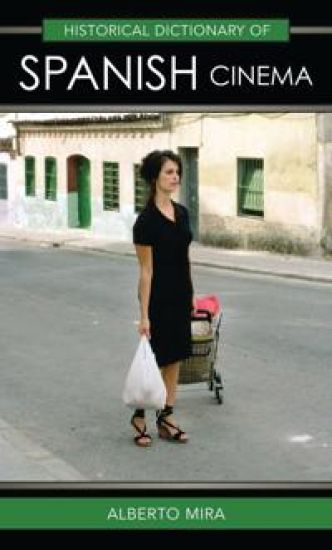
Spanish cinema is emerging as one of the most exciting, fascinating, and special cinemas in the world. Not only are others viewing Spanish films, but they are adopting Spanish producers and Spanish actors as their own. While Spanish cinema has been maturing for a long time and has been producing excellent directors, actors, and films for decades—including during the dark times of the Franco regime—only now is it winning numerous fans not only at home but also abroad. And with directors like Pedro Almodóvar, actors and actresses like Javier Bardem and Penélope Cruz, and films such as Abre los ojos and Alatriste to build upon, the outlook for Spanish Cinema appears brighter than ever. The Historical Dictionary of Spanish Cinema provides a better understanding of the role Spanish cinema has played in film history through a chronology, an introductory essay, a bibliography, and hundreds of cross-referenced dictionary entries on producers, directors, film companies, actors, and films.
Puerto Rican born Jesús María Sanromá (1902-1984) was one of the leading pianists in the United States. After graduating from the New England Conservatory, he embarked on an enviable concert career as official pianist for the Boston Symphony Orchestra, as well as soloist with other leading American orchestras. He was an accompanist, a recording artist, and a teacher, and he also stimulated and commissioned composers to write new music, fueled by his eagerness to present it to the general public. Jesús María Sanromá: An American Twentieth-Century Pianist is the first biography of this talented performer and one of the first books written about a native Puerto Rican classical musician. The book depicts many facets of Sanromá's life: his youth in Puerto Rico; his training at the Conservatory and abroad; his amazing concert career and collaboration with first-class musicians, conductors, and composers; his historical performances and recordings; and the zenith of his musical life when he returned home. Alberto Hernández provides abundant information about Sanromá's life, career, and professional relationships, uniquely documenting the pianist's close association and collaboration with Paul Hindemith, Serge Koussevitzky, Walter Piston, Nicolas Slonimsky, Vladimir Dukelsky, Mrs. Edward MacDowell, Arthur Fiedler, William Primrose, and many others. Two appendixes offer the complete sound archives and a list of Sanromá's impressive orchestra repertory, making this book a valuable reference as well as an informative read for music lovers and students of American and Latin American history.
Spanish cinema is emerging as one of the most exciting, fascinating, and special cinemas in the world. Not only are others viewing Spanish films, but they are adopting Spanish producers and Spanish actors as their own. While Spanish cinema has been maturing for a long time and has been producing excellent directors, actors, and films for decades-including during the dark times of the Franco regime-only now is it winning numerous fans not only at home but also abroad. And with directors like Pedro Almodóvar, actors and actresses like Javier Bardem and Penélope Cruz, and films such as Abre los ojos and Alatriste to build upon, the outlook for Spanish Cinema appears brighter than ever. The A to Z of Spanish Cinema provides a better understanding of the role Spanish cinema has played in film history through a chronology, an introductory essay, a bibliography, and hundreds of cross-referenced dictionary entries on producers, directors, film companies, actors, and films.
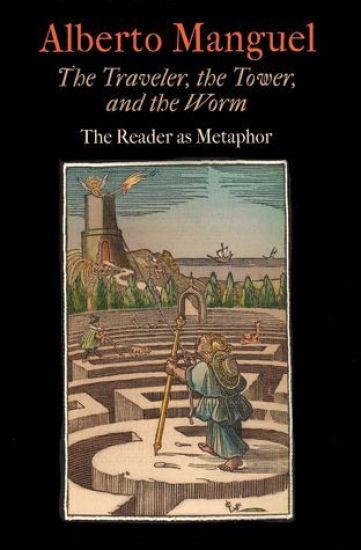
As far as one can tell, human beings are the only species for which the world seems made up of stories, Alberto Manguel writes. We read the book of the world in many guises: we may be travelers, advancing through its pages like pilgrims heading toward enlightenment. We may be recluses, withdrawing through our reading into our own ivory towers. Or we may devour our books like burrowing worms, not to benefit from the wisdom they contain but merely to stuff ourselves with countless words. With consummate grace and extraordinary breadth, the best-selling author of A History of Reading and The Library at Night considers the chain of metaphors that have described readers and their relationships to the text-that-is-the-world over a span of four millennia. In figures as familiar and diverse as the book-addled Don Quixote and the pilgrim Dante who carries us through the depths of hell up to the brilliance of heaven, as well as Prince Hamlet paralyzed by his learning, and Emma Bovary who mistakes what she has read for the life she might one day lead, Manguel charts the ways in which literary characters and their interpretations reflect both shifting attitudes toward readers and reading, and certain recurrent notions on the role of the intellectual: "We are reading creatures. We ingest words, we are made of words. . . . It is through words that we identify our reality and by means of words that we ourselves are identified."
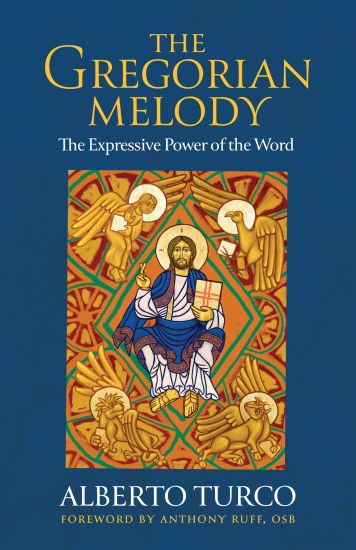
The Gregorian Melody is a resource of music pedagogy that centers on one of the most ancient musical repertoires honored by the church and music historians. Though it may not be common to see the word expressive describing Gregorian chant, a repertoire often associated with subdued solemnity, this volume by renowned scholar and practitioner Alberto Turco includes an abundance of insights into the Gregorian art and proposes that chant is first and foremost sung prayer, an interaction of word and melody, which both include proper and appropriate expression. The material included in this resource is foundational as it lays out the elements of the Gregorian melody through a careful analysis of first principles. It will be useful as an introduction to Gregorian chant and for helping readers to understand the Gregorian melody. Readers of all levels may turn to this book to sing the liturgical chant with a deepened appreciation for the expressive power of the Word.
2021 Catholic Media Association Award first place award in morality, ethics, christology, mariology, and redemption What does it mean to live and build up the Kingdom of God? In this book, professor and priest Alberto de Mingo Kaminouchi introduces the contemporary reader to Christian ethics by examining the New Testament through the three key concepts of Aristotle’s ethics: happiness, virtue, and love.In turn, the three affirmations orient this reflection through the Gospel. First, when the triune God appears on the horizon, it becomes easier to understand that existence has a purpose: namely, participating with the entire human family in this project of happiness called the Kingdom of God. Second, happiness is not something outside of us; it consists in the practice of the virtues that bring about a personal transformation. Third, the project of the Kingdom leads us to live in love with others. De Mingo Kaminouchi shows the reader a real model of this in the community we call the church, the “field hospital” for all those in need of hope. This book is accessibly written for readers not already well-versed in Christian ethics.
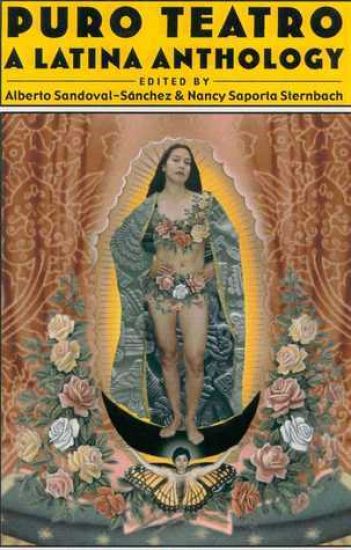
From plays produced on shoestring budgets in the 1970s to today's high-tech performance pieces, Latina theater has emerged as a vibrant art form whose time has come. This anthology showcases this dynamic new genre through the works of established playwrights such as Cherre Moraga and Dolores Prida as well as talented new playwrights and performers who have emerged in the past decade such as Migdalia Cruz, Elaine Romero, and Monica Palacios. "Puro Teatro, A Latina Anthology" includes a variety of theatrical genres: plays, performance pieces, puppet shows, innovative collaborations, and testimonials. It features previously unpublished plays from a broad range of experiences within the Latino/a community, including families and home, friends and community building, coming of age and empowerment, and sexual and ethnic identities. The editors' introduction provides a comprehensive survey of contemporary Latina theater, placing it in its theatrical context and examining its divergent roots. "Puro Teatro, A Latina Anthology" is the first book of its kind to reflect in print a diversified body of writing that turns the spotlight on some of America's most talented and prolific artists. A subsequent volume will complement this anthology with a theoretical, critical reading of Latina theater and performance. CONTENTSFull Length Plays"Botanica" by Dolores Prida"Heart of the Earth: A Popul Vuh Story" by Cherrie Moraga"The Fat-Free Chicana and the Snow Cap Queen" by Elaine RomeroOne-act Plays"Las nuevas tamaleras" by Alicia Mena"And Where Was Pancho Villa When You Really Needed Him?" by Silviana Wood"Fuschia" by Janis Astor del VallePerformance Pieces"Nostalgia Maldita: 1-900-MEXICO: A StairMaster Piece" by Yareli Arizmendi"Good Grief, Lolita" by Wilma Bonet"A Roomful of Men" by Amparo Garcia Crow"Describe Your Work" by Monica PalaciosTestimonials"Battle Worn," by Laura Esparza"Dancing with the Voice of Truth," by Maria Mar"Searching for Sanctuaries: Cruising through Town in a Red Convertible," by Diane Rodriguez"Home, Desire, Memory: There Are No Borders Here," by Caridad Svich"Tales of a South-of-the-Border/North-of-the-Stereotype Theatre Director, by Susana Tubert"Catching the Next Play: The Joys and Perils of Playwriting," by Edit VillarrealFull-Length Plays, Collaborative Works"Frida: The Story of Frida Kahlo" by Migdalia Cruz and Hilary Blecher"Memorias de la revolucion" by Carmelita Tropicana and Uzi Parnes
In Alberto Álvaro RÍos's new picaresque novel, momentous adventure and quiet connection brings twenty people to life in a small town in northern Mexico. A Good Map of All Things is home to characters whose lives are interwoven but whose stories are their own, adding warmth and humor to this continually surprising communal narrative. The stories take place in the mid-twentieth century, in the high desert near the border-a stretch of land generally referred to as the PimerÍa Alta-an ancient passage through the desert that connected the territory of Tucson in the north and Guaymas and Hermosillo in the south. The United States is off in the distance, a little difficult to see, and, in the middle of the century, not the only thing to think about. Mexico City is somewhere to the south, but nobody can say where and nobody has ever seen it.RÍos has created a whimsical yet familiar town, where brightly unique characters love fiercely and nurture those around them. The people in A Good Map of All Things have secrets and fears, successes and happiness, winters and summers. They are people who do not make the news, but who are living their lives for the long haul, without lotteries or easy answers or particular luck. Theirs is the everyday, with its small but meaningful joy. Whether your heart belongs to a small town in Mexico or a bustling metropolis, Alberto Álvaro RÍos has crafted a book that is overflowing with comfort, warmth, and the familiar embrace of a tightly woven community.
This text is appropriate for a one-semester course in what is usually called ad vanced calculus of several variables. The focus is on expanding the concept of continuity; specifically, we establish theorems related to extreme and intermediate values, generalizing the important results regarding continuous functions of one real variable. We begin by considering the function f(x, y, ... ) of multiple variables as a function of the single vector variable (x, y, ... ). It turns out that most of the n treatment does not need to be limited to the finite-dimensional spaces R , so we will often place ourselves in an arbitrary vector space equipped with the right tools of measurement. We then proceed much as one does with functions on R. First we give an algebraic and metric structure to the set of vectors. We then define limits, leading to the concept of continuity and to properties of continuous functions. Finally, we enlarge upon some topological concepts that surface along the way. A thorough understanding of single-variable calculus is a fundamental require ment. The student should be familiar with the axioms of the real number system and be able to use them to develop elementary calculus, that is, to define continuous junction, derivative, and integral, and to prove their most important elementary properties. Familiarity with these properties is a must. To help the reader, we provide references for the needed theorems.
This text is appropriate for a one-semester course in what is usually called ad vanced calculus of several variables. The approach taken here extends elementary results about derivatives and integrals of single-variable functions to functions in several-variable Euclidean space. The elementary material in the single- and several-variable case leads naturally to significant advanced theorems about func tions of multiple variables. In the first three chapters, differentiability and derivatives are defined; prop erties of derivatives reducible to the scalar, real-valued case are discussed; and two results from the vector case, important to the theoretical development of curves and surfaces, are presented. The next three chapters proceed analogously through the development of integration theory. Integrals and integrability are de fined; properties of integrals of scalar functions are discussed; and results about scalar integrals of vector functions are presented. The development of these lat ter theorems, the vector-field theorems, brings together a number of results from other chapters and emphasizes the physical applications of the theory.
This is the second of two volumes on the qualitative theory of foliations. For this volume, the authors have selected three special topics: analysis on foliated spaces, characteristic classes of foliations, and foliated manifolds. Each of these is an example of deep interaction between foliation theory and some other highly-developed area of mathematics. In all cases, the authors present useful, in-depth introductions, which lead to further study using the extensive available literature. This comprehensive volume has something to offer a broad spectrum of readers: from beginners to advanced students to professional researchers. It contains exercises and many illustrations. The book would make an elegant supplementary text for a topics course at the advanced graduate level. "Foliations I" is Volume 23 in the AMS series, "Graduate Studies in Mathematics".
This volume's papers present work at the cutting edge of current research in algebraic geometry, commutative algebra, numerical analysis, and other related fields, with an emphasis on the breadth of these areas and the beneficial results obtained by the interactions between these fields. This collection of two survey articles and sixteen refereed research papers, written by experts in these fields, gives the reader a greater sense of some of the directions in which this research is moving, as well as a better idea of how these fields interact with each other and with other applied areas. The topics include blowup algebras, linkage theory, Hilbert functions, divisors, vector bundles, determinantal varieties, (square-free) monomial ideals, multiplicities and cohomological degrees, and computer vision.
An important theorem by Beilinson describes the bounded derived category of coherent sheaves on $\mathbb{P}^n$, yielding in particular a resolution of every coherent sheaf on $\mathbb{P}^n$ in terms of the vector bundles $\Omega_{\mathbb{P}^n}^j(j)$ for $0\le j\le n$. This theorem is here extended to weighted projective spaces. To this purpose we consider, instead of the usual category of coherent sheaves on $\mathbb{P}({\rm w})$ (the weighted projective space of weights $\rm w=({\rm w}_0,\dots,{\rm w}_n)$), a suitable category of graded coherent sheaves (the two categories are equivalent if and only if ${\rm w}_0=\cdots={\rm w}_n=1$, i.e. $\mathbb{P}({\rm w})= \mathbb{P}^n$), obtained by endowing $mathbb{P}({\rm w})$ with a natural graded structure sheaf. The resulting graded ringed space $\overline{\mathbb{P}}({\rm w})$ is an example of graded scheme (in chapter 1 graded schemes are defined and studied in some greater generality than is needed in the rest of the work).Then in chapter 2 we prove for graded coherent sheaves on $\overline{\mathbb{P}}({\rm w})$ a result which is very similar to Beilinson's theorem on $\mathbb{P}^n$, with the main difference that the resolution involves, besides $\Omega_{\overline{\mathbb{P}}({\rm w})}^j(j)$ for $0\le j\le n$, also $\mathcal{O}_{\overline{\mathbb{P}}({\rm w})}(1)$ for $n-\sum_{i=0}^n{\rm w}_i\1\0$.This weighted version of Beilinson's theorem is then applied in chapter 3 to prove a structure theorem for good birational weighted canonical projections of surfaces of general type (i.e., for morphisms, which are birational onto the image, from a minimal surface of general type $S$ into a $3$-dimensional $\mathbb{P}({\rm w})$, induced by $4$ sections $\sigma_i\in H\0(S, \mathcal{O}_S({\rm w}_iK_S))$).This is a generalization of a theorem by Catanese and Schreyer (who treated the case of projections into $\mathbb{P}^3$), and is mainly interesting for irregular surfaces, since in the regular case a similar but simpler result (due to Catanese) was already known. The theorem essentially states that giving a good birational weighted canonical projection is equivalent to giving a symmetric morphism of (graded) vector bundles on $\overline{\mathbb{P}}({\rm w})$, satisfying some suitable conditions. Such a morphism is then explicitly determined in chapter 4 for a family of surfaces with numerical invariants $p_g=q=2$, $K^2=4$, projected into $\mathbb{P}(1,1,2,3)$.
The conditions for thinking about Latin America as a regional unit in transnational academic discourse have shifted over the past decades. In The Exhaustion of Difference Alberto Moreiras ponders the ramifications of this shift and draws on deconstruction, Marxian theory, philosophy, political economy, subaltern studies, literary criticism, and postcolonial studies to interrogate the minimal conditions for an effective critique of knowledge given the recent transformations of the contemporary world.What, asks Moreiras, is the function of critical reason in the present moment? What is regionalistic knowledge in the face of globalization? Can regionalistic knowledge be an effective tool for a critique of contemporary reason? What is the specificity of Latin Americanist reflection and how is it situated to deal with these questions? Through examinations of critical regionalism, restitutional excess, the historical genealogy of Latin American subalternism, testimonio literature, and the cultural politics of magical realism, Moreiras argues that while cultural studies is increasingly institutionalized and in danger of reproducing the dominant ideologies of late capitalism, it is also ripe for giving way to projects of theoretical reformulation. Ultimately, he claims, critical reason must abandon its allegiance to aesthetic-historicist projects and the destructive binaries upon which all cultural theories of modernity have been constructed. The Exhaustion of Difference makes a significant contribution to the rethinking of Latin American cultural studies.
The conditions for thinking about Latin America as a regional unit in transnational academic discourse have shifted over the past decades. In The Exhaustion of Difference Alberto Moreiras ponders the ramifications of this shift and draws on deconstruction, Marxian theory, philosophy, political economy, subaltern studies, literary criticism, and postcolonial studies to interrogate the minimal conditions for an effective critique of knowledge given the recent transformations of the contemporary world.What, asks Moreiras, is the function of critical reason in the present moment? What is regionalistic knowledge in the face of globalization? Can regionalistic knowledge be an effective tool for a critique of contemporary reason? What is the specificity of Latin Americanist reflection and how is it situated to deal with these questions? Through examinations of critical regionalism, restitutional excess, the historical genealogy of Latin American subalternism, testimonio literature, and the cultural politics of magical realism, Moreiras argues that while cultural studies is increasingly institutionalized and in danger of reproducing the dominant ideologies of late capitalism, it is also ripe for giving way to projects of theoretical reformulation. Ultimately, he claims, critical reason must abandon its allegiance to aesthetic-historicist projects and the destructive binaries upon which all cultural theories of modernity have been constructed. The Exhaustion of Difference makes a significant contribution to the rethinking of Latin American cultural studies.
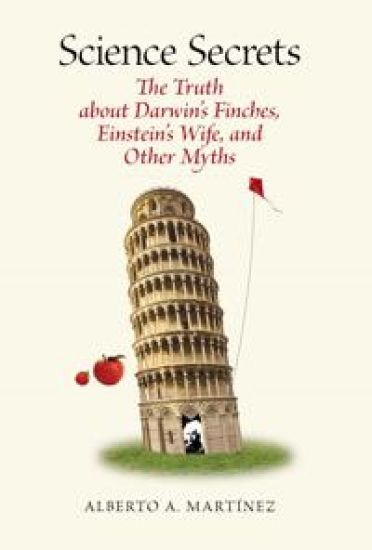
Was Darwin really inspired by Galapagos finches? Did Einstein's wife secretly contribute to his theories? Did Franklin fly a kite in a thunderstorm? Did a falling apple lead Newton to universal gravity? Did Galileo drop objects from the Leaning Tower of Pisa? Did Einstein really believe in God?Science Secrets answers these questions and many others. It is a unique study of how myths evolve in the history of science. Some tales are partly true, others are mostly false, yet all illuminate the tension between the need to fairly describe the past and the natural desire to fill in the blanks.Energetically narrated, Science Secrets pits famous myths against extensive research from primary sources in order to accurately portray important episodes in the sciences. Alberto A. Martinez analyzes how such myths grow and rescues neglected facts that are more captivating than famous fictions. Moreover, he shows why opinions that were once secret and seemingly impossible are now scientifically compelling. The book includes new findings related to the Copernican revolution, alchemy, Pythagoras, young Einstein, and other events and figures in the history of science.
In this follow-up to his popular Science Secrets, Alberto A. Mart\u00ednez discusses various popular myths from the history of mathematics: that Pythagoras proved the hypotenuse theorem, that Archimedes figured out how to test the purity of a gold crown while he was in a bathtub, that the Golden Ratio is in nature and ancient architecture, that the young Galois created group theory the night before the pistol duel that killed him, and more. Some stories are partly true, others are entirely false, but all show the power of invention in history. Pythagoras emerges as a symbol of the urge to conjecture and \u201cfill in the gaps\u201d of history. He has been credited with fundamental discoveries in mathematics and the sciences, yet there is nearly no evidence that he really contributed anything to such fields at all. This book asks: how does history change when we subtract the many small exaggerations and interpolations that writers have added for over two thousand years?The Cult of Pythagoras is also about invention in a positive sense. Most people view mathematical breakthroughs as \u201cdiscoveries\u201d rather than invention or creativity, believing that mathematics describes a realm of eternal ideas. But mathematicians have disagreed about what is possible and impossible, about what counts as a proof, and even about the results of certain operations. Was there ever invention in the history of concepts such as zero, negative numbers, imaginary numbers, quaternions, infinity, and infinitesimals?Mart\u00ednez inspects a wealth of primary sources, in several languages, over a span of many centuries. By exploring disagreements and ambiguities in the history of the elements of mathematics, The Cult of Pythagoras dispels myths that obscure the actual origins of mathematical concepts. Mart\u00ednez argues that an accurate history that analyzes myths reveals neglected aspects of mathematics that can encourage creativity in students and mathematicians.
The personal is not political, even if politics marks it and, in many cases, determines it. Infrapolitics seeks to understand conditions of existence that are not reducible to political life and that exceed any definition of world bound to political determinations. It seeks to mobilize an exteriority without which politics could only be business or administration, that is, oppression. It demands a change in seeing and an everyday practice that subtracts from political totalization in the name of a new production of desire, of a new emancipation, and of a conception of experience that can breach the general captivation of life. In this book, Alberto Moreiras describes a form of thought aiming to provide content for a form of life and to offer a new theoretical practice for concrete existence. The book provides a genealogy of the notion of infrapolitics and places it within contemporary philosophical reflection, examining its deployment in the wake of postphenomenology and deconstruction, Lacanian analysis, the principle of anarchy, and an egalitarian symbolization of social life. In doing so, Moreiras elaborates Infrapolitics as both a general critique of the political apparatus and as an imperative horizon for existential self-understanding.