Kirjojen hintavertailu. Mukana 11 627 220 kirjaa ja 12 kauppaa.

Kirjahaku

Etsi kirjoja tekijän nimen, kirjan nimen tai ISBN:n perusteella.

1000 tulosta hakusanalla Anna-Riikka Carlson

Anna's Strength

Anna's Strength

E. Kelly

Createspace Independent Publishing Platform
2011
nidottu
Interior designer, Anna Davis has spent three years developing her career. When she is hired by Vincent Lane and his fianc Bronwyn to redesign their new bookstore, Anna sees this as an opportunity to catapult her career from obscurity into distinction. The last thing Anna needs or wants right now is a man. And Daniel Spears, a friend who is helping Vincent with security for the store, is most definitely a man. One built for long hot nights and seduction. Unfortunately, even though Anna is undeniably attracted to Daniel, she isn't interested in accidental sex or casual intimate arrangements. Determined not to lose her, Daniel formulates a plan to ensure that he is never far from Anna's mind... or her body. He's not going to let anything stand between them, not ex-lovers, intruders, thieves, or even Anna herself. Daniel has waited an entire lifetime to find her and now that he has, he's never letting go.
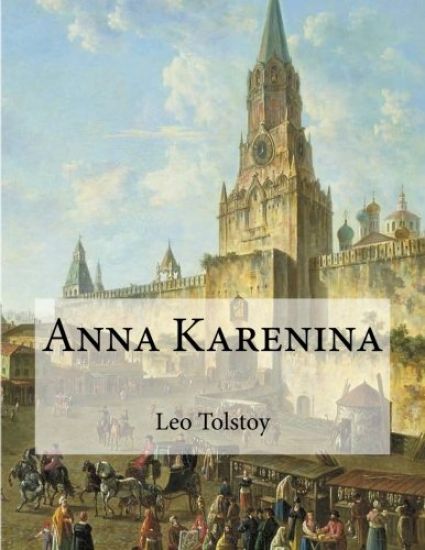
Anna Karenina: Abridged

Anna Karenina: Abridged

Leo Tolstoy

Createspace Independent Publishing Platform
2011
nidottu
Anna Karenina is generally considered Tolstoy's best book, and by some, the greatest novel ever written. Anna, miserable in her loveless marriage, does the barely thinkable and succumbs to her desires for another.
Anna Karenina

Anna Karenina

Leo Tolstoy

Createspace Independent Publishing Platform
2011
nidottu
Anna Karenina (sometimes Anglicised as Anna Karenin) is a novel by the Russian writer Leo Tolstoy, published in serial installments from 1873 to 1877 in the periodical The Russian Messenger. Tolstoy clashed with its editor Mikhail Katkov over issues that arose in the final installment; therefore, the novel's first complete appearance was in book form. Widely regarded as a pinnacle in realist fiction, Tolstoy considered Anna Karenina his first true novel, when he came to consider War and Peace to be more than a novel. The character of Anna was likely inspired, in part, by Maria Hartung (Russian spelling Maria Gartung, 1832-1919), the elder daughter of the Russian poet Alexander Pushkin. Soon after meeting her at dinner, Tolstoy began reading Pushkin's prose and once had a fleeting daydream of "a bare exquisite aristocratic elbow", which proved to be the first intimation of Anna's character. Although Russian critics dismissed the novel on its publication as a "trifling romance of high life", Fyodor Dostoevsky declared it to be "flawless as a work of art". His opinion was shared by Vladimir Nabokov, who especially admired "the flawless magic of Tolstoy's style", and by William Faulkner, who described the novel as "the best ever written". The novel is currently enjoying popularity as demonstrated by a recent poll of 125 contemporary authors by J. Peder Zane, published in 2007 in The Top Ten, which declared that Anna Karenina is the "greatest novel ever written".
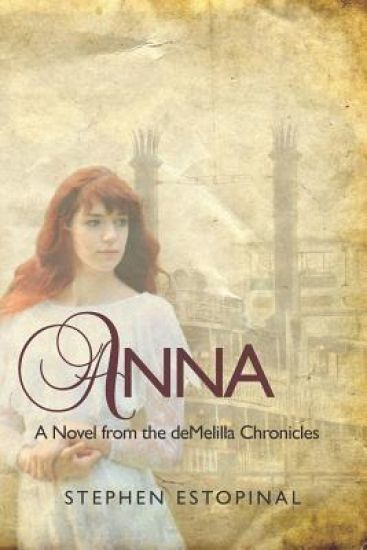
Anna: A Novel from the deMelilla Chronicles

Anna: A Novel from the deMelilla Chronicles

Stephen Vincent Estopinal

Createspace Independent Publishing Platform
2011
nidottu
Anna and Bartolom deMelilla manage Cathay Steamboats and are on the forefront of the industrial revolution. In 1825 their steamboats ply the vast Mississippi River Valley and they have begun to invest in a new form of land transportation - railroads - when they are attacked by ruthless men determined to take everything they have accomplished. Vengeful Voodoo spirits recruit the famous priestess, Madam Barbeaux, to intervene, manipulating events to serve their own ends, placing Anna and Bartolom in even greater danger.Bartolom is pursued through the wilderness, isolated from his family and friends in New Orleans. In his absence, survival of their business and their family depends upon Anna. Her courage, intellect and daring are all that stand between the powerful East India Company and her family. Anna must fight for her family, husband, children, and her life. When help does come, it is sent from the unseen, spiritual world and conveyed by Anna's unborn child.The first novel of the deMelilla Chronicles, El Tigre de Nueva Orle ns, the second, Incident at Blood River and Anna are stories of 18th and 19th Century Canary Islander settlers in Louisiana and their struggle for survival.
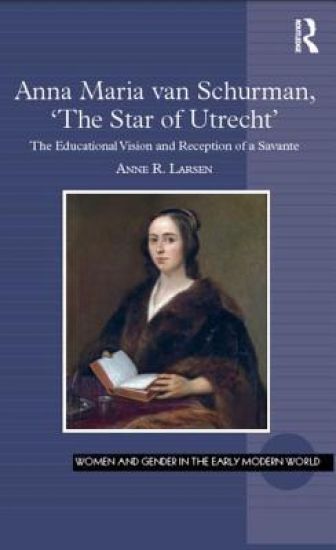
Anna Maria van Schurman, 'The Star of Utrecht'
Dutch Golden Age scholar Anna Maria van Schurman was widely regarded throughout the seventeenth century as the most learned woman of her age. She was 'The Star of Utrecht','The Dutch Minerva','The Tenth Muse', 'a miracle of her sex', 'the incomparable Virgin', and 'the oracle of Utrecht'. As the first woman ever to attend a university, she was also the first to advocate, boldly, that women should be admitted into universities. A brilliant linguist, she mastered some fifteen languages. She was the first Dutch woman to seek publication of her correspondence. Her letters in several languages Hebrew, Greek, Latin, and French – to the intellectual men and women of her time reveal the breadth of her interests in theology, philosophy, medicine, literature, numismatics, painting, sculpture, embroidery, and instrumental music. This study addresses Van Schurman's transformative contribution to the seventeenth-century debate on women's education. It analyses, first, her educational philosophy; and, second, the transnational reception of her writings on women's education, particularly in France. Anne Larsen explores how, in advocating advanced learning for women, Van Schurman challenged the educational establishment of her day to allow women to study all the arts and the sciences. Her letters offer fascinating insights into the challenges that scholarly women faced in the early modern period when they sought to define themselves as intellectuals, writers, and thoughtful contributors to the social good.
Anna Kavan

Anna Kavan

Victoria Walker

EDINBURGH UNIVERSITY PRESS
2023
sidottu
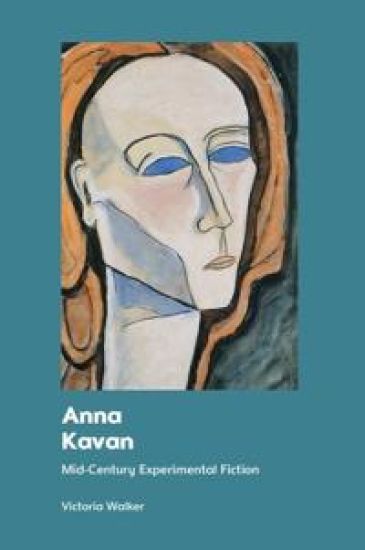
The first critical study of Anna Kavan's experimental fiction Makes extensive use of unpublished archival sources Reads Kavan comparatively against other twentieth-century experimental writers including Jean Rhys, Elizabeth Bowen and Muriel Spark Suggests new taxonomies for mid-century experimental fiction This first book-length study of Anna Kavan's writing contradicts earlier critical approaches that have figured her writing as sui generis by reading her comparatively alongside her contemporaries, especially Jean Rhys, Elizabeth Bowen, Muriel Spark and Doris Lessing. Taking Kavan's fiction as pivotal to understanding trends of experimentalism that emerged across the middle of the twentieth century, it offers close readings of her distinctive prose including her early Helen Ferguson texts, her writing of asylum incarceration, her wartime stories, and her postwar novels. Observing how her fiction challenges perceived divisions between experimental and realist writing, literary and popular genre and (late) modernist and postwar literatures, it focuses on the ways that Kavan's writing undermines fixed or knowable identity and explores the relationship between reality and fiction. This study not only brings necessary attention to a neglected writer, but also suggests new taxonomies for reading experimental fiction in the mid-twentieth century.
Anna Kavan

Anna Kavan

Victoria Walker

EDINBURGH UNIVERSITY PRESS
2025
nidottu
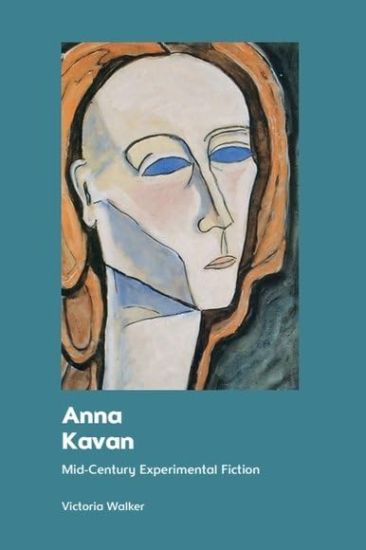
This first book-length study of Anna Kavan's writing contradicts earlier critical approaches that have figured her writing as sui generis by reading her comparatively alongside her contemporaries, especially Jean Rhys, Elizabeth Bowen, Muriel Spark and Doris Lessing. Taking Kavan's fiction as pivotal to understanding trends of experimentalism that emerged across the middle of the twentieth century, it offers close readings of her distinctive prose including her early Helen Ferguson texts, her writing of asylum incarceration, her wartime stories, and her postwar novels. Observing how her fiction challenges perceived divisions between experimental and realist writing, literary and popular genre and (late) modernist and postwar literatures, it focuses on the ways that Kavan's writing undermines fixed or knowable identity and explores the relationship between reality and fiction. This study not only brings necessary attention to a neglected writer, but also suggests new taxonomies for reading experimental fiction in the mid-twentieth century.