
Kirjahaku
Etsi kirjoja tekijän nimen, kirjan nimen tai ISBN:n perusteella.
1000 tulosta hakusanalla Auguste Devin
Les Fables De Phedre Affranchy D'Auguste (1702)
Caius Julius Phaedrus
KESSINGER PUBLISHING, LLC
2009
pokkari
Fables De Phedre Affranchi D'Auguste En Latin Et En Francois (1769)
Phaedrus
KESSINGER PUBLISHING, LLC
2009
pokkari

L'Histoire Et La Politique De L'Auguste Maison D'Autriche (1669)
Anonymous
KESSINGER PUBLISHING, LLC
2009
pokkari

L'Universite De Paris Sous Philippe Auguste (1899)
Achille Luchaire
KESSINGER PUBLISHING, LLC
2009
pokkari
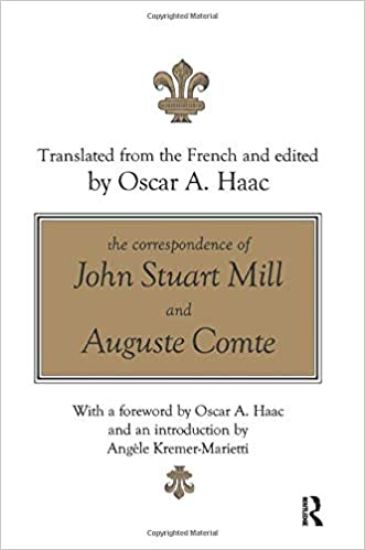
This volume presents eighty-nine letters exchanged between John Stuart Mill and Auguste Comte between 1841 and 1847. They address important issues of the mid-nineteenth century in philosophy, science, economics, and politics. Cumulatively, these letters provide a humanistic view of Western Europe and its social problems. They add valuable perspective to what we know about the work of Mill and Comte, in a critical period of English and French thought.The correspondence begins with an admiring letter from Mill who considers himself a positivist at the tune and writes to Comte as to an elder colleague. A close friendship developed, in the course of which they discussed matters of common concern. Their understanding extends to personal experiences, including their respective mental crises at an early age. The opinions expressed about their contemporaries are significant and include comments on Thomas Carlyle, John and Sarah Austin, and Alexander Bain, on philosophers and major authors in France, Germany, and Italy. Mill and Comte eventually encountered issues on which they could not come to consensus, especially the equality of women. While Mill was an ardent defender of women's rights, Comte supported the traditional hierarchy that endowed men with social and political superiority.According to Jerome H. Buckley, Gurner Professor of English Literature Emeritus at Harvard University, "The correspondence of Mill and Comte, now available for the first time in English translation, is a remarkable intellectual exchange, a dialogue of real significance in the history of ideas." This volume will be of great interest to philosophers, historians, economists, women's studies scholars, and political scientists.

Biographie De Monseigneur Sibour Marie-Dominique-Auguste
Philippe Aymes
KESSINGER PUBLISHING, LLC
2010
pokkari

Catalogue Des Actes De Philippe-Auguste (1856)
Leopold Delisle
KESSINGER PUBLISHING, LLC
2010
pokkari
Le Conseil Des Empereurs D'Auguste A Diocletien (1884)
Edouard Cuq
KESSINGER PUBLISHING, LLC
2010
pokkari
Lettres De Richard Wagner A Auguste Roeckel (1894)
KESSINGER PUBLISHING, LLC
2010
pokkari
Discours Sur Les Medailles D'Auguste Et De Tibere
Francois Artaud
KESSINGER PUBLISHING, LLC
2010
pokkari

Selection of Nine Paintings by Pierre Auguste Renoir: A Selection of Paintings of the French Modern School
Durand-Ruel Galleries; Pierre Auguste Renoir
Literary Licensing, LLC
2011
sidottu

Selection of Nine Paintings by Pierre Auguste Renoir: A Selection of Paintings of the French Modern School
Durand-Ruel Galleries; Pierre Auguste Renoir
Literary Licensing, LLC
2011
nidottu


La Vie romaine au temps d'Auguste
Jean-Jacques Ampere
Createspace Independent Publishing Platform
2014
nidottu
"La Vie romaine au temps d'Auguste" par Jean-Jacques Amp re. Jean-Jacques Amp re tait un historien, crivain et voyageur fran ais (1800-1864).
La Propriété foncière de Philippe Auguste à Napoléon
Georges D. Avenel
Createspace Independent Publishing Platform
2015
nidottu
"La Propri t fonci re de Philippe Auguste Napol on" de Georges d'Avenel. Historien et conomiste fran ais (1855-1939).

Tibère et l'héritage d'Auguste
Charles-Ernest Beule
Createspace Independent Publishing Platform
2015
nidottu
"Tib re et l'h ritage d'Auguste" de Charles Ernest Beul . Charles Ernest Beul , arch ologue et homme politique fran ais (1826-1874).
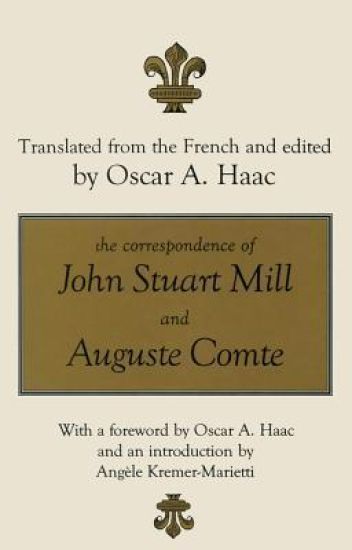
The Correspondence of John Stuart Mill and Auguste Comte
Oscar Haac
Transaction Publishers
1994
sidottu
This volume presents eighty-nine letters exchanged between John Stuart Mill and Auguste Comte between 1841 and 1847. They address important issues of the mid-nineteenth century in philosophy, science, economics, and politics. Cumulatively, these letters provide a humanistic view of Western Europe and its social problems. They add valuable perspective to what we know about the work of Mill and Comte, in a critical period of English and French thought.The correspondence begins with an admiring letter from Mill who considers himself a positivist at the tune and writes to Comte as to an elder colleague. A close friendship developed, in the course of which they discussed matters of common concern. Their understanding extends to personal experiences, including their respective mental crises at an early age. The opinions expressed about their contemporaries are significant and include comments on Thomas Carlyle, John and Sarah Austin, and Alexander Bain, on philosophers and major authors in France, Germany, and Italy. Mill and Comte eventually encountered issues on which they could not come to consensus, especially the equality of women. While Mill was an ardent defender of women's rights, Comte supported the traditional hierarchy that endowed men with social and political superiority.According to Jerome H. Buckley, Gurner Professor of English Literature Emeritus at Harvard University, "The correspondence of Mill and Comte, now available for the first time in English translation, is a remarkable intellectual exchange, a dialogue of real significance in the history of ideas." This volume will be of great interest to philosophers, historians, economists, women's studies scholars, and political scientists.

La Vie romaine au temps d'Auguste
Jean-Jacques Ampère
Createspace Independent Publishing Platform
2017
nidottu
... M c ne encourageait Properce dans l'entreprise de son po me national, parce qu'il devait aboutir Auguste; mais Properce, qui avait accept cette t che pour plaire M c ne, comprit que son g nie n' tait point-l . Il se contenta de souhaiter Auguste la conqu te du monde, laquelle Auguste ne pensait point, comme Horace lui pr disait la prochaine soumission de l'Inde et de la Chine. Properce, qui a renonc toute gloire militaire, sera content s'il assiste aux triomphes de l'empereur, s'il voit son char charg de d pouilles s'arr ter fr quemment dans sa marche pour qu'Auguste re oive les applaudissements du peuple. Lui cependant, appuy sur le sein de la jeune fille qu'il aime, lira les noms des villes conquises, verra les traits et les arcs des soldats trangers, les chefs assis sous les troph es d'armures, et il lui suffira d'applaudir avec la foule dans la voie Sacr e. L'aimable Tibulle est le seul des po tes de ce temps auquel je n'aie pas reprocher un vers en l'honneur d'Auguste. Les mes tendres ne sont pas toujours les plus faibles...
Oraison Funèbre de Mgr Joseph-Auguste-Victorin de Morlhon, En La Basilique-Cathédrale Du Puy
Antoine Coupe
Hachette Livre - BNF
2016
pokkari