Kirjojen hintavertailu. Mukana 12 390 323 kirjaa ja 12 kauppaa.

Kirjahaku

Etsi kirjoja tekijän nimen, kirjan nimen tai ISBN:n perusteella.

1000 tulosta hakusanalla Auguste Perdonnet

Berta und Auguste

Berta und Auguste

Heide Sommer

Medien Online Service Gmbh
2025
pokkari
Eine Frau aus Halberstadt m chte die Welt zu einem besseren Ort machen und niemand glaubt, dass sie es schafft. Bevor sie ihre Worte in Taten umsetzen kann, stirbt sie einen gewaltsamen Tod. Berta und Auguste machen sich auf die Suche nach dem M rder. Nebenbei k mmern sie sich unfreiwillig um Idas neuen Familienzuwachs.
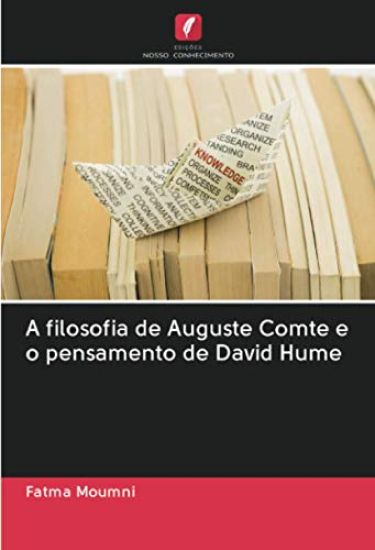
La Philosophie Auguste Comte Et La Pensée De David Hume

La Philosophie Auguste Comte Et La Pensée De David Hume

Fatma Moumni

Editions Universitaires Europeennes
2020
pokkari
Il est ind niable que Comte a t influenc par Hume depuis sa jeunesse, l'influence de Comte sur Hume se manifeste de fa on claire dans un article de 1819 intitul ״S paration g n rale entre les opinions et les d sirs״ qui se trouve dans les crits de jeunesse (1819-1828), et nous voyons aussi que Hume ressurgit la fin du Syst me de politique positive (1851-1854), texte dans lequel Auguste Comte affirme qu'il appartient l' cole de Hume.Nous avons deux philosophies anthropologiques qui tablissent les fondements d'une vie sociale et d'une th orie morale ancr es dans la nature humaine, dans les d sirs et les instincts incontr l s et qui exigent une r gulation par la m diation de la sociabilit et du temps. La question des passions, des penchants et des sentiments se d gage d'une probl matique classique celle qui l'int grait au sein d'un subjectivisme rationaliste, qui soumettait le corps l'emprise de l' me.
Die Philosophie von Auguste Comte und der Gedanke von David Hume
Es ist unbestreitbar, dass Comte von seiner Jugend an von Hume beeinflusst wurde, der Einfluss von Comte auf Hume zeigt sich deutlich in einem Artikel von 1819 mit dem Titel ״S paration general between the opinions und d sirs״, der in den Jugendschriften (1819-1828) zu finden ist, und wir sehen auch, dass Hume am Ende des Systems der positiven Politik (1851-1854) wieder auftaucht, ein Text, in dem Auguste Comte erkl rt, dass er zu Humes Schule geh rt.Wir haben zwei anthropologische Philosophien, die die Grundlagen f r ein soziales Leben und eine Moraltheorie schaffen, die in der menschlichen Natur, in unkontrollierten W nschen und Instinkten verwurzelt sind und die eine Regulierung durch die Vermittlung von Geselligkeit und Zeit verlangen. Die Frage nach den Leidenschaften, Neigungen und Gef hlen geht aus einer klassischen Problematik hervor, die sie in einen rationalistischen Subjektivismus integrierte, der den K rper dem Zugriff der Seele unterwarf.
La filosofia di Auguste Comte e il pensiero di David Hume
innegabile che Comte fu influenzato da Hume fin dalla sua giovinezza, l'influenza di Comte su Hume si manifesta chiaramente in un articolo del 1819 intitolato ״S paration general tra le opinioni e d sirs״ che si trova negli Scritti della giovent (1819-1828), e vediamo anche che Hume riemerge alla fine del Sistema di Politica Positiva (1851-1854), un testo in cui Auguste Comte dichiara di appartenere alla scuola di Hume.Abbiamo due filosofie antropologiche che stabiliscono i fondamenti di una vita sociale e di una teoria morale radicata nella natura umana, nei desideri e negli istinti incontrollati, e che richiedono una regolazione attraverso la mediazione della socievolezza e del tempo. La questione delle passioni, delle inclinazioni e dei sentimenti emerge da una problematica classica, quella che l'ha integrata in un soggettivismo razionalista, che sottoponeva il corpo alla presa dell'anima.
L'empire d'Auguste

L'empire d'Auguste

Jordan Iliev

Editions Notre Savoir
2025
pokkari
L'histoire fascinante de l'Empire romain - de la fondation du Principat en 27 avant J.-C. au d but du Dominat en 284 apr s J.-C. - est explor e dans ce livre, qui offre un aper u clair et chronologique des v nements cl s, des dirigeants et des conflits. Les dynasties imp riales, avec leurs repr sentants hauts en couleur et souvent dramatiques, sont galement examin es, mettant en lumi re leur impact sur le cours de l'histoire. S'appuyant sur les interpr tations et les r flexions historiques les plus r centes, l'ouvrage permet aux lecteurs de mieux comprendre le monde romain, depuis les luttes de pouvoir jusqu'aux transformations politiques. Que vous soyez passionn d'histoire, tudiant ou simplement curieux de conna tre l'une des civilisations les plus influentes de l'histoire, cet ouvrage fait revivre l' poque du Principat d'une mani re structur e et captivante, offrant des le ons intemporelles qui r sonnent encore aujourd'hui.
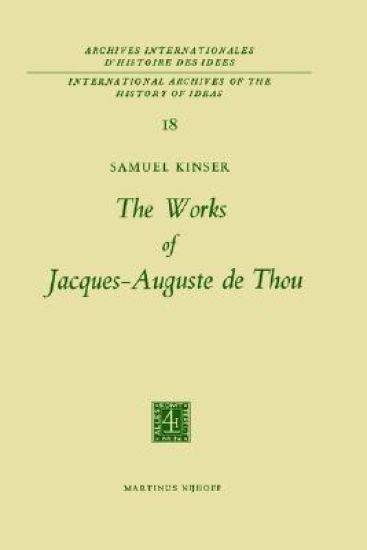
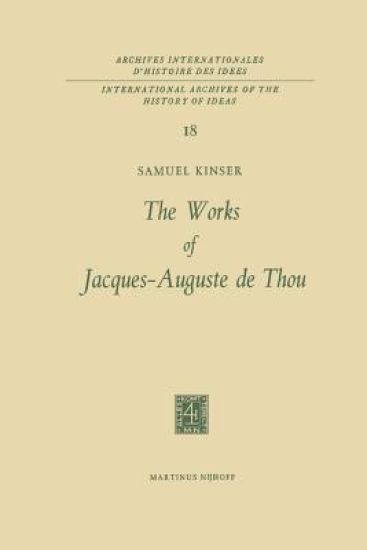
The Works of Jacques-Auguste de Thou

The Works of Jacques-Auguste de Thou

S. Kinser

Kluwer Academic Publishers
1967
sidottu
Until the nineteenth century Jacques-Auguste de Thou (1553-1617) was among the most famous and most valued of historians. While his first fame was a succes de scandale - the History of His Time was placed on the Index in 160g - de Thou's work quickly found favor with the humanistically-educated learned class throughout Europe. The esteem in which the History was held transcended religious divisions. The historian received letters of praise from staunchly orthodox Spain and Portugal as well as from heretic England and Germany; through the seventeenth and eighteenth centuries his History was read with enthusi­ asm by certain cardinals at the very curia which condemned it; and so staunch a champion of orthodoxy as Bishop Bossuet did not hesitate to appeal to "such a great author" for support in his own historical works. ! To the philosophe of the Enlightenment de Thou's impartiality in de­ scribing the impassioned times through which he lived and the exact yet eloquent style with which he wrote the History of His Time were familiar touchstones. Voltaire appealed to the "truthful and eloquent de Thou" again and again in his works,2 William Pitt rose in the House of Commons to quote the words of the "great historian of France" during the early years of the French Revolution,3 Lessing 4 and Herder 5 praised him with poetic hyperbole, and Edward Gibbon re­ ferred to "the authority of my masters, the grave Thuanus and the philosophic Hume . . . .
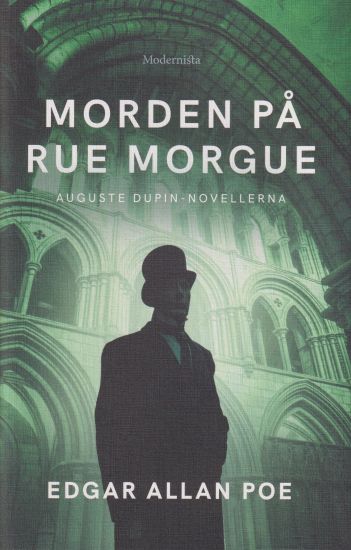
Morden på Rue Morgue : Auguste Dupin-novellerna
Ett brutalt och oförklarligt mord på två kvinnor i Paris leder till gripandet av en oskyldig banktjänsteman. När den smått excentriske och exceptionellt begåvade C. Auguste Dupin läser om händelsen erbjuder han sin hjälp till polisen - och upptäcker snart att ingenting är som man trott. Edgar Allan Poes »Morden på Rue Morgue« brukar betraktas som den första moderna detektivhistorien. Den publicerades första gången 1841 i tidskriften Graham's Magazine, och Dupin själv kom snart att utgöra en förlaga för berömda litterära detektiver som Sherlock Holmes och Hercule Poirot. Denna utgåva innehåller även de ytterligare två noveller Poe skrev om Dupin: »Mysteriet Marie Rogêt« [1842] och »Det försnillade brevet« [1844]. I svensk översättning av Anna Pyk.EDGAR ALLAN POE föddes i Boston 1809. Efter korta försök inom universitetsvärlden och militären började han verka som litteraturkritiker och författare. Han debuterade med romanen Gordon Pyms äventyr [1838], men det var i novellerna som Poes sällsamma stil verkligen kom till sin rätt. Han dog i Baltimore 1849.
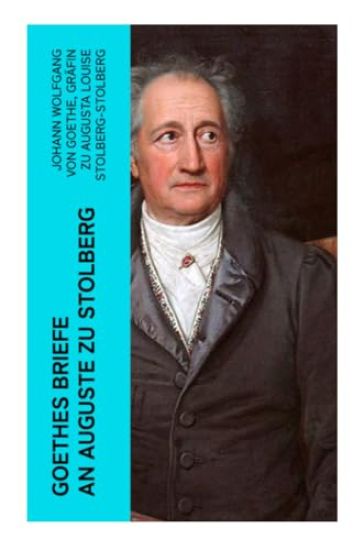
Goethes Briefe an Auguste zu Stolberg

Goethes Briefe an Auguste zu Stolberg

Johann Wolfgang Von Goethe; Gr Augusta Louise Zu Stolberg-Stolberg

ALPHA EDITION
2023
pokkari
Goethes Briefe an Auguste zu Stolberg, wurde w hrend der gesamten Menschheitsgeschichte als bedeutendes Werk angesehen, und um sicherzustellen, dass dieses Werk niemals verloren geht, haben wir Schritte unternommen, um seine Erhaltung zu gew hrleisten, indem wir dieses Buch in einem zeitgem en Format f r aktuelle und zuk nftige Generationen neu herausgeben. Dieses gesamte Buch wurde neu abgetippt, neu gestaltet und neu formatiert. Da diese B cher nicht aus gescannten Kopien bestehen, ist der Text lesbar und klar.
The Works of Jacques-Auguste de Thou
Until the nineteenth century Jacques-Auguste de Thou (1553-1617) was among the most famous and most valued of historians. While his first fame was a succes de scandale - the History of His Time was placed on the Index in 160g - de Thou's work quickly found favor with the humanistically-educated learned class throughout Europe. The esteem in which the History was held transcended religious divisions. The historian received letters of praise from staunchly orthodox Spain and Portugal as well as from heretic England and Germany; through the seventeenth and eighteenth centuries his History was read with enthusi­ asm by certain cardinals at the very curia which condemned it; and so staunch a champion of orthodoxy as Bishop Bossuet did not hesitate to appeal to "such a great author" for support in his own historical works. ! To the philosophe of the Enlightenment de Thou's impartiality in de­ scribing the impassioned times through which he lived and the exact yet eloquent style with which he wrote the History of His Time were familiar touchstones. Voltaire appealed to the "truthful and eloquent de Thou" again and again in his works,2 William Pitt rose in the House of Commons to quote the words of the "great historian of France" during the early years of the French Revolution,3 Lessing 4 and Herder 5 praised him with poetic hyperbole, and Edward Gibbon re­ ferred to "the authority of my masters, the grave Thuanus and the philosophic Hume . . . .
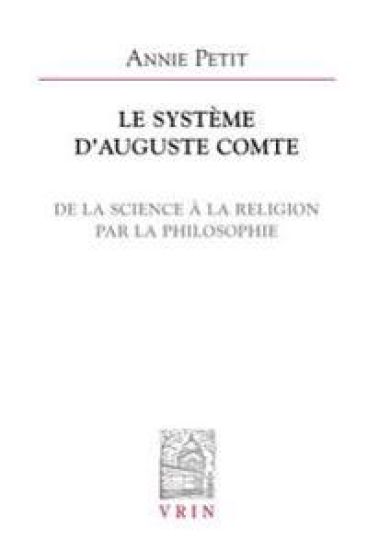
Le Systeme D'Auguste Comte: de la Science a la Religion Par La Philosophie
La philosophie positive, et le positivisme qui la developpe, ont ete d'une importance majeure au XIXe siecle. Une vulgate confondant parfois les positions explicites de Comte avec les modifications voire les derives apportees par des disciples plus ou moins fideles, ou avec ce que les adversaires en ont caricature, a multiplie les malentendus. Il s'agit ici de retracer le parcours comtien et d'en montrer les enjeux. Comte a voulu construire une philosophie en rupture avec celle de l'Encyclopedie et de la Revolution. Il a fonde un mouvement pour son temps, et dont le notre a sans doute herite plus qu'on ne l'a dit. L'accent est mis sur la systematisation complexe elaboree par Comte, liant les savoirs et les pouvoirs, les desseins intellectuels et sociaux, le souci de l'avenir appuye sur l'histoire. En partant des sciences, dont il s'efforce d'etablir une appellation controlee, il edifie une philosophie de l'ordre et du progres; il la prolonge en une socio-politique, puis la deploie, en reintegrant l'affectif, en une nouvelle religion, qui se veut sans Dieu pour mieux servir l'Humanite.