Kirjahaku
Etsi kirjoja tekijän nimen, kirjan nimen tai ISBN:n perusteella.
1000 tulosta hakusanalla Barbara Herrmann

Barbara Howard, or, the Belle of Allensville a Tale
Antigonos Verlag
2025
sidottu



Barbara Heathcote's Trial
Antigonos Verlag
2025
sidottu

Barbara Heathcote's Trial
Antigonos Verlag
2025
sidottu

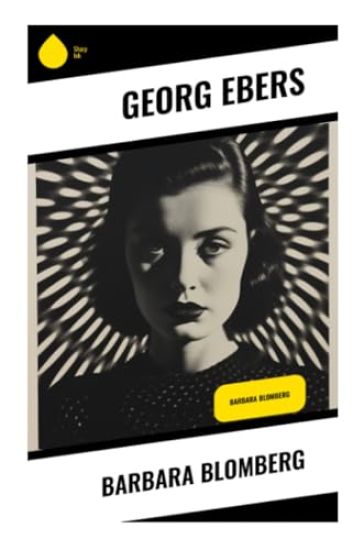
Barbara Blomberg
Antigonos Verlag
2025
sidottu



Barbara's History
Antigonos Verlag
2025
sidottu

Barbara's History
Antigonos Verlag
2025
sidottu

Barbara Yelin, Irmina
Tina Kaschub; Barbara Reidelshöfer
Buchner, C.C. Verlag
2021
lehtivihko, moniste
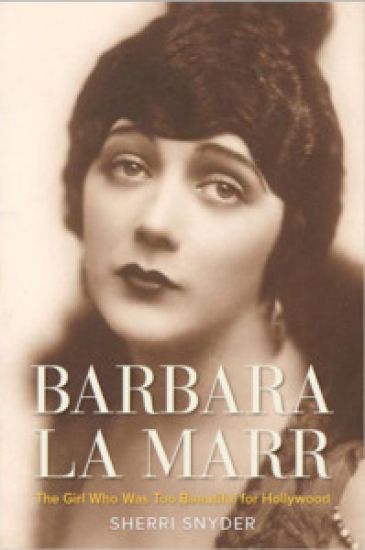
Barbara La Marr's (1896--1926) publicist once confessed: "There was no reason to lie about Barbara La Marr. Everything she said, everything she did was colored with news-value." When La Marr was sixteen, her older half-sister and a male companion reportedly kidnapped her, causing a sensation in the media. One year later, her behavior in Los Angeles nightclubs caused law enforcement to declare her "too beautiful" to be on her own in the city, and she was ordered to leave. When La Marr returned to Hollywood years later, her loveliness and raw talent caught the attention of producers and catapulted her to movie stardom. In the first full-length biography of the woman known as the "girl who was too beautiful," Sherri Snyder presents a complete portrait of one of the silent era's most infamous screen sirens. In five short years, La Marr appeared in twenty-six films, including The Prisoner of Zenda (1922), Trifling Women (1922), The Eternal City (1923), The Shooting of Dan McGrew (1924), and Thy Name Is Woman (1924). Yet by 1925 -- finding herself beset by numerous scandals, several failed marriages, a hidden pregnancy, and personal prejudice based on her onscreen persona -- she fell out of public favor. When she was diagnosed with a fatal lung condition, she continued to work, undeterred, until she collapsed on set. She died at the age of twenty-nine. Few stars have burned as brightly and as briefly as Barbara La Marr, and her extraordinary life story is one of tempestuous passions as well as perseverance in the face of adversity. Drawing on never-before-released diary entries, correspondence, and creative works, Snyder's biography offers a valuable perspective on her contributions to silent-era Hollywood and the cinematic arts.
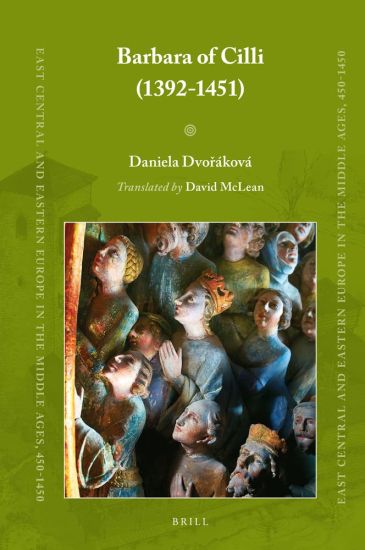
This is the first biography of Barbara of Cilli (1392-1451), Hungarian, Roman-German and Bohemian queen through her marriage to King and later Emperor Sigismund of Luxembourg (1368-1437). While Emperor Sigismund has enjoyed substantial historical attention, Barbara has remained in his shadow, despite her significant political, economic, and cultural influence. Barbara’s image is still preserved today as the "Black Queen" or the "German Messalina". She has been transformed into a mystical or even demonic figure in folklore – a prime example of the creation and functioning of historical stereotypes – yet as a historical figure she emerges as an influential and exceptional queen.

Barbara Strozzi in Context
Cambridge University Press
2026
sidottu
Renowned as both a singer and composer, Barbara Strozzi was among the most accomplished and prolific composers of vocal chamber music in the seventeenth century. Her works, which have become increasingly popular in concert and recordings in recent decades, are remarkable for their musical sophistication and extraordinary range of expression-humor, irony, eroticism, pathos, and religious devotion. The adopted daughter of the poet Giulio Strozzi and mother of four children, Barbara Strozzi (who might have been a courtesan) was also for a time a participant in Venice's vibrant libertine intellectual and artistic world. This first English-language volume to focus on the composer brings together invited essays by an international group of scholars from diverse disciplines to explore Strozzi's life, her music, and the complex world she inhabited. Chapters focus not only on Strozzi, but also on other prominent women of the time, and on other issues including financial questions and matters of sexuality.