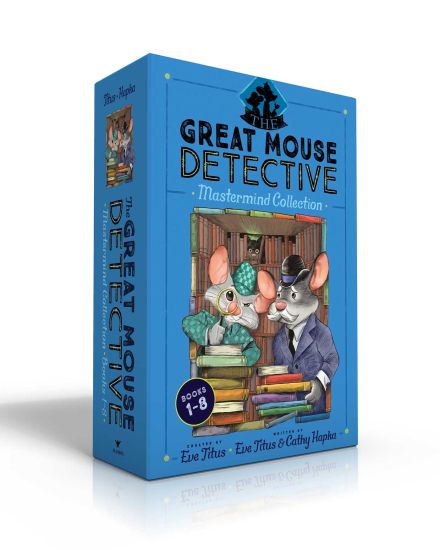
Join Basil, the Sherlock Holmes of the mouse world--and the inspiration for the hit Disney film The Great Mouse Detective--as he solves some of his most thrilling cases in this entertaining boxed set Basil--the detective mastermind of the mouse world--lives in the cellar of Sherlock Holmes's house. A devoted admirer of the great detective, he has learned his craft by listening at the feet of Holmes himself. Join Basil and his friend, Dr. Dawson, they solve some of their most baffling cases in this collectible boxed set The paperback boxed set includes: Basil of Baker Street Basil and the Cave of Cats Basil in Mexico Basil in the Wild West Basil and the Lost Colony Basil and the Big Cheese Cook-Off Basil and the Royal Dare Basil and the Library Ghost
This Herb Cooking Coloring Book for Adults the perfect way to relieve stress and aid relaxation while enjoying beautiful and highly detailed images. Product Details: Presentation Page for Gift-Giving Printed single sided on bright white paper Premium matte cover finish Large format 8.5" x 11.0" pages
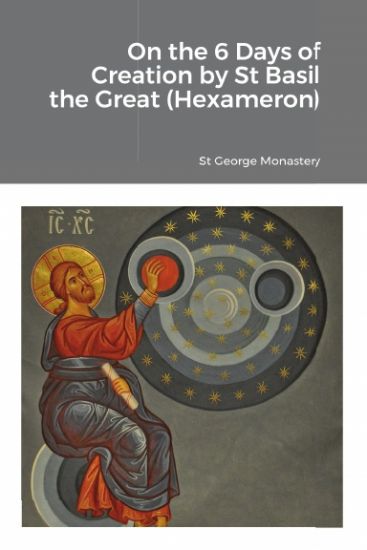
The term Hexameron (Greek: Ἡ Ἑξαήμερος Δημιουργία Hē Hexaēmeros Dēmiourgia) refers either to the genre of theological treatise that describes God's work on the six days of creation or to the six days of creation themselves. Most often these theological works take the form of commentaries on Genesis I. As a genre, hexameral literature was popular in the early church and medieval periods. The word derives its name from the Greek roots hexa-, meaning "six", and hemer-, meaning "day". Saint Basil wrote an early and influential series of homilies around 370 AD which figure as the earliest extant Hexameron. Basil originally performed the work as a series of sermons, and later collected them into a written work which was influential among early church leaders.
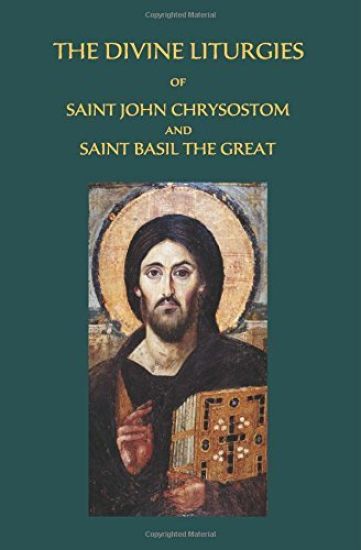
Published by the Institute for Orthodox Christian Studies, Cambridge, this translation into modern English is of the two major Liturgies of the Orthodox Church, that of St John Chrysostom (died 407 A.D.)which is used on most occasions when the communion is celebrated, and the fuller Liturgy attributed to St Basil the Great (died 379 A.D.), now used on 1 January, the Feast Day of the Saint, on the first five Sundays of Great Lent, and on Holy Saturday. Both liturgies express the essence of the Orthodox Christian faith, and have been in use since the early centuries of the Christian era. St Basil's Liturgy was for many centuries the most used, that of St John Chrysostom taking priority only in the early medieval period. Though both have had material added to them, recent scholarship, by comparing phrases and expressions in the liturgies with works undoubtedly by the two saints, have established that the traditional attributions are likely to be correct.These two translations into modern English were first commissioned by Archbishop Gibran (Ramlawi) for the Antiochian Orthodox Archdiocese of Australasia, to meet a need expressed by the youth of the archdiocese for an elegant and intelligible translation of the services into a modern English that worshippers and visiting friends from varied ethnic backgrounds might find comprehensible and moving.On the publication of the St John Chrysostom Liturgy in its modern version, Philip Tovey in his review for NEWS OF LITURGY wrote: 'This English version of the Orthodox Liturgy is done by David Frost to the high standard we might expect. It is a fresh translation which brings the liturgy to life . . . Indeed, the move to good Modern English shows the Orthodox Liturgy to be something living, rather than looking like a fossil. This translation is another great help in our appreciation of the Divine Liturgy.'This collection also contains translations of the short hymns, troparia and kontakia, that are used on the Sundays and Great Feasts of the Church's year.The text is intended as the foundation English version to be used in a project of the Institute for Orthodox Christian Studies, Cambridge, to provide parallel texts of the Liturgy for use in the various ethnic Orthodox Churches in Great Britain, whereby texts authorized by each Church can be paired with a common English translation of quality that can establish itself as a version familiar to all Orthodox who are bi-lingual and which will be acceptable to those from ethnic Churches who wish to worship in the language of their adopted country.
Revision with unchanged content. As Christianity flourished during the fourth century, believers were faced with the challenges not only of their own internal conflicts and theological dis-agreements, but also with religious, philosophical, and ethical pressures from the broader culture in which they were embedded. One unsettled issue was the role of classical Greek and Roman literature in Christian education. St. Basil the Great (c.330-379 CE) explores this question in his Address to Young Men. By recommending circumspect study of classical texts, Basil encourages his readers to extract what is useful from the earlier authors while rejecting what is harmful or irrelevant. The present work examines the images and metaphors employed by Basil in his Address with a view to answering such questions as why Basil recommended non-Christian writings, how he viewed their relationship to his own community's Scriptures, and what underlying presuppositions may have informed Basil's treatment of various kinds of literature. This book is directed toward students and scholars of early Christianity, Classics, and to anyone contemplating the value of ancient literature in education, whether religious or secular.
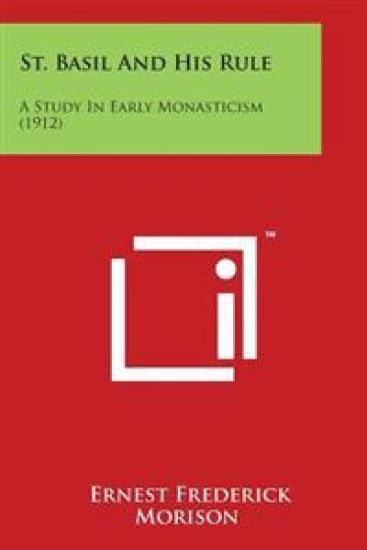
This book has been considered by academicians and scholars of great significance and value to literature. This forms a part of the knowledge base for future generations. So that the book is never forgotten we have represented this book in a print format as the same form as it was originally first published. Hence any marks or annotations seen are left intentionally to preserve its true nature.
OEuvres de Napol on Bonaparte (Tome II), un livre classique, a t consid r comme important tout au long de l'histoire de l'humanit , et pour que cet ouvrage ne soit jamais oubli , chez Alpha Editions, nous avons fait des efforts pour sa pr servation en r ditant ce livre dans un format moderne pour les g n rations pr sentes et futures. Tout ce livre a t reformat , retap et con u. Ces livres ne sont pas constitu s de copies num ris es de leur oeuvre originale et le texte est donc clair et lisible.
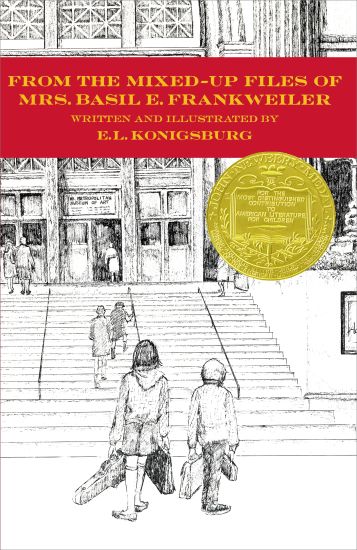
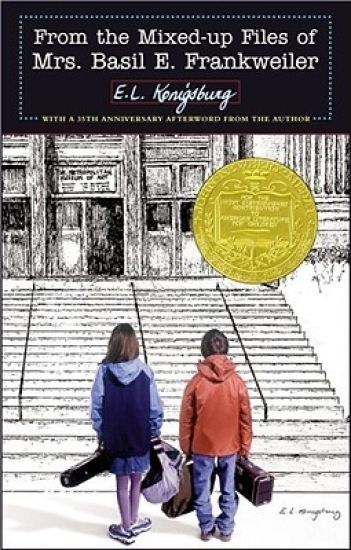
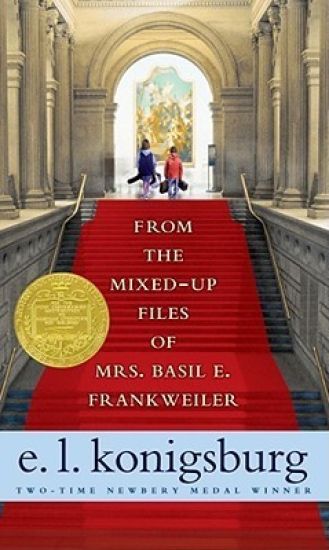
2017 marks the fiftieth anniversary of the beloved classic From the Mixed-up files of Mrs. Basil E. Frankweiler. When Claudia decided to run away, she planned very carefully. She would be gone just long enough to teach her parents a lesson in Claudia appreciation. And she would go in comfort-she would live at the Metropolitan Museum of Art. She saved her money, and she invited her brother Jamie to go, mostly because be was a miser and would have money. Claudia was a good organizer and Jamie bad some ideas, too; so the two took up residence at the museum right on schedule. But once the fun of settling in was over, Claudia had two unexpected problems: She felt just the same, and she wanted to feel different; and she found a statue at the Museum so beautiful she could not go home until she bad discovered its maker, a question that baffled the experts, too. The former owner of the statue was Mrs. Basil E. Frankweiler. Without her-well, without her, Claudia might never have found a way to go home.
Having run away with her younger brother to live in the Metropolitan Museum of Art, twelve-year-old Claudia strives to keep things in order in their new home and to become a changed person and a heroine to herself.
A Time Best YA Book of All Time (2021) Run away to the Metropolitan Museum of Art with E. L. Konigsburg's beloved classic and Newbery Medal--winning novel From the Mixed-Up Files of Mrs. Basil E. Frankweiler When Claudia decided to run away, she planned very carefully. She would be gone just long enough to teach her parents a lesson in Claudia appreciation. And she would go in comfort-she would live at the Metropolitan Museum of Art. She saved her money, and she invited her brother Jamie to go, mostly because be was a miser and would have money. Claudia was a good organizer and Jamie bad some ideas, too; so the two took up residence at the museum right on schedule. But once the fun of settling in was over, Claudia had two unexpected problems: She felt just the same, and she wanted to feel different; and she found a statue at the Museum so beautiful she could not go home until she bad discovered its maker, a question that baffled the experts, too. The former owner of the statue was Mrs. Basil E. Frankweiler. Without her--well, without her, Claudia might never have found a way to go home.
A Time Best YA Book of All Time (2021) Run away to the Metropolitan Museum of Art with E. L. Konigsburg's beloved classic and Newbery Medal--winning novel From the Mixed-Up Files of Mrs. Basil E. Frankweiler. When Claudia decided to run away, she planned very carefully. She would be gone just long enough to teach her parents a lesson in Claudia appreciation. And she would go in comfort-she would live at the Metropolitan Museum of Art. She saved her money, and she invited her brother Jamie to go, mostly because be was a miser and would have money. Claudia was a good organizer and Jamie bad some ideas, too; so the two took up residence at the museum right on schedule. But once the fun of settling in was over, Claudia had two unexpected problems: She felt just the same, and she wanted to feel different; and she found a statue at the Museum so beautiful she could not go home until she bad discovered its maker, a question that baffled the experts, too. The former owner of the statue was Mrs. Basil E. Frankweiler. Without her--well, without her, Claudia might never have found a way to go home.