
Kirjahaku
Etsi kirjoja tekijän nimen, kirjan nimen tai ISBN:n perusteella.
1000 tulosta hakusanalla Brett Relander

A devastating play about the impact of addiction, THE LONG RED ROAD introduces us to Sammy, who has fled his past and landed in South Dakota, where he is slowly drinking himself to death. When his young daughter arrives desperate to reunite with her father, he must decide between the self-hatred that consumes him and the responsibilities he's tried to leave behind. "THE LONG RED ROAD is a great work ... intensely moody, slowly paced, intimate and compellingly painful ... The play gets under your skin and convincingly takes you to the most unpleasant of psychic terrains. It ruins your day and, strangely, leaves you wanting more in that unrelentingly human but foolish belief in better tomorrows." -Steven Oxman, Variety " A] raw and arresting new drama from Brett C Leonard ... a deeply melancholy portrait of the horrific familial cost of addiction ... Leonard is a fascinating and authentic writer." -Chris Jones, Chicago Tribune "... a powerfully redemptive celebration of forgiveness and unconventional beauty ... startling, moving and at times, difficult to bear in its stark authenticity." -Catey Sullivan, Chicago Theater "THE LONG RED ROAD is a brilliant masterpiece ... a story you won't soon forget." -Philip Potempa, N W Indiana Times
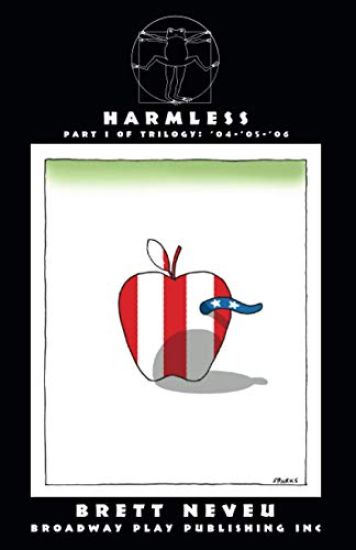
"The great joke of the universe--well, there are lots of great jokes of the universe. But one of them, certainly, is that human beings can't be trusted with the things they're capable of creating. We build combustion engines and choke on them, split atoms only to irradiate ourselves. Brett Neveu's new farce does a fine, crazed, funny job of telling that joke. Chris is an inventor who's come up with something astonishing. He takes it to Britt, who develops and markets astonishing inventions. Trouble is, some of Britt's previous astonishments have wreaked so much havoc that his corporate headquarters is under violent siege from all sides. Chris's sit-down with Britt turns into something out of Jurassic Park--assuming the park were run by General Jack Ripper from Dr Strangelove." Tony Adler, Chicago Reader
Bill Brett's folk tale of life in the Big Thicket takes place in the years around the turn of the century. Brett heard the story from the old man who had lived it. He retells it as a captivating, earthy yarn that won the National Cowboy Hall of Fame's Western Heritage Award for folklore in 1978, when it first appeared in cloth edition. The narrator, a young man hurt in an oilfield accident and down on his luck, runs out of money. When the opportunity presents itself, he steals a small herd of steers and a horse and sets out to drive them to a distant market. Suddenly his plans are halted when he comes down with a severe case of malaria. Fortunately he meets a poor but generous black man and woman who nurse him back to health, spending their last dollar to buy his medicine. Like a modern Robin Hood, the young man shares the fruits of his theft with the poor, trading the stolen steers for a small farm he then signs over to his benefactors. They never learn the source of their wealth, which they in turn continue to share with others. In one more effort to repay his friends--and in a final act of revenge for a wrong done to them--he ensures their security while giving up his own.

A church has built an accessibility ramp and perhaps refitted its restrooms to accommodate a wheelchair. Now what? This new resource by a noted author of several books on people with disabilities offers a theological and practical approach for congregations, with clear, targeted strategies for full inclusion of all members, recognizing and using the gifts that each member brings to the congregations life together.

A sumptuous monograph presenting for the first time the extraordinarily imaginative and delightful work of visionary artist Renaldo Kuhler (American, 1931–2013). The Secret World of Renaldo Kuhler catapults a thrilling new discovery into the pantheon of the most accomplished visionary—or “outsider”—artists. Like Henry Darger, Howard Finster, George Widener, and Adolf Wölfli, Renaldo Kuhler was an exceptionally gifted artist and possessed an imagination all his own. By day Kuhler was a self-taught scientific illustrator under the employ of the North Carolina Museum of Natural Sciences, for which he created thousands of wonderfully precise illustrations of myriad natural history specimens—reptiles, fish, turtles, and the like. Renaldo Kuhler was an unusual individual, as was instantly clear from his appearance alone. Six-foot-four, with a white beard and ponytail, he wore a custom-tailored uniform consisting of a sleeveless Kelly green suit jacket with wide, black, notched lapels, epaulets, and brass buttons, a matching suit vest, yellow flannel dress shirt, a fleur-de-lis Boy Scout neckerchief, and tight-fitting knee-length shorts (“cotton-blend lederhosen”). However, unbeknownst even to family, friends, and coworkers, Kuhler was more than an eccentric, gifted scientific illustrator. He was a prolific visionary artist, who, as a teenager in the late 1940s, invented an imaginary country he named Rocaterrania—after Rockland County, New York, where he had lived as a child. For the next sixty years, in secret, he illustrated the nation’s entire history and the prominent characters of its populace. Rocaterrania is a fantastical world, a richly illustrated amalgam of Kuhler’s personal cultural and aesthetic fascinations. Situated just north of the Adirondacks in New York, at the Canada–United States border, Rocaterrania is a sovereign nation of immigrants, from Scandinavia to Eastern Europe. Kuhler invented a complete world populated by a royal family and a succession of leaders resembling historical Russian figures, Women reminiscent of Marlene Dietrich and Janet Leigh play important roles as do bearded men of a seeming Hasidic Jewish heritage, men bearing curious physical similarities to American presidents, and neutants—individuals neither male nor female. Amid forests, mountains, lakes, and rivers, Kuhler’s imaginary country is made up of provinces and cities filled with distinctive Rocaterranian architecture and well-planned railroad and metro systems. Its government is unique, and it has its own religion, Ojallism, and its own evolving language and alphabet. With an organized labor service, a prison system (modeled after a New Jersey state penitentiary), a university system, a Rocaterranian Olympics, and an independent movie industry, Rocaterrania is a nation bustling with dozens of characters and their intrigues. Initially meant to be an escape, Kuhler's Rocaterrania became a secret lifelong obsession, an intricately coded, metaphorical account through Rocaterrania’s tumultuous history, which dovetailed with Kuhler’s own struggles for independence and freedom. Renaldo was the son of the German-born industrial designer Otto Kuhler, renowned for his Art Deco–era streamlined trains; his Belgian mother had little patience for her son, who was ostracized and bullied throughout his life for being “different.” The Kuhler family moved in 1948 from Rockland County, New York, to a remote cattle ranch in the Colorado Rockies—an unbearably isolated environment for the teenaged Renaldo. Retreating to his sketchbooks, journals, and watercolors to invent his imaginary nation of Rocaterrania, young Kuhler wrote, “The ability to fantasize is the ability to survive.” The Secret World of Renaldo Kuhler is filled with more than 400 illustrations in pencil, ink, acrylic, oil, gouache, watercolor, colored pencils, and markers, demonstrating Kuhler’s phenomenal draftsmanship and wide range of style—from delicately shaded graphite works to comic-book ink drawings. Complementing Kuhler’s impressive artistry is his gift for analogical thinking, which flowered in his appropriation and reimagining of personalities, places, and events from world history to form a cohesive and fully imagined world. After decades of secrecy, Kuhler eventually first shared his work and the story of his imaginary country with filmmaker Brett Ingram, whom he met by chance in the mid-1990s. In 2009 Ingram released Rocaterrania, a feature-length documentary with prized footage of Kuhler at home and at work, and talking about his creation. With The Secret World of Renaldo Kuhler Ingram has written the complete story of Rocaterrania as relayed to him over time by Kuhler, resulting in a fascinating, highly entertaining first and major book about this rare, newly discovered, full-blown visionary outsider artist.
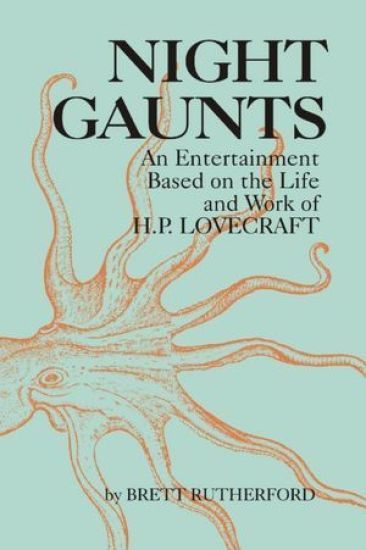
Night Gaunts: An Entertainment Based on the Life and Work of H.P. Lovecraft
Brett Rutherford
Grim Reaper Books
2011
nidottu
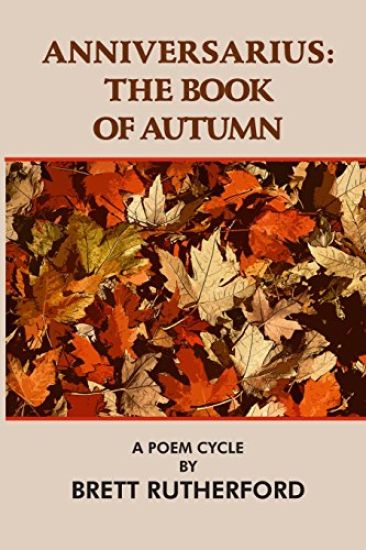
Now in its fourth edition and vastly expanded, Anniversarius: The Book of Autumn is Brett Rutherford's 40-poem epic cycle of autumn poems. Although there is plenty of Shelley, Poe, and Bradbury here in the celebration of "autumn's being," this cycle encompasses works that are mythic, metaphysical, political, satirical and, of course, supernatural. Autumn becomes the landscape for Jan Palach's suicide in Soviet-invaded Czechoslovakia in 1969; for translations of Pushkin and Hugo; and for rhapsodic and moody invocations of fall in Western Pennsylvania (the poet's birthplace) and haunted New England (his adopted home). Greek myth comes in by way of a hymn to Rhea, the Oak Tree Goddess, an encounter with three oak nymphs, and a dinner party in Hades. Influenced by Poe, Shelley, Whitman, Jeffers, Hugo, Bradbury, and Greek classics, these poems present a cosmos tinged with autumnal sadness, yet they are brave with the delight in a life fully relished down to the last falling leaf. Although solitude and loss stalk through these pages, there are also poems expressing a defiant, transcendent spirit. Each of the two "Rings" of the work ends with powerful affirmation. The locales of the latest poems include New York, Providence, rural Pennsylvania, the planets Mars and Pluto, and Ming Dynasty China. Rutherford walks in the footsteps of Poe in New York City, and sets two other powerful poems in Manhattan: one a panorama of historic Madison Square Park, and a troubled visit in the aftermath of 9/11.
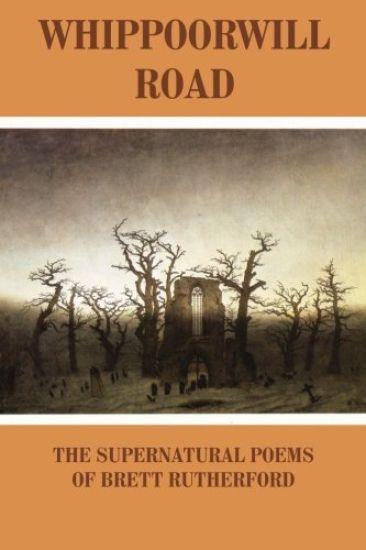
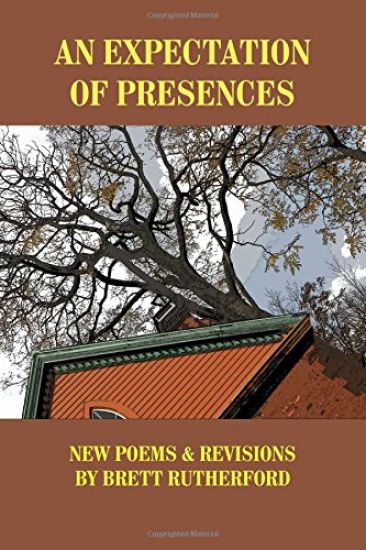
Here is Brett Rutherford's first new compendium of poems in seven years. Following on The Gods As They Are On Their Planets (2005) and Poems from Providence (1991), this book is a must for fans of this neo-Romantic American poet. The 94 new poems and revisions in this collection range from a dark-shadowed childhood in the coal and coke region of Western Pennsylvania, to New York City and Providence, Rhode Island. The jolting sequence titled "Out Home" is a poetic memoir of broken families and childhood terrors, and the imminent threat of kidnapping and mutilation by "Doctor Jones," a crazed surgeon who roams the countryside in a sinister roadster. The small boy of these poems is already a self-styled outsider, defining his difference from the crushing environment around him. In "Past the Millennium" and "Ars Poetica," the full-grown poet soars, with politically-charged poems on Solzhenitsyn, the self-immolation of Czech martyr Jan Palach, and the imagined overtaking of Bush and Cheney by "The Black Huntsman." Rutherford walks in Poe's footsteps on a Hudson River pier, visits ancient Rome for a chat with the law-giving King Numa Pompilius, and puts Poe to work tracking down a cemetery spectre in 1848 Providence. Two historic verse plays give voice to the mad Carlota, Empress of Mexico, and two Austrian policemen with an unexpected prisoner on their hands. Humor abounds in this volume, too, from the possessed sex toys in "A Night in Eddie's Apartment," skeptical Martians refusing to believe there's life on Earth, nine-year-old Dante meeting Beatrice in Providence's Federal Hill, and a surrealist adventure across Europe as a lost sock-puppet searches for its owner, meeting Sigmund Freud along the way. A sequence of poems on Love and Eros titled "Love Spells" plumbs the depths of desire and obsession, and presents several powerful elegies, culminating with the poignant "The Loft on Fourteenth Street." The erotic poems, some set in Ancient Greece and some in the present, are frank and often amusing, perhaps some comfort for those who think the fun ends at thirty. Ending the book is a clump of supernatural poems, as expected from this heir of Poe and Lovecraft: a story-length poem, "Dawn," presents the ennui of a 300-year-old vampire; the birth and education of the feared witch Keziah Mason; wind elementals attack the headquarters of Bain Capital in Boston; and Elder Gods arrive to make humans their playthings. An Expectation of Presences is a wide-ranging and startling collection, romantic, defiant, and bracingly hopeful.
Tales of Terror: The Supernatural Poem Since 1800, Volume 2
Brett Rutherford
Poet's Press
2016
nidottu
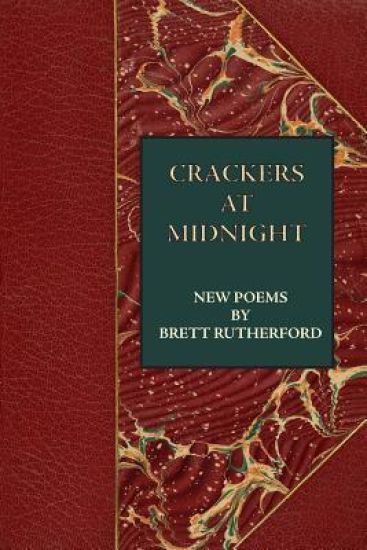
CRACKERS AT MIDNIGHT. New Poems 2015-2107 by Brett Rutherford. This book's title-poem - a small recollection of a hungry boy meeting his grandmother for a secret feast of saltine crackers and butter - is a metaphor for the book itself: a feast of poetic narratives and visions that the reader can savor, indulging in "just one more" until the last page is turned. Two story-poems come from the Pennsylvania landscape: the tale of Pittsburgh's radioactive millionaire who haunts Allegheny Cemetery, and the childhood memory of a visiting Rabbi who makes a Golem-monster in rural Scottdale. The feast, however, also spans continents and eras, as the poet takes us to the grave of Leonardo da Vinci in France, the exhumation of Goethe's body in Weimar, a flamingo sacrifice by the Emperor Nero, ancient Alexandrian gossip about ibises, and a shattering visit to the home of Emily Dickinson in Amherst. Sometimes the poems inhabit a strange, visionary world, overhearing a prayer on Cyprus from a hunted archbishop, visioning Eldorado rising from a glacial lake, or penetrating the psychology of the Egyptian Pharaoh Snofru. A cluster of nature poems from Edinboro Lake in Northwestern Pennsylvania, and some melancholy contemplations on "The Loved Dead," round out this collection of 40 poems.