Kirjojen hintavertailu. Mukana 12 016 292 kirjaa ja 12 kauppaa.

Kirjahaku

Etsi kirjoja tekijän nimen, kirjan nimen tai ISBN:n perusteella.

1000 tulosta hakusanalla Bridget S Howe

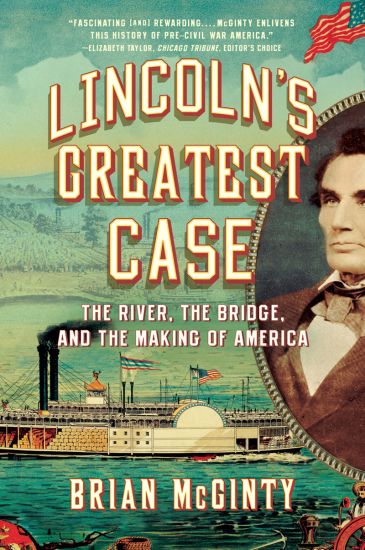
Lincoln's Greatest Case: The River, the Bridge, and the Making of America
In May of 1856, the steamboat Effie Afton barreled into a pillar of the Rock Island Bridge, unalterably changing the course of American transportation history. Within a year, long-simmering tensions between powerful steamboat interests and burgeoning railroads exploded, and the nation's attention, absorbed by the Dred Scott case, was riveted by a new civil trial. Dramatically reenacting the Effie Afton case--from its unlikely inception, complete with a young Abraham Lincoln's soaring oratory, to the controversial finale--this "masterful" (Christian Science Monitor) account gives us the previously untold story of how one sensational trial propelled a self-taught lawyer and a future president into the national spotlight.
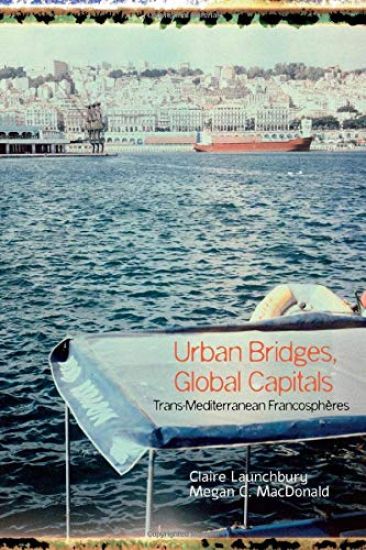
Urban Bridges, Global Capital(s)

Urban Bridges, Global Capital(s)

Liverpool University Press
2021
sidottu
This collection of essays on Trans-Mediterranean Francospheres offers an original examination of cultural production and the flows between urban capitals and “capital” in and of a selection of Mediterranean cities and sites. In three parts, the book covers both familiar and overlooked terrain, in chapters which examine writing the city, the transit between different poles, film and EU designated cultural capitals. The collection therefore brings together texts and their critical readings in new comparative ways. Following Jacques Derrida’s peregrinations in L’Autre Cap (1991), the volume interrogates the what of Europe; the when or where of Paris; the who of the Mediterranean. Or might the Mediterranean fall under the rubric of paleonomy, that is, as Michael Naas recalls Derrida’s words in Positions: “the ‘strategic’ necessity that requires the occasional maintenance of an old name in order to launch a new concept.”Taking this forward, we understand the Mediterranean as an old name to launch a new concept and the essays in the book each reflect on this in different ways. Issues concerning identity are challenged, since a Metropolitan, European, Arab or African identity may be preferred over a Mediterranean one. As borders become reinforced in the region, trans-Mediterranean bridging narratives may be thwarted, especially by those who write across Europe, Africa and the Middle East, in the face of the contemporary refugee crisis. Finally, chapters explore what it means to define a Mediterranean city—such as Marseille as European Capital of Culture—and interrogate how this feeds into the cultural production of a city whose multi-ethnic identities are as outward-looking towards North Africa as they are inward towards the French capital.Contributors: Silvia Baage, Marzia Caporale, Angela Giovanangeli, Mark Ingram, Christa Jones, Gemma King, Claire Launchbury, Megan C. MacDonald, Agnès Peysson-Zeiss, Ipek Çelik Rappas, Alison Rice, Rania Said
Urban Bridges, Global Capital(s)

Urban Bridges, Global Capital(s)

LIVERPOOL UNIVERSITY PRESS
2023
nidottu
This collection of essays on Trans-Mediterranean Francospheres offers an original examination of cultural production and the flows between urban capitals and “capital” in and of a selection of Mediterranean cities and sites. In three parts, the book covers both familiar and overlooked terrain, in chapters which examine writing the city, the transit between different poles, film and EU designated cultural capitals. The collection therefore brings together texts and their critical readings in new comparative ways. Following Jacques Derrida’s peregrinations in L’Autre Cap (1991), the volume interrogates the what of Europe; the when or where of Paris; the who of the Mediterranean. Or might the Mediterranean fall under the rubric of paleonomy, that is, as Michael Naas recalls Derrida’s words in Positions: “the ‘strategic’ necessity that requires the occasional maintenance of an old name in order to launch a new concept.”Taking this forward, we understand the Mediterranean as an old name to launch a new concept and the essays in the book each reflect on this in different ways. Issues concerning identity are challenged, since a Metropolitan, European, Arab or African identity may be preferred over a Mediterranean one. As borders become reinforced in the region, trans-Mediterranean bridging narratives may be thwarted, especially by those who write across Europe, Africa and the Middle East, in the face of the contemporary refugee crisis. Finally, chapters explore what it means to define a Mediterranean city—such as Marseille as European Capital of Culture—and interrogate how this feeds into the cultural production of a city whose multi-ethnic identities are as outward-looking towards North Africa as they are inward towards the French capital.Contributors: Silvia Baage, Marzia Caporale, Angela Giovanangeli, Mark Ingram, Christa Jones, Gemma King, Claire Launchbury, Megan C. MacDonald, Agnès Peysson-Zeiss, Ipek Çelik Rappas, Alison Rice, Rania Said
Analysis of William Wordsworth's Upon Westminster Bridge
Seminar paper from the year 2005 in the subject English Language and Literature Studies - Literature, grade: 1,3, University of Potsdam (Institut f r Anglistik/Amerikanistik), course: Faith and Beauty: Varieties of Religious Poetry in English Literature, language: English, abstract: When William Wordsworth wrote 'Upon Westminster Bridge' in September 1802, London was the economical as well as political centre of England. London set the tone for nearly everything - fashion, worn in London, was imitated in other provincial towns. The city became a metropolis - a place of consumption. But on the other hand, London's big-city appearance had some unwelcome side effects. According to industrial production the city was covered by fog nearly everyday. Streets and other public places were noisy and dirty and a terrible smell, like in Paris at that time, must have filled the air. Many people neglected their religious belief and some of them might even have lost their belief in God. Wordsworth probably wanted to make people aware that there is something more than the big-city life which is connected with hard work for the lower classes and a life of decadence which the upper classes enjoyed.
Nova Scotia's Historic Ferries: The Boats That Bridged the Province
Narrative, photo-filled historical guide to Nova Scotia's historic ferries from author of Nova Scotia's Historic Harbours and Nova Scotia's Lost Communities. Nova Scotia is a peninsula--almost an island--with a meandering coastline and a crisscrossing network of rivers. For both Indigenous people and settlers, these rivers have often served as highways, but they've also sometimes been major obstacles to travel. Inevitably, as travel increased in the province, a demand for ferry services over many of its bodies of water grew. In the mid-nineteenth century, ferries over rivers and harbours, across straits and out to islands, and to neighbouring provinces became indispensable in the province. The original ferryboats were rowed, sometimes towing scows for carrying horses, buggies, cattle, or sheep. Over the years, rowboats were replaced by sailboats, steamboats, or motorboats, and today's few remaining ferries are diesel operated. Today, most of Nova Scotia's former ferries have been replaced with bridges or causeways. With thirty historical images and thirty-five helpful maps, and from the author of numerous titles in the "Shaping Nova Scotia" series, Nova Scotia's Historic Ferries: The Boats that Bridged the Province explores the fascinating history of more than forty of Nova Scotia's ferries, the people who operated them, and the communities they served.
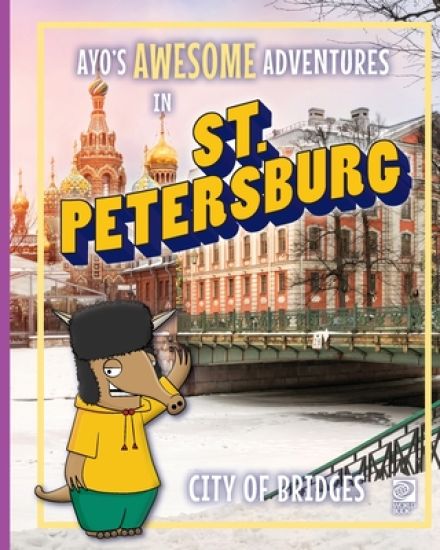
Ayo's Awesome Adventures in St. Petersburg: City of Bridges
Join Ayo on an adventure. Ayo is an aardvark, an African mammal that eats ants and termites, and also a tour guide traveling the world. In this book, Ayo tours the city of St. Petersburg. St. Petersburg is the second largest city in the country of Russia. Readers will watch a puppet show, cross dozens of bridges, and see the entire country of Russia in miniature.
From the Marco Polo Bridge to Pearl Harbor: Japan's Entry Into World War II

From the Marco Polo Bridge to Pearl Harbor: Japan's Entry Into World War II

David John Lu; Herbert Feis

Literary Licensing, LLC
2012
sidottu
From The Marco Polo Bridge To Pearl Harbor: Japan's Entry Into World War II is a historical book written by David John Lu. The book explores Japan's entry into World War II, starting from the Marco Polo Bridge Incident in 1937 to the attack on Pearl Harbor in 1941. The author takes a comprehensive approach in examining the political, military, and social factors that led to Japan's decision to enter the war. Lu provides insights into the Japanese government's decision-making process, including the role of Emperor Hirohito and the military leaders. The book also delves into the geopolitical environment of the time, including Japan's relations with the United States, China, and the Soviet Union. The author provides a detailed analysis of the events leading up to the attack on Pearl Harbor, including the negotiations between Japan and the United States and the decision-making process within the Japanese government. From The Marco Polo Bridge To Pearl Harbor: Japan's Entry Into World War II is a well-researched and informative book that provides a comprehensive understanding of Japan's entry into World War II. It is an essential read for anyone interested in the history of World War II and the geopolitical dynamics of the time.Excellent Account Of The Political Climate In Asia Just Before WWII.This scarce antiquarian book is a facsimile reprint of the old original and may contain some imperfections such as library marks and notations. Because we believe this work is culturally important, we have made it available as part of our commitment for protecting, preserving, and promoting the world's literature in affordable, high quality, modern editions, that are true to their original work.
Crossing the Narrow Bridge: A Practical Guide to Rebbe Nachman's Teachings

Crossing the Narrow Bridge: A Practical Guide to Rebbe Nachman's Teachings

Rebbe Nachman Of Breslov; Chaim Kramer

Createspace Independent Publishing Platform
2016
nidottu
Rebbe Nachman said, "The world is a very narrow bridge. The main thing is not to be afraid." This upbeat, down-to-earth book gives clear, detailed guidance for applying Rebbe Nachman's teachings to our everyday lives. Exploring a broad range of topics - from joy, peace and charity to earning a living, taking care of one's health, and raising children - this work answers many of the practical and technical questions that puzzle those who are making their first acquaintance with Breslov teachings.