Kirjojen hintavertailu. Mukana 11 627 670 kirjaa ja 12 kauppaa.

Kirjahaku

Etsi kirjoja tekijän nimen, kirjan nimen tai ISBN:n perusteella.

1000 tulosta hakusanalla C-Rene Dominique

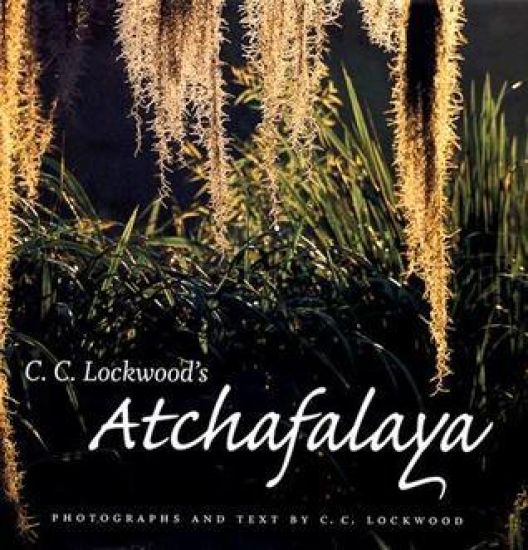
C. C. Lockwood's Atchafalaya

C. C. Lockwood's Atchafalaya

C. C. Lockwood

Louisiana State University Press
2007
sidottu
At nearly 1.4 million acres, the Atchafalaya Basin in south central Louisiana comprises America's largest swamp wilderness. Award-winning nature photographer C. C. Lockwood is the foremost chronicler of this natural treasure. What began as a curious side-trip in 1973 became a decades-long love affair, and for more than thirty years, Lockwood has explored the Atchafalaya's waters and captured its haunting beauty on film. Now, twenty-five years after the publication of his first book, he returns to his favorite subject in C. C. Lockwood's Atchafalaya. His passion for the Atchafalaya as expressed in his photographs can be compared to John James Audubon's exuberant appreciation for the state's abundant bird life as depicted in his prints more than 150 years ago. The art of both exalts Louisiana's wildlife -- and cautions against taking it for granted. Lockwood revisits and reflects on the places he has frequented most in the swamp, recalling his escapades both long past and recent among gators and skeeters. He shares the thoughts of basin residents about how the Atchafalaya has changed over time, for better and for worse. Increases and decreases in various bird and other animal populations, changes in water levels and consistency, flora mainstays and trees gone missing, burgeoning aquatic vegetation -- all are keenly observed by this explorer. Lockwood finds undiminished the seductive seasonal and diurnal moods of the swamp: autumn and spring, sunset and moonrise, as breathtaking now as in the past. In nearly one-hundred dazzling color photographs, Lockwood brilliantly documents the Atchafalaya's timeless beauty. He shows amazingly diverse and abundant wildlife, rookeries with thousands of egrets and herons, waters with billions of crawfish, and ridges with deer, squirrel, and woodcock. Waters run deep in Lockwood's soul, as evidenced in his intimate treatment of the meandering bayous fringed with bald cypress trees, the many glassy lakes reflecting vegetation into double images, and the mighty Atchafalaya River -- the lifeline of the swamp.""No place in the world gives me such a feeling of peace as America's largest river basin swamp,"" writes Lockwood. In these pages, he pays homage to the queen of U.S. wetlands.
C. M. Haile's ""Pardon Jones"" Letters

C. M. Haile's ""Pardon Jones"" Letters

Louisiana State University Press
2009
sidottu
From 1840 to 1848, journalist C. M. Haile published a series of mock letters-to-the-editor in the New Orleans Picayune under the pseudonym ""Pardon Jones."" With their rural dialect, outlandish and amusing characters, and farcical situations, the letters proved extremely popular with readers and became a regular feature in the newspaper. In C. M. Haile's ""Pardon Jones"" Letters, Ed Piacentino collects all of Haile's sixty-seven epistles, highlighting this trove of Old Southwest humor and the prolific writer's foremost literary achievement.The humor of the Old Southwest flourished in the sparsely settled frontier regions of Georgia, the Carolinas, Louisiana, and other southern states from the 1830s to the end of the Civil War, with amateur humorists anonymously or pseudonymously publishing pieces written in backwoods vernacular in their local and regional newspapers. Like others in the genre, Haile's ""Pardon Jones"" letters gently burlesque the eccentricities, scams, scrapes, and other misadventures of his plain folk characters. Unlike his contemporaries, however, Haile also used his mock epistles to discuss key political matters of the day, imbuing his characters with a liberal voice and an engaging dramatic presence. Set in three different venues - Louisiana, Massachusetts, and Mexico - the letters allude to national issues such as the tariff debate, boundary disputes between the United States and Canada, the controversy over a national bank, the conflict between states' rights and nationalism, and the debate over the annexation of Texas. Uniquely among Old Southwest humorists, Haile wrote from Mexico of Americans' encounter with a culture that lay south of the United States. By choosing to emphasise the marginalized Mexican ""other,"" Haile expanded the contours of Old Southwest humor and imaginatively enriched the sociocultural milieu of his fictive letters. Piacentino's informative introduction provides a meticulously researched account of Haile's life and career. His annotations identify obscure allusions throughout the book, and a glossary provides help with words and phrases of the dialect and with other unfamiliar references. With his lively ""Pardon Jones"" letters, C. M. Haile gave common folk a voice, a privilege rarely afforded to them in earlier American literature.
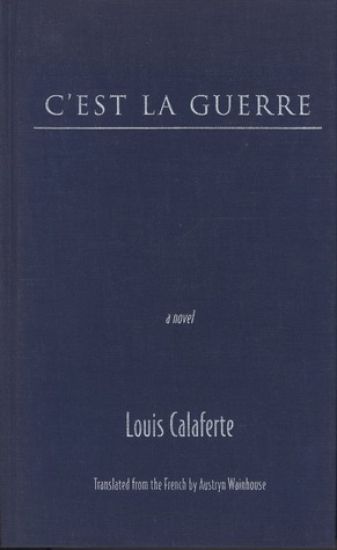
C'Est La Guerre

C'Est La Guerre

Louis Calaferte; Austryn Wainhouse

Northwestern University Press
1999
sidottu
In C'est la guerre Louis Calaferte presents the World War II--from the moment its outbreak is announced to the public through the unprecedented disaster that ensues, and through France's liberation in 1945--as it registers itself in the ever more isolated consciousness of a young, nameless boy.
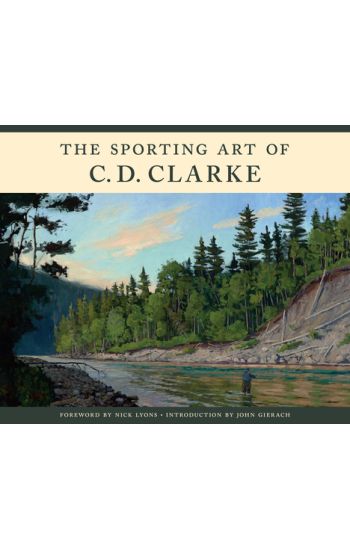
The Sporting Art of C. D. Clarke

The Sporting Art of C. D. Clarke

C. D. Clarke; Nick Lyons

STACKPOLE BOOKS
2023
sidottu
C. D. Clarke says he was born to paint and fish and hunt, and he’s done just that over his lifetime, capturing memorable times on the water and in the field on canvas and finessing that passion and pastime into a laudable career.This magnificent book of his work features 200 paintings, tableaus of color, light, motion, and possibility, created over the course of forty years fishing and hunting in the world’s most coveted destinations. Clarke prefers to work en plein air, and on site he fills sketchbooks with scenes that inspire the oils and watercolors he later refines in his New Jersey Highlands studio.At an early age Clarke discovered the work of the wildlife artists Ogden Pleissner, Chet Reneson, Thomas Aquinas Daly, and John Swan, and they influenced his style.Clarke’s work is featured in galleries and museums nationwide and he exhibits at the most prestigious wildlife art shows and festivals. He is regularly featured in the top wildlife and sporting publications.
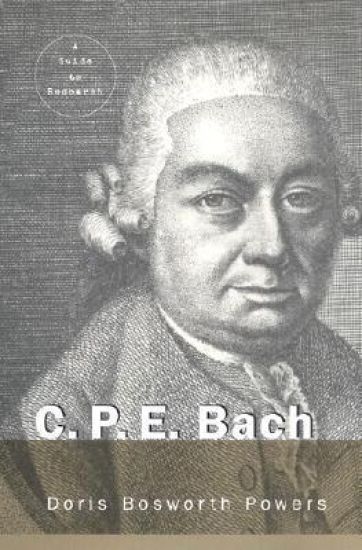
C.P.E. Bach

C.P.E. Bach

Doris Powers

CRC Press Inc
2002
sidottu
Although he is the son of J. S. Bach, C. P. E. Bach is an important composer in his own right, this long-awaited annotated bibliography presents a complete listing of the works of C. P. E. Bach. This volume in the RoutledgeMusic Bibliographies series includes many different aspects of his work: the editing of his father's masterpieces, his concertos and sonatas and theoretical essays. Doris Powers also collects writings that consider C. P. E. Bach's influence, the reception of his works and the cultural milieu in which Bach composed.
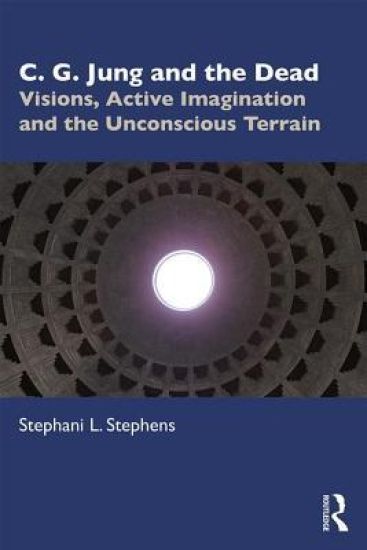
C. G. Jung and the Dead

C. G. Jung and the Dead

Stephani Stephens

CRC Press Inc
2019
sidottu
C. G. Jung and the Dead: Visions, Active Imagination and the Unconscious Terrain offers an in-depth look at Jung’s encounters with the dead, moving beyond a symbolic understanding to consider these figures a literal presence in the psyche. Stephani L. Stephens explores Jung’s personal experiences, demonstrating his skill at visioning in all its forms as well as detailing the nature of the dead.This unique study is the first to follow the narrative thread of the dead from Memories, Dreams, Reflections into The Red Book, assessing Jung’s thoughts on their presence, his obligations to them, and their role in his psychological model. It offers the opportunity to examine this previously neglected theme unfolding during Jung’s period of intense confrontation with the unconscious, and to understand active imagination as Jung’s principle method of managing that unconscious content. As well as detailed analysis of Jung’s own work, the book includes a timeline of key events and case material.C. G. Jung and the Dead will offer academics and students of Jungian and post-Jungian studies, the history of psychology, Western esoteric history and gnostic and visionary traditions a new perspective on Jung’s work. It will also be of great interest to Jungian analysts and psychotherapists, analytical psychologists and practitioners of other psychological disciplines interested in Jungian ideas.
C. G. Jung and the Dead

C. G. Jung and the Dead

Stephani Stephens

CRC Press Inc
2019
nidottu
C. G. Jung and the Dead: Visions, Active Imagination and the Unconscious Terrain offers an in-depth look at Jung’s encounters with the dead, moving beyond a symbolic understanding to consider these figures a literal presence in the psyche. Stephani L. Stephens explores Jung’s personal experiences, demonstrating his skill at visioning in all its forms as well as detailing the nature of the dead.This unique study is the first to follow the narrative thread of the dead from Memories, Dreams, Reflections into The Red Book, assessing Jung’s thoughts on their presence, his obligations to them, and their role in his psychological model. It offers the opportunity to examine this previously neglected theme unfolding during Jung’s period of intense confrontation with the unconscious, and to understand active imagination as Jung’s principle method of managing that unconscious content. As well as detailed analysis of Jung’s own work, the book includes a timeline of key events and case material.C. G. Jung and the Dead will offer academics and students of Jungian and post-Jungian studies, the history of psychology, Western esoteric history and gnostic and visionary traditions a new perspective on Jung’s work. It will also be of great interest to Jungian analysts and psychotherapists, analytical psychologists and practitioners of other psychological disciplines interested in Jungian ideas.
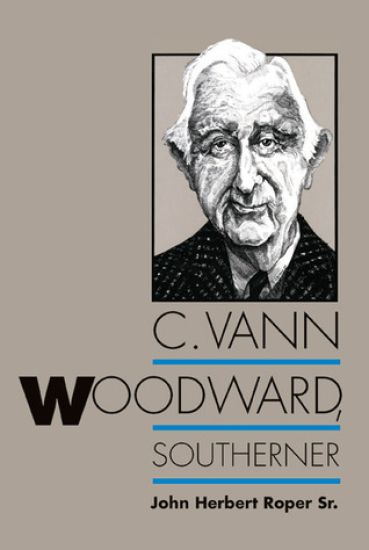
C. Vann Woodward, Southerner

C. Vann Woodward, Southerner

John Herbert Roper

University of Georgia Press
2012
pokkari
The most influential historian of our time, C. Vann Woodward has forged his place in American learning and culture from two sometimes opposing, sometimes complementary urges: to work for social justice and to reveal the past without bias. Underlying his career has been the knowledge that his native South, because of its traumatic experience of defeat and disgrace, holds within its past truths that could instruct the nation as a whole, perhaps ease it through the dilemmas and racial inequality and social strife, and guide it away from the mad pursuits of war and political repression.C. Vann Woodward, Southerner is a chronicle of Woodward’s life, of the tumultuous times that have engaged him and shaped his thought, and of the historical profession that has accorded him its highest honors of respect and unstinting criticism. Jack Roper begins with Woodward’s birth, in 1908, to an aristocratic family in eastern Arkansas and his youth in the Oachita valley. By the time Woodward left his home state to study at Emory University, he had already demonstrated the urge toward dissent that drove him, throughout the first decades of his career, to confront social and racial injustice, to press relentlessly outward from his own position of security and confront the civil strife that simmered outside the hedgerows of academia. In Chapel Hill and Atlanta, in New York and Baltimore, in his books and in his actions, Woodward spoke to the present even as he wrote of the past.By no means uncritical of Woodward’s works, Roper nonetheless shows that books such as Tom Watson: Agrarian Rebel, Origins of the New South, and The Strange Career of Jim Crow have effectively defined the terms of historical debate, often asking the “impertinent first question” that spurred other historians to seek fuller answers. Of those books, The Strange Career of Jim Crow is closest to Woodward’s ultimate concerns and has caused him his gravest doubts—for a time he almost disowned the book that Martin Luther King, Jr. called “the bible of the civil rights movement.” Those doubts came at a time in American history that Woodward found particularly ominous: the Vietnam years when it seemed that the lights of civil rights and social progress had lost their steady glow. In the mid-1970s, however, Woodward regained his political engagement, and today he continues his work of bringing—through numerous book reviews and essays—the insights of the historical profession to the intelligent, concerned reader.“What has the historian to do with hope?” These words of Woodward’s late colleague David Potter in response to The Strange Career of Jim Crow encapsulate the conflict that both inspired and occasionally beset that book’s author. For it is Woodward’s almost continual commitment to social change that made his books so powerful when they were published, so diminished in strength when examined in later decades. This tension between advocacy and scholarship, between experience and learning both marks the greatest challenge for Woodward and defines his greatness as a cultural figure, as a conscience for his profession and for our time.
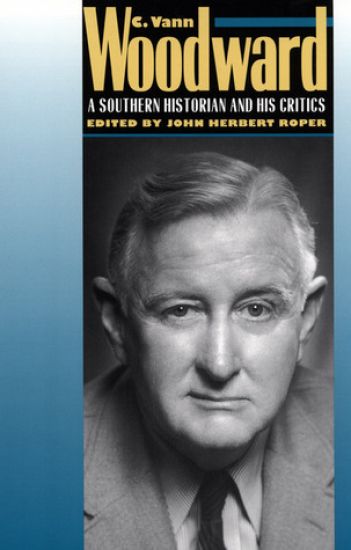
C. Vann Woodward

C. Vann Woodward

University of Georgia Press
2012
pokkari
Perhaps the most prominent historian of his time, C. Vann Woodward (1908–1999) was always at the center of public controversy, wielding power inside the history profession while exercising influence on the reading public. In this collection of essays, historians examine the writings of the American South’s esteemed scholar. Examining Woodward’s work from various angles, the “critics” in this volume reveal his contributions as history, as ideas, and as part of an activist scholar’s quest to understand and influence the racial and social dynamics of his region and times.Contributors: Edward L. Ayers, M. E. Bradford, Carl N. Degler, Gaines M. Foster, Paul M. Gaston, F. Sheldon Hackney, August Meier, James Tice Moore, Albert Murray, Michael O’Brien, Allan Peskin, David Morris Potter, Howard N. Rabinowitz, John Herbert Roper, Joel R. Williamson, Bertram Wyatt-Brown.
C.L.R.James's Caribbean

C.L.R.James's Caribbean

Paget Henry; Paul Buhle

Duke University Press
1992
pokkari
For more than half a century, C. L. R. James (1901-1989)-"the Black Plato," as coined by the London Times-has been an internationally renowned revolutionary thinker, writer, and activist. Born in Trinidad, his lifelong work was devoted to understanding and transforming race and class exploitation in his native West Indies, as well as in Britain and the United States. In C. L. R. James's Caribbean, noted scholars examine the roots of both James's life and oeuvre in connection with the economic, social, and political environment of the West Indies. Drawing upon James's observations of his own life as revealed to interviewers and close friends, this volume provides an examination of James's childhood and early years as colonial literatteur and his massive contribution to West Indian political-cultural understanding. Moving beyond previous biographical interpretations, the contributors here take up the problem of reading James's texts in light of poststructuralist criticism, the implications of his texts for Marxist discourse, and for problems of Caribbean development.
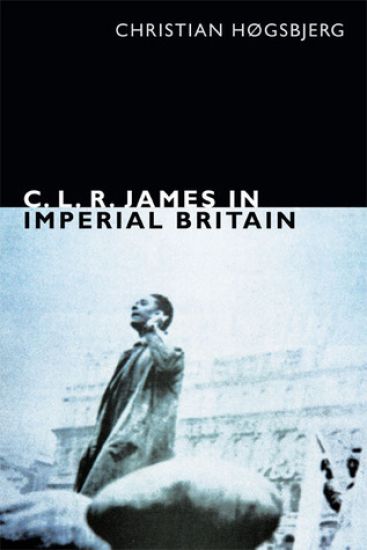
C. L. R. James in Imperial Britain

C. L. R. James in Imperial Britain

Christian Høgsbjerg

Duke University Press
2014
sidottu
C. L. R. James in Imperial Britain chronicles the life and work of the Trinidadian intellectual and writer C. L. R. James during his first extended stay in Britain, from 1932 to 1938. It reveals the radicalizing effect of this critical period on James's intellectual and political trajectory. During this time, James turned from liberal humanism to revolutionary socialism. Rejecting the "imperial Britishness" he had absorbed growing up in a crown colony in the British West Indies, he became a leading anticolonial activist and Pan-Africanist thinker. Christian Høgsbjerg reconstructs the circumstances and milieus in which James wrote works including his magisterial study The Black Jacobins. First published in 1938, James's examination of the dynamics of anticolonial revolution in Haiti continues to influence scholarship on Atlantic slavery and abolition. Høgsbjerg contends that during the Depression C. L. R. James advanced public understanding of the African diaspora and emerged as one of the most significant and creative revolutionary Marxists in Britain.
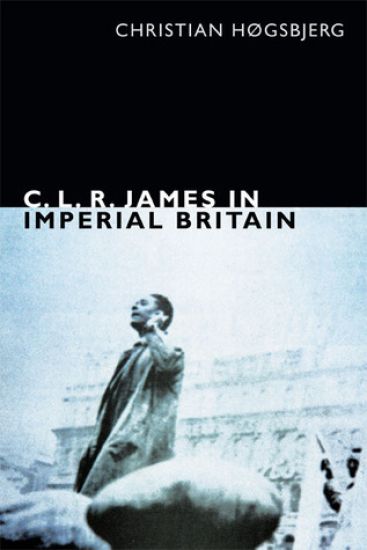
C. L. R. James in Imperial Britain

C. L. R. James in Imperial Britain

Christian Høgsbjerg

Duke University Press
2014
pokkari
C. L. R. James in Imperial Britain chronicles the life and work of the Trinidadian intellectual and writer C. L. R. James during his first extended stay in Britain, from 1932 to 1938. It reveals the radicalizing effect of this critical period on James's intellectual and political trajectory. During this time, James turned from liberal humanism to revolutionary socialism. Rejecting the "imperial Britishness" he had absorbed growing up in a crown colony in the British West Indies, he became a leading anticolonial activist and Pan-Africanist thinker. Christian Høgsbjerg reconstructs the circumstances and milieus in which James wrote works including his magisterial study The Black Jacobins. First published in 1938, James's examination of the dynamics of anticolonial revolution in Haiti continues to influence scholarship on Atlantic slavery and abolition. Høgsbjerg contends that during the Depression C. L. R. James advanced public understanding of the African diaspora and emerged as one of the most significant and creative revolutionary Marxists in Britain.
C* - Algebras and Numerical Analysis

C* - Algebras and Numerical Analysis

Ronald Hagen; Steffen Roch; Bernd Silbermann

CRC Press Inc
2000
sidottu
"Analyzes algebras of concrete approximation methods detailing prerequisites, local principles, and lifting theorems. Covers fractality and Fredholmness. Explains the phenomena of the asymptotic splitting of the singular values, and more."
Day by Day with C.H. Spurgeon

Day by Day with C.H. Spurgeon

C. H. Spurgeon; Al Bryant

KREGEL PUBLICATIONS,U.S.
1992
nidottu
This sourcebook of daily meditations comes from the pen of one of the greatest pulpiteers in the history of the Christian church and commemorates the anniversary oif his death in 1892. This is a daily adventure in walking with God, a devotional book with a purpose--to enrish your private meditations and public presentations. Every meditation is especially chosen to help the reader to overcome the day-to-day pressures of everyday existense--realistically, biblically, and enduringly.