Kirjojen hintavertailu. Mukana 12 249 182 kirjaa ja 12 kauppaa.

Kirjahaku

Etsi kirjoja tekijän nimen, kirjan nimen tai ISBN:n perusteella.

1000 tulosta hakusanalla Chad Cramer

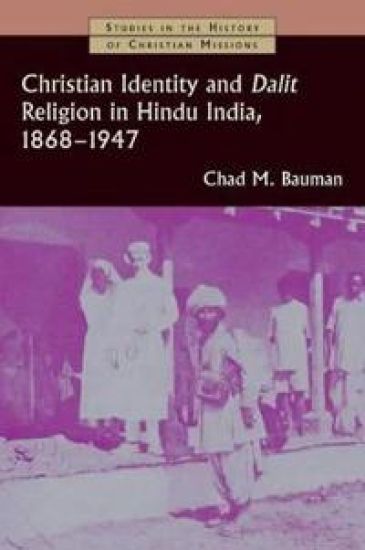
Christian Identity and Dalit Religion in Hindu India, 1868-1947

Christian Identity and Dalit Religion in Hindu India, 1868-1947

Chad M. Bauman

William B Eerdmans Publishing Co
2008
nidottu
When a form of Christianity from one corner of the world encounters the religion and culture of another, new and distinctive forms of the faith result. In this volume Chad Bauman considers one such cultural context -- colonial Chhattisgarh in north central India. In his study Bauman focuses on the interaction of three groups: Hindus from the low-caste Satnami community, Satnami converts to Christianity, and the American missionaries who worked with them. Informed by archival snooping and ethnographic fieldwork, the book reveals the emergence of a unique Satnami-Christian identity. As Bauman shows, preexisting structures of thought, belief, behavior, and more altered this emerging identity in significant ways, thereby creating a distinct regional Christianity.
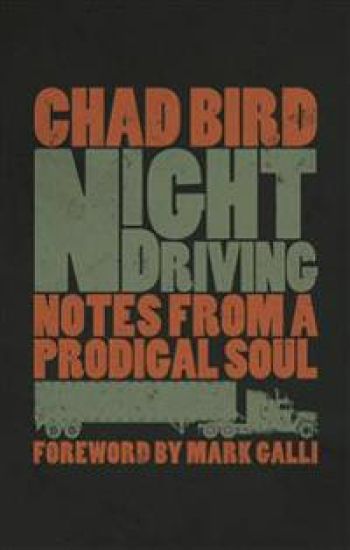
Night Driving

Night Driving

Chad Bird

William B Eerdmans Publishing Co
2017
nidottu
Journeys that begin in brokenness rarely follow a straight road to healing. There are twists and turns--and setbacks--on the path of repentance.Night Driving tells the story of a pastor and seminary professor whose moral failures destroyed his marriage and career, left his life in ruins, and sent him spiraling into a decade-long struggle against God. Forced to fight the demons of his past in the cab of the semi-truck he drove at night through the Texas oil fields, Chad Bird slowly began to limp toward grace and healing. Drawing on his expertise as an Old Testament scholar, Bird weaves together his own story, the biblical story, and the stories of fellow prodigals as he peels back the layers of denial, anger, addiction, and grief to help readers come face-to-face both with their own identities and with the God who alone can heal them.
Therapeutic Modalities

Therapeutic Modalities

Chad Starkey

F.A. Davis Company
2013
sidottu
The 4th Edition of the field's premier text on therapeutic modalities reflects evidence-based practice research and technologies that are impacting professional practice today. Step by step, you'll build a solid foundation in the theory and science that underlie today's best practices and then learn how to treat a wide range of orthopedic injuries.
Orthopedic & Athletic Injury Examination Handbook

Orthopedic & Athletic Injury Examination Handbook

Chad Starkey; Sara D. Brown

F.A. Davis Company
2015
nidottu
Tap into easy-to-follow, step-by-step guidance on the evaluation and initial management of specific orthopedic and athletic injuries with the companion to Examination of Orthopedic and Athletic Injuries, 4th Edition.From evaluative procedures for palpation and range of motion through neurologic, ligamentous, and special tests, everything you need now in the lab, and later in the field or in the clinic, is here. It’s a terrific preparation tool for the BOC examination, too.
Examination of Orthopedic & Athletic Injuries

Examination of Orthopedic & Athletic Injuries

Chad Starkey; Blaine Long; Julie Cavallario

F.A. Davis Company
2023
sidottu
Perform accurate evaluations of orthopedic injuries The field’s standard resource brings you the most current knowledge through a superb combination of detailed illustrations and precise language to make even the most complicated concepts and techniques clear. Organized by body region, each chapter begins with a review of anatomy and biomechanics; proceeds through clinical evaluation, pathologies, and related special tests; and concludes with a discussion of on-field or initial management of specific injuries. An access code inside new, printed texts unlocks range-of-motion animations and review questions for every chapter online.Updated & Revised! Today’s most current information and best evidence-based practicesExpanded! “Intervention Strategies” for each condition, an overview of the approaches that can be used which serve as the foundation for integrating the diagnostic process with the subsequent interventionsNew! “Clinical Correlations” tables, visual representations of key clinical findings and their relationships to pathologies and the key clinical findings associated with the pathology, facilitating the identification of which clinical tests may be used to develop the differential diagnosisUpdated! Muscle test procedures with instructions on the use of hand-held dynamometry for more precise assessment of muscular strength than traditional muscle testing to enhance the process of obtaining precise, objective strength measurements during the evaluation process and, when possible, comparing those measurements with those assessed during manual muscle testingUpdated! Information regarding the diagnostic accuracy of clinical testing, including additional representation of clinical prediction rulesExpanded! Emphasis on integrating outcome measures into the examination process and connecting the outcomes to brief descriptions of the interventions usedConforming to or exceeding the National Athletic Training Educational CompetenciesProcedures for over 185 special, neurological, ligamentous, and range of motion tests, with distinctive boxes for each type of test, including goniometry, resisted range of motion and manual muscle tests, clinical tests, and special testsPrecisely illustrated, step-by-step instructions for the correct position of patient and examiner, the evaluative procedure, positive test results, and implications“Evaluative Findings” boxes, “Practical Evidence Boxes” and “Observational Findings” boxesUnique palpation photographs with anatomical overlays to identify the underlying structure as well as tables of bony landmarksAssessments of the reliability of each test with grades that show the level of support from the available evidence
It Takes More Than a Network

It Takes More Than a Network

Chad C. Serena

Stanford University Press
2014
sidottu
It Takes More than a Network presents a structured investigation of the Iraqi insurgency's capacity for and conduct of organizational adaptation. In particular, it answers the question of why the Iraqi insurgency was seemingly so successful between 2003 and late 2006 and yet nearly totally collapsed by 2008. The book's main argument is that the Iraqi insurgency failed to achieve longer-term organizational goals because many of its organizational strengths were also its organizational weaknesses: these characteristics abetted and then corrupted the Iraqi insurgency's ability to adapt. The book further compares the organizational adaptation of the Iraqi insurgency with the organizational adaptation of the Afghan insurgency. This is done to refine the findings of the Iraq case and to present a more robust analysis of the adaptive cycles of two large and diverse covert networked insurgencies. The book finds that the Afghan insurgency, although still ongoing, has adapted more successfully than the Iraqi insurgency because it has been better able to leverage the strengths and counter the weaknesses of its chosen organizational form.
It Takes More Than a Network

It Takes More Than a Network

Chad C. Serena

Stanford University Press
2014
pokkari
It Takes More than a Network presents a structured investigation of the Iraqi insurgency's capacity for and conduct of organizational adaptation. In particular, it answers the question of why the Iraqi insurgency was seemingly so successful between 2003 and late 2006 and yet nearly totally collapsed by 2008. The book's main argument is that the Iraqi insurgency failed to achieve longer-term organizational goals because many of its organizational strengths were also its organizational weaknesses: these characteristics abetted and then corrupted the Iraqi insurgency's ability to adapt. The book further compares the organizational adaptation of the Iraqi insurgency with the organizational adaptation of the Afghan insurgency. This is done to refine the findings of the Iraq case and to present a more robust analysis of the adaptive cycles of two large and diverse covert networked insurgencies. The book finds that the Afghan insurgency, although still ongoing, has adapted more successfully than the Iraqi insurgency because it has been better able to leverage the strengths and counter the weaknesses of its chosen organizational form.
Holman Illustrated Bible Dictionary

Holman Illustrated Bible Dictionary

Chad Brand

Broadman Holman Publishers
2015
sidottu
Holman Illustrated Bible Dictionary, Revised and Expanded For 25 years the Holman Illustrated Bible Dictionary has been the go-to Bible reference resource for lay Bible students, teachers, pastors, academic courses, and libraries. Those who have used it have praised its comprehensiveness, conciseness, and clarity. Over 6,500 articles from Aaron to Zuzite are written to equip the reader for greater competence in understanding and interpreting the Scriptures. Each article is structured to begin with a concise definition followed by a thorough development of the topic. Some 700 full-color photos, maps, reconstructions, and charts enrich the experience of those who use the Dictionary for personal study, academic work, and preparation for teaching and preaching the Bible. Contemporary Bible readers are separated from the original documents by 2,000 to 3,500 years. Bridging this chasm requires linguistic, literary, geographical, historical, and cultural information that the Holman Illustrated Bible Dictionary provides. This third edition of the Dictionary makes available up-to-date archaeological information that illuminates the biblical text.
Terra Cognita

Terra Cognita

Chad Davidson

LOUISIANA STATE UNIVERSITY PRESS
2022
pokkari
Twenty-seven years in the making, Terra Cognita chronicles the author's continual travels—and problematic (if still, at times, ecstatic) encounters—in the "bel paese." Across nine richly evocative essays, Chad Davidson investigates the seemingly never-ending fascination that travelers have with Italy.As much a meditation on what home and away mean as it is a travel memoir, Terra Cognita finds literary predecessors such as Dante and Italo Calvino crowding in alongside more accustomed sights from travel shows, Hollywood films, and tourist guides. Though each essay departs from a particular location in Italy and remains rooted in the author's own history there, the book ultimately becomes less about those places and more about the placelessness any such journey can engender, how—even after flying across an ocean and landing in a foreign country—we are still hopelessly and fully ourselves.
Bring Out Your Dead

Bring Out Your Dead

Chad Davidson

LOUISIANA STATE UNIVERSITY PRESS
2024
pokkari
Could the shlock-rock '70s band Kiss in any way affect the outcome of a death-dealing twenty-first-century virus? Is Bob Ross—that permed, inimitable painter of Edenic nostalgia on PBS—actually an emissary from the land of personal loss? Might the work of Edward Hopper reflect facets of a global plague? What is the grammar, finally, of grief, of isolation? The essays in Chad Davidson's Bring Out Your Dead: Elegies from the Plague Year mainly concern the loss of the author's father directly before the onset of the COVID-19 pandemic, and the ways in which the pandemic itself provided a strangely ideal backdrop to grieving. Refracted through the kaleidoscopic, yet strangely stagnant, isolation period in the first year of COVID, his father's death—another plague visited on the author—found its way into all his waking hours, coloring whatever he tried to write, particularly when he tried not to let it. Friends both lost and nearly so, the burning of Notre Dame in Paris, even the seemingly inconsequential discovery of a rash of chew toys in the yard: these events assumed an unmistakable gravity, considered in the midst of a pandemic and the ruins of personal grief. Bring Out Your Dead adds Davidson's father to the growing list of loved ones lost in—and, in this case, right before—the pandemic. It's a personal memorial, given over to a father's memory and the grief endured while living through dueling plagues (one viral, the other psychological). In the end, the book becomes more about the ways we eulogize, how we remember those who are gone, why their memories persist, and what summons them back into our thoughts, our language, and our lives.
The Last Predicta

The Last Predicta

Chad Davidson

Southern Illinois University Press
2008
nidottu
This title juxtaposes themes of popular culture and apocalypse. ""The Last Predicta"" is Chad Davidson's searing collection of poetry dedicated to endings of all varieties. From odes to the corporate cornucopia of Target and the aggressive cheer of a Carnival cruise, to emotive examinations of Caravaggio's ""The Calling of St. Matthew"" or flies circling a putrescent bowl of forgotten fruit, Davidson weaves a lyrical web of apocalyptic scenarios and snapshots of pop culture.Throughout the volume appear cataclysms large and small, whether the finality of a minute passed or the deaths of a thousand swans at Seneca Lake in 1912. Images of King Kong, Starburst candies, and the Brady Bunch swim with mythological figures, Roman heroes, and dead animals as Davidson deftly explores the relationship between the mundane and the profound. At the center of the collection sits the Predicta television itself, 'the lives blooming there in Technicolor,' at once futuristic and nostalgic in its space age prophecy.Moving in their very simplicity, these poems resonate with discoveries that belie their seemingly ordinary wellsprings. Chad Davidson's stunning collection repeatedly explores the moment of revelation and all its accompanying aftermaths. ""The Last Predicta"" leads readers to ponder all manner of predictions, endings, and everything that follows.
From the Fire Hills

From the Fire Hills

Chad Davidson

Southern Illinois University Press
2014
nidottu
In From the Fire Hills, poet Chad Davidson shows us an Italy that is far from the romanticised notions of sun-drenched fields and self-discovery. Instead we see a maelstrom of chaos and contradiction, a place where the frenetic pace of modernity is locked in a daily struggle with recalcitrant history.This autobiographical collection explores the myriad ways in which Italian culture survives its own parodies and evokes a modern ferocity that harkens back to Italy’s barbarian past. As the narrator, rendered vulnerable by language, embarks on his journey, lines of location, time, and perception blur. From the siren song of Dante’s grave to the heights of San Luca, from streets where policemen with Uzis tread a hair’s breadth away from the macabre remains of Capuchin monks, Davidson’s Italy is a study in contrast between the contemporary and the classical, the sacred and the profane. Within these poems sensual and savage revelations unfold, exposing new, uncanny, and often uncomfortable spaces to explore in this well-travelled realm of Western imagination.Throughout the volume loom “the fire hills”: the scorched mountains of Sicily in summer; the memories of Italians living near the Gothic Line outside Bologna, where the Germans dug in and received heavy bombing at the close of World War II; even the wildfires igniting the San Gabriel foothills in southern California; all the way back to the burning city of Carthage in Virgil’s Aeneid. As the ash settles and the smoke clears, we realise that what we remember is often just remains, shells, and burned out wreckage, as if there were another type of memory.
The Green Ghost

The Green Ghost

Chad Weidner

Southern Illinois University Press
2016
nidottu
The Green Ghost, by Chad Weidner, uncovers the ecological context of literary texts by William Burroughs. Until now, much scholarly work on Burroughs has focused on the sensational aspects of his life and innovative writing. By rereading canonical and ignored texts while pushing the boundaries of ecocritical theory and practice, Weidner provides a fresh perspective on Burroughs and suggests new theoretical and methodological approaches to understanding the work of other Beat writers.Using an ecocritical lens, Weidner explores the toxicity in Naked Lunch, while at the same time teasing out latent ecological questions embedded in Burroughs’s later works. The author’s analysis of unknown and miniature “cut-ups,” texts that have been disassembled and rearranged to create new texts, provides a new understanding of these cryptic forms. Weidner also examines in detail books by Burroughs that have been virtually ignored by critics, exposing the deep ecology of the Beat writer’s vision. In calling attention to Burroughs’s narrative strategies that link him to an environmental political position, The Green Ghost reveals the work of the Beat writer as a ripe source for ecocritical dialogue.
Toward a Premodern Posthumanism

Toward a Premodern Posthumanism

Chad Augustine Córdova

NORTHWESTERN UNIVERSITY PRESS
2025
sidottu
Drawing on early modern French thought to free nature and aesthetics from metaphysical humanism What good is aesthetics in an age of ecological crisis? Toward a Premodern Posthumanism: Anarchic Ontologies of Earthly Life in Early Modern France draws on deconstructive, ecological, and biopolitical theories to interrogate the potentiality that philosophical aesthetics contains for challenging the ontological capture of “nature” by the human subject. Chad CÓrdova uncovers in aesthetics something irreducible to the subject: an account of how beings emerge and are interrelated, responsive, and even response-able without reason. Constructing multitemporal constellations of texts that bring forth the untimely relevance of pre-1800 modes of writing, science, and art, CÓrdova charts a new, premodern trajectory of posthumanism. This anarchic and atelic ontology, recovered from Kant, becomes the guiding thread for a new trajectory of posthumanist thought. This capacious study traces this trajectory from Aristotle to Heidegger and on to contemporary plant-thinking, circling back through Montaigne, Pascal, Diderot, Rousseau, and others along the way. This is a defense and an illustration of the importance of rereading early modern texts as a means of rethinking nature, art, and humanity in a time when these concepts are in flux and more contentious than ever.
Tartine Bread

Tartine Bread

Chad Robertson; Elizabeth Prueitt

Chronicle Books
2010
sidottu
The Tartine Way - Not all bread is created equal"...The most beautiful bread book yet published..." – The New York TimesTartine - A bread bible for the home baker or professional bread-maker! It comes from Chad Robertson, a man many consider to be the best bread baker in the United States, and co-owner with Elizabeth Prueitt of San Francisco's Tartine Bakery. At 5 P.M., Chad Robertson's rugged, magnificent Tartine loaves are drawn from the oven. The bread at San Francisco's legendary Tartine Bakery sells out within an hour almost every day.Only a handful of bakers have learned the bread science techniques Chad Robertson has developed: To Chad Robertson, bread is the foundation of a meal, the center of daily life, and each loaf tells the story of the baker who shaped it. Chad Robertson developed his unique bread over two decades of apprenticeship with the finest artisan bakers in France and the United States, as well as experimentation in his own ovens. Readers will be astonished at how elemental it is.Bread making the Tartine Way: Now it's your turn to make this bread with your own hands. Clear instructions and hundreds of step-by-step photos put you by Chad's side as he shows you how to make exceptional and elemental bread using just flour, water, and salt.If you liked Tartine All Day by Elisabeth Prueitt, Chad's partner in work and life, and Flour Water Salt Yeast by Ken Forkish, you'll love Tartine Bread! Additional categories for this book include:Baking BooksBaking Recipe BooksBaking Cook BooksBread Recipe Books
Reform or Repression

Reform or Repression

Chad Pearson

University of Pennsylvania Press
2015
sidottu
Historians have characterized the open-shop movement of the early twentieth century as a cynical attempt by business to undercut the labor movement by twisting the American ideals of independence and self-sufficiency to their own ends. The precursors to today's right-to-work movement, advocates of the open shop in the Progressive Era argued that honest workers should have the right to choose whether or not to join a union free from all pressure. At the same time, business owners systematically prevented unionization in their workplaces. While most scholars portray union opponents as knee-jerk conservatives, Chad Pearson demonstrates that many open-shop proponents identified themselves as progressive reformers and benevolent guardians of America's economic and political institutions. By exploring the ways in which employers and their allies in journalism, law, politics, and religion drew attention to the reformist, rather than repressive, character of the open-shop movement, Pearson's book forces us to consider the origins, character, and limitations of this movement in new ways. Throughout his study, Pearson describes class tensions, noting that open-shop campaigns primarily benefited management and the nation's most economically privileged members at the expense of ordinary people. Pearson's analysis of archives, trade journals, newspapers, speeches, and other primary sources elucidates the mentalities of his subjects and their times, rediscovering forgotten leaders and offering fresh perspectives on well-known figures such as Theodore Roosevelt, Louis Brandeis, Booker T. Washington and George Creel. Reform or Repression sheds light on businessmen who viewed strong urban-based employers' and citizens' associations, weak unions, and managerial benevolence as the key to their own, as well as the nation's, progress and prosperity.
Self-Enforcing Trade

Self-Enforcing Trade

Chad P. Bown

Brookings Institution
2009
nidottu
"The World Trade Organization—backbone of today's international commercial relations—requires member countries to self-enforce exporters' access to foreign markets. Its dispute settlement system is the crown jewel of the international trading system, but its benefits still fall disproportionately to wealthy nations. Could the system be doing more on behalf of developing countries? In Self-Enforcing Trade, Chad P. Bown explains why the answer is an emphatic ""yes.""Bown argues that as poor countries look to the benefits promised by globalization as part of their overall development strategy, they increasingly require access to the WTO dispute settlement process to protect their trading interests. Unfortunately, the practical realities of WTO dispute settlement as it currently stands create a number of hurdles that prevent developing countries from enjoying the trading system's full benefits. This book confronts these challenges. Self-Enforcing Trade examines the WTO's ""extended litigation process,"" highlighting the tangle of international economics, law, and politics that participants must master. He identifies the costs that prevent developing countries from disentangling the self-enforcement process and fully using the WTO system as part of their growth strategies. Bown assesses recent efforts to help developing countries overcome those costs, including the role of the Advisory Centre on WTO Law and development focused NGOs. Bown's proposed Institute for Assessing WTO Commitments tackles the largest remaining obstacle currently limiting developing country engagement in the WTO's selfenforcement process—a problematic lack of information, monitoring, and surveillance."
Eating Anxiety

Eating Anxiety

Chad Lavin

University of Minnesota Press
2013
nidottu
Debates about obesity are really about the meaning of responsibility. The trend toward local foods reflects the changing nature of space due to new communication technologies. Vegetarian theory capitalizes on biotechnology’s challenge to the meaning of species. And food politics, as this book makes powerfully clear, is actually about the political anxieties surrounding globalization. In Eating Anxiety, Chad Lavin argues that our culture’s obsession with diet, obesity, meat, and local foods enacts ideological and biopolitical responses to perceived threats to both individual and national sovereignty. Using the occasion of eating to examine assumptions about identity, objectivity, and sovereignty that underwrite so much political order, Lavin explains how food functions to help structure popular and philosophical understandings of the world and the place of humans within it. He introduces the concept of digestive subjectivity and shows how this offers valuable resources for rethinking cherished political ideals surrounding knowledge, democracy, and power. Exploring discourses of food politics, Eating Anxiety links the concerns of food-especially issues of sustainability, public health, and inequality-to the evolution of the world order and the possibilities for democratic rule. It forces us to question the significance of consumerist politics and-simultaneously-the relationship between politics and ethics, public and private.
The Revenge of Hatpin Mary

The Revenge of Hatpin Mary

Chad Dell

Peter Lang Publishing Inc
2006
nidottu
This book may set down the myth of June Cleaver once and for all. Chad Dell deftly details a 1950s revolution in the making: millions of women of all ages flocked to wrestling arenas across the country, drawn to a parade of glistening bodies, purple satin capes and characters such as Gorgeous George and Killer Kowalski while millions more roared their approval as they watched on television. Dell's analysis of television broadcasts, media artifacts, fan club ephemera and interviews with wrestlers and their fans paints a new portrait of women in the 1950s who embraced the power of their passions.
Posthumous Images

Posthumous Images

Chad Elias

Duke University Press
2018
sidottu
For almost two decades of its history (1975-90), Lebanon was besieged by sectarian fighting, foreign invasions, and complicated proxy wars. In Posthumous Images, Chad Elias analyzes a generation of contemporary artists who have sought, in different ways, to interrogate the contested memory of those years of civil strife and political upheaval. In their films, photography, architectural projects, and multimedia performances, these artists appropriate existing images to challenge divisive and violent political discourses. They also create new images that make visible individuals and communities that have been effectively silenced, rendered invisible, or denied political representation. As Elias demonstrates, these practices serve to productively unsettle the distinctions between past and present, the dead and the living, official history and popular memory. In Lebanon, the field of contemporary art is shown to be critical to remembering the past and reimagining the future in a nation haunted by a violent and unresolved war.