Kirjojen hintavertailu. Mukana 11 699 587 kirjaa ja 12 kauppaa.

Kirjahaku

Etsi kirjoja tekijän nimen, kirjan nimen tai ISBN:n perusteella.

761 tulosta hakusanalla Cherokee Randolph

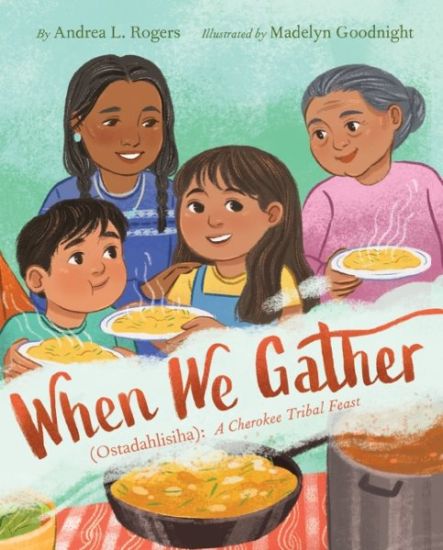
When We Gather (Ostadahlisiha): A Cherokee Tribal Feast
Nothing welcomes spring like a wild onion dinner As the dirt warms and green sprouts poke up, a Cherokee girl joins her family in the hunt for green onions. Together, they pick enough to bring to a feast, which is cooked with love and shared by their community.Idalisdayvhvga Let's all eat Written with simple, sensory lyricism by Andrea Rogers (Cherokee) and featuring warm, vibrant art by Madelyn Goodnight (Chickasaw), this picture book celebrates the spring tradition of wild onion dinners--and the community and comfort that are shared when we gather.
Tone and Accent in Oklahoma Cherokee

Tone and Accent in Oklahoma Cherokee

Hiroto Uchihara

Oxford University Press
2016
sidottu
This book examines the tone and accent of Oklahoma Cherokee, in which six possible pitch patterns can occur on a syllable: low, high, low-high, high-low, lowfall, and superhigh. It provides a comprehensive description and analysis of these patterns, examining their distribution, their source, the principles that determine their positions, and the nature of tonal alternations. The tone and accent of Oklahoma Cherokee displays some typologically unusual features, such as the glottal stop as the historical source for both high and lowfall tones, the coexistence of tonal and accentual systems, the existence of multiple accentual systems, and the morphosyntactic use of accents. Studies on tones in general have focused mainly on analytical languages or languages with little morphology, but Cherokee is unique in that it is polysynthetic at the same time as tonal. The emergence of tones in Oklahoma Cherokee is recent and its source is easily traceable, but the language has already developed a complex tonal alignment and tonal phonology. Hiroto Uchihara's description of tone and accent in Oklahoma Cherokee will not only contribute to a deeper understanding of the sound system of Cherokee, but will also advance the historical study of Iroquoian languages as a whole, and the typological study of tonal and accentual systems more generally.
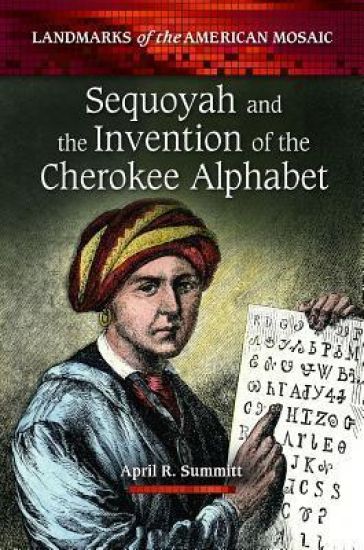
Sequoyah and the Invention of the Cherokee Alphabet
Through a unique combination of narrative history and primary documents, this book provides an engrossing biography of Sequoyah, the creator of the Cherokee writing system, and clearly documents the importance of written language in the preservation of culture.Sequoyah's creation of an easy-to-learn syllabary for the Cherokee nation enabled far more than the Cherokee Phoenix, the first newspaper of the Cherokee Nation, and the ability for Native Americans to communicate far more effectively than word of mouth can allow. In many ways, the effects of Sequoyah's syllabary demonstrate the critical role of written language in cultural preservation and persistence.Sequoyah and the Invention of the Cherokee Alphabet is a readable study of Sequoyah's life that also discusses Cherokee culture as well as the historical and current usage and impact of the Cherokee syllabary he created. While the emphasis of the work is on Sequoyah's adult life between 1800 and 1840, enough pre- and post-history information is provided to allow any reader to fully grasp the contextual significance of his accomplishments. The book includes a biography section of key individuals and contains a collection of primary documents that helps illustrate the usage of Sequoyah's syllabary.
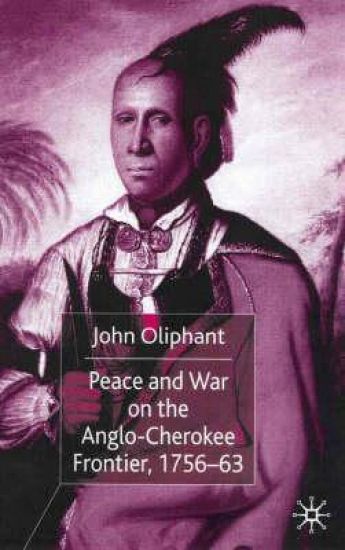
Peace and War on the Anglo-Cherokee Frontier, 1756–63
While the Seven Years War pushed London towards a protective Native American policy, outcomes were determined by men on the spot. The savage Anglo-Cherokee war was resolved by Cherokee headmen willing to accept a dignified peace; and by the sympathy of the very man sent to crush them. Colonel James Grant forced his treaty upon South Carolina, demonstrated the value of imperial frontier management and started some Carolinians on the road to revolution.
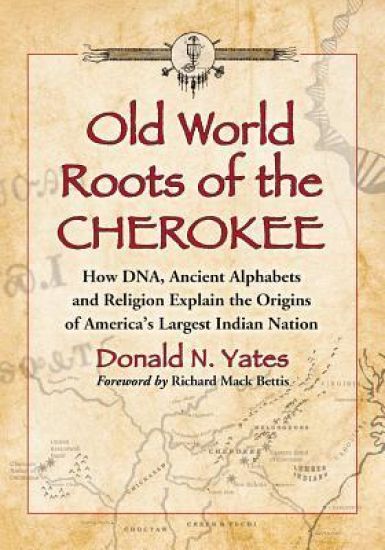
Old World Roots of the Cherokee

Old World Roots of the Cherokee

Donald N. Yates

McFarland Co Inc
2012
pokkari
Most histories of the Cherokee nation focus on its encounters with Europeans, its conflicts with the U. S. government, and its expulsion from its lands during the Trail of Tears. This work, however, traces the origins of the Cherokee people to the third century B.C.E. and follows their migrations through the Americas to their homeland in the lower Appalachian Mountains. Using a combination of DNA analysis, historical research, and classical philology, it uncovers the Jewish and Eastern Mediterranean ancestry of the Cherokee and reveals that they originally spoke Greek before adopting the Iroquoian language of their Haudenosaunee allies while the two nations dwelt together in the Ohio Valley.
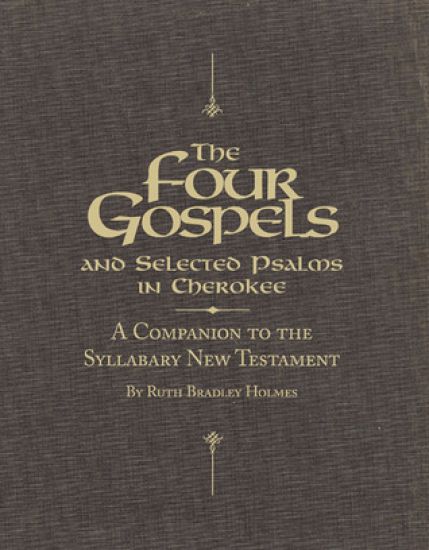
The Four Gospels and Selected Psalms in Cherokee

The Four Gospels and Selected Psalms in Cherokee

Ruth Bradley Holmes

University of Oklahoma Press
2004
nidottu
The Four Gospels and Selected Psalms in Cherokee is a companion to the Cherokee syllabary New Testament. Written by Sequoyah in the nineteenth century, the syllabary New Testament is the largest complex text composed in Cherokee by a truly fluent speaker with an easy command of the language. Here for the first time the Gospels of Matthew, Mark, Luke, and John are presented in Cherokee using the English alphabet. With line breaks that follow exactly those in the syllabary New Testament, this book serves as an aid for readers seeking to deepen their understanding of the Cherokee Bible.In her introduction to the Gospels, Ruth Bradley Holmes offers a history of the Cherokee New Testament, a detailed look both at the Cherokee syllabary and at the process of transliterating a Cherokee text into the English alphabet, and information on tones, vowel length, and other intricacies of the Cherokee language. Also included is the Lord's Prayer. This prayer is presented first in English, then in the Cherokee syllabary, and finally in Cherokee using the English alphabet. It is accompanied by an analysis of the language structure and word definitions within the prayer.
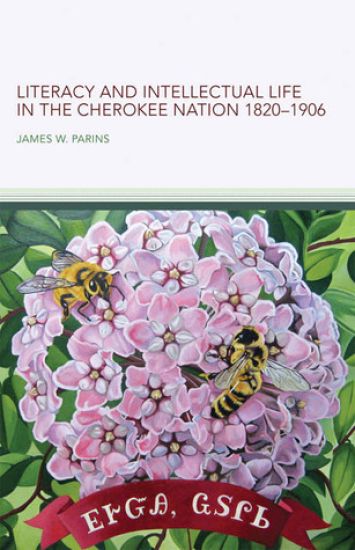
Literacy and Intellectual Life in the Cherokee Nation, 1820-1906

Literacy and Intellectual Life in the Cherokee Nation, 1820-1906

James W. Parins

University of Oklahoma Press
2013
sidottu
Many Anglo-Americans in the nineteenth century regarded Indian tribes as little more than illiterate bands of savages in need of ""civilizing."" Few were willing to recognize that one of the major Southeastern tribes targeted for removal west of the Mississippi already had an advanced civilization with its own system of writing and rich literary tradition. In Literacy and Intellectual Life in the Cherokee Nation, 1820-1906, James W. Parins traces the rise of bilingual literacy and intellectual life in the Cherokee Nation during the nineteenth century - a time of intense social and political turmoil for the tribe. By the 1820s, Cherokees had perfected a system for writing their language - the syllabary created by Sequoyah - and in a short time taught it to virtually all their citizens. Recognizing the need to master the language of the dominant society, the Cherokee Nation also developed a superior public school system that taught students in English. The result was a literate population, most of whom could read the Cherokee Phoenix, the tribal newspaper founded in 1828 and published in both Cherokee and English. English literacy allowed Cherokee leaders to deal with the white power structure on their own terms: Cherokees wrote legal briefs, challenged members of Congress and the executive branch, and bargained for their tribe as white interests sought to take their land and end their autonomy. In addition, many Cherokee poets, fiction writers, essayists, and journalists published extensively after 1850, paving the way for the rich literary tradition that the nation preserves and fosters today. Literary and Intellectual Life in the Cherokee Nation, 1820-1906 takes a fascinating look at how literacy served to unite Cherokees during a critical moment in their national history, and advances our understanding of how literacy has functioned as a tool of sovereignty among Native peoples, both historically and today.
Literacy and Intellectual Life in the Cherokee Nation, 1820–1906 Volume 58
Many Anglo-Americans in the nineteenth century regarded Indian tribes as little more than illiterate bands of savages in need of "civilizing." Few were willing to recognize that one of the major Southeastern tribes targeted for removal west of the Mississippi already had an advanced civilization with its own system of writing and rich literary tradition. In Literacy and Intellectual Life in the Cherokee Nation, 1820–1906, James W. Parins traces the rise of bilingual literacy and intellectual life in the Cherokee Nation during the nineteenth century—a time of intense social and political turmoil for the tribe. By the 1820s, Cherokees had perfected a system for writing their language—the syllabary created by Sequoyah—and in a short time taught it to virtually all their citizens. Recognizing the need to master the language of the dominant society, the Cherokee Nation also developed a superior public school system that taught students in English. The result was a literate population, most of whom could read the Cherokee Phoenix, the tribal newspaper founded in 1828 and published in both Cherokee and English. English literacy allowed Cherokee leaders to deal with the white power structure on their own terms: Cherokees wrote legal briefs, challenged members of Congress and the executive branch, and bargained for their tribe as white interests sought to take their land and end their autonomy. In addition, many Cherokee poets, fiction writers, essayists, and journalists published extensively after 1850, paving the way for the rich literary tradition that the nation preserves and fosters today. Literary and Intellectual Life in the Cherokee Nation, 1820–1906 takes a fascinating look at how literacy served to unite Cherokees during a critical moment in their national history, and advances our understanding of how literacy has functioned as a tool of sovereignty among Native peoples, both historically and today.
African Americans and Native Americans in the Cherokee and Creek Nations, 1830s-1920s
Illuminating the historical development of race relations from African American, Cherokee, and Muskeg (Creek) points of views, this book weaves a rich tapestry from oral history accounts, manuscript census schedules, and ethnohistorical literature. The Cherokee and Creek tribes were two of the largest in the Southeast and their forcible removal to Indian Territory affected tens of thousands of Africans and Native Americans This innovative study describes Creek and Cherokee social organization and culture change in the early 19th century, uses oral accounts to examine the impact of Removal on black-Indian relations, and analyzes Creek-black Indian political alliances during the Green Peach War and the anti-allotment Crazy Snake Uprising. Two chapters contain analyses of samples from federal manuscript census schedules of 1900 and 1910, describing demographics, intermarriage patterns, and education The study also links African American and European American immigration to race relations in Creek and Cherokee history between 1880 and 1920, consulting many sources that have not been used before. The comparison between the neighboring Cherokees and Creeks in the Indian Territory shows different approaches to similar problems, documenting culture change that affected the two societies. The census figures at the beginning of the century are analyzed in terms of four population segments: black Indians, including freedmen, and post-1880 black immigrants, so-called fullbloods, and (white-Indian) mixed-bloods. The study shows how these categories became metaphors for political and social outlooks and attitudes about race and native Americans. The book ends with a detailed, comprehensive bibliography containing primary and secondary sources with guides to their locations. (Ph.D. dissertation, University of California, Berkeley 1994; revised with new preface and index)
Townsite Settlement and Dispossession in the Cherokee Nation, 1866-1907
In response to the influx of white settlement after the Civil War, the Cherokee nation devised a regional development plan which allowed whites to establish farms and build towns while reinforcing Cherokee tribal sovereignty over the territory. The presence of sizeable towns and numerous villages presented a legal conundrum for Congress when it legislated away Cherokee sovereignty at the turn of the century. By 1898, tens of thousands of whites owned residential and commercial properties worth millions of dollars in Cherokee Nation towns, but every lot was owned by the Cherokee people. The federal government created a program to transfer legal ownership of town lots to white occupants, but poor implementation of the program allowed individuals to subvert the law for their own gain. The author explores the subject using primary documentation of such diverse sources as traveler's reports, land records, tribal and federal correspondence, and accounts of Cherokee and white settlers. Descriptive statistics and analytical mapping of historical data provide additional facets to the analysis. Also inlcludes 50 maps. (Ph.D. dissertation, University of Nebraska-Lincoln, 1996; revised with new preface, introduction, afterword) Index. Bibliography.