Kirjojen hintavertailu. Mukana 12 083 983 kirjaa ja 12 kauppaa.

Kirjahaku

Etsi kirjoja tekijän nimen, kirjan nimen tai ISBN:n perusteella.

1000 tulosta hakusanalla Clive Smallman

First World Interest Groups

First World Interest Groups

Clive S. Thomas

Praeger Publishers Inc
1993
sidottu
This first comprehensive appraisal of interest groups in Western democracies in thirty years a systematic comparison of interest group activities and their impact on public policymaking in twelve post-industrial First World nations. Using a conceptual framework, well-known experts provide an assessment of these interest group systems, identify similarities and differences, and point to current trends and future directions. This up-to-date overview and analysis is intended for students and specialists dealing with interest group behavior, comparative government and political institutions, and also with each country that is surveyed.This landmark comparative study of interest groups balances pluralist, corporatist, and to a lesser extent neo-Marxist approaches, synthesizing current know-how about interest groups in Australia, Britain, Canada, France, Germany, Israel, Italy, Japan, New Zealand, Sweden, Switzerland, and the United States. Each country chapter describes the factors that affect interest group make-up, their operating techniques, and their influence, and chapter demonstrates how the interest group system impacts on the public policymaking process and how well the system is explained by the conceptual framework it is studies. This study is viewed in terms of an American model, a British model with its derivations, models in continental European democracies, and in newer democracies. A concluding chapter offers further insights, and a selected bibliography is helpful in pointing as it does to important sources for further study.

Policing Western Europe

Policing Western Europe

Clive Emsley; Barbara Weinberger

Praeger Publishers Inc
1991
sidottu
This collection of essays examines the growth of professionalization in national police forces in England, France, Germany, Ireland, and the Netherlands. The period covered begins at the point where police forces had been established on some sort of a national scale. The essays are concerned with perceptions of both rulers and ruled, and perceptions of the role and function of the police in established industrial and urbanized societies. They also deal with the ways in which different police forces expanded and developed over time, and with the effect of this expansion and development on police organization and strategy.During the period covered in the book, all the countries of Western Europe were confronted with similar, essentially political challenges. Industrialization and urbanization created new and alarming environments and appeared to foster new and menacing social groups, from the dangerous classes lurking within the unskilled urban working class, to the more tangible organizations created by labor. Socialism and fascism provided the European states with new ideologies and ideologues to confront or to support--and world war, involving mass mobilization on the home as well as the battle fronts, was seen to require a further extension of the role of the state. In a crisis, central government must ensure its command over its forces of coercion and its sources of information--it was then that the police became most openly the executive area of government. As the trend toward central control intensified, so did the trend toward professionalization. By examining the evolution of the police in five societies, the authors provide valuable analyses of the ways police forces differed from one another, the ways in which they approached their tasks, and how they developed their respective self-images. This collection will be of considerable use to scholars and students involved in research on modern European history and criminology.
Crime History and Histories of Crime

Crime History and Histories of Crime

Clive Emsley

Praeger Publishers Inc
1996
sidottu
When is a crime a crime—or an act condoned by a significant portion of society? When is a criminal a criminal—or a revolutionary or a national hero? As the chapters in this collection make clear, what constitutes criminal activity varies, to a degree, among different societies and at different moments in a society's history. In this wide-ranging work, major historians of criminology and penology examine aspects of crime and criminal justice from medieval Western Europe to modern day Canada.In addition to examining crime, the judicial system, and punishment in various societies, the chapters look at the evolution of police systems as societies urbanize and undergo population changes. Together these chapters look at many key questions concerning the modern study of criminal behavior. As such, the volume will be of great interest to researchers and scholars of the history of crime.
Research Guide to U.S. and International Interest Groups

Research Guide to U.S. and International Interest Groups

Clive S. Thomas

Praeger Publishers Inc
2004
sidottu
Interest groups influence every government around the world, but what exactly are they, and how do they go about their work? This compilation of the major research, literature, and possible future directions of the study of interest groups is an excellent introductory resource for scholars and students in political science and related fields. Thoroughly cross-referenced and thematically organized, more than 200 entries detail the main topics of interest group activity in the United States and around the world. Following an introductory chapter that explains the format and content of the book, and a review of the development of interest group research, the entries are organized into 14 distinct chapters, each of which focuses on an area of significant research on various facets of group activity. A number of chapters deal with how interest groups form, dissolve, and work. More theoretically oriented chapters provide a wealth of information about the greater role interest groups play in society, and the various stances on whether those roles benefit or harm political life. Uniquely, special attention is paid to interest group activity in other countries, and to group activity that crosses international boundaries and political systems. A comprehensive bibliography concludes this useful volume.
Falling Towards England

Falling Towards England

Clive James

Picador
2008
pokkari
The second instalment of his famed unreliable memoirs, Falling Towards England sees Clive James set sail for London – a long way from the acclaimed author, poet and broadcaster he would one day become . . .'A comic triumph' – Ian Hamilton, London Review of BooksWaving goodbye to Sydney, Clive James arrives in 1960s England with nothing much besides the clothes on his back, in search of fame and fortune. Idealistic and uncompromising, if short on cash, he plans to get a low-paying menial job by day and compose poetical masterpieces by night. London is beginning to swing, but our hero is flat broke. The menial job proves elusive, with steady employment as hard to find as a room of his own.In a succession of more or less unsatisfactory digs, which include a bedsit, a barge, and a large paper bag, he attempts to stay warm, knuckle down, practise the Twist, plan those poetical masterpieces and improve his unsatisfactory wardrobe. Reflecting on these years, Clive is at his erudite and hilarious best.Falling Towards England is the second book of memoir from Clive James. Continue his story with May Week Was In June.
SNAKECHARMERS IN TEXAS

SNAKECHARMERS IN TEXAS

CLIVE JAMES

PAN MACMILLAN
nidottu
In this latest collection of essays, Clive James tackles burning issues and shining personalities from Barry Humphries to Barry Manilow and Michael Jackson to Michael Foot. He discusses the nuances of Kung Fu cinema, the lyrical footwork of Torvill and Dean and the charms of the Statue of Liberty.
May Week Was In June

May Week Was In June

Clive James

Picador
2008
pokkari
It is the middle of the Swinging Sixties, and Clive James doesn't have much to show for it. May Week Was In June is the third hilarious, tender instalment of memoir from the iconic author, poet and broadcaster.'Nobody writes like Clive James' – SpectatorArriving at Cambridge University in a cold October in 1964, the young Clive James has yet to find a footing in the literary world. His move from Sydney and three years of hand-to-mouth existence in London has produced nothing but a handful of unpublished poems. Pembroke College Cambridge offers a way out, if not up . . .Ignoring the curriculum, he throws himself into writing songs, performing and film reviewing. “If something was irrelevant, I could do it.” He takes Footlights to the Edinburgh Fringe, writes for the New Stateman and works on Expresso Drongo, arguably the worst film ever screened at the NFT . He finds a lifelong passion in criticism, continues his poetry, falls in love with Italian art and eventually, in May Week, he marries. These are the years that formed the man Clive James – told with his trademark erudition and humour.May Week Was In June is the third book of memoir from Clive James. Continue his story with North Face of Soho.
Always Unreliable

Always Unreliable

Clive James

Picador
2004
pokkari
Always Unreliable is the collected first three volumes of Clive James's eloquently witty autobiographies, Unreliable Memoirs, Falling Towards England and May Week Was in June.In Unreliable Memoirs we meet the young Clive James – dressed in shorts and growing up in post-war Sydney. With Falling Towards England, we find Clive living in a Swiss Cottage B&B, where he practises the Twist, anticipates poetical masterpieces he’s yet to compose, and worries about his wardrobe. Finally, May Week Was In June sees Clive at Cambridge University, where he enthusiastically involves himself in college life (generally female lives) until May Week – not only in June but also a fortnight long – when he gets married.The rest, of course, is history . . .
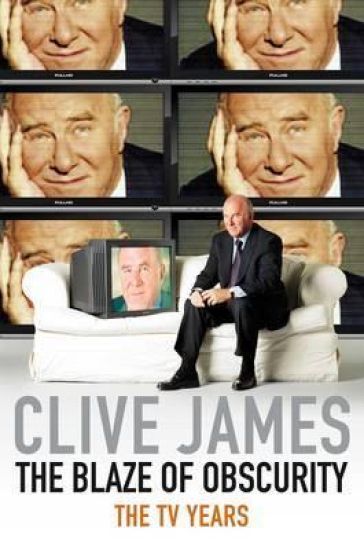
The Blaze of Obscurity

The Blaze of Obscurity

Clive James

Picador
2010
pokkari
In the 1980s, Clive James found his way into full-time television. In The Blaze of Obscurity, his fifth book of memoir, he delivers the inside story. A hilarious, thoughtful, warts and all account of a life in the public eye.'Clive James is an intellectual as well as a joker, a wise man as well as a wit' – ObserverAs his fame grew, Clive James was never alone – except in the toilet. But there, cubicle walls provided little protection against young men, standing at urinals, talking behind his back:Jesus, he's looking rough.And it's only Monday.Taking it in his stride and batting away accusations of selling out, Clive James was in television for the adventure. And an adventure it was. Rollicking through the end of one century and the beginning of the next, he interviews Hefner and Hepburn, Frank Sinatra and Françoise Sagan, Peter Ustinov ('even his nose could act') and Ronald Reagan. He explores the Las Vegas Grand Prix and the Louisville Kentucky Holiday Inn talent pageant, sends Postcards from Kenya, Shanghai, Tokyo and Dallas, interprets the news, discovers the first bizarre examples of what has come to be known as reality TV, and promotes the career of the irrepressible Margarita Pracatan – all told here with his trademark humour and thoughtful erudition.The Blaze of Obscurity is the fifth and final book of memoir from Clive James.Praise for Clive James:'It is one of the most tender, frank and, above all, funny accounts of growing up I have ever read' –Michael Parkinson'There can't be many writers of my generation who haven't been heavily influenced by Clive James' – Charlie Brooker'A wonderfully witty and intelligent writer' – Verity Lambert
The Revolt of the Pendulum

The Revolt of the Pendulum

Clive James

Picador
2010
pokkari
The Revolt of the Pendulum is an essay collection that shows Clive James at his most dazzling and versatile best. From the rules of grammar to the fundamentals of religion, from the culture of fandom to the cult of the critic, it’s all there: his customary wit, learning and understanding; his precise way with words and pointed comments; his ear for language and eye for detail; his ability to focus on the finer points and the bigger picture simultaneously – not to mention the sheer scope of his subject matter. ‘Clive James has a fantastic range and depth of knowledge. He is, at times, miraculously funny. He writes knowledgeably and with passion about literature, and especially poetry. His opinions are his own; he knows about classical music, show tunes and pop. He knows about politics and history. He understands people too. And he makes good jokes . . . There’s only one Clive James’ – Sam Leith, Spectator.Discover more of Clive's essays in Reliable Essays and The Meaning of Recognition.
North Face of Soho

North Face of Soho

Clive James

Picador
2008
pokkari
From Fleet Street to the television, North Face of Soho is the fascinating and hilarious fourth volume of memoir from much-loved author, poet and broadcaster Clive James.'[James] delivers his gags with honed elegance' – Sunday TimesIt is 1968. Newly married, dressed in the style of the times ('a frenzy of bad judgement'), Clive James is leaving the cloistered world of Cambridge academia and setting his sights once again on the lights of literary London.Luckily for him and us, this crack at the big city would go rather better than last time.Still writing songs, directing sketch shows and trying to break into the movie business, with very mixed success, Clive eventually lands a weekly TV column at the Observer, finds his metier and rapidly becomes a household name. Credited with inventing a genre, Clive turns his attention to the previously critically disregarded medium of television to comment on the entire culture. Through the Seventies and early Eighties, from Fleet Street to Hollywood, from Russian department stores to Paris fashion shows, this is the hilarious, entertaining and honest story of a life lived to the full.North Face of Soho is the fourth book of memoir from Clive James. Continue his story with The Blaze of Obscurity.
A Point of View

A Point of View

Clive James

Picador
2012
pokkari
From the fierce and funny Clive James, this is Britain in the twenty-first century – from wheelie bins to plastic surgery, and from Britain's Got Talent to contemporary art.Between 2007 and 2009, Clive James wrote and presented A Point of View for BBC Radio 4, providing hilarious and profound thoughts on the matters of the moment. In this volume are presented his original pieces – sixty in total – alongside previously unpublished postscripts.Read along with Clive as he delves deep into television, Elizabeth Hurley, Harry Potter, the Olympic Games, Snoop Dogg and cane toads – and plenty more besides.'Irreverent and funny, clever without being cynical and not afraid to flex his wits on anything and everything' – Daily TelegraphClive James (1939–2019) was a broadcaster, critic, poet, memoirist and novelist. His much-loved, influential and hilarious television criticism is available both in individual volumes and collected in Clive James On Television. His encyclopaedic study of culture and politics in the twentieth century, Cultural Amnesia, remains perhaps the definitive embodiment of his wide-ranging talents as a critic. Praise for Clive James:'The perfect critic' – A.O. Scott, New York Times'There can't be many writers of my generation who haven't been heavily influenced by Clive James' – Charlie Brooker 'A wonderfully witty and intelligent writer' – Verity Lambert
Politics In African Education

Politics In African Education

Clive Harber

Macmillan Education
1989
nidottu
This is a study of the political dimensions of education in Africa south of the Sahara, focusing especially on politics in primary and secondary schools and on the political knowledge and values both of the pupils attending them and of other young people of a similar age. Harber considers the comprehensive nature of the relationship between politics and education, the role of schools in nation-building, colonial education as a form of political domination, the role of political education in liberation struggles, the "modernizing" role of formal education, the problematic nature of political education courses in schools, the contradictions between government educational policy and the actual operation of schools, the conflict between authoritarian and democratic forms of school organization and the need to consider the political views of young people.
Becoming World Class

Becoming World Class

Clive Morton

Palgrave Macmillan
1994
sidottu
This book addresses the issues concerned with the achievement of world class competitiveness by major international companies. It is the story of creating success where failure was endemic and demonstrating that so-called Japanese management techniques can be applied elsewhere by other western companies to attain market supremacy. It is a book based on personal experience but related to theory and thus is of use to the reader trying to change where they work for the better as well as providing answers to a number of commonly asked questions: * Why are the Japanese so consistently successful? * Can we compete and become World Class using our culture and Japanese management techniques? * Is there a manufacturing future for the UK and Europe in the face of competition from the Pacific Basin? * How do we achieve world class competitiveness? How do you start this in your business?
Christianity in a Post-atheist Age
Christianity is in crisis in the West and is failing to persuade people to adopt a religious lifestyle. This work is directed at anyone willing to have a serious look at the issues involved. Echoing the form of Luther's theses and the intent of Schleiermacher's "Speeches", the text offers 95 discussion starters for bemused contemporaries. It invites readers to think deeply about their own lives and to examine the religious and theological contexts of Britain today. The book then offers a bold proposal for a viable form of Christian belief, drawing heavily but not uncritically on liberal Protestantism. It thus develops further a tradition of Christian thought which SCM Press has done much to promote in the past. The appendices make the book suitable for individual or group study.
Christ in Focus

Christ in Focus

Clive Marsh

SCM Press
2005
nidottu
Christ in Focus demonstrates why the figure of Christ is so central for Christian faith and thought. It starts by asking what constitutes the focus or centre of Christian theology? In opposition to the way in which the trinity is being reasserted as the lynchpin of Christianity, this book argues that Christianity loses its soul when it is not Christocentric. Part One examines the way in which Christian theology works methodologically. Christology may not be the starting point of a systematic Christian theology, but this book argues that it must be the focus. The dangers in seeking to maintain a Christocentric focus are drawn out as a catalogue of distortions of Christocentricism. Part Two turns attention to the kind of Christology needed to sustain such a radical Christocentricism. In a series of critical dialogues, with the work of Schleiermacher, Rauschenbusch and Brock respectively, the author develops a corporate Christology adequate for today. It is argued that talk of 'dependence upon Christ' has, to date, turned Christians inward, or found them appealing to a past, isolated male saviour figure. In critiquing such an approach, an understanding of the contemporary Christ is developed; Christ as an empowering presence, for the many communal settings in which people live their lives today.
Tom Kitwood on Dementia: A Reader and Critical Commentary

Tom Kitwood on Dementia: A Reader and Critical Commentary

Clive Baldwin; Andrea Capstick

Open University Press
2007
nidottu
"The book will be valuable for undergraduate and postgraduate students, researchers and lecturers involved in the field of dementia care and the health-care sciences. Furthermore, it provides a useful resource for clinicians who wish to explore their understanding of 'personhood', person-centred care and the nature of Kitwood's critical appraisal of how 'care' should be constructed and delivered."Ageing and Society"Baldwin and Capstick have produced an honest appraisal that is undeniably a reader and critical commentary, and have not shirked from any responsibilities. ... This paperback would serve two distinct strands of readership equally well - those coming afresh to dementia care, or practitioners steeped in the concepts, who are looking to reanalyse and consider future developments. As such, it is difficult to underestimate its value."Nursing in PracticeHow does Kitwood’s work contribute to our understanding of ‘the dementing process’ and the essentials of quality care?How was Kitwood’s thinking about dementia influenced by the wider context of his work in theology, psychology and biochemistry?What is the relevance today of key themes and issues in Kitwood’s work?Tom Kitwood was one of the most influential writers on dementia of the last 20 years. Key concepts and approaches from his work on person-centred care and well-being in dementia have gained international recognition and shaped much current thinking about practice development. The complexities of Kitwood’s work and the development of his thinking over time have, however, received less attention. This Reader brings together twenty original publications by Kitwood which span the entire period of his writing on dementia, and the different audiences for whom he wrote.Almost ten years after Kitwood’s death, it is now timely to review his contribution to the field of dementia studies in the light of more recent developments and from a critical and interdisciplinary perspective. The introduction to this Reader summarises and problematises some of the key characteristics of Kitwood’s writing. Each of the four themed sections begins with a commentary offering a balanced consideration of the strengths of Kitwood’s work, but also of its limitations and oversights. The Reader also includes a biography and annotated bibliography.Tom Kitwood on Dementia: A Reader and Critical Commentary is key reading for students of social work or mental health nursing, with an interest in dementia care. Professionals working with people with dementia will also find it invaluable.Additional Contributors: Habib Chaudhury, Deborah O’Connor, Alison Phinney, Barbara Purves, Ruth Bartlett.
Classroom Teaching in the 21st Century: Directions, Principles and Strategies
As technology becomes more widespread and the world continues to change in many other ways, teachers have adapted to allow education to evolve with the 21st century. This book provides theoretical foundations and highly practical strategies for classrooms tackling modern challenges, drawing in part on the ideas and experiences of practising teachers. The authors highlight how crucial education is for equipping future generations with the skills for individual, societal and planetary wellbeing, while still considering the pressures of ‘teaching to the test’. Every teacher balances a range of priorities as they enter a classroom which this book addresses:•Teaching for personal development, including autonomy, resilience, critical thinking, mental health and overall wellbeing•Teaching for social development, for the workplace but also for community participation and social life generally•Teaching for equity, inclusion and political and global/environmental commitment•Teaching for digital knowledge and skill, in ways that are technologically advanced and substantively relevant•Enhanced teacher identity, professionalism and wellbeing The book will be an essential companion for teachers, particularly those at the start of their training and in preservice roles, with plenty of practical suggestions and strategies.“Classroom Teaching in the 21st Century is a gift to school leaders and teachers who are looking for sound advice to improve teaching and learning.”Pak Tee NG, National Institute of Education, Nanyang Technological University, Singapore“If you are looking for fresh ideas about teaching for meaning and well-being, as well as for competence and content, look no further.”A. Lin Goodwin, Dean, Faculty of Education, The University of Hong Kong, Hong Kong“This is an important new book which will make a substantial contribution to the literature on education and schooling.”Keith F Punch, Emeritus Professor, Graduate School of Education, The University of Western Australia, AustraliaClive Beck is Emeritus Professor in Curriculum, Teaching and Learning at OISE/University of Toronto, Canada, teaching courses for preservice and in-service teachers and engaging in empirical research on teaching. He is a past-Coordinator of Graduate Studies at OISE and past-President of the American Philosophy of Education Society. Clare Kosnik is Professor in Curriculum, Teaching and Learning at OISE/University of Toronto, Canada, past-Director of Elementary Teacher Education at OISE and past-Director of the Jackman Institute of Child Study. She has researched extensively on teaching and teacher education, and has received University-wide Awards for Excellence in both teaching and graduate supervision.
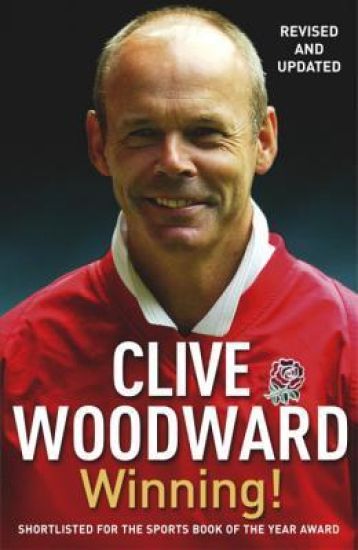
Winning!

Winning!

Clive Woodward

Hodder Paperback
2005
pokkari
'There is so much more to the man than single-minded determination.' Sunday Telegraph 'His first day in the job of England coach is superbly described, and thereafter he is forever going the extra yard to make his team great.' Sunday Times__________Winning! tells a remarkable story - an unforgettable journey that began in September 1997 and took the English Rugby Team team from the lower ranks of international first-class rugby to the top as World Cup Champions. Sir Clive Woodward and his team mounted a campaign of vast change, great learning, team building and clear vision to achieve their aim. 'We would question everything, change anything and leave no stone unturned,' he writes. WINNING! will talk about the team's journey of innovation and discovery and will reveal exactly how it happened, the fundamentals of their success and how these principles can be applied to any human endeavour. 'We changed the way we coached, the way we played and, of equal importance, how we operated off the field.' Bringing his business management skills to the game, Woodward simplified the entire approach to the structure of the team and created new management systems both on and off the pitch.In an anecdotal style, Clive Woodward entertains and informs while he describes the thrilling build-up to England's World Cup triumph in 2003.