Kirjojen hintavertailu. Mukana 11 717 486 kirjaa ja 12 kauppaa.

Kirjahaku

Etsi kirjoja tekijän nimen, kirjan nimen tai ISBN:n perusteella.

1000 tulosta hakusanalla Clyde Forsberg Jr.

The New North American Order

The New North American Order

Clyde V. Prestowitz; Robert B. Cohen; Peter Morici; Alan Tonelson

University Press of America
1991
sidottu
In this report, the Economic Strategy Institute explains how to structure a North American Free Trade Agreement to strengthen the U.S. economy and bolster the competitiveness of an increasingly integrated North American economy. The report begins with a description of U.S. and Mexican interests in the FTA, and an analysis of how they converge and diverge.
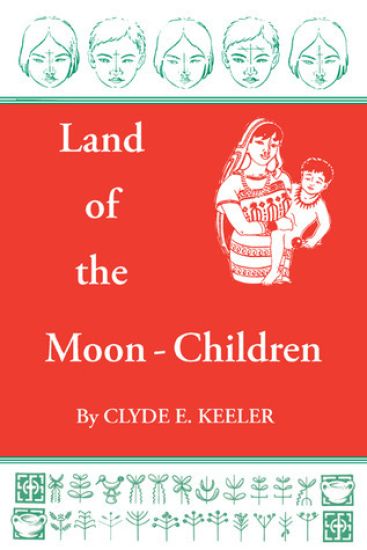
Land of the Moon-Children

Land of the Moon-Children

Clyde E. Keeler

University of Georgia Press
2010
pokkari
Clyde E. Keeler spent five summers studying the Cuna Indians on the San Blas islands off the coast of Panama as part of his genetics research—specifically research into certain genetic traits of albino populations. Published in 1956, this book is Keeler’s account of his personal experiences with the Cuna people. Keeler describes a people who still adhered to many of their traditional tribal customs while also embracing modern ways of life. He witnessed ceremonial chants, procedures for harnessing evil spirits, and elaborate celebrations of puberty and fertility. Keeler examines the history of Caribe-Cuna ranging from details about their religious beliefs and customs, firsthand accounts of Cuna stories and chants, and developments caused by Christian missions and modern education.
Development Drowned and Reborn

Development Drowned and Reborn

Clyde Woods

University of Georgia Press
2017
sidottu
Development Drowned and Reborn is a “Blues geography” of New Orleans, one that compels readers to return to the history of the Black freedom struggle there to reckon with its unfinished business. Reading contemporary policies of abandonment against the grain, Clyde Woods explores how Hurricane Katrina brought long-standing structures of domination into view. In so doing, Woods delineates the roots of neoliberalism in the region and a history of resistance.Written in dialogue with social movements, this book offers tools for comprehending the racist dynamics of U.S. culture and economy. Following his landmark study, Development Arrested, Woods turns to organic intellectuals, Blues musicians, and poor and working people to instruct readers in this future-oriented history of struggle. Through this unique optic, Woods delineates a history, methodology, and epistemology to grasp alternative visions of development.Woods contributes to debates about the history and geography of neoliberalism. The book suggests that the prevailing focus on neoliberalism at national and global scales has led to a neglect of the regional scale. Specifically, it observes that theories of neoliberalism have tended to overlook New Orleans as an epicenter where racial, class, gender, and regional hierarchies have persisted for centuries. Through this Blues geography, Woods excavates the struggle for a new society.
Development Drowned and Reborn

Development Drowned and Reborn

Clyde Woods

University of Georgia Press
2017
pokkari
Development Drowned and Reborn is a “Blues geography” of New Orleans, one that compels readers to return to the history of the Black freedom struggle there to reckon with its unfinished business. Reading contemporary policies of abandonment against the grain, Clyde Woods explores how Hurricane Katrina brought long-standing structures of domination into view. In so doing, Woods delineates the roots of neoliberalism in the region and a history of resistance.Written in dialogue with social movements, this book offers tools for comprehending the racist dynamics of U.S. culture and economy. Following his landmark study, Development Arrested, Woods turns to organic intellectuals, Blues musicians, and poor and working people to instruct readers in this future-oriented history of struggle. Through this unique optic, Woods delineates a history, methodology, and epistemology to grasp alternative visions of development.Woods contributes to debates about the history and geography of neoliberalism. The book suggests that the prevailing focus on neoliberalism at national and global scales has led to a neglect of the regional scale. Specifically, it observes that theories of neoliberalism have tended to overlook New Orleans as an epicenter where racial, class, gender, and regional hierarchies have persisted for centuries. Through this Blues geography, Woods excavates the struggle for a new society.
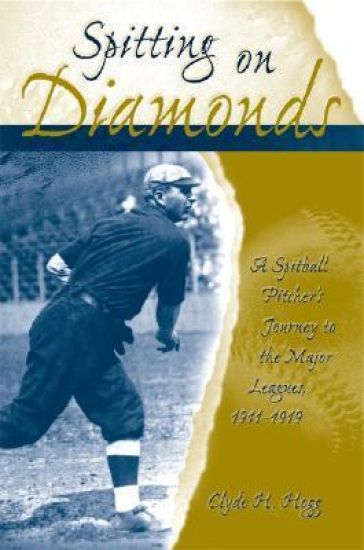
Spitting on Diamonds

Spitting on Diamonds

Clyde H. Hogg

University of Missouri Press
2005
sidottu
In 1911, when Bradley Hogg began his major-league pitching career for the National League's Boston Rustlers, baseball was a different game. Hogg played during a time known as the Dead Ball Era, when a pitcher could spit on, shine up, or even roughen a ball to secure an advantage over a hitter. Players used heavier bats and choked up farther on the handle, and the annual World Series was just arriving. But the names of the best and most colorful players remain familiar today: Cy Young, Casey Stengel, Honus Wagner, Rogers Hornsby, Christy Mathewson. During his nine-year professional career, Hogg played with or against twenty-seven Hall of Fame ballplayers and under the critical gaze of two Hall of Fame umpires and eleven Hall of Fame sports writers. In Spitting on Diamonds, Clyde Hogg details the life of baseball's everyman, including excerpts from newspapers throughout the country to bring to life the times in which Bradley Hogg played. The author shows how Hogg's career is representative of the thousands of men who have played major-league baseball since its inception more than 125 years ago, men who didn't make it into the Hall of Fame or win awards but made it possible for millions of fans to enjoy the game. These players were the flannelled hosts of America's favorite pastime and the ones who made the game what it was and is today. The author uses Hogg's career as a spitball pitcher in leagues from coast to coast from the majors to the minors to show the rapid change and growth of our nation between 1910 and 1920. With enough baseball statistics to satisfy even the most hard core fan, this time capsule of early twentieth-century America will appeal to sports enthusiasts and readers of general historical nonfiction alike. They will find in its pages an America now visible only in faded photographs, along with a version of the national pastime that no longer exists. Featuring multiple bunts, double steals, inside pitching, and the now outlawed ""spitball,"" as well as the skill it took to hit such deliveries, this game was hard, fast, and nonstop. Spitting on Diamonds lets the reader understand what it was like to live and play professional sports at an important time in baseball history.
Tangled Bylines

Tangled Bylines

Clyde H. Farnsworth

University of Missouri Press
2017
sidottu
This memoir of father and son journalists—both named Clyde Farnsworth—draws on the unfinished autobiography of the author’s father. Largely biographical, this book can be read as a panoramic history of American newspaper journalism in the twentieth-century, covering Prohibition gangs, prison fires, and botched executions in the 1920s and 1930s, to global war, the shaping of postwar Europe and Asia, and America’s emergence from the Cold War. Tangled Bylines includes off-beat encounters with Amelia Earhart, Douglas MacArthur, Charles de Gaulle, Winston Churchill, and Simon Wiesenthal.
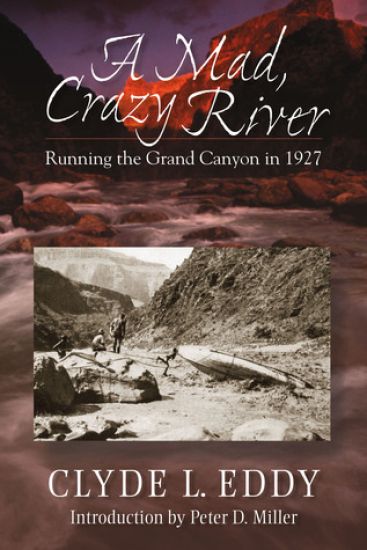
A Mad, Crazy River

A Mad, Crazy River

Clyde L. Eddy

University of New Mexico Press
2012
nidottu
When Clyde Eddy first saw the Colorado River in 1919, he vowed that he would someday travel its length. Eight years later, Eddy recruited a handful of college students to serve as crewmen and loaded them, a hobo, a mongrel dog, a bear cub, and a heavy motion picture camera into three mahogany boats and left Green River, Utah, headed for Needles, California. Forty-two days and eight hundred miles later, they were the first to successfully navigate the river during its annual high water period. This book is the original narrative of that foolhardy and thrilling adventure.
Red or Green

Red or Green

Clyde W. Casey

University of New Mexico Press
2013
nidottu
Winner of the 2008 New Mexico Book Award for Best CookbookChile is the heart and soul of New Mexican cuisine and in restaurants across the state visitors are asked, “Red or green?” Diners have strong opinions on which color best complements a dish, so much so that in 1999 “Red or Green?” was adopted as the official state question.In Red or Green, Casey invites readers to experience the bold flavours of southwestern cooking in their own homes. The cookbook introduces various types of chile peppers and how to select, handle, and incorporate them into everyday cooking. Also included are a guide to New Mexico wines and wineries, a glossary, and information on high altitude cooking and where to buy chiles and chile products. With more than two hundred recipes centering on chile cuisine, Red or Green offers an enticing exploration of the traditional and the exotic in New Mexican fare.
New Mexico Cuisine

New Mexico Cuisine

Clyde W. Casey

University of New Mexico Press
2013
nidottu
Winner of the 2010 New Mexico Book Award for Best CookbookSince he first travelled to New Mexico in the 1960s, Clyde Casey has been in love with New Mexican cuisine and has explored its evolution from Puebloan roots, to influences brought by the Spanish in the early 1500s, to what is today a unique blend of Native American, Spanish, French, cowboy chuck wagon, Mexican, and Mediterranean influences. A companion to Casey’s Red or Green cookbook, New Mexico Cuisine reflects the diversity of these culinary origins, offering a wide range of New Mexican recipes. Casey includes dozens of quick recipes designed for the convenience of the modern cook as well as traditional recipes that require more time and patience for those looking for a bit of challenge. Along with the recipes, Casey includes engaging notes on one of the most unique histories and cultures in the United States.
Eugenics, Race and Intelligence in Education

Eugenics, Race and Intelligence in Education

Clyde Chitty

Continuum International Publishing Group Ltd.
2009
nidottu
This is a fascinating study into how eugenics and concepts of intelligence have influenced education systems in both the UK and US.For over a hundred years, psychologists and human biologists have been engaged in an often heated debate as to whether 'heredity' or 'environment' should be viewed as the determining factor in the creation of the human personality. For teachers and educationists, the discussion has tended to focus on how the human mind functions and intellectual powers develop.The controversy is often simply expressed in terms of 'nature' versus 'nurture,' with some scientists declaring that human beings are a product of a transaction between the two. To many, such enquiry and speculation is little more than futile and depressing. Yet it can surely be argued that at least with regard to the development of abilities, the 'nature' versus 'nurture' debate has had dire consequences for the education of millions of young people. Furthermore, we need to question why this debate has been pursued with such vigour in both Britain and America.
Eugenics, Race and Intelligence in Education

Eugenics, Race and Intelligence in Education

Clyde Chitty

Continuum International Publishing Group Ltd.
2007
sidottu
For over a hundred years, psychologists and human biologists have been engaged in an often heated debate as to whether 'heredity' or 'environment' should be viewed as the determining factor in the creation of the human personality. For teachers and educationists, the discussion has tended to focus on how the human mind functions and intellectual powers develop. The controversy is often simply expressed in terms of 'nature' versus 'nurture,' with some scientists declaring that human beings are a product of a transaction between the two. To many, such enquiry and speculation is little more than futile and depressing. Yet it can surely be argued that at least with regard to the development of abilities, the 'nature' versus 'nurture' debate has had dire consequences for the education of millions of young people. Furthermore, we need to question why this debate has been pursued with such vigour in both Britain and America.
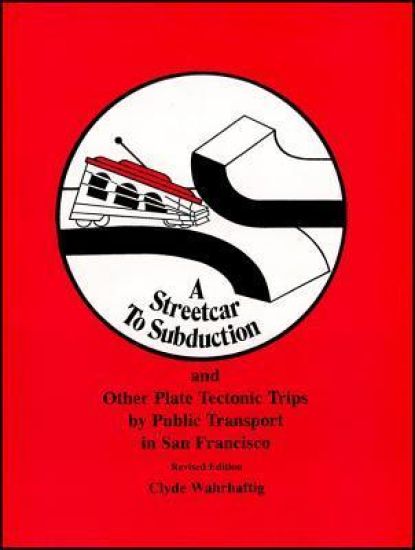
A Streetcar to Subduction and Other Plate Tectonic Trips by Public Transport in San Francisco
Published by the American Geophysical Union as part of the Special Publications Series. It is hard to be unaware of the earth in San Francisco. Built on rocky hills, the city is surrounded on three sides by bay and ocean that can be seen from nearly everywhere within it. Precipitous cliffs face the city from across the Golden Gate, and the skyline to the north, east, and south is dominated by mountains. Occasional tremors from the San Andreas and related faults nearby remind us that the earth here is active. Until recently the rocks so abundantly exposed in San Francisco baffled geologists. Jumbled together without apparent order and lacking visible fossils, they defied explanation. The theory of plate tectonics has changed all that. We now have an explanation for the origin of the rocks of San Francisco, although it is anything but simple.
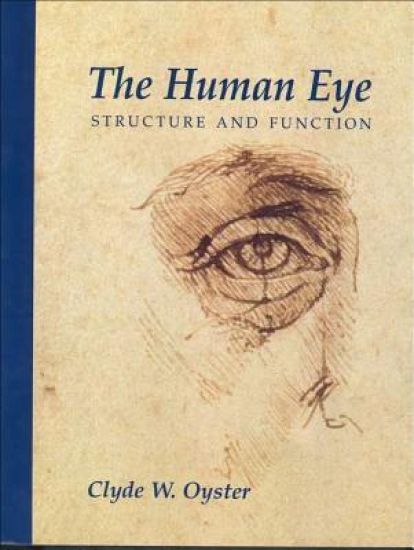
The Human Eye

The Human Eye

Clyde W. Oyster

Oxford University Press Inc
1999
nidottu
Published by Sinauer Associates, an imprint of Oxford University Press. We are a highly visual species. Most of our information about the world comes to us through our eyes and most of our cultural and intellectual heritage is stored and transmitted as words and images to which our vision gives access and meaning. Knowing more about our eyes and vision is, therefore, one path to better understanding ourselves. And, as it happens, the human eye is a fairly representative vertebrate eye; knowing more about it tells us much about the eyes of other animals and about how they view the world and us. In more practical terms, a better understanding of the human eye allows us to intervene more intelligently and purposefully as we attempt to correct, modify, or ameliorate disorders of the eye brought on by trauma, disease, or senescence. Understanding the eye requires an exploration of the relationship between its structure and its function--that is, a consideration not only of how the eye and its parts are constructed, but also of what they do and how they work. Thus, this book considers both the structure and the function of the human eye and how they are related, often using functional issues as a guide to the most meaningful and important features of the anatomy. Limited use of technical terms from the various disciplines that relate to the eye, definitions of terms as they are used, a glossary, and suggestions for additional reading are all included to make the text accessible to readers for whom the subject is new. Boxes interspersed throughout the text discuss methods used to study the structure of the eye and surgical procedures used to alter its structure in beneficial ways. In addition to the main theme of structure and function, several subthemes make the general point, in different ways, that the eye and our understanding of it are dynamic and changing. Change on a geological timescale is represented by the evolutionary history of eyes generally and the human eye's place among the diversity of eyes in the animal kingdom; these issues are discussed in the Prologue. Change within a human lifetime begins with a chapter about the early stages of development in utero, continues throughout the book with the developmental histories of different parts of the eye, and concludes, in the Epilogue, with accounts of postnatal growth, maturation, and senescence. Change throughout human history in the way we have understood our eyes is another story, fragments of which are contained in a series of "vignettes" about some of the people and ideas that have influenced human thought about the eye over the past several thousand years. The Human Eye: Structure and Function appeals to a wide audience, including all scientists who are interested in the eye and in vision; optometrists and ophthalmologists; and optometry students and ophthalmology residents.
The Essential Calhoun

The Essential Calhoun

Clyde N. Wilson

Transaction Publishers
1991
sidottu
John C. Calhoun was a major actor in the political history of nineteenth-century America. His dramatic career will always be of interest. However, Calhoun is equally important as a political thinker who continues to elicit widespread interest from the most diverse points of the ideological spectrum. The Essential Calhoun presents a full-fledged selection of speeches and writings taken from the entire forty-year span of Calhoun's public career and from many varieties of occasions, public and private. For the first time, it is possible to appreciate Calhoun fully and to consider his thought within the compass of a single volume.Calhoun is known to posterity as the premier defender of the Old South and slavery and as the theorist of the concurrent majority. His contemporaries knew him as much else, including a political economist and foreign policy authority. As the range of writings shows, he was a valuable and often prophetic commentator.Calhoun's thought testifies to a deep and abiding concern with moral and ethical issues that confront a government resting on the consent of the people. The fundamental question with which he wrestles in all his works is how to achieve and maintain a proper balance between power and liberty in a democratic society. By providing the most representative compendium of his thought, The Essential Calhoun invites the reader to engage in this exercise of applying the moral imagination realistically to the public business of America. Historians, American studies specialists, economists, and political scientists will find this volume indispensible.
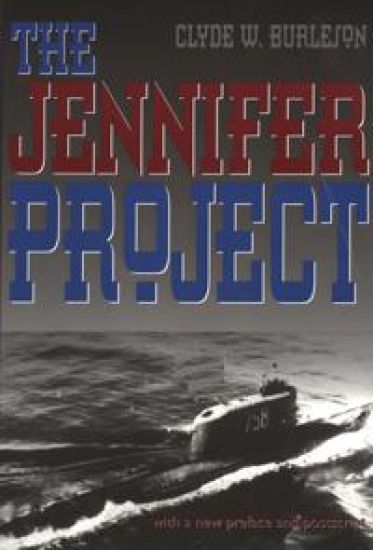
The Jennifer Project

The Jennifer Project

Clyde W. Burleson

Texas A M University Press
1997
nidottu
In 1968 a Soviet G-class submarine mysteriously exploded and sank to the bottom of the Pacific. With Cold War secrecy and speed, U.S. military intelligence raced to find a way to raise the sub. In the new preface to this edition of The Jennifer Project, which was first published in 1977, author Clyde Burleson discusses some of the sources he could not reveal twenty years ago and provides an interesting swords-to-plowshares update.In one of the more remarkable episodes of high-tech espionage and engineering of the Cold War, the effort to raise the Soviet sub, code-named the "Jennifer Project," assembled a cast of players that included top military brass, the CIA, and the eccentric millionaire and inventor Howard Hughes.The Project was a monumental effort to create a tool that could reach three miles below the ocean's surface and pull the sub from primordial muck—in secret. Financed and built by Hughes and Global Marine under contract with the CIA, the ship created to pluck the sub from the ooze was a technological marvel. Two football fields in length and twenty-three stories high, the Hughes Glomar Explorer held in its hull a six-million-pound submersible "claw" for picking up sections of the submarine.The project cost the U.S. government hundreds of millions of dollars, but the intelligence community was betting that, if successful, reclamation of the Soviet submarine would mean accessing invaluable military knowledge as the two superpowers neared negotiations in the Strategic Arms Limitation Treaty talks. The Jennifer Project revisits a fascinating period of high-level intrigue and invention that has remained unknown to many Americans.