Kirjojen hintavertailu. Mukana 12 390 323 kirjaa ja 12 kauppaa.

Kirjahaku

Etsi kirjoja tekijän nimen, kirjan nimen tai ISBN:n perusteella.

1000 tulosta hakusanalla Conrad Varentrapp

A set of six. By: Joseph Conrad: A Set of Six. (collection of story): Gaspar Ruiz, The Informer, The Brute, An Anarchist, The Duel, Il Conde .
A Set of Six. (collection of story): Gaspar Ruiz, The Informer, The Brute, An Anarchist, The Duel, Il Conde . Joseph Conrad (Polish pronunciation: born J zef Teodor Konrad Korzeniowski; 3 December 1857 - 3 August 1924) was a Polish-British writer regarded as one of the greatest novelists to write in the English language. He joined the British merchant marine in 1878, and was granted British nationality in 1886. Though he did not speak English fluently until his twenties, he was a master prose stylist who brought a non-English sensibility into English literature. He wrote stories and novels, many with a nautical setting, that depict trials of the human spirit in the midst of an impassive, inscrutable universe. Conrad is considered an early modernist, though his works still contain elements of 19th-century realism. His narrative style and anti-heroic characters have influenced many authors, including F. Scott Fitzgerald, William Faulkner, Ernest Hemingway, Andr Malraux, George Orwell, Graham Greene, Gabriel Garc a M rquez, John le Carr , V. S. Naipaul, Philip Roth, J. M. Coetzee, and Salman Rushdie. Many films have been adapted from, or inspired by, Conrad's works. Writing in the heyday of the British Empire, Conrad drew on, among other things, his native Poland's national experiences and his own experiences in the French and British merchant navies, to create short stories and novels that reflect aspects of a European-dominated world-including imperialism and colonialism-and that profoundly explore the human psyche. Joseph Conrad was born on 3 December 1857 in Berdychiv, in what is now Ukraine and at the time of his birth the Russian Empire, a region that was once part of the Kingdom of Poland. He was the only child of Apollo Korzeniowski and his wife Ewa Bobrowska. His father was a writer, translator, political activist, and would-be revolutionary. Conrad was christened J zef Teodor Konrad after his maternal grandfather Jozef, his paternal grandfather Teodor, and the heroes (both named "Konrad") of two poems by Adam Mickiewicz, Dziady and Konrad Wallenrod. He was subsequently known to his family as "Konrad", rather than "Jozef". Though the vast majority of the surrounding area's inhabitants were Ukrainians, and the great majority of Berdychiv's residents were Jewish, almost all the countryside was owned by the Polish szlachta (nobility), to which Conrad's family belonged as bearers of the coat-of-arms. Polish literature, particularly patriotic literature, was held in high esteem by the area's Polish population. The Korzeniowski family played a significant role in Polish attempts to regain independence. Conrad's paternal grandfather served under Prince Jozef Poniatowski during Napoleon's Russian campaign and formed his own cavalry squadron during the November 1830 Uprising.
Lord Jim Joseph Conrad

Lord Jim Joseph Conrad

Joseph Conrad

Createspace Independent Publishing Platform
2017
nidottu
Lord Jim tells the story of a young, idealistic Englishman--"as unflinching as a hero in a book"--who is disgraced by a single act of cowardice while serving as an officer on the Patna, a merchant-ship sailing from an eastern port. His life is ruined: an isolated scandal has assumed horrifying proportions. But, then he is befriended by an older man named Marlow who helps to establish him in exotic Patusan, a remote Malay settlement where his courage is put to the test once more. Lord Jim is a book about courage and cowardice, self-knowledge and personal growth. It is one of the most profound and rewarding psychological novels in English. Set in the context of social change and colonial expansion in late Victorian England, it embodies in Jim the values and turmoil of a fading empire. This new edition uses the first English edition text and includes a new introduction and notes by leading Conrad scholar Jacques Berthoud, glossaries, and an appendix on Conrad's sources and reading.
The Duel Joseph Conrad

The Duel Joseph Conrad

Joseph Conrad

Createspace Independent Publishing Platform
2017
nidottu
Napoleon I., whose career had the quality of a duel against the whole of Europe, disliked duelling between the officers of his army. The great military emperor was not a swashbuckler, and had little respect for tradition. Nevertheless, a story of duelling, which became a legend in the army, runs through the epic of imperial wars. To the surprise and admiration of their fellows, two officers, like insane artists trying to gild refined gold or paint the lily, pursued a private contest through the years of universal carnage. They were officers of cavalry, and their connection with the high-spirited but fanciful animal which carries men into battle seems particularly appropriate...
Joseph Conrad

Joseph Conrad

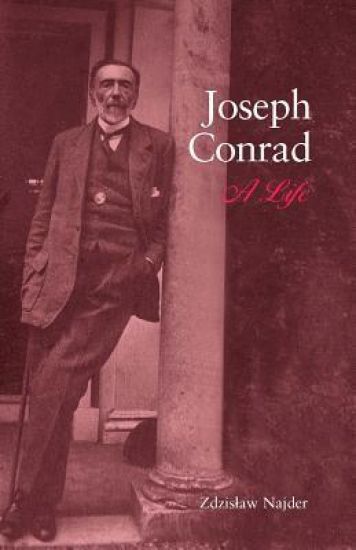
Zdzislaw Najder

Camden House Inc
2007
sidottu
Up-to-date and extensive revision of Najder's much-acclaimed scholarly biography of Conrad, employing newly accessible sources. Joseph Conrad is not only one of the world's great writers of English -- and world -- literature, but was a writer who lived a particularly full and interesting life. For the biographer this is a double-edged sword, however: thereare many periods for which documentation is uncommonly difficult. Zdzislaw Najder's meticulously documented biography first appeared in English in 1983, garnering high praise as the best, most complete biography of Conrad. Najder's command of English, French, Polish, and Russian allowed him access to a greater variety of sources than any other biographer, and his Polish background and his own experience as an exile have afforded him a unique affinity forConrad and his milieu. All this has come into play once again in the present, extensively revised edition: much of its extensive new material was unearthed in newly-opened former east-bloc archives. There is new material on Conrad's father's genealogy and his role in Polish politics; Conrad's service in the French and British merchant marines; his early English reading and correspondence; his experiences in the Congo; the circumstances of writing his memoirs, and much more. In addition, several aspects of Conrad's life and works are more thoroughly analyzed: his problems with the English language; his borrowings from French writers; his attitude toward socialism, his reaction to the reception of his books. Zdzislaw Najder teaches at the European Academy, Cracow.
Joseph Conrad: Master Mariner

Joseph Conrad: Master Mariner

Peter Villiers

Sheridan House
2006
pokkari
Before he published his first novel in 1895, Joseph Conrad spent twenty years in the merchant navy, eventually obtaining his master's ticket and commanding the barque Otago, in which he sailed a notable passage from Sydney to Mauritius. This book traces his sea-career, and shows how Captain Jozef Konrad Korzeniowski, master mariner, became Joseph Conrad, master novelist. Conrad was injured on the Highland Forest, burned out of the Palestine, falsely censured for professional misconduct by the master of the Riversdale, survived a brief and dangerous posting as a river-boat captain on the Congo???and finally served as first officer on the famous Torrens, a passenger ship sailing between Adelaide and Great Britain.
Joseph Conrad and the Anxiety of Knowledge

Joseph Conrad and the Anxiety of Knowledge

William Freedman

University of South Carolina Press
2014
sidottu
Few if any writers in the English language have been cited, praised, chided, or marvelled at more routinely than Joseph Conrad for the perplexing evasiveness, contradictoriness, and indeterminacy of their fiction. William Freedman argues that the explanations typically offered for these identifying characteristics of much of Conrad's work are inadequate if not mistaken. Freedman's claim is that the illusiveness of a coherent interpretation of Conrad's novels and shorter fictions is owed not primarily to the inherent slipperiness or inadequacy of language or the consequence of a wilful self-deconstruction. Nor is it a product of the writer's philosophical nihilism or a realized aesthetic of suggestive vagueness. Rather, Freedman argues, the perplexing elusiveness of Conrad's fiction is the consequence of a pervasive ambivalence toward threatening knowledge, a protective reluctance and recoil that are not only inscribed in Conrad's tales and novels, but repeatedly declared, defended, and explained in his letters and essays. Conrad's narrators and protagonists often set out on an apparent quest for hidden knowledge or are drawn into one. But repelled or intimidated by the looming consequences of their own curiosity and fervour, they protectively obscure what they have barely glimpsed or else retreat to an armoury of practiced distractions. The result is a confusingly choreographed dance of approach and withdrawal, fascination and revulsion, revelation and concealment. The riddling contradictions of these fictions are thus in large measure the result of this ambivalence, their evasiveness the mark of intimidation's triumph over fascination. The idea of dangerous and forbidden knowledge is at least as old as Genesis, and Freedman provides a background for Conrad's recoil from full exposure in the rich admonitory history of such knowledge in theology, myth, philosophy, and literature. He traces Conrad's impassioned, at times pleading case for protective avoidance in the writer's letters, essays, and prefaces, and he elucidates its enactment and its connection to Conrad's signature evasiveness in a number of short stories and novels, with special attention to The Secret Agent, Heart of Darkness, Lord Jim, Under Western Eyes, and The Rescue.
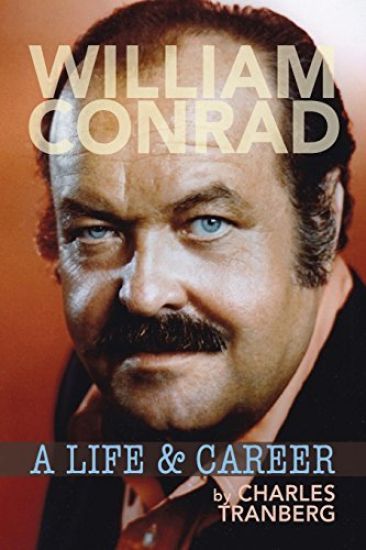
William Conrad

William Conrad

Charles Tranberg

BearManor Media
2018
pokkari
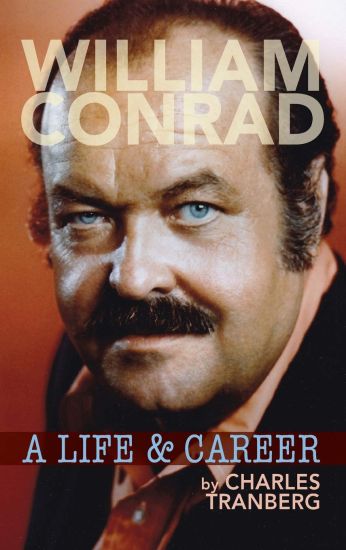
Old Time Radio fans remember William Conrad from Suspense (1947-1959), Escape (1947-1954), and Gunsmoke (1952-1961). Film Noir devotees recognize him in The Killers (1946), Body and Soul (1947), Sorry, Wrong Number (1948), and One Way Street (1950). Television viewers know him from Cannon (1971-1996) and Jake and the Fatman(1987-1992), and Nero Wolfe (1981).That he was an American World War II fighter pilot in the United States Army Air Corps with the rank of Captain and a producer-director of the Armed Forces Radio Service, as well as a film producer/director at Warner Bros., and later a singer, has never been fully revealed . . . until now. Author Charles Tranberg discloses the facts behind his feats, including Conrad's tremendous radio, film, and television credits, his memorable productions, and those that brought him from sound speakers to sound stages, including Quinn Martin, Lee Horsley, Joe Penny, Andy Griffith, Dean Hargrove, Fred Silverman, Howard McNear, John Wayne, James Arness, and Jack Webb. William Conrad. Conscientious professional. Congenial gentleman. Consumate actor. Discover his full story in the first ever richly researched biography. Illustrated. Index. Bibliography. About the author: Charles Tranberg's other works include I Love the Illusion: The Life and Career of Agnes Moorehead; Not So Dumb: The Life and Career of Marie Wilson; Fred MacMurray: A Biography; The Thin Man Films: Murder Over Cocktails, Robert Taylor: A Biography; Walt Disney & Recollections of the Disney Studios: 1955-1980; Fredric March: A Consummate Actor.
William Conrad

William Conrad

Charles Tranberg

BearManor Media
2018
sidottu
Old Time Radio fans remember William Conrad from Suspense (1947-1959), Escape (1947-1954), and Gunsmoke (1952-1961). Film Noir devotees recognize him in The Killers (1946), Body and Soul (1947), Sorry, Wrong Number (1948), and One Way Street (1950). Television viewers know him from Cannon (1971-1996) and Jake and the Fatman(1987-1992), and Nero Wolfe (1981). That he was an American World War II fighter pilot in the United States Army Air Corps with the rank of Captain and a producer-director of the Armed Forces Radio Service, as well as a film producer/director at Warner Bros., and later a singer, has never been fully revealed . . . until now. Author Charles Tranberg discloses the facts behind his feats, including Conrad's tremendous radio, film, and television credits, his memorable productions, and those that brought him from sound speakers to sound stages, including Quinn Martin, Lee Horsley, Joe Penny, Andy Griffith, Dean Hargrove, Fred Silverman, Howard McNear, John Wayne, James Arness, and Jack Webb. William Conrad. Conscientious professional. Congenial gentleman. Consumate actor. Discover his full story in the first ever richly researched biography. Illustrated. Index. Bibliography. About the author: Charles Tranberg's other works include I Love the Illusion: The Life and Career of Agnes Moorehead; Not So Dumb: The Life and Career of Marie Wilson; Fred MacMurray: A Biography; The Thin Man Films: Murder Over Cocktails, Robert Taylor: A Biography; Walt Disney & Recollections of the Disney Studios: 1955-1980; Fredric March: A Consummate Actor.
Heart of Darkness: New Edition - Heart of Darkness by Joseph Conrad
Heart of Darkness by Joseph Conrad is a real classic.You should grab it and read it to experience it yourself.Here's a simple plot to Heart of Darkness by Joseph ConradAs a child, Marlow had been fascinated by "the blank spaces" on maps, particularly by the biggest, which by the time he had grown up was no longer blank but turned into "a place of darkness". Yet there remained a big river, "resembling an immense snake uncoiled, with its head in the sea, its body at rest curving afar over a vast country and its tail lost in the depths of the land". The image of this river on the map fascinated Marlow "as a snake would a bird". Feeling as though "instead of going to the centre of a continent I were about to set off for the centre of the earth", Marlow takes passage on a French steamer bound for the African coast and then into the interior. After more than thirty days the ship anchors off the seat of government near the mouth of the big river. Marlow, with still some two hundred miles to go, takes passage on a little sea-going steamer captained by a Swede. He departs some thirty miles up the river where his company's station is. Work on the railway is going on, involving removal of rocks with explosives. Marlow enters a narrow ravine to stroll in the shade under the trees, and finds himself in "the gloomy circle of some Inferno" the place is full of diseased Africans who worked on the railroad and now await their deaths, their sickened bodies already as thin as air. Marlow witnesses the scene "horror-struck".Marlow has to wait for ten days in the company's Outer Station, where he sleeps in a hut. At this station, which strikes Marlow as a scene of devastation, he meets the company's impeccably dressed chief accountant who tells him of a Mr. Kurtz, who is in charge of a very important trading-post, and a widely respected, first-class agent, a "'very remarkable person'" who "'Sends in as much ivory as all the others put together'". The agent predicts that Kurtz will go very far: "'He will be a somebody in the Administration before long. They, above-the Council in Europe, you know-mean him to be'".Marlow departs with a caravan of sixty men to travel on foot about 200 miles (320 km) into the wilderness to the Central Station, where the steamboat that he is to captain is based. On the fifteenth day of his march, he arrives at the station, which has some twenty employees and is shocked to learn from a fellow European that his steamboat had been wrecked in a mysterious accident two days earlier. He meets the general manager, who informs him that he could wait no longer for Marlow to arrive, because the up-river stations had to be relieved and tells a rumour that one important station is in jeopardy because its chief, the exceptional Mr. Kurtz, is ill. "Hang Kurtz", Marlow thinks, irritated. He fishes his boat out of the river and is occupied with its repair for some months, during which a sudden fire destroys a grass shed full of materials used to trade with the natives. While one of the natives is tortured for allegedly causing the fire, Marlow is invited in the room of the station's brick-maker, a man who spent a year waiting for material to make bricks. Marlow gets the impression the man wants to pump him and is curious to know what kind of information he is after. Hanging on the wall is "a small sketch in oils, on a panel, representing a woman draped and blindfolded carrying a lighted torch". Marlow is fascinated with the sinister effect of the torchlight upon the woman's face, and.............Heart of Darkness by Joseph Conrad
Heart of Darkness: New Edition - Heart of Darkness by Joseph Conrad
Heart of Darkness by Joseph Conrad is a real classic.You should grab it and read it to experience it yourself.Here's a simple plot to Heart of Darkness by Joseph ConradAs a child, Marlow had been fascinated by "the blank spaces" on maps, particularly by the biggest, which by the time he had grown up was no longer blank but turned into "a place of darkness". Yet there remained a big river, "resembling an immense snake uncoiled, with its head in the sea, its body at rest curving afar over a vast country and its tail lost in the depths of the land". The image of this river on the map fascinated Marlow "as a snake would a bird". Feeling as though "instead of going to the centre of a continent I were about to set off for the centre of the earth", Marlow takes passage on a French steamer bound for the African coast and then into the interior. After more than thirty days the ship anchors off the seat of government near the mouth of the big river. Marlow, with still some two hundred miles to go, takes passage on a little sea-going steamer captained by a Swede. He departs some thirty miles up the river where his company's station is. Work on the railway is going on, involving removal of rocks with explosives. Marlow enters a narrow ravine to stroll in the shade under the trees, and finds himself in "the gloomy circle of some Inferno" the place is full of diseased Africans who worked on the railroad and now await their deaths, their sickened bodies already as thin as air. Marlow witnesses the scene "horror-struck".Marlow has to wait for ten days in the company's Outer Station, where he sleeps in a hut. At this station, which strikes Marlow as a scene of devastation, he meets the company's impeccably dressed chief accountant who tells him of a Mr. Kurtz, who is in charge of a very important trading-post, and a widely respected, first-class agent, a "'very remarkable person'" who "'Sends in as much ivory as all the others put together'". The agent predicts that Kurtz will go very far: "'He will be a somebody in the Administration before long. They, above-the Council in Europe, you know-mean him to be'".Marlow departs with a caravan of sixty men to travel on foot about 200 miles (320 km) into the wilderness to the Central Station, where the steamboat that he is to captain is based. On the fifteenth day of his march, he arrives at the station, which has some twenty employees and is shocked to learn from a fellow European that his steamboat had been wrecked in a mysterious accident two days earlier. He meets the general manager, who informs him that he could wait no longer for Marlow to arrive, because the up-river stations had to be relieved and tells a rumour that one important station is in jeopardy because its chief, the exceptional Mr. Kurtz, is ill. "Hang Kurtz", Marlow thinks, irritated. He fishes his boat out of the river and is occupied with its repair for some months, during which a sudden fire destroys a grass shed full of materials used to trade with the natives. While one of the natives is tortured for allegedly causing the fire, Marlow is invited in the room of the station's brick-maker, a man who spent a year waiting for material to make bricks. Marlow gets the impression the man wants to pump him and is curious to know what kind of information he is after. Hanging on the wall is "a small sketch in oils, on a panel, representing a woman draped and blindfolded carrying a lighted torch". Marlow is fascinated with the sinister effect of the torchlight upon the woman's face, and.............Heart of Darkness by Joseph Conrad
Joseph Conrad, Nostromo

Joseph Conrad, Nostromo

Joseph Conrad

Createspace Independent Publishing Platform
2018
nidottu
A gripping tale of capitalist exploitation and rebellion, set amid the mist-shrouded mountains of a fictional South American republic, employs flashbacks and glimpses of the future to depict the lure of silver and its effects on men. Conrad's deep moral consciousness and masterful narrative technique are at their best in this, one of his greatest works.