
Kirjahaku
Etsi kirjoja tekijän nimen, kirjan nimen tai ISBN:n perusteella.
1000 tulosta hakusanalla David L. Goetsch

Noted author and scholar David McKenna celebrates these simple, yet distinctive foundations and shares with enthusiasm the chalenges facing present-day Wesleyans in his timely new book.

Engaging, perceptive, and academically thorough, the New Beacon Bible Commentary will expand your understanding and deepen your appreciation of the meaning and message of each book of the Bible.Written from the Wesleyan theological perspective, this indispensable commentary provides pastors, professional scholars, teachers, and Bible students with a critical, relevant, and inspiring interpretation of the Word of God in the 21st century.Perhaps no other book of the OT is more beloved, more widely used, and more often interpreted than Psalms. Psalms 1-72 is the first of two volumes on this treasured collection of hymns, praises, and prayers.With scholarly precision, David Thompson brings to the forefront the meaning of each psalm, describing its background and original function in the life of God s people. He then skillfully steers the reader toward present-day applications, displaying a keen grasp of what the psalms mean in the light of Christ s coming. Through this commentary, pastors, worship leaders, teachers, and laypeople can gain increased insight into how each psalm best fits in worship, ministry, and daily life. Biblically sound and thoroughly relevant, this commentary is an essential guide to the church s most important book of prayer and song.

Nbbc, Psalms 73-150
David L Thompson; Barry L Ross; Alex Varughese
Beacon Hill Press of Kansas City
2020
pokkari
Continuing where the first New Beacon Bible Commentary on Psalms left off, NBBC Psalms 73-150 expertly explores relevant details of these prayers and hymns such as their poetic features, theological emphases, and types (thanksgiving psalms, praise psalms, laments, etc.). Attention is given to Old Testament thematic elements found in the Psalms, as well as the important influence of the Psalms on Jesus and the New Testament writers. A helpful glossary and an extensive bibliography are included. Written by a formidable team of scholars, this volume is another welcome addition to the NBBC series. The New Beacon Bible Commentary is an engaging, indispensable reference tool to aid individuals in every walk of life in the study and meditation of God's Word. Written from the Wesleyan theological perspective, it offers insight and perceptive scholarship to help you unlock the deeper truths of Scripture and garner an awareness of the history, culture, and context attributed to each book of study. Readable, relevant, and academically thorough, it offers scholars, pastors, and laity a new standard for understanding and interpreting the Bible in the 21st century. Each Volume Features: CONTEMPORARY NEW SCHOLARSHIP from notable experts in the Wesleyan theological tradition CONVENIENT INTRODUCTORY MATERIAL, for each book of the Bible including information on authorship, date, history, audience, sociological/cultural issues, purpose, literary features, theological themes, hermeneutical issues, and more CLEAR VERSE-BY-VERSE EXPLANATIONS, which offer a contemporary, Wesleyan-based understanding derived from the biblical text in its original language COMPREHENSIVE ANNOTATION divided into three sections, which cover background elements behind the text; verse-by-verse details and meanings found in the text; and significance, relevance, intertextuality, and application from the text HELPFUL SIDEBARS, which provide deeper insight into theological issues, word meanings, archeological connections, historical relevance, and cultural customs AN EXPANDED BIBLIOGRAPHY for further study of historical elements, additional interpretations, and theological themes
The organ procurement system in the United States has failed patients awaiting transplants, as evidenced by years-long waiting lists, with many patients declining in health or dying before a suitable organ donor is found. The cadaveric organ shortage can be remedied by allowing for organ purchases and sales, to encourage families of the deceased to donate the organs. This monograph is part of AEI's Evaluative Studies Series. The series aims to enhance understanding of government programs and to prompt continual review of their performance. David L. Kaserman is the Torchmark Professor and chairman of the Department of Economics at Auburn University. A. H. Barnett is a professor in, as well as the chairman of, the Department of Economics, International Studies, and Public Administration at the American University of Sharjah in the United Arab Emirates. A summary of the book follows. The first successful human organ transplant in the United States was performed on December 23, 1954, when a kidney was transplanted from a living donor who was an identical twin of the recipient. Since then, the ability to use organ transplants to save the lives and improve the health of thousands of patients suffering from kidney, heart, liver, and other organ failures has improved dramatically. New immunosuppressive drugs and advanced surgical techniques have allowed the successful use of cadaveric donor organs and, thereby, expanded the set of organs for which transplantation is a viable treatment. As a result, the number of organ transplants performed in this country has now grown to approximately 22,000 each year. Despite the tremendous successes that have been achieved, transplantation technology has failed to realize its full promise because of a chronic shortage of cadaveric organs that are made available for that use. The sad fact is that every year for the past three decades the number of cadaveric organs supplied has fallen well short of the number demanded. As a consequence, many patients are denied timely access to this life-saving treatment modality. Those who are deemed medically suitable candidates for transplantation are placed on organ waiting lists, where they often remain for one or more years before an acceptable organ becomes available. While they wait, these patients' health declines, making successful treatment increasingly problematic. Indeed, many of them die before a suitable donor organ is found. As of June 25, 2001, more than 77,000 patients were waiting for an organ transplant. Approximately 7,000 patients died in the preceding year as still more were added to the lists. And as the shortage continues, the length of the lists grows, waiting times increase, and the death toll rises. Importantly, the cadaveric organ shortage is not attributable to an inadequate number of potential organ donors. Of the 2 million or so deaths that occur in the United States each year, estimates indicate that somewhere between 13,000 and 29,000 occur under circumstances that would allow the organs of the deceased to be transplanted. Of these, only 5,843 (or 28 percent of the midrange of the estimates of the number of potential donors) yielded organ donations in 1999. Given the number of potential donors, then, organ collections could easily double or perhaps even triple without exhausting the existing potential supply. Thus, the organ shortage is the product of an ill-conceived public policy that fails to achieve higher collection rates from the available pool of donors. That policy, often referred to as the "altruistic system" of organ procurement, operates (as this name implies) entirely on the basis of unpaid donors. In the typical situation, the families of recently deceased accident or stroke victims who have been declared brain dead are asked for permission to remove the organs of the deceased for use in transplantations. Under the National Organ Transplant Act of 1984, any payment or other form of compensation to encourage the family to donate the organs is strictly proscribed by federal law. As a result, while the suppliers of all other inputs used in a transplant operation are paid market-determined prices, the parties who hold the key that makes transplantation possible cannot be paid. History of the Transplant System Notably, this system has evolved more by historical accident than conscious design. It grew out of a public policy that was intended for use with living, related kidney donors only. Because the earliest transplants were performed exclusively with kidneys donated by the recipients' living relatives, all organ transplant candidates brought the necessary donor with them when they checked into the hospital. If there was no acceptable living donor, there could be no transplant operation. As a result, there were no waiting lists and no apparent shortage. Moreover, under the living related donor system, there was no obvious need for any payment to encourage donor cooperation. The affection associated with the kinship between the donor and recipient was generally thought to be sufficient to motivate the requisite organ supply. And, where it was not, any necessary payment (or coercion) between family members could easily be arranged without resorting to the sort of middlemen generally required for market exchange. Such intrafamily cajoling by emotional pressure or outright payment also remained out of sight of the transplant centers and attending physicians. Therefore, a system of "altruistic" supply seemed to make sense in this setting, and reliance upon such a system did not seriously impede the use of this emerging medical technology. Indeed, it seemed to work quite well. That situation gradually changed, however, as new drugs began to allow the use of cadaveric donor organs and transplant success rates improved. Apparently, sometime during the 1970s, organ waiting lists began to arise as transplant candidates formed queues for needed cadaveric organs. The existing organ procurement system, however, was never altered to meet the needs of the greatly expanded pool of potential recipients created by the new technological opportunities. While some minor modifications have been implemented and considerable sums spent to educate the public regarding the virtues of organ donation, the basic system of complete reliance upon altruism to motivate supply has not changed. As a result, we have come to the current tragic situation in which thousands of patients die each year for lack of a suitable donor organ. These deaths have sparked considerable debate about how best to reform the U.S. organ procurement system to increase cadaveric donations. That debate, in turn, is reflected in a large and growing literature in which a variety of alternative policy proposals have been advanced. These proposals are surveyed in Chapter 3 of this monograph. While some authors have argued for continued reliance upon the current system with, perhaps, an appeal for increased educational expenditures, most now recognize that more fundamental policy change is required. The five most common proposals that have appeared in the literature are: (1) presumed consent, (2) conscription, (3) required request, (4) compensation, and (5) cadaveric organ markets. The first three of these proposals have, to varying degrees, been implemented either in the United States or abroad. In Chapter 3, we describe how each of these policies operates. We then demonstrate that, under reasonable assumptions regarding cadaveric organ supply and demand curves, the proposal to allow cadaveric organ markets to form clearly dominates all other policy options on social welfare grounds. Indeed, the organ market proposal appears to be the only alternative likely to eliminate the organ shortage entirely. Moreover, we estimate that, relative to the current system, creation of a market for procurement of cadaveric kidneys alone would, conservatively estimated, increase social welfare by over USD 300 million per year. Expanding the market system of procurement to other solid organs, then, would be likely to expand these welfare gains to well over USD 1 billion per year. And these welfare gains would be accompanied by several thousand lives saved annually. Despite the likelihood of such superior performance, however, the organ market proposal is not ubiquitously supported by those writing in this area. Both ethical and economic objections have been raised against the use of this most promising policy option. Upon inspection, however, these objections are found to be attributable, to a large degree, to: (1) some rather dubious ethical positions that have, in fact, been shown to be either logically weak or outright specious; (2) some fundamental misconceptions about how markets in general and organ markets in particular might operate in practice; and (3) several implicit (and empirically unlikely) assumptions regarding underlying structural parameters of cadaveric organ supply and demand curves. Chapter 4 addresses the first two sources of opposition, while Chapter 6 attempts to shed some light on the third. Importantly, we demonstrate in these chapters that none of the objections that have been raised in the literature to date is supported by either straightforward economic theory or empirical evidence. A dispassionate, objective analysis of the relevant arguments reveals no sound basis for rejecting the cadaveric organ market proposal. That is not to say, however, that sound economic reasons do not exist for particular interest groups to oppose this policy option. As with any policy change, there are parties likely to win and parties likely to lose from the formation of organ markets and resolution of the shortage. Chapter 5 focuses on the possibility that suppliers of transplant-related services - including, among other things, UNOS (an organization that maintains the nation's organ transplant waiting lists), organ procurement organizations, and transplant centers - could, in theory, suffer a decline in profits or a reduction in (or elimination of) the demand for their services if the organ market proposal were adopted. In addition, other parties providing substitutable services, such as dialysis clinics, could experience financial losses as well. While the economic stakes that a group holds in the outcome of this policy debate are not necessarily determinative of the positions adopted, they at least tend to temper each party's receptiveness to the options presented and the arguments used to support them. Consequently, while the case for adoption of the cadaveric organ market proposed is compelling, one should not expect to observe ubiquitous support for that proposal, particularly among suppliers of transplant services and organizations responsible for managing the shortage. The Case for Change The economic analysis and empirical evidence presented in this monograph support the following significant conclusions: 1. The shortage of cadaveric organs for transplantation has persisted for more than three decades. It is large, growing, and responsible for at least several thousand deaths each year. 2. The organ shortage is not caused by an insufficient number of potentially transplantable cadaveric organs. Rather, it is the direct result of a public policy that proscribes organ purchases and sales. 3. Economic theory strongly suggests that this shortage can be resolved by changing that policy to allow cadaveric organs markets to form. Such markets would permit cadaveric organ prices to rise and fall as necessary to equilibrate supply and demand, thereby eliminating the shortage. The social welfare gains achievable through implementation of the organ market proposal appear to be quite substantial, probably exceeding USD 1 billion per year. 4. Ethical objections to cadaveric organ markets appear to be either logically specious or generally unconvincing. Indeed, the alleged moral superiority of any policy that leads to unnecessary deaths along with higher expenditures must be viewed as inherently suspect. It seems, to us, indefensible to argue that one group of people should be denied lifesaving transplants simply because another group (who neither supplies nor demands cadaveric organs) prefers altruistic supply over market exchange. 5. Initial empirical evidence (though limited) suggests that adoption of organ markets would completely resolve the shortage at surprisingly low equilibrium prices. Our data suggest that payments on the order of USD 1,000 per donor would encourage an increase in the number of donors that would be sufficient to clear the market. These data also suggest that the alleged public opposition to such markets has been grossly exaggerated. It appears that it is the medical community, not the public, that is opposed to organ markets. We believe that these findings conclusively demonstrate the desirability, on social welfare grounds, of repealing the ban on cadaveric organ purchases contained in the National Organ Transplant Act of 1984. That ban has caused the unnecessary deaths of tens of thousands of patients and prolonged the suffering of many thousands more. And, ironically, it has done this while actually increasing federal and state expenditures on the affected programs. Thus, our current cadaveric organ procurement policy simultaneously causes unnecessary deaths and increased costs. And all of this is done for the high moral purpose of preventing the families of recently deceased accident and stroke victims from receiving any payment for their agreement to allow removal of their loved ones' organs.
Philosophers Annual 1990
David L. (EDT) Boyer; Patrick (EDT) Grim; John T. (EDT) Sanders
Rowman Littlefield Pub Inc
1990
sidottu

This is the only book focused on the complete aspects of RF Stealth design. It is the first book to present and explain first order methods for the design of active and passive stealth properties. Everything from Electronic Order of Battle to key component design is covered. The book is a 'How to' reference, allowing estimation of RCS, emitter interceptability, IR signature with speed, emitter footprints, terrain obscuration and target visibility, ambient spectra, ambient pulse density, detection performance, antenna, filter and pulse compression sidelobes, emitter location accuracy, stealthy pulse compression design, stealthy antenna design, signal processor performance, and more. Unique compilations of the leading parameters of many emitters and interceptors are included, as is analytical software for each chapter. Stealth was a major military breakthrough very much in today's news. Though the author has been pioneering modern stealth techniques since 1975, necessary requirements of security has kept this material from becoming widely known. The book's purpose is to provide a new generation of designers with a firm and proven basis for new developments and to allow buyers of stealth technology to separate the charlatans from serious engineers. Key features of this book include the fact that there is no competing title on the market; this will be the standard text for years to come. All analysis is presented on a first order basis: simplest approach, use of approximations, intuitive reasoning, many examples. The book's practical 'How to' approach incorporates recipes and examples for estimation of critical performance parameters. Includes 368 figures, 74 tables, 328 equations and 108 items of analytical software.


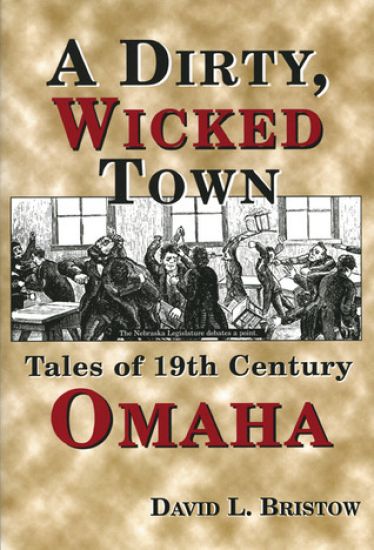
"It requires but little if any, stretch of the imagination to regard Omaha as a cesspool of iniquity, for it is given up to lawlessness and is overrun with a horde of fugitives from justice and dangerous men of all kinds who carry things with a high hand and a loose rein...If you want to find a rogue's rookery, go to Omaha." (A Kansas City newspaper).
Mormonism's formative years in the West have never been evaluated with the clarity and objectivity David L. Bigler brings to the story of our nation's most unique territory and its proud and peculiar people. Forgotten Kingdom combines an insightful understanding of the theology of early Mormonism with a lifetime of research into federal and LDS church sources to forge a creative reinterpretation of this fascinating and contentious history. Early settlement, Indian affairs, the Reformation, handcart migration, and much more are discussed in the early chapters. Forgotten Kingdom objectively evaluates some of the most troublesome puzzles in Mormonism's history and presents some intriguing solutions to many of its mysteries. The bitter political battle between the federal government and the Mormon church is told with special emphasis on the forgotten men and women who lived with its consequences. Meeting the standards of the most demanding scholarship, Forgotten Kingdom tells a story so odd and interesting that it both challenges and entertains. Bigler's gentle wit seldom misses the high irony of a story that has entertained Western observers since Samuel Clemens. A fascinating cast of little-known Latter-day Saints, including Hannah Tapfield King, Joseph Morris, Jeter Clinton, Sylvanus Collett, George Reynolds, Lydia Spencer Clawson, and George Hill, shows both the diversity of opinion within the faith and the devotion of its people to their institutions. The Utah War of 1857 was a pivotal episode in Utah's history. This event and those which led up to it are often given scant treatment in previous histories of the period. The reader will find the author's meticulous research and clear prose enlightening on this topic and others. California, Nevada, Arizona, Wyoming, Idaho, and other western lands were impacted by the Mormon theocracy's battle for independence. Nevada became a separate entity because its early settlers rejected theocratic rule and Congress determined to cut Mormon domains back to governable size. This history is not limited to Utah, but reflects a broad view of the history of the Far West. Patrick E. Connor, Daniel S. Tuttle, Duncan J. McMillan, Charles S. Zane, Robert N. Baskin, Caleb W. West, Clarence E. Allen, and many others are among the forgotten leaders whose role in the Americanization of Mormonism is often overlooked in the traditional histories. Their stories are told in this volume.
In 1855 the Mormons established a mission at the foot of famous Lemhi Pass near Salmon River, where the Lewis and Clark Corps of Discovery first crossed the Continental Divide and Sacagawea was reunited with her brother. Fort Limhi was, at first, part of the Church of Jesus Christ of Latter-day Saints' outreach to the Indians throughout the West. But the mission soon assumed a critical role in Brigham Young's plans for the Saints as they faced the imminent confrontation with the U.S. government which came to be known as the Utah War. Fort Limhi: The Mormon Adventure in Oregon Territory is an innovative account of a fascinating but forgotten story. Journals, diaries, letters and recollections of the men and women who served at the mission during the three years of its existence provide a wealth of information about native history and culture in eastern Idaho. The Mormon missionaries intentionally selected a spot that put them at the crossroads of ancient trails used by Nez Perc , Shoshone, Bannock, and Flathead bands as they battled each other and pursued their annual pilgrimages to trade, harvest salmon, and hunt buffalo. The sources also cast important light on little-known trails followed by Indians, traders, and emigrants. Ordinary western folk who survived an extraordinary exploit tell their stories in their own words, and these narratives are dramatic, compelling, ironic, enlightening, and downright fun. With its astonishing fish stories, desperate Indian battles, life-threatening chases, and heroic rides to rescue a terrified and helpless outpost, this work has all the elements of a great frontier novel. It even tells of the star-crossed love of Lewis Shurtliff and Louisa Moore, whose romance, like the story of Fort Limhi, came to a tragic ending. Historians often seemed baffled by Brigham Young's visit to Fort Limhi in 1857 while the fires of the Mormon Reformation burned in Utah and the territory's relationship with the federal government was collapsing. Young's trip was far more than a vacation for his family and advisors. As award-winning author David Bigler reveals, the Salmon River Indian Mission played a pivotal role in the resolution of the Utah War of 1857-1858. The catastrophe that ended the colony at Fort Limhi brought Utah back from the very brink of war with the United States. Fort Limhi provides new material on the obscure fur-trade veterans and misfits who called themselves "mountaineers" (the contemporary term for that "majority of scoundrels" now known as the fearless "Mountain Men") and sheds light on their contentious relations with their Mormon neighbors. The story of Fort Limhi has long deserved a larger role in the history of Idaho and Montana. It provides new insights into the role of Mormons in the West and their Indian relations, and explains some long-standing puzzles about the Utah War of 1857-1858.

Nitriding and ferritic nitrocarburizing offer unique advantages compared to other surface hardening heat treatments. This book provides a comprehensive guide to understanding these processes, selecting the appropriate process and process parameters, controlling the process, evaluating results, and troubleshooting. Contents: Part 1, Nitriding: An Introduction to Nitriding; Why Nitride?; How does the Process of Nitriding Work?; Microstructures of Nitrided Iron and Steel; Furnace Equipment and Control Systems; Salt Bath Nitriding; Control of the Compound Zone or White Layer; Ion Nitriding; Ion Nitriding Equipment; Nitriding in Fluidized Beds; Distortion; Steels for Nitriding; Control of the Process Gas in Plasma Conditions; Processing with Nitriding; Stop-Off Procedures for Selective Nitriding; Examination of the Nitrided Case; Troubleshooting. Part 2, Ferritic Nitrocarburizing: What is Meant by 'Ferritic Nitrocarburizing'?; Salt Bath Ferritic Nitrocarburizing; The Gaseous Ferritic Nitrocarburizing Process; Equipment for Ferritic Nitrocarburizing; Preparation for the Ferritic Nitrocarburizing Process; Evaluating the Process; Index.

David Wallace argues that any understanding of writing studies must include the conception of discourse as an embodied force with real consequences for real people. Informed in important ways by queer theory, Wallace calls to account users of dominant discourses and at the same time articulates a theory base from which to interpret "alternative rhetoric." To examine the practice of writing from varied margins of society, Compelled to Write offers careful readings of four exemplar American writers, each of whom felt compelled within their own time and place to write in response to systemic injustices in American society.Sarah Grimke, a privileged white woman advocating for abolition, is forced to defend her right to speak as a woman; Frederick Douglass begins his public career almost as a curiosity (the articulate ex-slave)and ends it as one of the most important rhetors in American history; Gloria Anzaldua writes not only in multiple languages and dialects but from marginalized positions related to gender, race, class, sexual identity, and physical able-ness; David Sedaris uses his privileged position as a middle-class white male humorist to speak unabashedly of his sexuality, his addictions, and obsessive-compulsive personality disorder. Through these writers, Wallace explores a range of strategies that comprise alternative rhetorical practice, and demonstrates how such practice is inflected by social constraints on rhetorical agency and by how writers employ alternative discourses to resist those constraints. Grounding and personalizing Compelled to Write with rich material from his own teaching and his own experience, Wallace considers a number of implications for teachers of writing.
Lewis & Clark Reframed
David L. Nicandri; Clay S. Jenkinson
Washington State University Press
2020
pokkari
Spanish, British, and French explorers reached the Pacific Northwest before Meriwether Lewis and William Clark. The American captains benefited from those predecessors, even carrying with them copies of their published accounts. James Cook, George Vancouver, and Alexander Mackenzie--and to a lesser extent fur traders John Meares and Robert Gray--directly and indirectly influenced the expedition. Based on new material as well as revised essays from popular history journals, Lewis and Clark Reframed examines several curious and seemingly inexplicable aspects of the journey after the Corps of Discovery crossed the Rocky Mountains.The captains' journals demonstrate that they relied on Mackenzie's 1801 Voyages from Montreal as a trail guide. They borrowed field techniques and favorite literary expressions--at times plagiarizing entire paragraphs. Cook's literature also informed the pair, and his naming conventions evoke fresh ideas about an enduring expedition mystery--the identity of the two or three journalists whose records are now missing. Additional journal text analysis dispels the notion that the captains were equals, despite expedition lore. Lewis claimed all the epochal discoveries for himself, and in one of his more memorable passages, drew on Mackenzie for inspiration. Parallels between Cook's and other exploratory accounts offer evidence that like many long-distance voyagers, Lewis grappled with homesickness. His friendship with Mahlon Dickerson lends insights into Lewis's shortcomings and eventual undoing. As secretary of the navy, Dickerson drew from Lewis's troubled past to impede the 1840s ocean expedition set to emulate Cook and solidify America's claim, through Lewis and Clark, to the region.
River of Promise
David L. Nicandri; Clay S. Jenkinson
Washington State University Press
2022
pokkari
In the many published accounts of the Lewis and Clark expedition, historians have tended to undervalue the explorers' encounter with Columbia River country. Most narratives emphasize Lewis and Clark's adventures through their journey to the Bitterroot Mountains but have said little about the rest of their travels west of there. River of Promise fills a significant gap in our understanding of Lewis and Clark's legendary expedition.Historian David L. Nicandri shifts the focus to an essential goal of the explorers: to discover the headwaters of the Columbia and a water route to the Pacific Ocean. He also restores William Clark in his role as the primary geographic problem-solver of the partnership. Most historians assume that Meriwether Lewis was a more distinguished scientist than Clark because of his formal training in Philadelphia and superior writing skills. Here we see Clark as Lewis's equal as scientific geographer, not merely the practical manager of boats and personnel.Nicandri places the legend of Sacagawea in clearer perspective by focusing instead on the contributions of often-overlooked Indian leaders in Columbia River country. He also offers many points of comparison to other explorers and a provocative analysis of Lewis's suicide in 1809, arguing that it was not a sudden event but fruit of a seed planted much earlier, quite possibly in Columbia country. Originally published by The Dakota Institute.
River of Promise
David L. Nicandri; Clay S. Jenkinson
Washington State University Press
2022
sidottu
In the many published accounts of the Lewis and Clark expedition, historians have tended to undervalue the explorers' encounter with Columbia River country. Most narratives emphasize Lewis and Clark's adventures through their journey to the Bitterroot Mountains but have said little about the rest of their travels west of there. River of Promise fills a significant gap in our understanding of Lewis and Clark's legendary expedition.Historian David L. Nicandri shifts the focus to an essential goal of the explorers: to discover the headwaters of the Columbia and a water route to the Pacific Ocean. He also restores William Clark in his role as the primary geographic problem-solver of the partnership. Most historians assume that Meriwether Lewis was a more distinguished scientist than Clark because of his formal training in Philadelphia and superior writing skills. Here we see Clark as Lewis's equal as scientific geographer, not merely the practical manager of boats and personnel.Nicandri places the legend of Sacagawea in clearer perspective by focusing instead on the contributions of often-overlooked Indian leaders in Columbia River country. He also offers many points of comparison to other explorers and a provocative analysis of Lewis's suicide in 1809, arguing that it was not a sudden event but fruit of a seed planted much earlier, quite possibly in Columbia country. Originally published by The Dakota Institute.

During the infamous raid on Columbus, New Mexico, in 1916, Antonio Salazar, one of Pancho Villa's bandit chiefs, kidnaps Mary Wells, daughter of New Mexico rancher Frank MacPherson. MacPherson's longtime foreman, James Hampton, determines to go deep into Mexico to rescue the girl he remembers as Little Mary. Hamp's old friend, Bud Tyler, goes with him, as does MacPherson's nephew, the greenhorn Reuben Satterwhite. For Hamp and Tyler, the mission is reminiscent of adventures shared years before as Texas Rangers, when both were young and strong and felt immortal. For Satterwhite, it is adventure and apprenticeship. Once into Mexico, all three men must cross psychological frontiers as well as geographic borders. Mary, meanwhile, has borders of her own to cross. In clean, straightforward prose, the action alternates between Mary and her rescuers, and David Fleming draws the reader into a threatening web where ultimately survival is not the most important thing. In this, his second novel, Fleming demonstrates the creativity and historical responsibility required to turn history into spellbinding fiction.