

Kirjahaku
Etsi kirjoja tekijän nimen, kirjan nimen tai ISBN:n perusteella.
1000 tulosta hakusanalla David L. Minter

"It requires but little if any, stretch of the imagination to regard Omaha as a cesspool of iniquity, for it is given up to lawlessness and is overrun with a horde of fugitives from justice and dangerous men of all kinds who carry things with a high hand and a loose rein...If you want to find a rogue's rookery, go to Omaha." (A Kansas City newspaper).

Mormonism's formative years in the West have never been evaluated with the clarity and objectivity David L. Bigler brings to the story of our nation's most unique territory and its proud and peculiar people. Forgotten Kingdom combines an insightful understanding of the theology of early Mormonism with a lifetime of research into federal and LDS church sources to forge a creative reinterpretation of this fascinating and contentious history. Early settlement, Indian affairs, the Reformation, handcart migration, and much more are discussed in the early chapters. Forgotten Kingdom objectively evaluates some of the most troublesome puzzles in Mormonism's history and presents some intriguing solutions to many of its mysteries. The bitter political battle between the federal government and the Mormon church is told with special emphasis on the forgotten men and women who lived with its consequences. Meeting the standards of the most demanding scholarship, Forgotten Kingdom tells a story so odd and interesting that it both challenges and entertains. Bigler's gentle wit seldom misses the high irony of a story that has entertained Western observers since Samuel Clemens. A fascinating cast of little-known Latter-day Saints, including Hannah Tapfield King, Joseph Morris, Jeter Clinton, Sylvanus Collett, George Reynolds, Lydia Spencer Clawson, and George Hill, shows both the diversity of opinion within the faith and the devotion of its people to their institutions. The Utah War of 1857 was a pivotal episode in Utah's history. This event and those which led up to it are often given scant treatment in previous histories of the period. The reader will find the author's meticulous research and clear prose enlightening on this topic and others. California, Nevada, Arizona, Wyoming, Idaho, and other western lands were impacted by the Mormon theocracy's battle for independence. Nevada became a separate entity because its early settlers rejected theocratic rule and Congress determined to cut Mormon domains back to governable size. This history is not limited to Utah, but reflects a broad view of the history of the Far West. Patrick E. Connor, Daniel S. Tuttle, Duncan J. McMillan, Charles S. Zane, Robert N. Baskin, Caleb W. West, Clarence E. Allen, and many others are among the forgotten leaders whose role in the Americanization of Mormonism is often overlooked in the traditional histories. Their stories are told in this volume.

In 1855 the Mormons established a mission at the foot of famous Lemhi Pass near Salmon River, where the Lewis and Clark Corps of Discovery first crossed the Continental Divide and Sacagawea was reunited with her brother. Fort Limhi was, at first, part of the Church of Jesus Christ of Latter-day Saints' outreach to the Indians throughout the West. But the mission soon assumed a critical role in Brigham Young's plans for the Saints as they faced the imminent confrontation with the U.S. government which came to be known as the Utah War. Fort Limhi: The Mormon Adventure in Oregon Territory is an innovative account of a fascinating but forgotten story. Journals, diaries, letters and recollections of the men and women who served at the mission during the three years of its existence provide a wealth of information about native history and culture in eastern Idaho. The Mormon missionaries intentionally selected a spot that put them at the crossroads of ancient trails used by Nez Perc , Shoshone, Bannock, and Flathead bands as they battled each other and pursued their annual pilgrimages to trade, harvest salmon, and hunt buffalo. The sources also cast important light on little-known trails followed by Indians, traders, and emigrants. Ordinary western folk who survived an extraordinary exploit tell their stories in their own words, and these narratives are dramatic, compelling, ironic, enlightening, and downright fun. With its astonishing fish stories, desperate Indian battles, life-threatening chases, and heroic rides to rescue a terrified and helpless outpost, this work has all the elements of a great frontier novel. It even tells of the star-crossed love of Lewis Shurtliff and Louisa Moore, whose romance, like the story of Fort Limhi, came to a tragic ending. Historians often seemed baffled by Brigham Young's visit to Fort Limhi in 1857 while the fires of the Mormon Reformation burned in Utah and the territory's relationship with the federal government was collapsing. Young's trip was far more than a vacation for his family and advisors. As award-winning author David Bigler reveals, the Salmon River Indian Mission played a pivotal role in the resolution of the Utah War of 1857-1858. The catastrophe that ended the colony at Fort Limhi brought Utah back from the very brink of war with the United States. Fort Limhi provides new material on the obscure fur-trade veterans and misfits who called themselves "mountaineers" (the contemporary term for that "majority of scoundrels" now known as the fearless "Mountain Men") and sheds light on their contentious relations with their Mormon neighbors. The story of Fort Limhi has long deserved a larger role in the history of Idaho and Montana. It provides new insights into the role of Mormons in the West and their Indian relations, and explains some long-standing puzzles about the Utah War of 1857-1858.

Nitriding and ferritic nitrocarburizing offer unique advantages compared to other surface hardening heat treatments. This book provides a comprehensive guide to understanding these processes, selecting the appropriate process and process parameters, controlling the process, evaluating results, and troubleshooting. Contents: Part 1, Nitriding: An Introduction to Nitriding; Why Nitride?; How does the Process of Nitriding Work?; Microstructures of Nitrided Iron and Steel; Furnace Equipment and Control Systems; Salt Bath Nitriding; Control of the Compound Zone or White Layer; Ion Nitriding; Ion Nitriding Equipment; Nitriding in Fluidized Beds; Distortion; Steels for Nitriding; Control of the Process Gas in Plasma Conditions; Processing with Nitriding; Stop-Off Procedures for Selective Nitriding; Examination of the Nitrided Case; Troubleshooting. Part 2, Ferritic Nitrocarburizing: What is Meant by 'Ferritic Nitrocarburizing'?; Salt Bath Ferritic Nitrocarburizing; The Gaseous Ferritic Nitrocarburizing Process; Equipment for Ferritic Nitrocarburizing; Preparation for the Ferritic Nitrocarburizing Process; Evaluating the Process; Index.

David Wallace argues that any understanding of writing studies must include the conception of discourse as an embodied force with real consequences for real people. Informed in important ways by queer theory, Wallace calls to account users of dominant discourses and at the same time articulates a theory base from which to interpret "alternative rhetoric." To examine the practice of writing from varied margins of society, Compelled to Write offers careful readings of four exemplar American writers, each of whom felt compelled within their own time and place to write in response to systemic injustices in American society.Sarah Grimke, a privileged white woman advocating for abolition, is forced to defend her right to speak as a woman; Frederick Douglass begins his public career almost as a curiosity (the articulate ex-slave)and ends it as one of the most important rhetors in American history; Gloria Anzaldua writes not only in multiple languages and dialects but from marginalized positions related to gender, race, class, sexual identity, and physical able-ness; David Sedaris uses his privileged position as a middle-class white male humorist to speak unabashedly of his sexuality, his addictions, and obsessive-compulsive personality disorder. Through these writers, Wallace explores a range of strategies that comprise alternative rhetorical practice, and demonstrates how such practice is inflected by social constraints on rhetorical agency and by how writers employ alternative discourses to resist those constraints. Grounding and personalizing Compelled to Write with rich material from his own teaching and his own experience, Wallace considers a number of implications for teachers of writing.
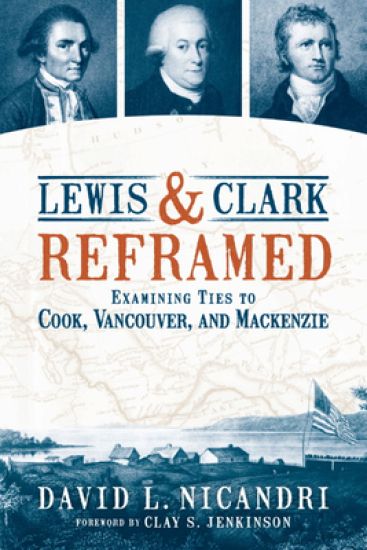
Lewis & Clark Reframed
David L. Nicandri; Clay S. Jenkinson
Washington State University Press
2020
pokkari
Spanish, British, and French explorers reached the Pacific Northwest before Meriwether Lewis and William Clark. The American captains benefited from those predecessors, even carrying with them copies of their published accounts. James Cook, George Vancouver, and Alexander Mackenzie--and to a lesser extent fur traders John Meares and Robert Gray--directly and indirectly influenced the expedition. Based on new material as well as revised essays from popular history journals, Lewis and Clark Reframed examines several curious and seemingly inexplicable aspects of the journey after the Corps of Discovery crossed the Rocky Mountains.The captains' journals demonstrate that they relied on Mackenzie's 1801 Voyages from Montreal as a trail guide. They borrowed field techniques and favorite literary expressions--at times plagiarizing entire paragraphs. Cook's literature also informed the pair, and his naming conventions evoke fresh ideas about an enduring expedition mystery--the identity of the two or three journalists whose records are now missing. Additional journal text analysis dispels the notion that the captains were equals, despite expedition lore. Lewis claimed all the epochal discoveries for himself, and in one of his more memorable passages, drew on Mackenzie for inspiration. Parallels between Cook's and other exploratory accounts offer evidence that like many long-distance voyagers, Lewis grappled with homesickness. His friendship with Mahlon Dickerson lends insights into Lewis's shortcomings and eventual undoing. As secretary of the navy, Dickerson drew from Lewis's troubled past to impede the 1840s ocean expedition set to emulate Cook and solidify America's claim, through Lewis and Clark, to the region.
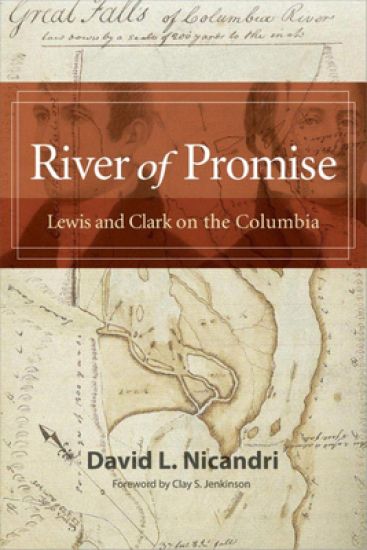
River of Promise
David L. Nicandri; Clay S. Jenkinson
Washington State University Press
2022
pokkari
In the many published accounts of the Lewis and Clark expedition, historians have tended to undervalue the explorers' encounter with Columbia River country. Most narratives emphasize Lewis and Clark's adventures through their journey to the Bitterroot Mountains but have said little about the rest of their travels west of there. River of Promise fills a significant gap in our understanding of Lewis and Clark's legendary expedition.Historian David L. Nicandri shifts the focus to an essential goal of the explorers: to discover the headwaters of the Columbia and a water route to the Pacific Ocean. He also restores William Clark in his role as the primary geographic problem-solver of the partnership. Most historians assume that Meriwether Lewis was a more distinguished scientist than Clark because of his formal training in Philadelphia and superior writing skills. Here we see Clark as Lewis's equal as scientific geographer, not merely the practical manager of boats and personnel.Nicandri places the legend of Sacagawea in clearer perspective by focusing instead on the contributions of often-overlooked Indian leaders in Columbia River country. He also offers many points of comparison to other explorers and a provocative analysis of Lewis's suicide in 1809, arguing that it was not a sudden event but fruit of a seed planted much earlier, quite possibly in Columbia country. Originally published by The Dakota Institute.
River of Promise
David L. Nicandri; Clay S. Jenkinson
Washington State University Press
2022
sidottu
In the many published accounts of the Lewis and Clark expedition, historians have tended to undervalue the explorers' encounter with Columbia River country. Most narratives emphasize Lewis and Clark's adventures through their journey to the Bitterroot Mountains but have said little about the rest of their travels west of there. River of Promise fills a significant gap in our understanding of Lewis and Clark's legendary expedition.Historian David L. Nicandri shifts the focus to an essential goal of the explorers: to discover the headwaters of the Columbia and a water route to the Pacific Ocean. He also restores William Clark in his role as the primary geographic problem-solver of the partnership. Most historians assume that Meriwether Lewis was a more distinguished scientist than Clark because of his formal training in Philadelphia and superior writing skills. Here we see Clark as Lewis's equal as scientific geographer, not merely the practical manager of boats and personnel.Nicandri places the legend of Sacagawea in clearer perspective by focusing instead on the contributions of often-overlooked Indian leaders in Columbia River country. He also offers many points of comparison to other explorers and a provocative analysis of Lewis's suicide in 1809, arguing that it was not a sudden event but fruit of a seed planted much earlier, quite possibly in Columbia country. Originally published by The Dakota Institute.
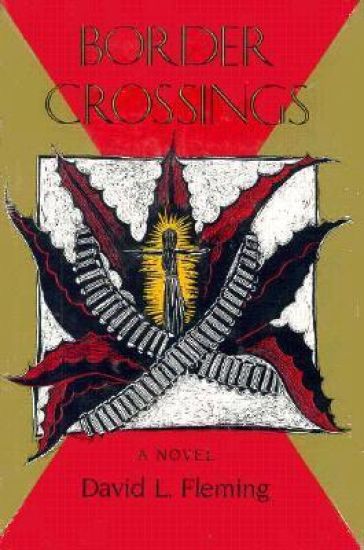
During the infamous raid on Columbus, New Mexico, in 1916, Antonio Salazar, one of Pancho Villa's bandit chiefs, kidnaps Mary Wells, daughter of New Mexico rancher Frank MacPherson. MacPherson's longtime foreman, James Hampton, determines to go deep into Mexico to rescue the girl he remembers as Little Mary. Hamp's old friend, Bud Tyler, goes with him, as does MacPherson's nephew, the greenhorn Reuben Satterwhite. For Hamp and Tyler, the mission is reminiscent of adventures shared years before as Texas Rangers, when both were young and strong and felt immortal. For Satterwhite, it is adventure and apprenticeship. Once into Mexico, all three men must cross psychological frontiers as well as geographic borders. Mary, meanwhile, has borders of her own to cross. In clean, straightforward prose, the action alternates between Mary and her rescuers, and David Fleming draws the reader into a threatening web where ultimately survival is not the most important thing. In this, his second novel, Fleming demonstrates the creativity and historical responsibility required to turn history into spellbinding fiction.
During the infamous raid on Columbus, New Mexico, in 1916, Antonio Salazar, one of Pancho Villa's bandit chiefs, kidnaps Mary Wells, daughter of New Mexico rancher Frank MacPherson. MacPherson's longtime foreman, James Hampton, determines to go deep into Mexico to rescue the girl he remembers as Little Mary. Hamp's old friend, Bud Tyler, goes with him, as does MacPherson's nephew, the greenhorn Reuben Satterwhite. For Hamp and Tyler, the mission is reminiscent of adventures shared years before as Texas Rangers, when both were young and strong and felt immortal. For Satterwhite, it is adventure and apprenticeship. Once into Mexico, all three men must cross psychological frontiers as well as geographic borders. Mary, meanwhile, has borders of her own to cross. In clean, straightforward prose, the action alternates between Mary and her rescuers, and David Fleming draws the reader into a threatening web where ultimately survival is not the most important thing. In this, his second novel, Fleming demonstrates the creativity and historical responsibility required to turn history into spellbinding fiction.
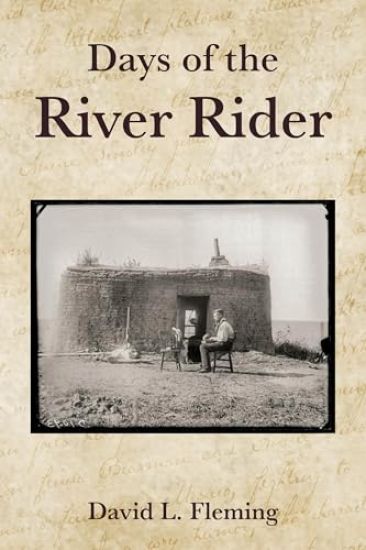
Days of the River Rider is a powerful blend of historical fiction and classic western storytelling, set against the stark beauty of Texas’ Big Bend country in 1943. At the height of a foot-and-mouth cattle quarantine along the Rio Grande, John Bearman patrols the river as an isolated rider, armed only with books, a Victrola, and his duty to protect the borderlands. His solitary existence is interrupted when he meets Annie Tinsley, a rancher’s wife whose resilience and pain mirror the rugged land they both inhabit. What begins as an unlikely bond quickly unfolds into a story of smuggling, survival, and forbidden connection—where loyalty is tested, violence is close at hand, and the unforgiving desert reveals both its harshness and its grace. From Annie’s struggle with a traumatic birth to Bearman’s deadly clash with the ruthless Emilio Ornelos, the novel explores themes of isolation, resilience, love, loss, and redemption. Told through vivid journal entries that give voice to Bearman’s inner battles, Days of the River Rider offers readers a deeply character-driven western that balances gritty action with moments of profound tenderness. Ideal for fans of Yellowstone:1923 and 1883; for readers of historical fiction, westerns, and literary fiction, particularly those interested in the Southwest, World War II–era Texas, and Rio Grande border history.
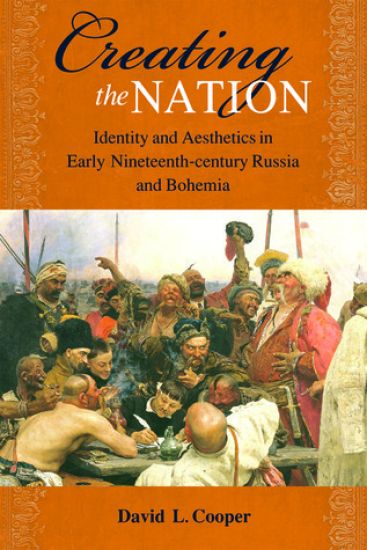
Offering an incisive new study of literature and nationalism, Cooper examines fundamental developments in Russian and Czech literature and criticism from 1800 to 1830, a period that has largely been neglected in the English-language scholarship. While other books have focused on the question of why developing nations look to literature as a source of national identity, Cooper asks why ideas of nationality were necessary for critics and writers seeking to evolve new genres and forms and modernize literary values. Cooper's ambitious work produces a clear picture of the paradigm shift in literary values that drove the development of national identity and demonstrates how critical this period is to understanding the major trends and concerns of Russian and Czech literatures over the nineteenth century. With its broad scope, this groundbreaking comparison of two national literatures will interest a wide range of scholars and students of cultural and intellectual history and those who study the interaction between nationalism and literature. Creating the Nation will appeal to historians and historically minded political scientists and sociologists, along with specialists in Russian and Czech literatures.

Cardiac Pacing - A Case Approach
David L. Hayes; Paul J. Wang; Marleen Irwin; A. John Camm
Blackwell Futura
1998
nidottu
There are many excellent textbooks that exist in the area of implantable devices for arrhythmia control. Few textbooks, however, provide a case study approach. Collectively, these workbooks provide an approach to problem solving an electrocardiographic interpretation for patients with permanent pacemakers and defibrillators. Volume 1 addresses patients with permanent pacemakers Volume 2 examines interactions between pacemakers and implantable defibrillators Volume 3 provides case studies of transtelephonic pacemakers electrocardiography Volume 4 provides more pacemaker and implantable defibrillator troubleshooting cases This volume takes a case-orientated approach, providing a diverse series of problems on a broad range of pacing related topics. The cases are divided into easy, moderate and complex according to their level of difficulty, allowing the reader to gauge their progress. This workbook is suitable for physicians, nurses, technicians, technologists and industry engineers, particularly those new to the field who are keen to learn in a practical way.

Oregon offers a wealth of historic, cultural, and natural wonders, and this book leads hikers to some of its most spectacular destinations. Hike distances range from 1 to 18 miles, encouraging casual and extreme adventurers to sample the best trails the state has to offer. The book highlights nearby activities and attractions that will interest travelers and natives alike who enjoy discovering more about the areas. The author divides the book into four regions: Coast and Coast Range, Columbia River, Cascades, and High Desert. Each hike includes a topographical map, detailed description of the location, terrain length, and elevation. In addition to practical information, this guide also gives the reader a feel for each hike by providing insights into the natural history, geology, wildlife, and plant life unique to each trail.

Evil, Sexuality, and Disease in Grünewald's Body of Christ
David L Miller; Eugene Monick
Spring Publications
2017
pokkari
This wonderfully readable work by the Jungian analyst Eugene Monick is about an equally wondrous, if difficult, artwork. Gr newald's famous Isenheim altarpiece, now located at Colmar in the Alsatian part of France, contains a strange and troubling image: a portrayal of Jesus's body, skin yellowed and greened, covered with pus and scabs, thoroughly diseased. This image - what archetypal psychologists Rafael L pez-Pedraza, Niel Micklem, and Alfred Ziegler, following the poet Jos Lezama Lima, have called an "intolerable image" - constitutes both the wondrous and difficult dimensions of Monick's theme. Surprising as it may seem with so distressing a topic, and like the Isenheim altarpiece itself, this book offers relief, a "welcome remedy to incessant blame," as Monick himself puts it, an antidote to "the huge and fruitless effort of seeking a perfect and stainless way." The fascination, then, is in seeing how a blemished image of Jesus paradoxically constitutes precisely a Christic sense of self without blemish. (David L. Miller)
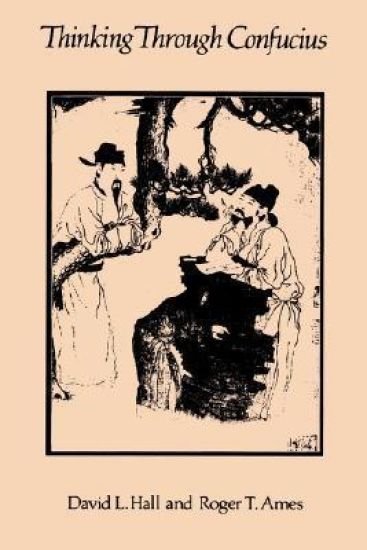
Thinking Through Confucius
David L. Hall; Roger T. Ames
State University of New York Press
1987
pokkari
Thinking Through Confucius critically interprets the conceptual structure underlying Confucius' philosophical reflections. It also investigates "thinking," or "philosophy" from the perspective of Confucius. Perhaps the philosophical question of our time is "what is philosophy". The authors suggest that an examination of the Chinese philosophy may provide an alternative definition of philosophy that can be used to address some of the pressing issues of the Western cultural tradition. This book finds an appropriate language for the interpretation of traditional Chinese philosophical thought - a language which is relatively free from the bias and presuppositions of Western philosophy.

This invaluable reference offers the most comprehensive introduction available to the concepts of multisensor data fusion. It introduces key algorithms, provides advice on their utilization, and raises issues associated with their implementation. With a diverse set of mathematical and heuristic techniques for combining data from multiple sources, the book shows how to implement a data fusion system, describes the process for algorithm selection, functional architectures and requirements for ancillary software, and illustrates man-machine interface requirements an database issues.