Kirjojen hintavertailu. Mukana 12 367 668 kirjaa ja 12 kauppaa.

Kirjahaku

Etsi kirjoja tekijän nimen, kirjan nimen tai ISBN:n perusteella.

1000 tulosta hakusanalla David N Rodriguez

A New Version of the Psalms of David, ... by Dr. Brady ... and N. Tate, ... Compared with Different Editions, and Carefully Corrected. to This Edition Are Added, the Veni Creator, the Song of the Three Holy Children
The 18th century was a wealth of knowledge, exploration and rapidly growing technology and expanding record-keeping made possible by advances in the printing press. In its determination to preserve the century of revolution, Gale initiated a revolution of its own: digitization of epic proportions to preserve these invaluable works in the largest archive of its kind. Now for the first time these high-quality digital copies of original 18th century manuscripts are available in print, making them highly accessible to libraries, undergraduate students, and independent scholars.The Age of Enlightenment profoundly enriched religious and philosophical understanding and continues to influence present-day thinking. Works collected here include masterpieces by David Hume, Immanuel Kant, and Jean-Jacques Rousseau, as well as religious sermons and moral debates on the issues of the day, such as the slave trade. The Age of Reason saw conflict between Protestantism and Catholicism transformed into one between faith and logic -- a debate that continues in the twenty-first century.++++The below data was compiled from various identification fields in the bibliographic record of this title. This data is provided as an additional tool in helping to insure edition identification: ++++National Library of ScotlandT181887Verify format. E reports vertical chainlines in part of book. NUC = 16 .Edinburgh: printed; and sold by R. Stirling and R. Fleming, 1761. 4],219, 9]p.; 12

Bryant Family History; Ancestry And Descendants Of David Bryant (1756) Of Springfield, N.J.; Washington Co., Pa.; Knox Co., Ohio; And Wolf Lake, Noble Co., Ind.
This book has been considered by academicians and scholars of great significance and value to literature. This forms a part of the knowledge base for future generations. So that the book is never forgotten we have represented this book in a print format as the same form as it was originally first published. Hence any marks or annotations seen are left intentionally to preserve its true nature.
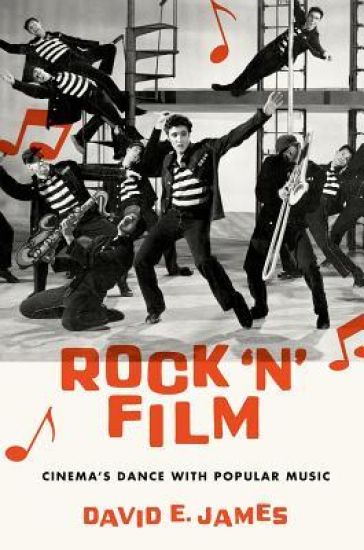
Rock 'N' Film

Rock 'N' Film

David E. James

Oxford University Press Inc
2017
nidottu
For two decades after the mid-1950s, biracial popular music played a fundamental role in progressive social movements on both sides of the Atlantic. Balancing rock's capacity for utopian popular cultural empowerment with its usefulness for the capitalist media industries, Rock 'N' Film explores how the music's contradictory potentials were reproduced in various kinds of cinema, including major studio productions, minor studios' exploitation projects,independent documentaries, and the avant-garde.These include Rock Around the Clock and other 1950s jukebox musicals; the films Elvis made before being drafted, especially King Creole, as well as the formulaic comedies in which Hollywood abused his genius in the 1960s; early documentaries such as The T.A.M.I. Show that presented James Brown and the Rolling Stones as the core of a black-white, US-UK cultural commonality; A Hard Day's Night that marked the British Invasion; Dont Look Back, Monterey Pop,Woodstock, and other Direct Cinema documentaries about the music of the counterculture; and avant-garde films about the Rolling Stones by Jean-Luc Godard, Kenneth Anger, and Robert Frank. After the turn of the decade, notably Gimme Shelter, in which the Stones appeared to be complicit in the Hells Angels' murder of a young black man, 1960s' music-and films about it-reverted to separate black and white traditions based respectively on soul and country. These produced blaxploitation and Lady Sings the Blues on the one hand, and bigoted representations of Southern culture in Nashville on the other. Ending with the deaths of their stars, both films impliedthat rock 'n' roll had died or even, as David Bowie proclaimed, that it had committed suicide. But in his documentary about Bowie, Ziggy Stardust and the Spiders from Mars, D.A. Pennebaker triumphantly re-affirmed the community of musicians and fans in glam rock.In analyzing this history, David E. James adapts the methodology of histories of the classic film musical to show how the rock 'n' roll film both displaced and recreated it.
Rock 'N' Film

Rock 'N' Film

David E. James

Oxford University Press Inc
2016
sidottu
Rock 'N' Film presents a cultural history of films about US and British rock music during the period when biracial popular music was fundamental to progressive social movements on both sides of the Atlantic. Considering the music's capacity for utopian popular cultural empowerment and its usefulness for the capitalist media industries, Rock 'N' Film explores how its contradictory potentials were reproduced in various kinds of cinema, including major studio productions, minor studios' exploitation projects, independent documentaries, and avant-garde works. These include Rock Around the Clock (Fred F. Sears, 1956) and other 1950s jukebox musicals; Elvis's King Creole (Michael Curtiz, 1958) and other important films he made before being drafted as well as the formulaic musical comedies in which Hollywood abused his genius in the 1960s; early documentaries such as The T.A.M.I. Show (Steve Binder, 1964) that presented James Brown and the Rolling Stones as core of a black-white, US-UK cultural commonality; A Hard Day's Night (Richard Lester, 1964) that precipitated the British Invasion, Dont Look Back (1967), Monterey Pop (1968), and other Direct Cinema documentaries about the music of the counterculture by D. A. Pennebaker; Woodstock (1970); avant-garde documentaries about the Rolling Stones by Jean-Luc Godard, Kenneth Anger, Robert Frank, and others. After the turn of the decade, notably Gimme Shelter (1970) in which Charlotte Zwerin edited David and Albert Maysles's footage of the Altamont free concert so as to portray the Stone's complicity in the Hells Angels' murder of a young man, the 60s' utopian biracial music—and films about it—reverted to separate black and white traditions based respectively on soul and country. These produced Blaxploitation and Lady Sings the Blues (Sidney J. Furie, 1972) on the one hand, and bigoted representations of the Southern culture in Nashville (Robert Altman, 1975) on the other. Both these last two films ended with the deaths of their stars, and it seemed that rock 'n' roll had died or even, as David Bowie proclaimed, that it had committed suicide. But in another documentary about Bowie's concert, Ziggy Stardust and the Spiders from Mars (1973), D.A. Pennebaker triumphantly re-affirmed the community of musicians and fans in glam rock. In analyzing this history, David James adapts the methodology of histories of the classic musical to rock 'n' roll to show how the rock 'n' roll film both displaced and recreated the film musical.
Rock 'n' Roll, Baby!

Rock 'n' Roll, Baby!

David McMullin

Random House Books for Young Readers
2026
sidottu
Rock on, Baby Explore a day in the life of a baby, from waking up to bedtime, through different types of rock 'n' roll music. A dazzling rework of the classic lullaby "Rock-a-bye Baby" Rock 'N' Roll Baby, warm up your voice Give the whole world a cause to rejoice.Look It's your fans, they're here to engage, So slide on your knees and take center stage. From waking up and sliding on their knees to fading out of the spotlight as they get ready for their nighty night gig, join a diverse group of babies as they live it up rock 'n' roll style. This riff on the classic lullaby "Rock-A-Bye-Baby" follows the daily routine of a baby through the lens of different musical genres such as jazz, country, punk, and Latin American.
Rock 'n' Roll Movies

Rock 'n' Roll Movies

David Sterritt

Rutgers University Press
2017
nidottu
Rock ‘n’ Roll Movies presents an eclectic look at the many manifestations of rock in motion pictures, from teen-oriented B-movies to Hollywood blockbusters to avant-garde meditations to reverent biopics to animated shorts to performance documentaries. Acclaimed film critic David Sterritt considers the diverse ways that filmmakers have regarded rock ‘n’ roll, some cynically cashing in on its popularity and others responding to the music as sincere fans, some depicting rock as harmless fun and others representing it as an open challenge to mainstream norms.
Rock 'n' Roll Movies

Rock 'n' Roll Movies

David Sterritt

Rutgers University Press
2017
sidottu
Rock ‘n’ Roll Movies presents an eclectic look at the many manifestations of rock in motion pictures, from teen-oriented B-movies to Hollywood blockbusters to avant-garde meditations to reverent biopics to animated shorts to performance documentaries. Acclaimed film critic David Sterritt considers the diverse ways that filmmakers have regarded rock ‘n’ roll, some cynically cashing in on its popularity and others responding to the music as sincere fans, some depicting rock as harmless fun and others representing it as an open challenge to mainstream norms.
Count N. P. Ignat`ev – The Father of Lies?

Count N. P. Ignat`ev – The Father of Lies?

David Mackenzie

East European Monographs
2002
sidottu
This is the first complete biography of the outstanding Russian general and diplomat Count N. P. Ignat'ev (1832-1908) who negotiated the important treaties of Beijing and San Stefano. The book focuses on his brilliant career in Central Asia as a leading player in the "Great Game", China and especially as ambassador in Constantinople, 1864-77., where he acquired the monikers "the Vice-Sultan" for his powerful position there and "Father of Lies" for his alleged tendency to tell fibs (a reputation here reassessed).
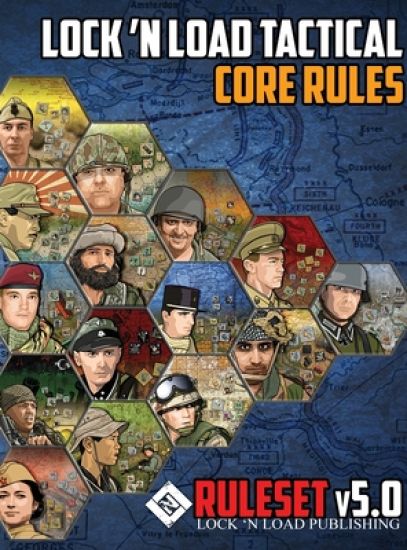
Lock 'n Load Tactical Core Rules v5.0

Lock 'n Load Tactical Core Rules v5.0

David Heath; Jeff Lewis

Lock 'n Load Publishing, LLC.
2019
sidottu
For over 15 years the Lock 'n Load Tactical system has set a new standard in Squad-level gaming. Its innovative gameplay mechanics, unparalleled artwork, historical scope, and accessibility have entertained veterans and new gamers alike. Over that time, our rules have grown, too, introducing new unit capabilities and concepts; they have also matured in their presentation.The LnLT version 5.0 rules manual contains the latest set of guidelines and regulations for the game system. Our goal is to present the rules in a straightforward manner without disrupting their existing structure and foundation. The biggest difference between the v5.0 and the v4.1 rules is that the World War II- and Modern-era core rules are no longer separate, making these rules a more comprehensive set, for use with the entire system. For clarity, some rules sections have been modified not with content but with a new structure, e.g., additional subsections, more bullet points, or more images and examples--and even in-depth examples. Additional cross-referencing of rules expanded unit-image diagrams and a detailed Index have also been added.Other new additions to the v5.0 rules are numbered examples within each rules section and the implementation of a hexagonal color-coding system in the Table of Contents and throughout the manual, to make referencing certain sections and subsections easier. Two new rules sections have been added: one on Scenario Information, which breaks down how scenarios are laid out, to aid new gamers; and another on unique Weapons and Equipment. And a Series Resources section introduces new and veteran gamers to additional ways to expand and enjoy the LnLT system.Learning any game system can be daunting, but don't be dissuaded; we use a large font-size, to accommodate the eyes, and have lots of examples, to illustrate the mechanics. Further, the best way to learn is to have another person show you how to play, but that's not always an option. We encourage new players to read the two gameplay narratives (for infantry and vehicles/ordnance) found at the back of the booklet before reading the rules, to familiarize yourself with how a scenario plays in an intuitive and observational manner.The v5.0 rules can be used with any previously published LnLT module, including the Solo system.
"Rock 'n' Roll Years"

"Rock 'n' Roll Years"

David Conduct

Lulu.com
2016
nidottu
'Rock 'n' Roll Years' is a series of reflections on the passage of time and the world events which we all observe. It calls in question the significance of such events and celebrates the role of the individual in relation to them. A retired history teacher, David Conduct now lives in Durham where he taught for over twenty years. His studies have taken him through the universities of Hull, London, Warwick and Leicester and his main academic interest lies in the history of ideas. This is his third book. When not writing he can be found busking in the streets of Durham.
L N E R 4-6-0 Locomotives

L N E R 4-6-0 Locomotives

David Maidment

Pen Sword Transport
2021
sidottu
L N E R 4-6-0 Tender Mixed Traffic Locomotives covers the design, construction, operation and performance of all 4-6-0 locomotives that ran on the London & North Eastern Railway between 1923 and 1947 and the LNER designed engines that ran on BR's Eastern Region until the end of BR steam in 1968\. This includes the former Great Central 4-6-0s of classes B1 - B9 (the B1 and B2 later reclassified B18 & B19); the North Eastern Railway B13 - B16s; the Great Eastern B12s; and the LNER B17s, the Thompson B1s and rebuilds (B2 and B3/3). The book has over 60,000 words and 400 black and white and coloured photographs, many previously unpublished from the archives of the Manchester Locomotive Society at Stockport. It will be of particular interest to railway modellers and enthusiasts of locomotive running and performance as well as those seeking more general locomotive history. The book is designed and written in the same style as David Maidment's previous Locomotive Portfolio books on engines of the Great Western and Southern Railways, and includes where possible his own experiences, seeing and travelling behind engines of these classes in the 1950s and early 1960s, especially the B1s, B12s and B17 'Sandringhams'.