

Kirjahaku
Etsi kirjoja tekijän nimen, kirjan nimen tai ISBN:n perusteella.
608 tulosta hakusanalla Deloris Good


Récits du Retourtour et Contes du Haut-Pas
Olivier-Marie Delouis
Les Editions De La Bannière
2024
nidottu

Petit Magistère de Cuisine de la Truffe
Olivier-Marie Delouis
Les Editions De La Bannière
2024
nidottu



Opdag en langsom og nærværende måde at gå tur på, der griber dig om hjertet og helbreder din sjæl. Lad alle dine sanser bade i de vidunderlige sanseindtryk, som skoven kan byde på. Tag den gamle japanske filosofi shinrin-yoku til dig, og find praktiske forslag til at opnå dyb kontakt til naturen.

Tutustu perinteiseen tarotiin yhdistettynä japanilaiseen spiritualismiin tämän upeasti kuvitetun opaskirjan ja pakan avulla. Tarot - Ikiaikainen viisaus -paketti sisältää kuvitetun ohjekirjan ja 78 korttia kätevässä säilytyslaatikossa. Jokaisen kortin merkitys kerrotaan yksityiskohtaisesti. Tulkinnoissa auttavat myös kortteihin liittyvät avainsanat ja käänteiset merkitykset!Tarotin suosio jatkaa kasvuaan uuden tarotin harrastajien sukupolven käyttäessä tarotia itsestä huolehtimisen ja henkisen kasvun työkaluna78 kortin pakka ja ohjekirja• Tarot japanilaisen Mia Komatsun ukiyo-e-tyyliin kuvittamana• Sisältää käytännöllisen ja helppotajuisen oppaan ja kauniisti kuvitetun tarotpakan
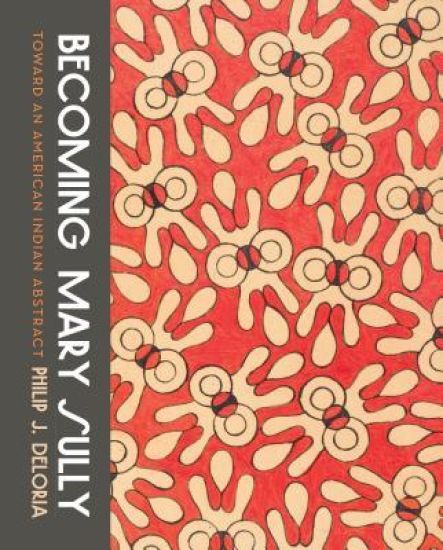
"The moment to savor [Mary Sully]. . . has arrived." —New York TimesDakota Sioux artist Mary Sully was the great-granddaughter of respected nineteenth-century portraitist Thomas Sully, who captured the personalities of America's first generation of celebrities (including the figure of Andrew Jackson immortalized on the twenty-dollar bill). Born on the Standing Rock reservation in South Dakota in 1896, she was largely self-taught. Steeped in the visual traditions of beadwork, quilling, and hide painting, she also engaged with the experiments in time, space, symbolism, and representation characteristic of early twentieth-century modernist art. And like her great-grandfather Sully was fascinated by celebrity: over two decades, she produced hundreds of colorful and dynamic abstract triptychs, a series of "personality prints" of American public figures like Amelia Earhart, Babe Ruth, and Gertrude Stein.Sully's position on the margins of the art world meant that her work was exhibited only a handful of times during her life. In Becoming Mary Sully, Philip J. Deloria reclaims that work from obscurity, exploring her stunning portfolio through the lenses of modernism, industrial design, Dakota women's aesthetics, mental health, ethnography and anthropology, primitivism, and the American Indian politics of the 1930s. Working in a complex territory oscillating between representation, symbolism, and abstraction, Sully evoked multiple and simultaneous perspectives of time and space. With an intimate yet sweeping style, Deloria recovers in Sully's work a move toward an anti-colonial aesthetic that claimed a critical role for Indigenous women in American Indian futures—within and distinct from American modernity and modernism.
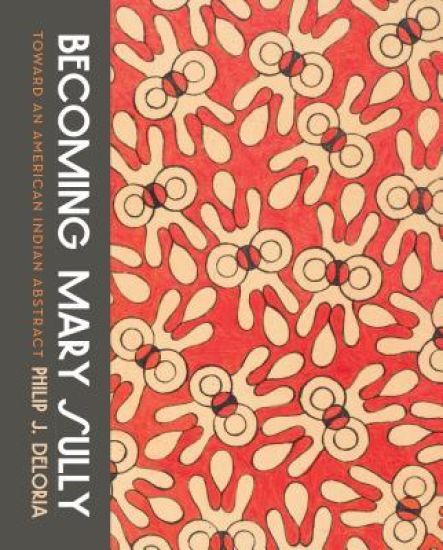
"The moment to savor [Mary Sully]. . . has arrived." —New York TimesDakota Sioux artist Mary Sully was the great-granddaughter of respected nineteenth-century portraitist Thomas Sully, who captured the personalities of America’s first generation of celebrities (including the figure of Andrew Jackson immortalized on the twenty-dollar bill). Born on the Standing Rock reservation in South Dakota in 1896, she was largely self-taught. Steeped in the visual traditions of beadwork, quilling, and hide painting, she also engaged with the experiments in time, space, symbolism, and representation characteristic of early twentieth-century modernist art. And like her great-grandfather Sully was fascinated by celebrity: over two decades, she produced hundreds of colorful and dynamic abstract triptychs, a series of “personality prints” of American public figures like Amelia Earhart, Babe Ruth, and Gertrude Stein.Sully’s position on the margins of the art world meant that her work was exhibited only a handful of times during her life. In Becoming Mary Sully, Philip J. Deloria reclaims that work from obscurity, exploring her stunning portfolio through the lenses of modernism, industrial design, Dakota women’s aesthetics, mental health, ethnography and anthropology, primitivism, and the American Indian politics of the 1930s. Working in a complex territory oscillating between representation, symbolism, and abstraction, Sully evoked multiple and simultaneous perspectives of time and space. With an intimate yet sweeping style, Deloria recovers in Sully’s work a move toward an anti-colonial aesthetic that claimed a critical role for Indigenous women in American Indian futures—within and distinct from American modernity and modernism.

Philip J. Deloria’s classic exploration of white America’s drive to “play Indian,” from the Boston Tea Party to the New Age “[A] brilliant book. . . . This book reminds us that at least one question about America has been settled. Contrary to the conventional wisdom that prevailed throughout most of our history, the Indians will remain.”—Peter Iverson, American Historical Review “Not since I first read Michel Foucault, Fredric Jameson, or bell hooks has a text crackled with so much theoretical frisson. Its historical insights are rich and political repercussions profound. American culture will never look the same.”—Joel Martin, author of Sacred Revolt and Native American Religion This provocative book, reissued with a timely new preface, explores how white Americans have used their ideas about Native Americans to shape national identity in different eras—and how Indian people have reacted to these appropriations of their native dress, language, and ritual. At the Boston Tea Party, colonial rebels played Indian in order to claim an aboriginal American identity. In the nineteenth century, Indian fraternal orders allowed men to rethink the idea of revolution, consolidate national power, and write nationalist literary epics. By the twentieth century, playing Indian helped nervous city dwellers deal with modernist concerns about nature, authenticity, Cold War anxiety, and various forms of relativism. Philip J. Deloria points out, however, that throughout American history the creative uses of Indianness have been interwoven with conquest and dispossession. Indian play has thus been fraught with ambivalence—for white Americans who idealized and villainized the Indian, and for Indians who were both humiliated and empowered by these cultural exercises. Deloria suggests that imagining Indians has helped generations of white Americans define, mask, and evade paradoxes stemming from simultaneous construction and destruction of these native peoples. In the process, Americans have created powerful identities that have never been fully secure.

The Maverick & Grayson: A 2-In-1 Collection
Diana Palmer; Delores Fossen
Harlequin Bestselling Author Collection
2016
pokkari
A COWBOY'S PURSUIT Rancher Harley Fowler had a knack for getting himself out of trouble--until trouble runs right into him in the form of whirlwind investigator Alice Jones. Alice has been called to Jacobsville, Texas, after a man's body is discovered. And when her investigation leads her straight back to Harley, he knows this is one fight he has to win. Alice doesn't need help from anyone, particularly a long, tall Texan. And when the friendly cowboy's smile starts to distract her from her work, there's only one thing to do--convince him to marry her. BONUS BOOK INCLUDED IN THIS VOLUME Grayson by USA TODAY bestselling author Delores Fossen Sheriff Grayson Ryland promises to protect his old flame Eve Warren. But keeping Eve safe proves almost impossible when they are caught up in a dangerous murder investigation--and an even more dangerous liaison...

First Published in 1999. For This Land, edited and with an introduction by James Treat, brings together over thirty years of the work of Vine Deloria, Jr., regarded as one of the most important living Native American figures. For three decades, Deloria has offered substantive and persistent contributions to understanding the complexity of religion in America. In uis writings he recognizes the spiritual desperation and religious breakdown in the contemporary situation, and provides the groundwork to get people to examine what they actually believe and how they must put those beliefs into practice. The essays in this collection express Deloria's concern for the religious dimensions and implications of human existence. His writings are engaged within a theoretical system of physical, not ideological, space, and ultimately give voice to this intellectual passion by calling into question our controversial religious institutions, commitments, worldviews, freedoms and experiences. For This Land offers a distinctive approach to comprehending human existence from one of the leading critics of mainstream American thought.

First Published in 1999. For This Land, edited and with an introduction by James Treat, brings together over thirty years of the work of Vine Deloria, Jr., regarded as one of the most important living Native American figures. For three decades, Deloria has offered substantive and persistent contributions to understanding the complexity of religion in America. In uis writings he recognizes the spiritual desperation and religious breakdown in the contemporary situation, and provides the groundwork to get people to examine what they actually believe and how they must put those beliefs into practice. The essays in this collection express Deloria's concern for the religious dimensions and implications of human existence. His writings are engaged within a theoretical system of physical, not ideological, space, and ultimately give voice to this intellectual passion by calling into question our controversial religious institutions, commitments, worldviews, freedoms and experiences. For This Land offers a distinctive approach to comprehending human existence from one of the leading critics of mainstream American thought.

As an only child, Janet longs for a sister her parents are unable to give her. In kindergarten she meets Sophie, a strange and imaginative girl with a troubled family life. As friendship grows between the two girls, Janet believes her prayers have been answered, especially when members of her family embrace Sophie as one of their own. Sophie's troubles continue to follow her through high school, and Janet stands by her "sister" until, in adulthood, she learns of a devastating secret Sophie has kept from her. Janet's world is turned upside down-and she discovers there may be a limit to what sisters should share.

American Studies has long been a home for adventurous students seeking to understand the culture and politics of the United States. Despite being taught in universities around the world, American Studies has resisted developing a coherent methodology for fear of losing the flexibility and freedom to imagine new avenues of thought. But what if these fears are misplaced? Through a fresh look at the origins of the field, this book contends that a shared set of "rules" can offer a springboard to creativity. American Studies: A User's Guide offers readers a critical introduction to the history and methods of the field, useful strategies for interpretation, curation, analysis, and theory, and case studies of American Studies in practice.

American Studies has long been a home for adventurous students seeking to understand the culture and politics of the United States. Despite being taught in universities around the world, American Studies has resisted developing a coherent methodology for fear of losing the flexibility and freedom to imagine new avenues of thought. But what if these fears are misplaced? Through a fresh look at the origins of the field, this book contends that a shared set of "rules" can offer a springboard to creativity. American Studies: A User's Guide offers readers a critical introduction to the history and methods of the field, useful strategies for interpretation, curation, analysis, and theory, and case studies of American Studies in practice.
Valarie and Monica, two best friends, decide to meet their friends at a popular hangout that they have never been to before, driving there on a Friday night, they get lost and witness a murder and they are framed by the murderer for a crime they did not commit in an abandoned gasoline station deep in the Colorado wilderness. In the victims last moments, before she dies from a stab wound she hands the girls a golden box that has magical powers that goes beyond belief. In her dying moments, she asks the girls for one last request to return the golden box to Covenant Cove so the curse that haunts her native tribe is broken. In the midst of this great sadness, Valarie and Monica must find a way to catch the murderer, prove their innocence and return this magical box to Covenant Cove.

Distant Revenge
Edward G Briscoe; Delores R Johnson; Agatha D Briscoe
Writers Club Press
2000
pokkari