Kirjojen hintavertailu. Mukana 12 431 280 kirjaa ja 12 kauppaa.

Kirjahaku

Etsi kirjoja tekijän nimen, kirjan nimen tai ISBN:n perusteella.

1000 tulosta hakusanalla Edmundo LLAMAS ALBA

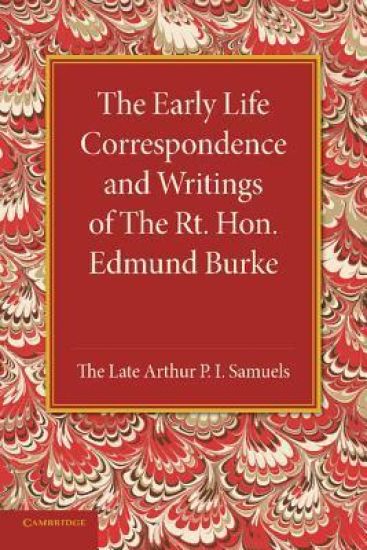
The Early Life Correspondence and Writings of The Rt. Hon. Edmund Burke

The Early Life Correspondence and Writings of The Rt. Hon. Edmund Burke

Edmund Burke; Arthur P.I. Samuels

Cambridge University Press
2014
pokkari
Originally published in 1923, this book presents a biographical account of Edmund Burke's early life and education. A transcript of the Minute Book of the Trinity College, Dublin Debating Club, founded by Burke in 1747, is also included, together with other writings by and relating to Burke. Illustrative figures are incorporated throughout, together with extensive textual notes. This book will be of value to anyone with an interest in the early life and writings of Burke.
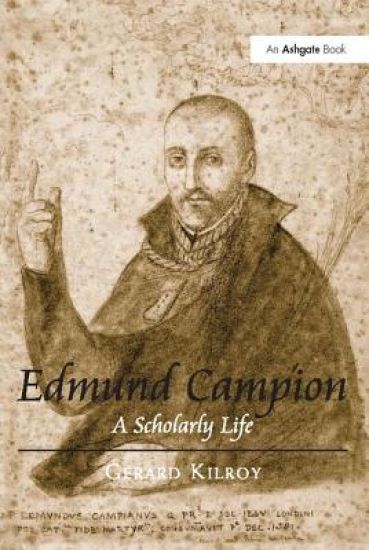
Edmund Campion

Edmund Campion

Gerard Kilroy

Routledge
2017
nidottu
Edmund Campion: A Scholarly Life is the response, at long last, to Evelyn Waugh’s call, in 1935, for a ’scholarly biography’ to replace Richard Simpson's Edmund Campion (1867). Whereas early accounts of his life focused on the execution of the Jesuit priest, this new biography presents a more balanced assessment, placing equal weight on Campion’s London upbringing among printers and preachers, and on his growing stature as an orator in an Oxford riven with religious divisions. Ireland, chosen by Campion as a haven from religious conflict, is shown, paradoxically, to have determined his life and his death. Gerard Kilroy here draws on newly discovered manuscript sources to reveal Campion as a charismatic and affectionate scholar who was finding fulfilment as priest and teacher in Prague when he was summoned to lead the first Jesuit mission to England. The book argues that the delays in his long journey suggest reluctant acceptance, even before he was told that Dr Nicholas Sander had brought ’holy war’ to Ireland, so that Campion landed in an England that was preparing for papal invasion. The book offers fresh insights into the dramatic search for Campion, the populist nature of the disputations in the Tower, and the legal issues raised by his torture. It was the monarchical republic itself that, in pursuit of the Anjou marriage, made him the beloved ’champion’ of the English Catholic community. Edmund Campion: A Scholarly Life presents the most detailed and comprehensive picture to date of an historical figure whose loyalty and courage, in the trial and on the scaffold, swiftly became legendary across Europe.
Edmund Spenser

Edmund Spenser

Andrew Hadfield

Routledge
2017
sidottu
This collection represents some of the best recent critical writing on Edmund Spenser, a major Renaissance English poet. The essays cover the whole of Spensers work, from early literary experiments such as The Shepeardes Calendar, to his unfinished crowning work,The Fairie Queene. The introduction provides an overview of critical responses to Spenser, setting his work and the debates which it has generated in their perspective contexts: new historicist, post-structural, psychoanalytic and feminist. His study also covers the critical responses of leading British, Irish and American scholars.
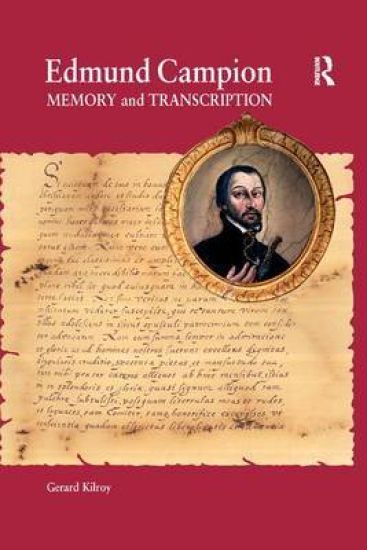
Edmund Campion

Edmund Campion

Gerard Kilroy

Routledge
2016
nidottu
The death of Edmund Campion in 1581 marked a disjunction between the world of printed untruth and private, handwritten, truth in early modern England. Gerard Kilroy traces the circulation of manuscripts connected with Campion to reveal a fascinating network that not only stretched from the Court to Warwickshire and East Anglia but also crossed the confessional boundaries. Kilroy shows that in this intricate web Sir John Harington was a key figure, using his disguise as a wit to conceal a lifelong dedication to Campion's memory. Sir Thomas Tresham is shown as expressing his devotion to Campion both in his coded buildings and in a previously unpublished manuscript, Bodleian MS Eng. th. b. 1-2, whose theological and cultural riches are here fully explored. This book provides startling new views about Campion's literary, historical and cultural impact in early modern England. The great strength of this study is its exploitation of archival manuscript sources, offering the first printed text and translation of Campion's Virgilian epic, a fully collated text of 'Why doe I use my paper, ynke and pen', and Harington's four decades of theological epigrams, printed for the first time in the order he so carefully designed. Edmund Campion: Memory and Transcription lays the foundations of the first full literary assessment of Campion the scholar, the impact he had on the literature of early modern England, and the long legacy in manuscript writing.
Edmund Burke

Edmund Burke

Routledge
2018
nidottu
Two centuries after Edmund Burke published his Reflections on the Revolution in France, his name and reputation stand alongside Locke, Montesquieu, and Hume - the other still-cited grand political thinkers of the eighteenth century. For those great nations that have fallen into what Burke called "the antagonist world of madness, discord, vice, confusion and unavailing sorrow," the work of Burke supplies that sense of order, justice and freedom the present age seems to require.This volume by Peter Stanlis has grown out of almost four decades of studying Burke. Today, Professor Stanlis is called by Russell Kirk "the leading American authority on the political thought of the great conservative reformer." The book is divided into three categories: Burke on law and politics; Burke's criticism of Enlightenment rationalism and sensibility; and Burke's theory of revolution and critique of the English revolution of 1688.Stanlis' reasons' for linking Burke to the English Revolution rather than the later, and admittedly more decisive American and French Revolutions of his own time, is that for Burke, that earlier event was the normative pivot for judging how to make important changes in civil society. Indeed, even in his writings on the contemporary revolutions of his time,. Stanlis reminds us that Burke interpreted revolutionary events in France and Americas through the prism of the bloodless Revolution of 1688.
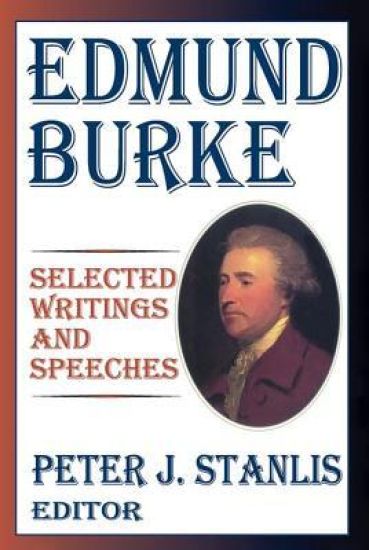
Edmund Burke

Edmund Burke

Peter Stanlis

Routledge
2017
sidottu
In this unique book, Peter J. Stanlis, the leading Burke scholar in America, has collected all the most important works and speeches of Edmund Burke (1729-1797), British statesman, political philosopher, and founder of modern conservative thought and, with due care to preserve the beauty of Burke's prose, edited them down to their essentials."The main purpose of these selections," Stanlis explains, "is to present extensive and in the main unbroken samples of Burke's most representative thought in his most characteristic style, on a great variety of subjects."In this major effort you can find--to name only a few topics covered--Burke's defense of ordered liberty, his advocacy of secure property rights, his love of Christianity and Europe's moral tradition, and his impassioned jeremiad against the orgy of destruction that the French Revolution became. Stanlis's general introduction gives important insight into Burke's early life, education, professional training, literary and political career, prose style, political philosophy, and more. In addition, each selection is preceded by a headnote that clarifies the selections in their historical context and includes a brief analytical interpretation. A chronology highlights important dates in Burke's life and career.In its compactness and comprehensiveness, this volume is the quintessential Burke reader. It will be of interest to historians, political scientists, and students of literature and intellectual history.
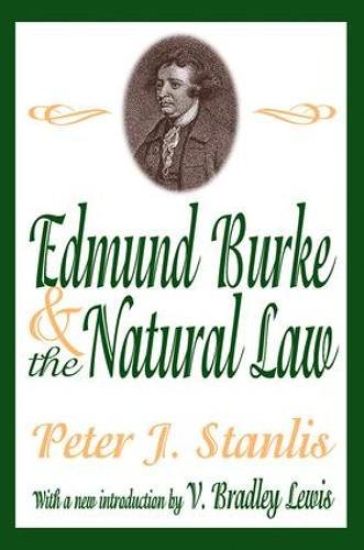
Edmund Burke and the Natural Law

Edmund Burke and the Natural Law

Peter Stanlis

Routledge
2017
sidottu
Today the idea of natural law as the basic ingredient in moral, legal, and political thought presents a challenge not faced for almost two hundred years. On the surface, there would appear to be little room in the contemporary world for a widespread belief in natural law. The basic philosophies of the opposition--the rationalism of the philosophes, the utilitarianism of Bentham, the materialism of Marx--appear to have made prior philosophies irrelevant. Yet these newer philosophies themselves have been overtaken by disillusionment born of conflicts between "might" and "right." Many thoughtful people who were loyal to secular belief have become dissatisfied with the lack of normative principles and have turned once more to natural law.This first book-length study of Edmund Burke and his philosophy, originally published in 1958, explores this intellectual giant's relationship to, and belief in, the natural law. It has long been thought that Edmund Burke was an enemy of the natural law, and was a proponent of conservative utilitarianism. Peter J. Stanlis shows that, on the contrary, Burke was one of the most eloquent and profound defenders of natural law morality and politics in Western civilization. A philosopher in the classical tradition of Aristotle and Cicero, and in the Scholastic tradition of Aquinas, Burke appealed to natural law in the political problems he encountered in American, Irish, Indian, and British affairs, and in reaction to the French Revolution.This book is as relevant today as it was when it was first published, and will be mandatory reading for students of philosophy, political science, law, and history.