Kirjahaku
Etsi kirjoja tekijän nimen, kirjan nimen tai ISBN:n perusteella.
1000 tulosta hakusanalla Frederick Locker
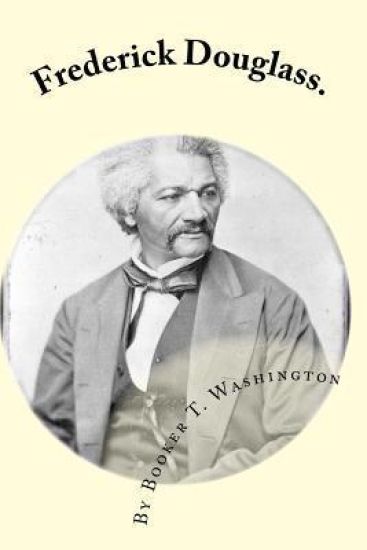
Frederick Douglass.: by Booker T. Washington
Booker T. Washington
Createspace Independent Publishing Platform
2010
nidottu
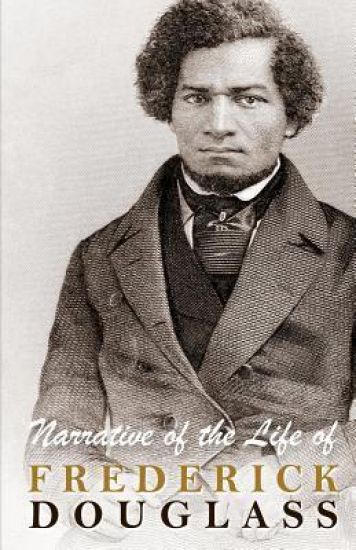
Narrative of the Life of Frederick Douglass
Frederick Douglass
Createspace Independent Publishing Platform
2010
nidottu
Frederick Douglass (c.1818 1895) was born into slavery but escaped in 1838, quickly becoming involved in the abolitionist movement. Following publication in 1845 of this autobiography he risked recognition and recapture by his owner, and so fled the United States. This reissue is of the Dublin edition of 1845, with a preface by Douglass explaining his reasons for his journey to Britain. Opening with a touching explanation of how he doesn't know his birthday, Douglass describes his early life and the growing awareness of the injustices he suffered. The beatings he witnessed and received himself are described in painful detail. Later, Douglass highlights the hypocrisy of the 'slaveholding religion of this land', condemning it as 'the grossest of libels'. The eloquence of the writing, with an immediacy and honesty found shocking at the time, make this an invaluable first-hand record of one of humanity's most shameful acts.
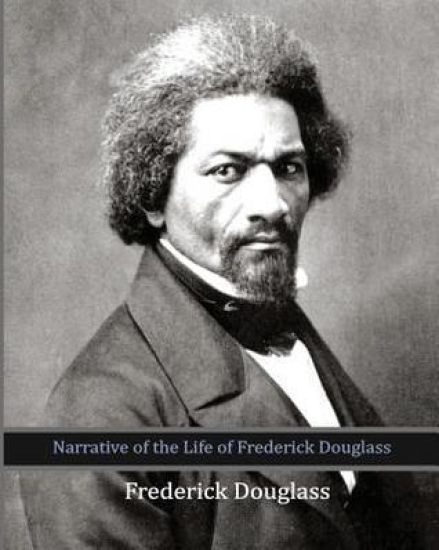
Narrative of the Life of Frederick Douglass
Frederick Douglass
Createspace Independent Publishing Platform
2010
nidottu
Frederick Douglass (c.1818 1895) was born into slavery but escaped in 1838, quickly becoming involved in the abolitionist movement. Following publication in 1845 of this autobiography he risked recognition and recapture by his owner, and so fled the United States. This reissue is of the Dublin edition of 1845, with a preface by Douglass explaining his reasons for his journey to Britain. Opening with a touching explanation of how he doesn't know his birthday, Douglass describes his early life and the growing awareness of the injustices he suffered. The beatings he witnessed and received himself are described in painful detail. Later, Douglass highlights the hypocrisy of the 'slaveholding religion of this land', condemning it as 'the grossest of libels'. The eloquence of the writing, with an immediacy and honesty found shocking at the time, make this an invaluable first-hand record of one of humanity's most shameful acts.
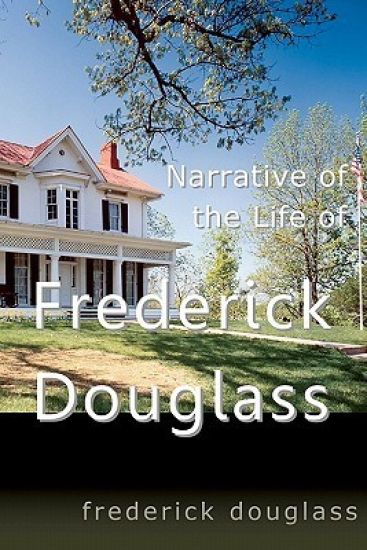
Narrative of the Life of Frederick Douglass
Frederick Douglass
Createspace Independent Publishing Platform
2010
nidottu
Narrative of the Life of Frederick Douglass is a pioneering account of one man's journey from slavery to freedom. Douglass's powerful autobiography was an instant bestseller upon publication in 1845 and played a fundamental role in the abolition of slavery, a movement that Douglass dedicated his life to. Part of the Macmillan Collector's Library; a series of stunning, clothbound, pocket-sized classics with gold foiled edges and ribbon markers. These beautiful books make perfect gifts or a treat for any book lover. This edition is introduced by Dr. Lydia Plath. Born on a plantation in Maryland, Douglass was sent to Baltimore aged only seven. There, he had the rare opportunity to learn to read, which opened his eyes to the existence of the abolition movement. From then on, he was determined to escape, but first suffered at the hands of harsh masters, thwarted plans and deep-rooted racial prejudice before he saved up enough money to get to New York, where he finally freed himself from slavery.
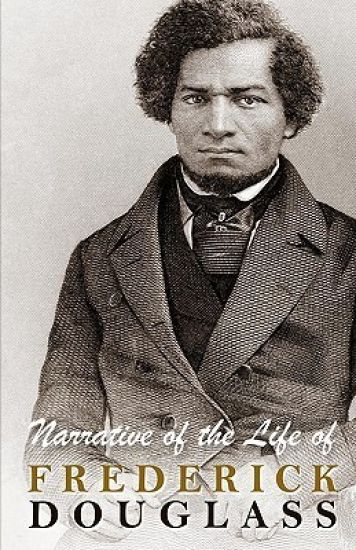
Narrative of the Life of Frederick Douglass
Frederick Douglass
Createspace Independent Publishing Platform
2010
nidottu
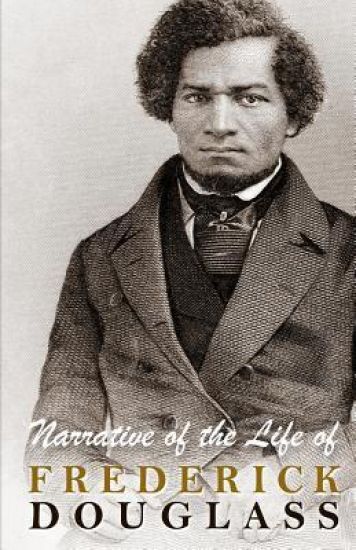
Narrative of the Life of Frederick Douglass
Frederick Douglass
Createspace Independent Publishing Platform
2010
nidottu
Frederick Douglass (c.1818 1895) was born into slavery but escaped in 1838, quickly becoming involved in the abolitionist movement. Following publication in 1845 of this autobiography he risked recognition and recapture by his owner, and so fled the United States. This reissue is of the Dublin edition of 1845, with a preface by Douglass explaining his reasons for his journey to Britain. Opening with a touching explanation of how he doesn't know his birthday, Douglass describes his early life and the growing awareness of the injustices he suffered. The beatings he witnessed and received himself are described in painful detail. Later, Douglass highlights the hypocrisy of the 'slaveholding religion of this land', condemning it as 'the grossest of libels'. The eloquence of the writing, with an immediacy and honesty found shocking at the time, make this an invaluable first-hand record of one of humanity's most shameful acts.
Frederick Schiller: The essential in 200 quotes: On Love, Nature, History, Grace, Dignity.....
J. Marc Rakotolahy
Createspace Independent Publishing Platform
2010
nidottu
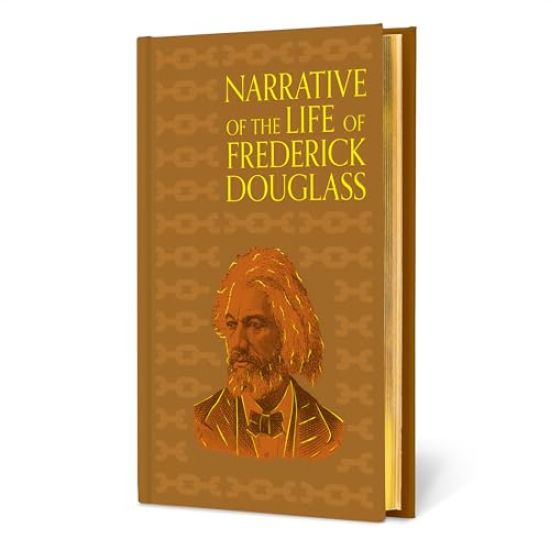
Narrative of the Life of Frederick Douglass (Special Edition)
Frederick Douglass
Union Square Co.
2024
sidottu
Discover Frederick Douglass's memoir and treatise on slavery with this exquisite edition from Union Square & Co.’s Signature Gilded Editions series! The stunning Narrative of the Life of Frederick Douglass, An American Slave special edition features sprayed edges, color end pages, a built-in ribbon bookmark, and embossed foil cover. The beautiful design and attention to detail set this special edition book apart, whether you’re reading for the first time or building a library of your favorite classic literature books. Frederick Douglass (born Frederick Bailey) doesn't know the year of his birth. Separated from his mother in infancy, he sees her only a few times, always at night, before her death. His fellow slaves agree that his father is a white man. At the age of seven or eight, Frederick is sent from the Maryland plantation of his birth to Baltimore. His kindly new mistress starts teaching him to read, until her furious husband forbids it. Frederick realizes then that reading is his path to freedom, but his journey is long and difficult. In writing his narrative, Frederick Douglass, a fugitive slave, revealed his slave name, the names of his masters and overseers, and the locations of his servitude, putting him in danger of being captured and returned into slavery. This volume also includes eleven selected essays and speeches. Frederick Douglass’s 1845 autobiography, Narrative of the Life of Frederick Douglass, remains a crucial work in American literature and history, chronicling his life from slavery to freedom and his emergence as an influential voice in the abolitionist movement. Douglass's eloquent examination of slavery’s brutalities and his passionate advocacy for human rights resonate today amid ongoing discussions about racial injustice and inequality. His narrative underscores the enduring struggle for dignity and equality, serving as both a historical document and a source of inspiration for movements advocating social change and civil rights in contemporary society.
Frederick Schiller: The essay on Aesthetics
J-Marc Rakotolahy
Createspace Independent Publishing Platform
2012
nidottu
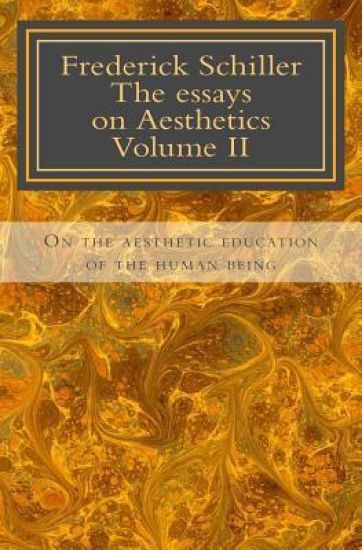
Broadly defined, Aesthetics inform us about what is worth our time and interest in Nature and Art, or in life in general. For Schiller, it is the aesthetic condition which everyone should be reaching for, to allow the advent of the true republic where the human being "neither has to offend the freedom of others in order to affirm his, nor has to throw away his dignity in order to show grace". Hence, the following collection of essays is divided into two parts, an individual level aimed at giving supplemental awareness to the human being about what he or she can do with his or her inner drive and actions; and a national level geared at the continuous education of the citizens through the appropriate exhibition of national events. Part One: Aesthetics of the individual "On the moral use of aesthetic behaviors" is an educational text about taste as something that helps people in the practice of virtues. Taste, here, is a component of Freedom in which the person acts and behaves from inner drive. "On the cohesion of the animal and spiritual natures of the human being" attempts to demonstrate the close relationship between our body and soul. A very audacious essay for its time and still for our century, because it asserts the pre-eminence of the mental condition, and therefore, of the aesthetic education in our overall well-being. This is also the writing which owed F. Schiller his first literary censure. "On the necessity to have limits in the use of beautiful forms" is the aesthetic essay par excellence, and exposes the different relationships among our personal skills, of which we should be aware, in order to use discernment. "On the common and minor treatment of artistic subjects" refines our judgmental capacity further by pointing out at these two manners of dealing with an artistic subject (also applicable in literary style); some will notice that this essay is expressed in a rather incisive manner.
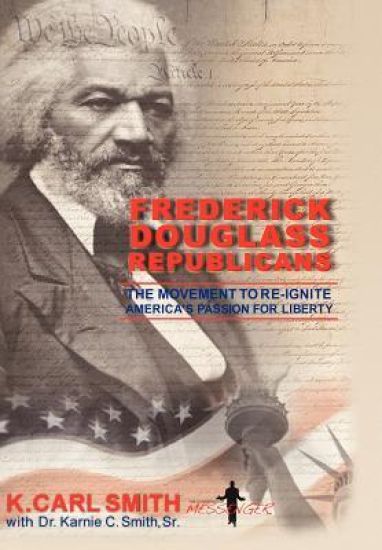
Frederick Douglass is an iconic historical figure whose noble qualities are visible in the lives of four major Biblical characters: Like Joseph, who was sold into slavery by his brothers and later became second-in-command of Egypt. Douglass was born into slavery and served as an advisor to five US presidents. Like Moses, who liberated the Israelites from Egypt by confronting Pharaoh. Douglass fought to liberate blacks from slavery by agitating President Lincoln. Like Paul, who wrote the majority of the New Testament and composed letters that changed the world. Douglass authored three books and penned thousands of articles, speeches, and editorials that transformed the nature of politics in America. Like Jesus, who forgave those who nailed Him to the cross and yes He died for the salvation of humanity. Douglass forgave his slave masters and dedicated his life for the liberation of all people. For these reasons and more, Douglass' political and social principles can heal our nation. Frederick Douglass-the role model for the next generation-the "Quintessential Conservative."
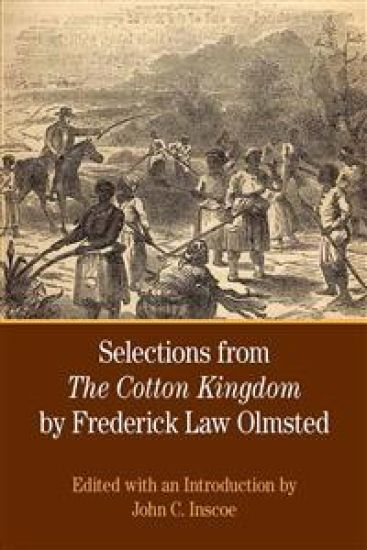
Selections from the Cotton Kingdom by Frederick Law Olmsted
Frederick Olmsted
Bedford Books
2014
nidottu
Focused on the extent of Frederick Law Olmsteds travels and his appreciation of the multiplicity of the antebellum Southern experience, Selections from The Cotton Kingdom by Frederick Law Olmsted helps put the conflicts over slavery in the critical decade of the 1850s into perspective through observations.
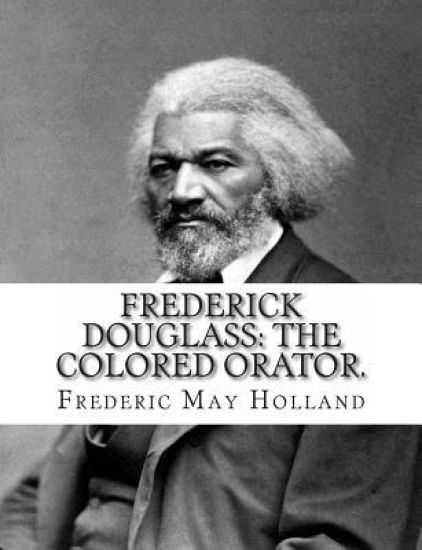
FREDERICK DOUGLASS. The Colored Orator: Revised Edition
Frederic May Holland
Createspace Independent Publishing Platform
2012
nidottu
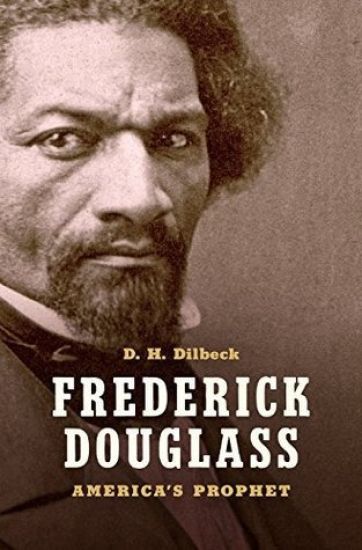
From his enslavement to freedom, Frederick Douglass was one of America's most extraordinary champions of liberty and equality. Throughout his long life, Douglass was also a man of profound religious conviction. In this concise and original biography, D. H. Dilbeck offers a provocative interpretation of Douglass's life through the lens of his faith. In an era when the role of religion in public life is as contentious as ever, Dilbeck provides essential new perspective on Douglass's place in American history. Douglass came to faith as a teenager among African American Methodists in Baltimore. For the rest of his life, he adhered to a distinctly prophetic Christianity. Imitating the ancient Hebrew prophets and Jesus Christ, Douglass boldly condemned evil and oppression, especially when committed by the powerful. Dilbeck shows how Douglass's prophetic Christianity provided purpose and unity to his wide-ranging work as an author, editor, orator, and reformer. As ""America's Prophet,"" Douglass exposed his nation's moral failures and hypocrisies in the hopes of creating a more just society. He admonished his fellow Americans to truly abide by the political and religious ideals they professed to hold most dear. Two hundred years after his birth, Douglass's prophetic voice remains as timely as ever.
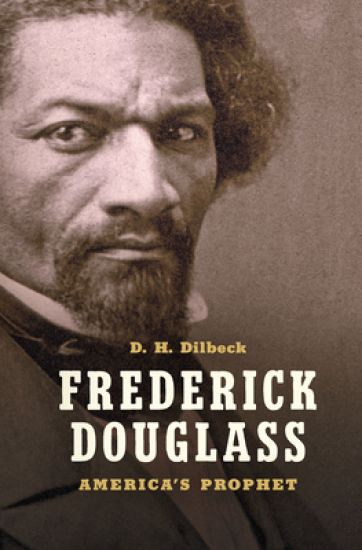
From his enslavement to freedom, Frederick Douglass was one of America's most extraordinary champions of liberty and equality. Throughout his long life, Douglass was also a man of profound religious conviction. In this concise and original biography, D. H. Dilbeck offers a provocative interpretation of Douglass's life through the lens of his faith. In an era when the role of religion in public life is as contentious as ever, Dilbeck provides essential new perspective on Douglass's place in American history. Douglass came to faith as a teenager among African American Methodists in Baltimore. For the rest of his life, he adhered to a distinctly prophetic Christianity. Imitating the ancient Hebrew prophets and Jesus Christ, Douglass boldly condemned evil and oppression, especially when committed by the powerful. Dilbeck shows how Douglass's prophetic Christianity provided purpose and unity to his wide-ranging work as an author, editor, orator, and reformer. As "America's Prophet," Douglass exposed his nation's moral failures and hypocrisies in the hopes of creating a more just society. He admonished his fellow Americans to truly abide by the political and religious ideals they professed to hold most dear. Two hundred years after his birth, Douglass's prophetic voice remains as timely as ever.
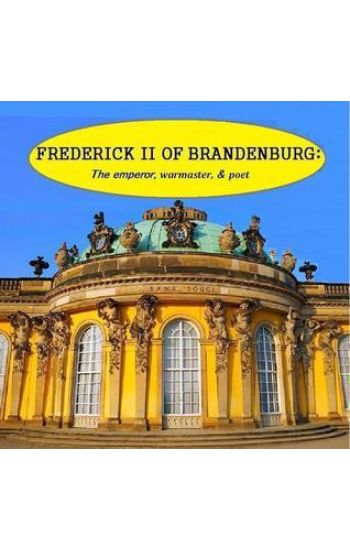
Frederick II of Brandenburg: The emperor, warmaster, and poet
Naira Roland Matevosyan
Createspace Independent Publishing Platform
2012
nidottu
AUTHOR S NOTE: Dedicated to the 300th birthday of Frederick the Great, this book presents one of the most elusive and controversial rulers of the 18th century, subjected to myriad glories and legends, and whose personality requires a few more centuries to duke it out what kind of combat or person he was. Since German unification under the Great Elector, Frederick II has been unfairly seen as the root of militarist Germany that dominated Europe during the First and Second World Wars. Most biographies focus heavily on the rehabilitation of his reputation that was already overshadowed by Napoleon Bonaparte. But the consistency of his character makes it plain that Frederick II was a military genius, who could lead troops from the front in the thick of the battles, losing horses under him, loosing Generals, and still fearlessly moving forward with bullet wholes through his collar. Frederick II was a self-styled philosopher, a classed "monarch-enluminator," whose domestic reforms and expansions made Prussia an iron kingdom, doubling its holdings. He was Voltaire s pen-pal. He admired Voltaire, argued with him, and brain-stormed him. This book also describes the King's passion of poetry, his correspondence with Voltaire, treatment of military and diplomatic causes, warfare, state-society nexus, and ardent sense for art and music. He had composed 121 flute sonatas, 4 concertos, areas, a symphony, and an overture. He wrote the treatise "Anti-Machiavel." He sketched and designed his resort Sanssouci in Potsdam, the grand palace and parks, the opulent equivalents to the Ch teau de Versailles, and the European prototype of today s Epcot. Seen as a despot and nobleman at the same time, Frederick was a fascinating character for his rivals. In all complexities of that extraordinary spirit, one thing at least is certain; that spirit, whether it was admirable to some, or odious to others, was moved by a terrific force.
Frederick Schiller The essays on Aesthetics Volume II: The essays on Aesthetics
J. Marc Rakotolahy
Createspace Independent Publishing Platform
2012
nidottu
Part Two: Aesthetics on the national level "On the aesthetic education of the human being" is probably the most famous work of Frederick Schiller. In this masterpiece, he presents in a series of 27 letters the many points that people should know about in order to complete his or her aesthetic education. These letters constitute one of Schiller's most valuable legacy to the past, present and future generations. It links the actions of the individual citizen to the various groups and interests they belong to, and finally, to the clockwork of the national government. In "On the ground for enjoying tragic subjects" and in "On the contemporary German theater", Frederick Schiller analyzes the many aesthetic effects of tragic subjects, among other things, that these subjects reflect to us values we cherish, but which unfortunately, we cannot always observe the prevalence in reality. "On the national scene considered as a moral institution" approaches the national scene (taken in its broader meaning; that is, any media coverage of national scope which has a determined plan) as an educational tool. This essay can also be considered as a governance essay, however, it is not superfluous to have it read by the greater number of people who has to judge about national events almost on a daily basis. "What can a national scene really perform?" was written to reflect on the plan of what people should know about on a national level. It is directly linked to the previous essay (only a few passages of the previous essay were changed), and gives the reader an additional awareness of what the national scene can be about, and the manner how this should be presented to the public. These essays, hence, focus on the need to have a continued national education for all the citizens in order to remind them of what is important, at any precise time, for the largest group that the nation constitutes. A reminder that whatever family, group of interests or philosophical school we belong to, there is only one country and only one nation in which everybody is evolving.
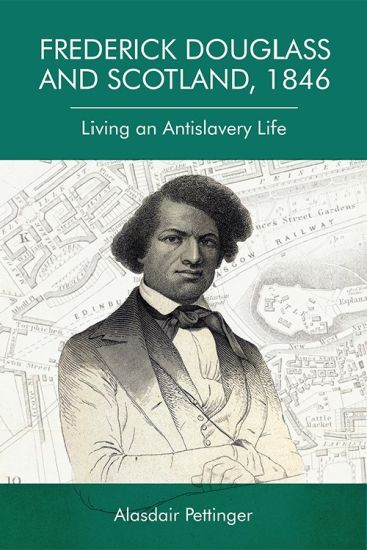
The first full-length study of Frederick Douglass' visit to Scotland in 1846Frederick Douglass (181895) was not the only fugitive from American slavery to visit Scotland before the Civil War, but he was the best known and his impact was far-reaching. This book shows that addressing crowded halls from Ayr to Aberdeen, he gained the confidence, mastered the skills and fashioned the distinctive voice that transformed him as a campaigner. It tells how Douglass challenged the Free Church over its ties with the Southern plantocracy; how he exploited his knowledge of Walter Scott and Robert Burns to brilliant effect; and how he asserted control over his own image at a time when racial science and blackface minstrel shows were beginning to shape his audiences' perceptions. He arrived as a subordinate envoy of white abolitionists, legally still enslaved. He returned home as a free man ready to embark on a new stage of his career, as editor and proprietor of his own newspaper and a leader in his own right.Key Features:First full-length study of Frederick Douglass' visit to Scotland in 1846Reveals fresh information about, and deepens our understanding of, a major 19th-century intellectual at a crucial stage in his political and professional developmentSubjects Douglass' speeches and letters to close readings and situates them in the immediate context of their delivery and compositionDemonstrates the extent to which Douglass was closely acquainted with Scottish literature, history and current affairsEnhances our knowledge of Douglass as a performer, his ability to read audiences, and how he moved and influenced them
The first full-length study of Frederick Douglass' visit to Scotland in 1846Frederick Douglass (181895) was not the only fugitive from American slavery to visit Scotland before the Civil War, but he was the best known and his impact was far-reaching. This book shows that addressing crowded halls from Ayr to Aberdeen, he gained the confidence, mastered the skills and fashioned the distinctive voice that transformed him as a campaigner. It tells how Douglass challenged the Free Church over its ties with the Southern plantocracy; how he exploited his knowledge of Walter Scott and Robert Burns to brilliant effect; and how he asserted control over his own image at a time when racial science and blackface minstrel shows were beginning to shape his audiences' perceptions. He arrived as a subordinate envoy of white abolitionists, legally still enslaved. He returned home as a free man ready to embark on a new stage of his career, as editor and proprietor of his own newspaper and a leader in his own right.Key Features:First full-length study of Frederick Douglass' visit to Scotland in 1846Reveals fresh information about, and deepens our understanding of, a major 19th-century intellectual at a crucial stage in his political and professional developmentSubjects Douglass' speeches and letters to close readings and situates them in the immediate context of their delivery and compositionDemonstrates the extent to which Douglass was closely acquainted with Scottish literature, history and current affairsEnhances our knowledge of Douglass as a performer, his ability to read audiences, and how he moved and influenced them