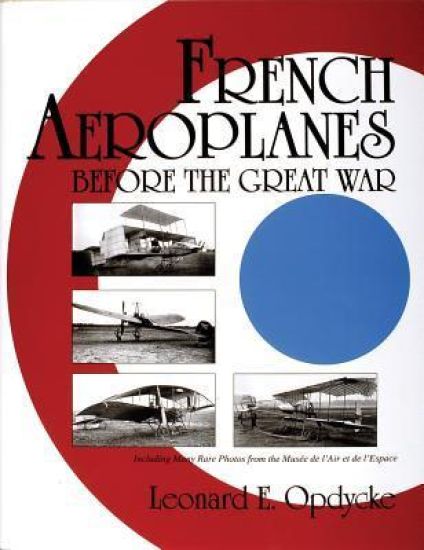
French Aeroplanes Before the Great War is a catalog of the aeroplanes of the nearly 700 French builders who worked before the onset of World War I. Most of these aeroplanes flew – some did not – some were never even finished – but all of them reflect the extraordinary vitality and sense of optimism that powered the aeronautical world before the future of the aeroplane began to become clearer in wartime. If the Wrights had not flown in 1903, one of the early French builders would very quickly have won the laurels for the first flight. Some of the machines appear in these pages probably for the first time in print; others are rarely seen. This collection serves as a kind of super Exposition Internationale de Locomotion Aérienne; readers are invited to enter the Grand Palais, as they might have in 1908 or 1909, to enjoy these marvelous aircraft.
These pendulum clocks not only tell time but also depict magnificent bronze and gilded sculptures which more or less relate to time, especially of Greek and Roman mythology, American Indian or African origin, and inhabitants of exotic countries. The author explains the underlying stories and scenes of everyday life in panels which represent the new, post-revolutionary era of the middle class in 19th century France.
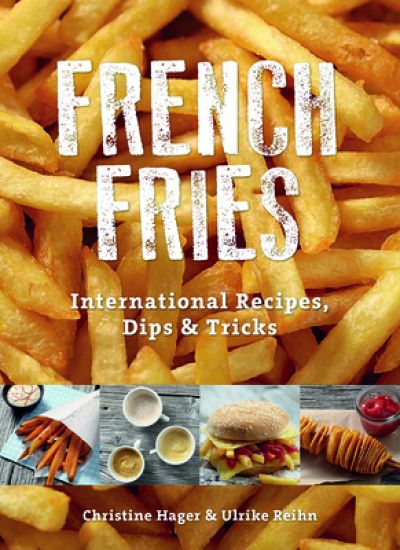
More than 50 recipes celebrate the versatility of the french fry. Why tear open bags and slide tasteless frozen potato sticks into the oven? Much more appetizing are home-cut Belgian hand-made french fry soufflés, extravagant tornados, or delicate spaghetti nests. Regardless of shape or thickness, whether you are looking for a quick snack or an entire meal, this book presents a palette of potato options. From prepping the perfect potato to selecting the right type of oil to serving the perfect dipping sauce, this book not only presents french fries as an accompaniment but a main course like the french fry burger or chili french fries. Contains an overview of potato types and oils as well as cooking tips and tricks.
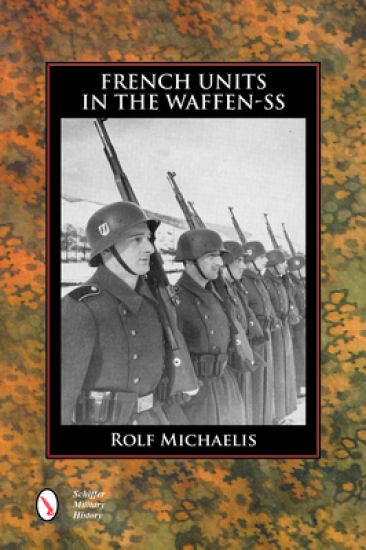
The story of the French units of the Waffen-SS in World War II—the Französische SS-Freiwilligen-Grenadier-Regiment; Französische SS-Freiwilligen-Sturmbrigade, Waffen-Grenadier-Brigade der SS “Charlemagne”; 33. Waffen-Grenadier-Division der SS “Charlemagne”—is told in this concise and detailed book. Examined first are the many fascist and national-socialist movements that existed in France at the beginning of the twentieth century, from whose ranks the majority of the war and eastern front volunteers were recruited. The recruiting campaign and training of the SS volunteers are examined, along with the combat operations by armed French units in Galicia, Pomerania, Kolberg, and in the Gotenhafen area. After the necessary unit rebuilding following these costly actions, there followed further actions in Mecklenburg-Western Pomerania, and the actions of unit remnants in the Reich capital Berlin. The book is augmented by rare photographs, some never before published, and detailed maps.
“Whether you are an avid collector or wine novice, this book offers an extensive resource in an accessible format.” —Charlie Trotter, Acclaimed Chef and Award-Winning Author “This book is an invitation to discover the bountiful wine regions, each different from one another, and is an homage to the beauty and uniqueness of the delicious wines they produced.” —Georges Duboeuf, Les Vins Georges Duboeuf “The diversity of French wine is one of its attractions, but it can seem perplexing...until you pick up this marvelous guide. The route is well -marked, easy-to-follow, and the destinations are delicious.” —Kermit Lynch, Wine Merchant and author, Adventures on the Wine Route “...Ed McCarthy and Mary Ewing-Mulligan lead us by the hand down the road of adventure to discover the wines of France that they know so well.... In their relaxed, wise, and mischievous way, they show us the joy and pleasure of drinking French wine.” —Prince Alain de Polignac, Winemaker, Champagne Pommery You no longer need to be confused or intimidated by French wine. Authored by certified wine educators and authors Ed McCarthy and Mary Ewing-Mulligan, French Wine For Dummies introduces you to the delicious world of fine French wine. Among other things, you’ll discover how to: *Translate wine labels *Identify great wine bargains *Develop your own wine tastes *Match French wines with foods Here’s everything you need to know to sip and savor the best—and the best-value—Bordeaux, Burgundy, Beaujolais, Alsace, and other delicious wines. This lighthearted and informative guide covers: *The story of French wine and how it came to dominate the wine world *How the French name and label their wines and why *France’s most important wine regions—including a region-by-region survey of the best vineyards and their products *France’s other wine regions, including Champagne, Alsace, the Loire Valley, and others So pour yourself a big glass of Beaujolais Nouveau, sit back, and enjoy the ride as Ed McCarthy and Mary Ewing-Mulligan take you on an intoxicating journey through the wonderful world of French wine.
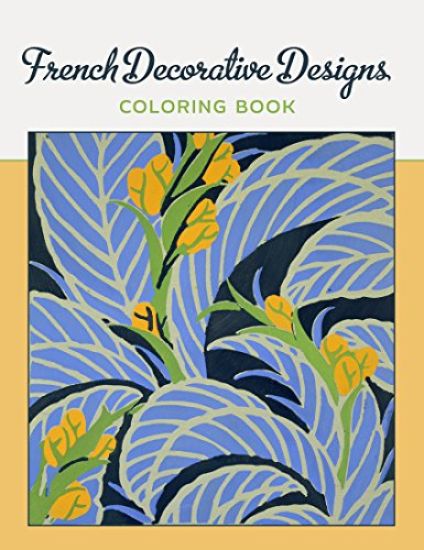
Soft cover book with staple binding. 48 pages with 22 images to color. Size: 8.5 x 11 in. Coloring pages are blank on the back so they can be cut out and displayed.
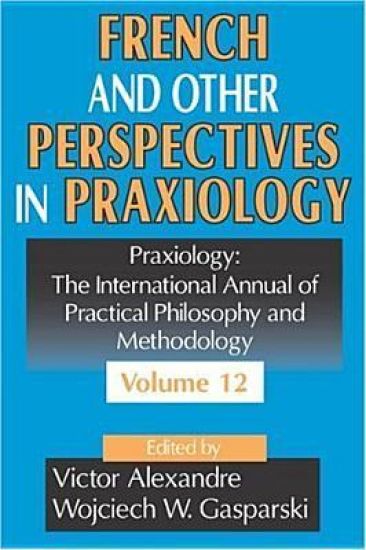
Volume 12 in this distinguished series explores current topics in praxiology as studied in France and elsewhere. As is characteristic of contemporary praxiology, contributors both investigate new topics and use new methods to re-examine older approaches.Part 1 is composed of three sections by French scholars. These deal with humans as a subject of action as well as a subject of knowledge. In respecting the particular domains of psychology and praxiology, they demonstrate how they converge to shed light on the human being as an individual or as part of a group. The first section discusses relations between individual action and collective action, while the second section is concerned with relations between the act, objects, and space, and explores work spaces, production spaces, office spaces, and social spaces. The third section examines relations between action and cognition, a domain considered to be little understood in general. Finally, the role of mathematics in decision-making is discussed as a determinate of the praxiological process.The second part is composed of contributions by scholars from Finland, Great Britain, Poland, Portugal, Spain, and the United States. The topics are: how praxiology helps economists understand cooperative actions and related issues of different responsibilities; how and to what an extent university education creates conditions for competitive advantage in the countries of Central and Eastern Europe and how problems of corporate governance are approached in the region; how innovation influences competence in the region of established economy in Spain; and how information systems constitute a multi-agent system. Finally, a formal analysis of praxiological dimensions in light of the fuzzy logic approach is discussed.
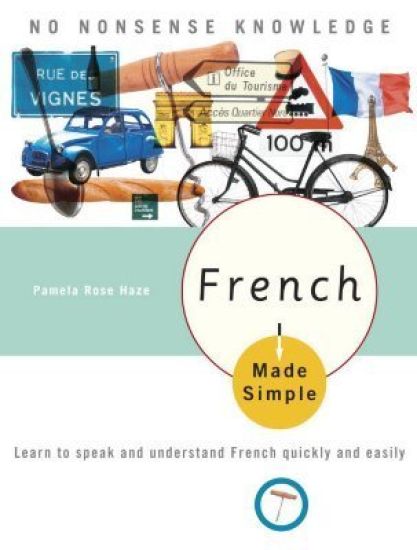
French Made Simple will help you learn to speak French quickly and easily An invaluable introduction to one of the most studied languages, French Made Simple is ideal for students, business professionals, and tourists alike. Teaching the basics of grammar, vocabulary, and culture, it guides you step-by-step through the process of learning and conversing quickly. Refreshingly easy to understand, French Made Simple includes: - Grammar basics - Modern vocabulary - Helpful verb chart - French-English dictionary - Reading exercises - Economic information - Common expressions - Review quizzes - Complete answer key
Can a family of five from deep in the heart of Dixie find happiness smack dab in the middle of France? French By Heart is the story of an all-American family pulling up stakes and finding a new home in Clermont-Ferrand, a city four hours south of Paris known more for its smoke-spitting factories and car dealerships than for its location in the Auvergne, the lush heartland of France dotted with crumbling castles and sunflower fields. The Ramseys are not jet-setters; they're a regular family with big-hearted and rambunctious kids. Quickly their lives go from covered-dish suppers to smoky dinner parties with heated polemics, from being surrounded by Southern hospitality to receiving funny looks if the children play in the yard without shoes. A charming tale with world-class characters, French By Heart reads like letters from your funniest friend. More than just a slice of life in France, it's a heartwarming account of a family coming of age and learning what "home sweet home" really means.
Jean Barman was the recipient of the 2014 George Woodcock Lifetime Achievement Award.In French Canadians, Furs, and Indigenous Women in the Making of the Pacific Northwest, Jean Barman rewrites the history of the Pacific Northwest from the perspective of French Canadians attracted by the fur economy, the indigenous women whose presence in their lives encouraged them to stay, and their descendants. Joined in this distant setting by Quebec paternal origins, the French language, and Catholicism, French Canadians comprised Canadiens from Quebec, Iroquois from the Montreal area, and métis combining Canadien and indigenous descent. For half a century, French Canadians were the largest group of newcomers to this region extending from Oregon and Washington east into Montana and north through British Columbia. Here, they facilitated the early overland crossings, drove the fur economy, initiated non-wholly-indigenous agricultural settlement, eased relations with indigenous peoples, and ensured that, when the region was divided in 1846, the northern half would go to Britain, giving today's Canada its Pacific shoreline.
Jean Barman was the recipient of the 2014 George Woodcock Lifetime Achievement Award.In French Canadians, Furs, and Indigenous Women in the Making of the Pacific Northwest, Jean Barman rewrites the history of the Pacific Northwest from the perspective of French Canadians attracted by the fur economy, the indigenous women whose presence in their lives encouraged them to stay, and their descendants. Joined in this distant setting by Quebec paternal origins, the French language, and Catholicism, French Canadians comprised Canadiens from Quebec, Iroquois from the Montreal area, and métis combining Canadien and indigenous descent. For half a century, French Canadians were the largest group of newcomers to this region extending from Oregon and Washington east into Montana and north through British Columbia. Here, they facilitated the early overland crossings, drove the fur economy, initiated non-wholly-indigenous agricultural settlement, eased relations with indigenous peoples, and ensured that, when the region was divided in 1846, the northern half would go to Britain, giving today's Canada its Pacific shoreline.
This book describes and illustrates French fortifications from 1715 (the death of Louis XIV) to 1815 (the fall of Napoleon), focusing particularly on the Napoleonic era. After an historical background, it covers the heritage of the Ancien Regime with the important contributions of Vauban (the bastioned defense), Gribeauval's reforms in artillery, and Montalembert's innovations. Chapters explore the style of Napoleonic fortifications, siege warfare, artillery and engineering corps, as well as the Napoleonic achievements in France, Italy, German and the Netherlands, including projects that were planned but never completed.