Title: Cast Out. A novel.]Publisher: British Library, Historical Print EditionsThe British Library is the national library of the United Kingdom. It is one of the world's largest research libraries holding over 150 million items in all known languages and formats: books, journals, newspapers, sound recordings, patents, maps, stamps, prints and much more. Its collections include around 14 million books, along with substantial additional collections of manuscripts and historical items dating back as far as 300 BC.The FICTION & PROSE LITERATURE collection includes books from the British Library digitised by Microsoft. The collection provides readers with a perspective of the world from some of the 18th and 19th century's most talented writers. Written for a range of audiences, these works are a treasure for any curious reader looking to see the world through the eyes of ages past. Beyond the main body of works the collection also includes song-books, comedy, and works of satire. ++++The below data was compiled from various identification fields in the bibliographic record of this title. This data is provided as an additional tool in helping to insure edition identification: ++++ British Library Gerard, Morice; 1890. 2 vol.; 8 . 012632.i.32.
""A Decorator's Dizzy Decade: The Fun And Foibles Of A Decorator In The Twenties"" is a memoir written by Theresa Chalmers Baker. The book recounts the author's experiences as a decorator in the 1920s, a time when the world was experiencing a cultural shift and the design industry was undergoing significant changes. The book is filled with anecdotes and stories about the author's clients, her colleagues, and the various design projects she worked on during this period. Through her writing, Baker provides insight into the social and cultural trends of the time, as well as the challenges and rewards of being a decorator in the 1920s. The book is a delightful read for anyone interested in design, history, or the glamour of the Roaring Twenties.This scarce antiquarian book is a facsimile reprint of the old original and may contain some imperfections such as library marks and notations. Because we believe this work is culturally important, we have made it available as part of our commitment for protecting, preserving, and promoting the world's literature in affordable, high quality, modern editions, that are true to their original work.
Read this book, and you will be an instant interviewer with questions to ask a celebrity, family of a celebrity, opera diva, mafia criminal, environmentalist, politician, foreign or domestic leader, artist, author and more. You'll get hints on how to meet and greet guests, how to dress, act, talk and so much more. The book is peppered with humorous, poignant and wonderful personal stories of Suzanne Lasky Gerard, its author and TV interviewer.But most importantly, you will be holding all the questions you'll ever need in your career as a print, social media or on-air radio and TV interviewer.Example...Questions for celebrities: *What do you think of people who say actors should keep quiet on world issues?*If people could know one thing about you, what would you want it to be?Politicians: *Finish this statement... "If I were President..."*Is the media coverage fair/unfair in its appraisal of politicians? Explain.Successful people: *So many very talented people start out in this business... some make it, most don't. You did. Tell me one quality that separates those who will reach the top, from those who won't?These are only a few of the hundreds of thought-provoking and provocative questions.
MAMES JESUS, Si Yu'us Ma' se', is a Christian title that aims to teach children about showing gratitude and thankfulness to Jesus. MAMES JESUS, Si Yu'us Ma' se' means Sweet Jesus, Thank you, in the language of the Chamorro people of Guam and the Northern Mariana Islands of Rota, Tinian, and Saipan. Parents will love to read this book with their children. Young ones will also enjoy reciting these prayers in a rhyming stance. It's a great way to introduce Jesus to little children While children say a prayer, they also learn to speak a little Chamorro as they learn how to say Sweet Jesus, Thank You or Mames Jesus, Si Yu'us Ma' se.
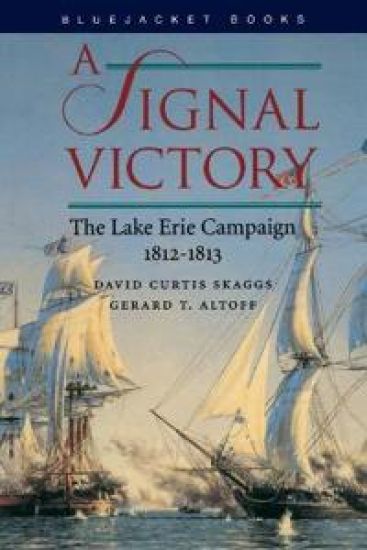
The Battle of Lake Erie on 10 September 1813 is considered by many to be the most important naval confrontation of the War of 1812. Made famous by the American fleet commander Oliver Hazard Perry's comment, ""We have met the enemy and they are ours,"" the battle marked the U.S. Navy's first successful fleet action and was one of the rare occasions when the Royal Navy surrendered an entire squadron. This book draws on British, Canadian, and American documents to offer a totally impartial analysis of all sides of the struggle to control the lake. New diagrams of the battle are included that reflect the authors' modification of traditional positions of various vessels. The book also evaluates the strategic background and tactical conduct of the British and the Americans and the command leadership exercised by Perry and his British opponent, Commander Robert H. Barclay. Not since James Fenimore Cooper's 1843 book on the subject has the battle been examined in such detail, and not since Alfred Thayer Mahan's 1905 study of the war has there been such a significant reinterpretation of the engagement. First published in hardcover in 1997, the book is the winner of the North American Society for Oceanic History's John Lyman Book Award.
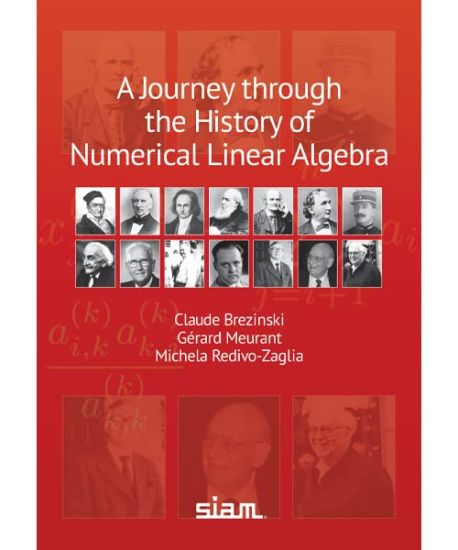
This expansive volume describes the history of numerical methods proposed to solve linear algebra problems,, from antiquity to the present day. The authors focus on methods for solving linear systems of equations and eigenvalue problems and describe the interplay between numerical methods and the computing tools available at the time. The second part of the book consists of 78 biographies of the main important contributors to the field.A Journey through the History of Numerical Linear Algebra will be of special interest to applied mathematicians, especially researchers in numerical linear algebra, and to applied mathematiciansas well as to and historians of mathematics as well.
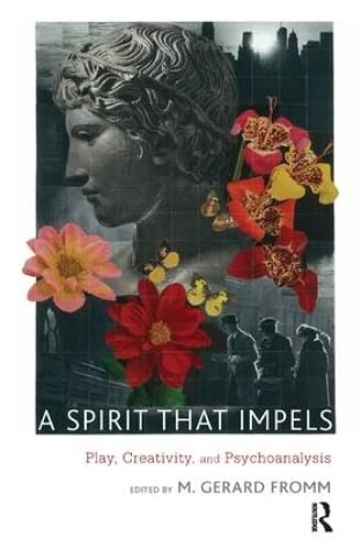
This volume brings together some of the papers presented by leading scholars, artists and psychoanalysts at an annual Creativity Seminar organised by the Erikson Institute of the Austen Riggs Center. Looking at creativity through a psychoanalytic lens - and very importantly, vice versa - the authors examine great works, such as Nathaniel Hawthorne's The Scarlet Letter, Mahler's Eighth Symphony, and William Gibson's The Miracle Worker; as well as great artists, such as Van Gogh and Lennon and McCartney, for what we might learn about the creative process itself. Deepening this conversation are a number of clinical studies and other reflections on the creative process - in sickness and in health, so to speak. A central theme is that of "deep play", the level at which the artist may be unconsciously playing out, on behalf of all of us, the deepest dynamics of human emotion in order that we may leave the encounter not only emotionally spent, but profoundly informed as well.
The Grant Writer's Handbook: How to Write a Research Proposal and Succeed provides useful and practical advice on all aspects of proposal writing, including developing proposal ideas, drafting the proposal, dealing with referees, and budgeting. The authors base their advice on many years of experience writing and reviewing proposals in many different countries at various levels of scientific maturity. The book describes the numerous kinds of awards available from funding agencies, in particular large collaborative grants involving a number of investigators, and addresses the practical impact of a grant, which is often required of proposals. In addition, information is provided about selection of reviewers and the mechanics of organizing a research grant competition to give the proposal writer the necessary background information. The book includes key comments from a number of experts and is essential reading for anyone writing a research grant proposal.The Grant Writer's Handbook's companion website, featuring regularly updated resources and helpful links, can be found at www.ifm.eng.cam.ac.uk/research/grant-writers-handbook/.
The Grant Writer's Handbook: How to Write a Research Proposal and Succeed provides useful and practical advice on all aspects of proposal writing, including developing proposal ideas, drafting the proposal, dealing with referees, and budgeting. The authors base their advice on many years of experience writing and reviewing proposals in many different countries at various levels of scientific maturity. The book describes the numerous kinds of awards available from funding agencies, in particular large collaborative grants involving a number of investigators, and addresses the practical impact of a grant, which is often required of proposals. In addition, information is provided about selection of reviewers and the mechanics of organizing a research grant competition to give the proposal writer the necessary background information. The book includes key comments from a number of experts and is essential reading for anyone writing a research grant proposal.The Grant Writer's Handbook's companion website, featuring regularly updated resources and helpful links, can be found at www.ifm.eng.cam.ac.uk/research/grant-writers-handbook/.

![Cast Out. [A Novel.]](/covers/9781241197704.jpg)
![Lot 13. [A Novel.]](/covers/9781241203139.jpg)
![Cast Out. [A Novel.]](/covers/9781241401849.jpg)