
Kirjahaku
Etsi kirjoja tekijän nimen, kirjan nimen tai ISBN:n perusteella.
1000 tulosta hakusanalla Gavin Pyakurel


Do Donkeys Dream of Ice Cream?
Gavin Buckley
Gavin Buckley | Art - Illustration - Design
2015
nidottu


Shadows of the King
Gavin Peacock; Jeff Jones; Clint Humfrey
Calvary Grace Church of Calgary
2015
pokkari



Aquaponics Food Production Systems
Gavin M Burnell; Benz Kotzen; Simon Goddek
Saint Philip Street Press
2020
pokkari
This open access book, written by world experts in aquaponics and related technologies, provides the authoritative and comprehensive overview of the key aquaculture and hydroponic and other integrated systems, socio-economic and environmental aspects. Aquaponic systems, which combine aquaculture and vegetable food production offer alternative technology solutions for a world that is increasingly under stress through population growth, urbanisation, water shortages, land and soil degradation, environmental pollution, world hunger and climate change. This work was published by Saint Philip Street Press pursuant to a Creative Commons license permitting commercial use. All rights not granted by the work's license are retained by the author or authors.
Aquaponics Food Production Systems
Gavin M Burnell; Benz Kotzen; Simon Goddek
Saint Philip Street Press
2020
sidottu
This open access book, written by world experts in aquaponics and related technologies, provides the authoritative and comprehensive overview of the key aquaculture and hydroponic and other integrated systems, socio-economic and environmental aspects. Aquaponic systems, which combine aquaculture and vegetable food production offer alternative technology solutions for a world that is increasingly under stress through population growth, urbanisation, water shortages, land and soil degradation, environmental pollution, world hunger and climate change. This work was published by Saint Philip Street Press pursuant to a Creative Commons license permitting commercial use. All rights not granted by the work's license are retained by the author or authors.
This work has been selected by scholars as being culturally important and is part of the knowledge base of civilization as we know it.This work is in the public domain in the United States of America, and possibly other nations. Within the United States, you may freely copy and distribute this work, as no entity (individual or corporate) has a copyright on the body of the work.Scholars believe, and we concur, that this work is important enough to be preserved, reproduced, and made generally available to the public. To ensure a quality reading experience, this work has been proofread and republished using a format that seamlessly blends the original graphical elements with text in an easy-to-read typeface.We appreciate your support of the preservation process, and thank you for being an important part of keeping this knowledge alive and relevant.
This work has been selected by scholars as being culturally important and is part of the knowledge base of civilization as we know it.This work is in the public domain in the United States of America, and possibly other nations. Within the United States, you may freely copy and distribute this work, as no entity (individual or corporate) has a copyright on the body of the work.Scholars believe, and we concur, that this work is important enough to be preserved, reproduced, and made generally available to the public. To ensure a quality reading experience, this work has been proofread and republished using a format that seamlessly blends the original graphical elements with text in an easy-to-read typeface.We appreciate your support of the preservation process, and thank you for being an important part of keeping this knowledge alive and relevant.
This work has been selected by scholars as being culturally important and is part of the knowledge base of civilization as we know it.This work is in the public domain in the United States of America, and possibly other nations. Within the United States, you may freely copy and distribute this work, as no entity (individual or corporate) has a copyright on the body of the work.Scholars believe, and we concur, that this work is important enough to be preserved, reproduced, and made generally available to the public. To ensure a quality reading experience, this work has been proofread and republished using a format that seamlessly blends the original graphical elements with text in an easy-to-read typeface.We appreciate your support of the preservation process, and thank you for being an important part of keeping this knowledge alive and relevant.
This work has been selected by scholars as being culturally important and is part of the knowledge base of civilization as we know it.This work is in the public domain in the United States of America, and possibly other nations. Within the United States, you may freely copy and distribute this work, as no entity (individual or corporate) has a copyright on the body of the work.Scholars believe, and we concur, that this work is important enough to be preserved, reproduced, and made generally available to the public. To ensure a quality reading experience, this work has been proofread and republished using a format that seamlessly blends the original graphical elements with text in an easy-to-read typeface.We appreciate your support of the preservation process, and thank you for being an important part of keeping this knowledge alive and relevant.

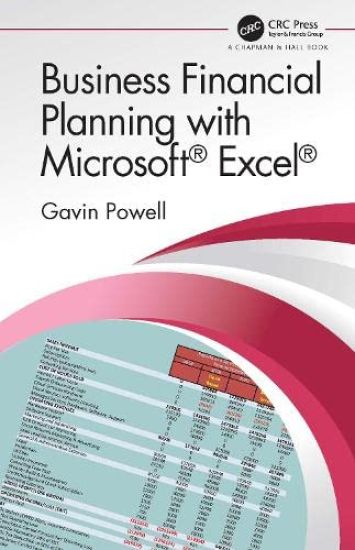
Business Finance Planning with Microsoft® Excel® shows how to visualize, plan, and put into motion an idea for creating a start-up company. Microsoft Excel is a tool that makes it easier to build a business financial planning process for a new business venture.With an easy-to follow structure, the book flows as a six-step process:Presenting a case study of a business start-upCreating goals and objectivesDetermining expenses from those goals and objectives,Estimating potential sales revenue based on what competitors charge their customersPredicting marketing costsFinalizing the financial analysis with a of financial statements.Written around an IT startup case study, the book presents a host of Excel worksheets describing the case study along with accompanying blank forms. Readers can use these forms in their own businesses, so they can build parts of their own business plans as they go. This is intended to be a practical guide that teaches and demonstrates by example, in the end presenting a usable financial model to build and tweak a financial plan with a set of customizable Excel worksheets. The book uses practical techniques to help with the planning processing. These include applying a SWOT (strengths, weaknesses, opportunities, and threats) matrix to evaluate a business idea and SMART (Specific, Measurable, Achievable, Relevant, and Time-Bound) objectives to link together goals. As the book concludes, readers will be able to develop their own income statement, balance sheet, and the cash-flow statement for a full analysis of their new business ideas.Worksheets are available to download from: https://github.com/gjtpowell/business_finance_planning

This book presents a conversation between two prominent archaeologists who have been exploring the concept of time in their discipline for several decades. It is a discussion on key issues of time in archaeology filtered through their unique perspectives, which sometimes meet and at other times, clash. Key features include discussions on the nature of change and time in the archaeological record, the relation between the present and past, the connection between time and the goals of archaeology and the relevance of the Anthropocene to disciplinary practice. Situated in how the authors' own views on the topic of time have developed over their careers, the conversation offers an intimate and personal insight into how two leading scholars think and debate a topic of central importance to the discipline.All archaeologists with an interest in contemporary theory and the topic of time will find this book of relevance. Also the student who wants a front-row seat onto a live debate on this topic will find it an invaluable complement to the more traditional textbook.

This book presents a conversation between two prominent archaeologists who have been exploring the concept of time in their discipline for several decades. It is a discussion on key issues of time in archaeology filtered through their unique perspectives, which sometimes meet and at other times, clash. Key features include discussions on the nature of change and time in the archaeological record, the relation between the present and past, the connection between time and the goals of archaeology and the relevance of the Anthropocene to disciplinary practice. Situated in how the authors' own views on the topic of time have developed over their careers, the conversation offers an intimate and personal insight into how two leading scholars think and debate a topic of central importance to the discipline.All archaeologists with an interest in contemporary theory and the topic of time will find this book of relevance. Also the student who wants a front-row seat onto a live debate on this topic will find it an invaluable complement to the more traditional textbook.

This book, first published in 1967, examines the implications of a now-forgotten minor riot that occurred in 1833, a turbulent year with the working classes striving for recognition in a changing social order. A political meeting in London had been declared illegal, the police breaking up the crowd were met with resistance, and in the fracas a policeman was stabbed to death. A bad-tempered inquest followed, at which the jury returned a verdict of justified killing – for which a section of the public hailed them as heroes. This analysis sets the crime and verdict against the political protests of the time.