When nineteen-year old Grady Gilbert seeks gas money in a rural Tennessee church, the congregation assumes he is the straight-out-of-the seminary pastor for whom they've been waiting. The truth is, Grady lost his college basketball scholarship. Matt the Rat, his stepfather, refused to let him live at home, and Grady stole Matt's antique Pontiac and drove off without a plan.With limited church exposure, Grady figures pastoring couldn't be too difficult-he wouldn't have to punch a time clock or report to a boss-so he does not correct the congregation's misunderstanding. When he runs into obstacles, Grady simply searches the Internet for guidance. The one insurmountable obstacle is Mae-June, the church secretary whose trust he can't seem to win.In the beginning, impersonating a pastor was a joke to Grady, but somewhere along the line all that changes when he beginsto care.
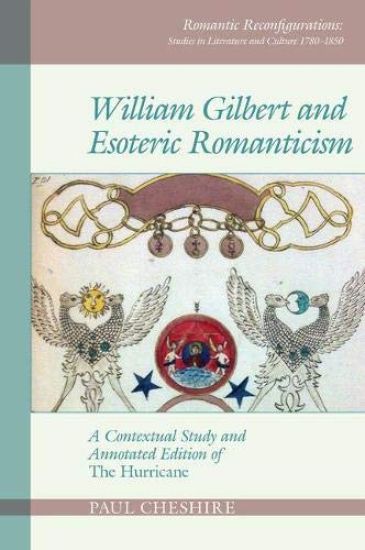
William Gilbert, poet, theosophist and astrologer, published The Hurricane: A Theosophical and Western Eclogue in Bristol in 1796, while he was on intimate terms with key members of Bristol literary culture: Coleridge published an extract from The Hurricane in his radical periodical The Watchman; Robert Southey wrote of the poem’s ‘passages of exquisite Beauty’; and William Wordsworth praised and quoted a long passage from Gilbert’s poem in The Excursion. The Hurricane is a copiously annotated 450 line blank verse visionary poem set on the island of Antigua where, in 1763, Gilbert was born into a slave-owning Methodist family. The poem can be grouped with other apocalyptic poems of the 1790s—Blake’s Continental Prophecies, Coleridge's Religious Musings, Southey's Joan of Arc—all of which gave a spiritual interpretation to the dramatic political upheavals of their time. William Gilbert and Esoteric Romanticism presents the untold story of Gilbert’s progress from the radical occultist circles of 1790s London to his engagement with the first generation Romantics in Bristol. At the heart of the book is the first modern edition of The Hurricane, fully annotated to reveal the esoteric metaphysics at its core, followed by close interpretative analysis of this strange elusive poem.
William Gilbert, poet, theosophist and astrologer, published The Hurricane: A Theosophical and Western Eclogue in Bristol in 1796, while he was on intimate terms with key members of Bristol literary culture: Coleridge published an extract from The Hurricane in his radical periodical The Watchman; Robert Southey wrote of the poem’s ‘passages of exquisite Beauty’; and William Wordsworth praised and quoted a long passage from Gilbert’s poem in The Excursion. The Hurricane is a copiously annotated 450 line blank verse visionary poem set on the island of Antigua where, in 1763, Gilbert was born into a slave-owning Methodist family. The poem can be grouped with other apocalyptic poems of the 1790s—Blake’s Continental Prophecies, Coleridge's Religious Musings, Southey's Joan of Arc—all of which gave a spiritual interpretation to the dramatic political upheavals of their time. William Gilbert and Esoteric Romanticism presents the untold story of Gilbert’s progress from the radical occultist circles of 1790s London to his engagement with the first generation Romantics in Bristol. At the heart of the book is the first modern edition of The Hurricane, fully annotated to reveal the esoteric metaphysics at its core, followed by close interpretative analysis of this strange elusive poem.
'December is FINALLY here! I'm making a list, I'm checking it twice, and I'm dreaming of a PINK Christmas!' What colour is Christmas, do you think? Is it red, is it green? Well, according to one little girl, Christmas is most definitely PINK! Join her on this hilarious, and colourful, adventure as she tries to persuade her friends, you, and even Santa and his elves, that anything to do with Christmas must be, and simply has to be, PINK! Written by the talented children's book author Frances Gilbert, author of I Love Pink and Go, Girls, Go! and with utterly charming illustrations by George Sweetland, this pink-credible storybook is a perfect read for anyone who loves pink at Christmas time. So, this Christmas, think PINK!
At the turn of the twentieth century, West Virginia was in the throes of its formative years as a state. After more than two decades of alternating its government seat between Wheeling and Charleston and the destruction of the Gothic Revival Capitol in Charleston by fire in 1921, a building commission was formed to create a permanent Capitol that would display the young state's pride, wealth, and sophistication to the entire nation. To achieve these goals, the legislature approved a budget of more than $6.5 million for the design and construction of this statehouse and the Commission appointed by the Governor hired internationally renowned Cass Gilbert as its architect. After much debate, an impressive site along the shore of the Kanawha River in Charleston was selected as its location.As one of the most influential architects of the early twentieth century, Cass Gilbert is known for structures such as the Woolworth Building, the United States Supreme Court building, and the Minnesota State Capitol. He believed architecture should reflect historic tradition and established social order, and this conservative philosophy is evinced within the classic form and proportions of the West Virginia State Capitol. As one of his final commissions, the West Virginia Capitol, with its golden ""dome of majestic proportion,"" marble interiors, ornamental reliefs, and rich woodwork, remains a distinguished example of noble simplicity in American architecture.Cass Gilbert's West Virginia State Capitol narrates the intricate story behind this architectural feat. Its close examination of the design, construction, and execution of this commission not only reveals the social, political, and financial climate of West Virginia during this period but also provides insight into the cultural importance of this public building. As Cass Gilbert's design process is traced through unpublished documentation, drawings, and letters from several archives, the over one hundred accompanying photographs - many historical and others newly commissioned for this book - divulge the subtle beauty of the Capitol complex. At the same time, an extensive analysis of historical and contemporary illustrations and primary sources further elucidates the architectural value of this structure.With welcomes by West Virginia Governor Earl Ray Tomblin and State Senator Brooks F. McCabe, Jr., a prologue by art historians Bernard Schultz and Mary L. Soldo Schultz, and an epilogue by Chad Proudfoot, this revealing and comprehensive study examines the importance of this often overlooked architectural accomplishment, solidifying its significance as a socio-political symbol as well as its place within the history of American public architecture.
This work has been selected by scholars as being culturally important, and is part of the knowledge base of civilization as we know it. This work was reproduced from the original artifact, and remains as true to the original work as possible. Therefore, you will see the original copyright references, library stamps (as most of these works have been housed in our most important libraries around the world), and other notations in the work.This work is in the public domain in the United States of America, and possibly other nations. Within the United States, you may freely copy and distribute this work, as no entity (individual or corporate) has a copyright on the body of the work.As a reproduction of a historical artifact, this work may contain missing or blurred pages, poor pictures, errant marks, etc. Scholars believe, and we concur, that this work is important enough to be preserved, reproduced, and made generally available to the public. We appreciate your support of the preservation process, and thank you for being an important part of keeping this knowledge alive and relevant.
Catalogue of an exhibition at LabCentral in Cambridge, Massachusetts, in March, 2018. Colorful, digital photographs, often modifiedhttps: //eu.createspace.com/title/8200223/advanced# in the computer.A retrospective of Wally Gilbert's art from 2004 to 2018
Le Siege de Stenay en 1654, d'apres les correspondances des contemporains, par M. Andre Gilbert, ...Date de l'edition originale: 1893Ce livre est la reproduction fidele d'une oeuvre publiee avant 1920 et fait partie d'une collection de livres reimprimes a la demande editee par Hachette Livre, dans le cadre d'un partenariat avec la Bibliotheque nationale de France, offrant l'opportunite d'acceder a des ouvrages anciens et souvent rares issus des fonds patrimoniaux de la BnF.Les oeuvres faisant partie de cette collection ont ete numerisees par la BnF et sont presentes sur Gallica, sa bibliotheque numerique.En entreprenant de redonner vie a ces ouvrages au travers d'une collection de livres reimprimes a la demande, nous leur donnons la possibilite de rencontrer un public elargi et participons a la transmission de connaissances et de savoirs parfois difficilement accessibles.Nous avons cherche a concilier la reproduction fidele d'un livre ancien a partir de sa version numerisee avec le souci d'un confort de lecture optimal. Nous esperons que les ouvrages de cette nouvelle collection vous apporteront entiere satisfaction.Pour plus d'informations, rendez-vous sur www.hachettebnf.fr