When the world needs to change to whom will God look? A short story with the punch of a revelation Helen Kirk, a young, unassuming English girl, lives in a mid 21st century world which has experienced a transformation. Fake news has been exposed and the new truth program means only the honest will hold any office. At the same time nature has provided mankind with some unprecedented disasters and the worldwide recovery is ongoing. Helen - quiet, studious and earnest realises that she has a role to play and might even be the only person who can free the world from the last vestiges of evil.
Scottish writer Andrew Lang is best remember for his prolific collections of folk and fairy tales, but he was also an accomplished poet, literary critic, novelist and contributor in the field of anthropology. In Lang's Helen of Troy, a story in rhyme of the fortunes of Helen, the theory that she was an unwilling victim of the Gods has been preferred. Many of the descriptions of manners are versified from the Iliad and the Odyssey. The description of the events after the death of Hector, and the account of the sack of Troy, is chiefly borrowed from Quintus Smyrnaeus. The character and history of Helen of Troy have been conceived of in very different ways by poets and mythologists.
A hopelessly mismatched niece and uncle find themselves thrown together by circumstance. But underneath their constant bickering and nitpicking, the pair truly cares about each other. Will this hilariously dysfunctional duo find a way to make their nontraditional household work?
A young, English girl is forced to leave her hometown in England after a tragic death in her family. Leaving her beloved bulldog King Orry and ailing mother behind she is forced to cross the Atlantic and is unwittingly accosted by anarchists who are traveling to the Pan-American Exposition in Buffalo, New York. In Manchester she meets her Tory leaning relatives who are involved in political intrigue, she experiences ghostly happenings in Salem, and ominous disturbances at Miss Porter's School in Farmington, Connecticut. Ultimately she learns that her French lover has spurned her for another, and is forced to endure amorous attempts by deceitful men, bent on crushing her already broken heart. These and other madcap adventures await Helen Miller as she struggles to adjust to a time when manners are changing, when feminists are on the prowl, when anarchists are out for blood, and when it seems that love is only found in dreams.
Sara Teasdale(August 8, 1884 - January 29, 1933) was an American lyric poet. She was born Sarah Trevor Teasdale in St. Louis, Missouri, and used the name Sara Teasdale Filsinger after her marriage in 1914. Biography;easdale was born on August 8, 1884. She had poor health for much of her childhood, so she was home schooled until age 9. It was at age 10 that she was well enough to begin school. She started at Mary Institute in 1898, but switched to Hosmer Hall in 1899, graduating in 1903. The Teasdale family resided at 3668 Lindell Blvd. and then 38 Kingsbury Place in St. Louis, Missouri. Both homes were designed by Sara's mother. The house on Kingsbury Place had a private suite for Sara on the second floor. Guests entered through a separate entrance and were admitted by appointment. This suite is where Sara worked, slept, and often dined alone. From 1904 to 1907, Teasdale was a member of The Potters, led by Lillie Rose Ernst, a group of female artists in their late teens and early twenties who published, from 1904 to 1907, The Potter's Wheel a monthly artistic and literary magazine in St. Louis. Teasdale's first poem was published in William Marion Reedy's Reedy's Mirror, a local newspaper, in 1907. Her first collection of poems, Sonnets to Duse and Other Poems, was published that same year. Teasdale's second collection, Helen of Troy and Other Poems, was published in 1911. It was well received by critics, who praised its lyrical mastery and romantic subject matter. From 1911 to 1914 Teasdale was courted by several men, including the poet Vachel Lindsay, who was truly in love with her but did not feel that he could provide enough money or stability to keep her satisfied. She chose to marry Ernst Filsinger, a longtime admirer of her poetry, on December 19, 1914. Teasdale's third poetry collection, Rivers to the Sea, was published in 1915. It was and is a bestseller, being reprinted several times. In 1916 she and Filsinger moved to New York City, where they lived in an Upper West Side apartment on Central Park West. In 1918 she won a Pulitzer Prize for her 1917 poetry collection Love Songs. It was "made possible by a special grant from The Poetry Society"; however, the sponsoring organization now lists it as the earliest Pulitzer Prize for Poetry (inaugurated 1922). Filsinger's constant business travel caused Teasdale much loneliness. In 1929, she moved interstate for three months, thereby satisfying the criteria to gain a divorce. She did not wish to inform Filsinger, only doing so at her lawyers' insistence as the divorce was going through. Filsinger was shocked. After the divorce she moved only two blocks from her old home on Central Park West. She rekindled her friendship with Vachel Lindsay, who was now married with children. In 1933, she died by suicide, overdosing on sleeping pills. Lindsay had died by suicide two years earlier. She is interred in Bellefontaine Cemetery in St. Louis.
In Greek mythology, Helen, better known as Helen of Sparta or Helen of Troy, was daughter of Zeus and Leda, wife of king Menelaus of Sparta and sister of Castor, Polydeuces and Clytemnestra. Her abduction by Paris brought about the Trojan War. Helen was described as having the face that launched a thousand ships. Helen or Helene is probably derived from the Greek word meaning "torch" or "corposant" or might be related to "selene" meaning "moon". We are delighted to publish this classic book as part of our extensive Classic Library collection. Many of the books in our collection have been out of print for decades, and therefore have not been accessible to the general public. The aim of our publishing program is to facilitate rapid access to this vast reservoir of literature, and our view is that this is a significant literary work, which deserves to be brought back into print after many decades. The contents of the vast majority of titles in the Classic Library have been scanned from the original works. To ensure a high quality product, each title has been meticulously hand curated by our staff. Our philosophy has been guided by a desire to provide the reader with a book that is as close as possible to ownership of the original work. We hope that you will enjoy this wonderful classic work, and that for you it becomes an enriching experience.
In Greek mythology, Helen, better known as Helen of Sparta or Helen of Troy, was daughter of Zeus and Leda, wife of king Menelaus of Sparta and sister of Castor, Polydeuces and Clytemnestra. Her abduction by Paris brought about the Trojan War. Helen was described as having the face that launched a thousand ships. Helen or Helene is probably derived from the Greek word meaning "torch" or "corposant" or might be related to "selene" meaning "moon." (source: Wikipedia)
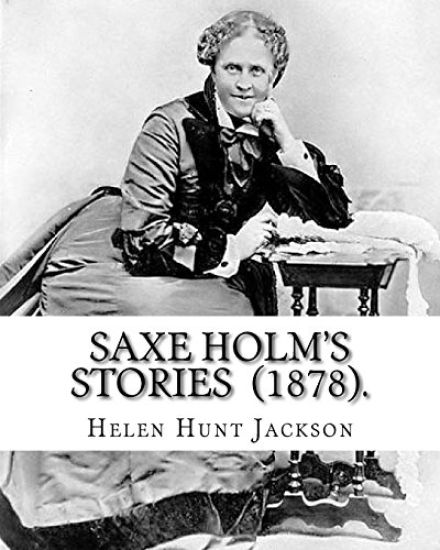
Helen Maria Hunt Jackson (pen name, H.H.; October 15, 1830 - August 12, 1885), was an American poet and writer who became an activist on behalf of improved treatment of Native Americans by the United States government. She described the adverse effects of government actions in her history A Century of Dishonor (1881). Her novel Ramona (1884) dramatized the federal government's mistreatment of Native Americans in Southern California after the Mexican-American War and attracted considerable attention to her cause. Commercially popular, it was estimated to have been reprinted 300 times and most readers liked its romantic and picturesque qualities rather than its political content. The novel was so popular that it attracted many tourists to Southern California who wanted to see places from the book. Early years and education Helen Maria Fiske was born in Amherst, Massachusetts, the daughter of Nathan Welby Fiske and Deborah Waterman Vinal Fiske. Helen's father was a minister, author, and professor of Latin, Greek, and philosophy at Amherst College. She had two brothers, Humphrey Washburn Fiske (?-1833) and David Vinal Fiske (1829-1829), both of whom died soon after birth, and a sister Anne. They were raised as Unitarian. Anne became the wife of E. C. Banfield, a federal government official who served as Solicitor of the United States Treasury. The girls' mother died in 1844, when Helen was fourteen. Three years later, their father died. He had provided financially for Helen's education and arranged for an uncle to care for her. Fiske attended Ipswich Female Seminary and the Abbott Institute, a boarding school in New York City run by Reverend John Stevens Cabot Abbott. She was a classmate of Emily Dickinson, also from Amherst; Emily became a renowned poet. The two corresponded for the rest of their lives, but few of their letters have survived. WORK: Bits of Travel (1872) Bits about Home Matters (1873) Saxe Holm's Stories (1874) The Story of Boon (1874) Mercy Philbrick's Choice (1876) Hetty's Strange History (1877) Bits of Talk in Verse and Prose for Young Folks (1876) Bits of Travel at Home (1878) Nelly's Silver Mine: A Story of Colorado Life (1878) Letters from a Cat (1879) A Century of Dishonor (1881) Ramona (1884) Zeph: A Posthumous Story (1885) Glimpses of Three Coasts (1886) Between Whiles (1888) A Calendar of Sonnets (1891) Ryan Thomas (1892) The Hunter Cats of Connorloa (1894) Poems by Helen Jackson Roberts Bros, Boston (1893) Pansy Billings and Popsy: Two Stories of Girl Life (1898) Glimpses of California (1914)
Andrew Lang, FBA was a Scottish poet, novelist, literary critic, and contributor to the field of anthropology. He is best known as a collector of folk and fairy tales. The Andrew Lang lectures at the University of St Andrews are named after him.
Enoch Arnold Bennett was an English writer. He is best known as a novelist, but he also worked in other fields such as the theatre, journalism, propaganda and films.
A collection of recipes for excellent dishes enjoyed by many, including family and friends, over the past half century. These recipes are inspired by Southern tastes and Country-style cooking methods using local ingredients. Simple, healthy ingredients, ease of preparation, and and flavors that call you back to prepare them over and over, make these recipes great. Make them and you will Love them
Beset by family tragedy Helen Miller is thrust into the cruel world of the late 19th century, a world where the old norms and customs are rapidly giving way to vulgarity, and the desire for wealth and power is infecting the minds of men. Small business' are giving way to large factories where men and women are subjected to slave labor with little pay, woman are in the streets demanding the right to vote while denouncing the institution of marriage as slavery, and crusaders are hailing against the evils of alcohol and demanding fair wages for workers. Into this maelstrom comes a young girl who is forced to leave her hometown in England to live with relatives in the small industrial town of Manchester, New Hampshire. Here the manners she learned at a finishing school in France will be challenged, as she is thrust into a world of vulgar manners, the struggle for power and wealth, and political intrigue.
Being immortal means you live forever, correct? Wrong - but only because many confuse living with existing. HELEN OF DETROIT (Book Two), it has been eighty years since Sylvian became the last vampire, and the world has moved on without her, maybe in spite of her, and definitely in a direction because of her. With the vampires gone, werewolves filled that void, and now it is their turn to bring about a renaissance of their kind as foretold by prophetic mutterings. This time it will attempt to consume a woman named Helen, a young citizen who wanted nothing more than to do her duty for her city. For Sylvian, Helen is a reflection of where she had come from and what the world could do to her in the future. Sylvian must save Helen, but a thousand werewolves have come to Detroit. History repeating itself demands nothing less. This the second of the four books in this trilogy, and this dystopian future influenced by Sylvian's decisions eight years prior is the crucial turning point that will ultimately free Sylvian and Helen from just existing.
Love is LoveHelen Lipton is a woman on the run. There are demons in her past that will follow her to the ends of the earth until she is able to free herself from them. But for right now she is a drifter, trying to stay out of the spotlight, blending in as best she can.Her only companion is her dead girlfriend Susan, who for some unknown reason is able to appear to her and only her. Susan was the love of Helen's life. She was her everything. And now she is gone
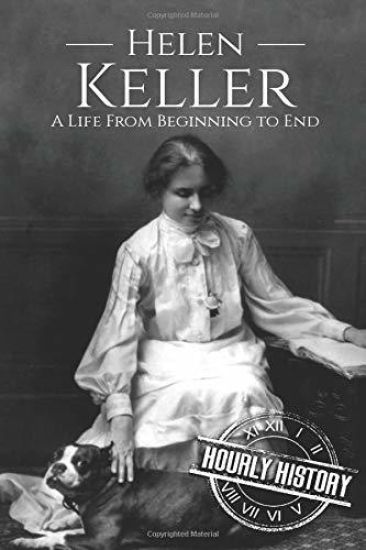
Helen KellerWhat was Helen Keller's legacy to the world? Was it the impressive list of firsts that she accomplished as a deafblind person? Was it the assistance that she gave to the cause of the handicapped? Was it her numerous writings, her forgotten ideals, her inspirational quotations? Or was it simply her story? Inside you will read about...✓ Growing up Deaf and Blind at Ivy Green✓ Learning to Speak✓ Earning Her Bachelor's Degree✓ Relentless Work and Radical Socialism✓ Keller's Secret Engagement✓ Late Life and DeathAnd much more Perhaps the only way to measure the gift of Helen Keller would be to discover just how her life has touched the lives of the presidents, inventors, poets, and other famous people of her day down to the countless school urchins who have heard the tale of the little girl that could not see or hear. Helen Keller meant something to them all.
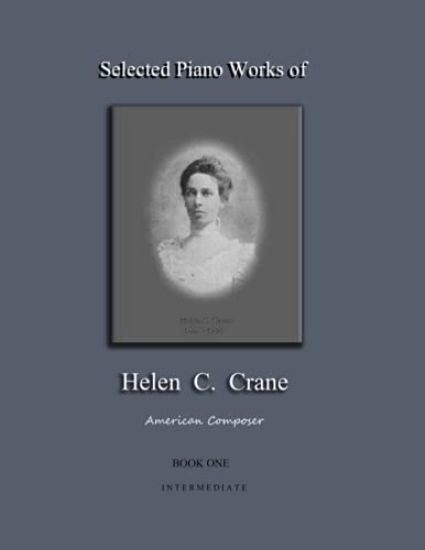
Recently re-discovered composer Helen C. Crane (1868-1930) makes her 21st century debut with this collection of her piano works. A talented student of music, Ms. Crane was chosen to study composition in the 1890s with Philipp Scharwenka, pianist, composer and then director of the Klindworth-Scharwenka Conservatory in Berlin, Germany. This third book in the series includes her Intermezzo op.38, no.1, Four Character Pieces, op.6, also Sc nes Champ tres (6) op. 31 and September Days op. 62 (3).
HELEN . . . IS SIXTEEN AND PREGNANT. IT IS 1963. ABORTION IS A CRIME. WHAT CAN SHE DO? WHAT SHOULD SHE DO?Author Wendy Sibbison offers an insightful, thought-provoking perspective in this coming-of-age novel; a poignant exploration of burgeoning womanhood, mother-daughter relations, family dynamics, and sexual awakenings rooted in the mores of an era that offers lessons for the present. Beautifully written, a meaningful read for mature readers of all ages and for book groups interested in the debates about Roe v Wade.
Recently re-discovered composer Helen C. Crane (1868-1930) makes her 21st century debut with this collection of her piano works. A talented student of music, Ms. Crane was chosen to study composition in the 1890s with Philipp Scharwenka, pianist, composer and then director of the Klindworth-Scharwenka Conservatory in Berlin, Germany. Here she studied alongside later notables like Otto Klemperer who was one of her contemporaries. With the completion of studies her budding career was met with numerous accolades and acceptance into the various German & Austrian publishing houses: among these Breitkopf & Hertel, Gustav Vetter, and Ries & Erler. On one of her trips home to the States (April of 1900) she premiered several of her pieces at Mendellsohn Hall in NYC and herself conducted an American premier of her orchestral tone-poem "The Last Tournament", based upon the same named chapter of Alfred Lord Tennyson's "The Idylls Of The King" Her career was marked with well-met premiers in Germany and Austria and she was honored to have her music performed by the Berlin Philharmonic at the St. Louis Exposition in 1904. Her career appeared quite vibrant until the First World War brought it all to a close. She returned to the United States in 1917 where in spite of the horrific turn of events she once again was the recipient of an award: this time American. Federated Music Clubs awarded her first prize for her composition "Elegy for Cello". In the last decade of her life (1923) indicative of her success and her abiding appreciation to German-Austrian audiences, she was gifted an "all-Helen Crane" concert at the Mozarteum in Salzberg, with Dr. Bernhard Paumgartner conducting. She passed in November of 1930 at her home in Scarsdale, NY. She accomplished a great deal in her four-decade career, her music encompassing 74 numbered works: music for piano, violin, cello, string quartets, tone-poems for orchestra, art songs, works for choir as well as for orchestra and chorus and two symphonies. Her piano music gives a unique insight into her marvelous talent and reveals a heretofore unheard American strain: the unique marriage of Helen Crane's American taste and sensibilities and her German conservatory training. It is apparent upon playing and/or listening to her music that here was fertile ground for the blossoming of all manner of future American music styles, from music for the cinema to jazz.