Kirjojen hintavertailu. Mukana 12 016 292 kirjaa ja 12 kauppaa.

Kirjahaku

Etsi kirjoja tekijän nimen, kirjan nimen tai ISBN:n perusteella.

1000 tulosta hakusanalla Helmut Kaiser

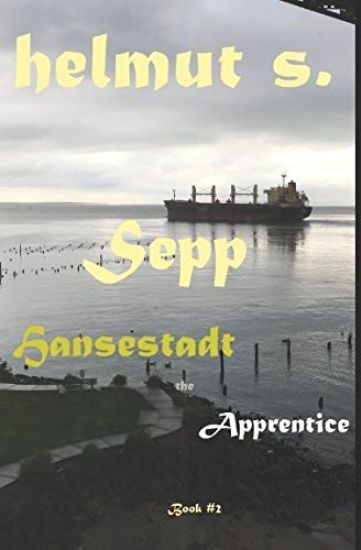
Sepp Apprentice: Hansestadt

Sepp Apprentice: Hansestadt

Helmut Schonwalder

Independently Published
2017
nidottu
Introduction: Sepp, Hansestadt the Apprentice is book #2 in a series of fiction writing describing a section of Sepp's Odyssey during the past century. It portrays Sepp's growing up years from age thirteen to twenty-two. Sepp went to school for eight years. In Kleinerort 4 years, followed by 4 more years of Oberealschule in Unterschwarzenberg to age 13. Then it was time for him to stand on his own two feet. The 13-year-old Sepp went to the 'Arbeitsamt' (German Federal Employment Agency) in Unterschwarzenberg. Here on his first try, Sepp got offered an apprenticeship as a waiter in Altestadt at a most famous Luxury Hotel. He tried but failed, only to regroup and on his second attempt was accepted as a waiter apprentice in the Hansestadt. After a 12-hour long train ride, upon arrival at his new workplace, Sepp knew he had it made. Sepp was willing to do whatever it might take to stay and call the Ferry-Restaurant-Caf &Bar his home for good. He had no plans ever to go back to Kleinerort. It is here at the Ferry-Restaurant-Caf &Bar that Sepp learns all about working and living life. Sepp becomes a product of his surroundings and the society. Sepp's life changes, as his motives, reasons, and purpose change daily. He loves having his own room in the attic, the good food, the friendly people, indoor plumbing, shower and all those many things he never had before. As time goes on, he learns a new behavior by copying the style and conduct, the manners and actions as seen by his superiors, co-workers, buddies, and friends. With his room-mates help he gets introduced to manhood. In addition three hospitality apprenticeships, Sepp receives hands on training, in the sciences of sexuality. For the reader it is important to know and understand that the age of consent in Germany is 14, and any person mentioned in this book over the age of 21 did not exploit the 14 - 15 year old Sepp. He was seeking out and welcoming the adventures and temptation, and fully enjoyed all situations which offered him sexual education and study-time.

Sepp The Cape: The Seventies

Sepp The Cape: The Seventies

Helmut Schonwalder

Independently Published
2017
nidottu
Introduction: Sepp's Odyssey had led him from the Frankenland to the Hansestadt. After realizing that he had to move on, he lived and worked in Andalusia, before his travels led him to the most southern tip of Africa. In South Africa, Sepp got to know the people and learned about the 'pencil test.' "Whenever it was unclear what classification a person should be put in. The simply pushing a pencil through a person's hair determines the racial identity, and with this, it's easy to classify a person as White, Coloured or Black "Sepp, The Cape is book #4 in a series of fiction writing describing a section of Sepp's Odyssey before the turn of the century.Sepp meets influential and powerful businessmen and becomes close friends with Walter van Russbourg. The same, or was it his wife Alexis, who sees more in Sepp than Sepp could have ever imagined. With this Sepp is on a roll, and soon on many trips to America and back. Sepp works hard and does his best. He takes risks to please his bosses of which he has more than one. In the United States of America, Sepp's dream of home ownership is turning into reality.
Sepp America: The West

Sepp America: The West

Helmut Schonwalder

Independently Published
2017
nidottu
Introduction: He recalls his visit to Kansas City, and getting wasted on Bourbon Whiskey at the hotel bar across the street, then after being lectured by the bartender about the Kansas City Mafia, the Chicago Mafia, the Irish Mafia and the Teamsters, Sepp was ready to leave the country for some more peaceful pasture.Getting out to West, to Big Sur, Sepp enjoyed to live the good life the kind you could only find in a late 1970s, early 1980s in California. And he visited South Africa on occasions. He was hardworking and risk taking. Sepp believed in the power of money, because without really doing much, except risking jail or prison, by bending some rules, and being at the right time at the right place, he had money coming his way wherever he went. Sepp formed a California Corporation, and invested in properties. He could have kept going, but then something drastic happens, and it happens so fast and unexpected that Sepp didn't even realize what happened, until after it all had happened, and long after. The after effects could be felt till the end of his days. Is self-will-run-riot a sure path to destruction? You be the judge.
Sepp Rehab: Restoration

Sepp Rehab: Restoration

Helmut Schonwalder

Independently Published
2017
nidottu
Introduction: Sepp, Rehab is book #6 in the series of fiction writing describing Sepp's Odyssey before and after the turn of the century. It portrays Sepp's struggles to survive, by working hard and partying hard, doing as he had learned back in the Hansestadt as a young man. At times he uses his talents to create, battling the misfortunate habits to destroy all he worked for, within moments. Sepp had to be doing better than anyone else to prove a point namely that he was somebody, was the faster, the smarter. Sepp's ego was unable to accept that he was who he was. Up to now he still thought that he was different from those others, he met. He was better than the ones addicted to sex and having problems with alcohol. Sepp disliked DUIs and the cost of those inconveniences. Sepp was self-made, he started from a nothing son of a shoemaker, and he made it. Sepp was once married to one of the prettiest women he had ever seen. He had built up a small fortune in a short time. About sexual fun, yes after all, as a healthy strong young man he loves temptations.
Home

Home

Helmut Schonwalder

Independently Published
2017
nidottu
Introduction: All Sepp books are stories about war, refugees, money, sex, religion, apartheid, food and very common issues, such as addiction, and spiritual awakenings. The Sepp books are without a so-called hero. We have Sepp, an ordinary kid growing up slowly on planet earth, and he has no special super powers, aside from a 'Guardian Angel' and the 'schmaltzy' Walter fellow, until he finds what he always wanted. Book #7 builds on books#1 through #6. Will Sepp ever find out the truth about Walter van Russbourg, his birth father, or maybe not? Finally in Sepp, Home Book#7 Sepp learns from his lessons, realizing the insanity of his actions and as he stops fighting and gives up, he wins and finds his place in life. However, is being at home and in peace, having sobriety and serenity just an inside job?
Renal Pathophysiology

Renal Pathophysiology

Helmut Rennke; Bradley M. Denker

Wolters Kluwer Health
2024
pokkari
Up-to-date, easy-to-read, and rich with dynamic visual aids and engaging learning resources, Renal Pathophysiology: The Essentials, 6th Edition, helps you develop a confident understanding of the complex mechanisms that cause kidney dysfunction and disease. This case-based approach grounds renal disease in realistic scenarios that open each chapter and are accompanied by learning objectives and integrated open-ended questions to reinforce your mastery of the material and challenge you to apply what you’ve learned. Updated with the latest clinical advances and research as well as new cases, questions, and online tools, this 6th Edition makes difficult concepts approachable and helps you establish a foundation for success in clinical practice. UPDATED! Content keeps students current with the latest developments in diagnosis and treatment of kidney dysfunction and renal disease, including expanded coverage of interstitial diseases. UPDATED! Case Presentations in each chapter—including additional cases new to this edition—provide critical practice applying knowledge to real clinical situations. UPDATED! Thought Questions & Answers in every chapter encourage reflection and provide valuable self-assessment, including new questions available in the text and online. NEW! Animations available online clarify important renal pathophysiology concepts in vivid detail. Case Discussions close out each chapter with the opportunity to compare possible approaches and reinforce the correct ones.
Unter Der Haut: Massage Klassisch Professionell

Unter Der Haut: Massage Klassisch Professionell

Helmut Markus; Mike P. Muzak

Independently Published
2018
nidottu
FARBVERSION: Lehrbuch der Klassischen (Schwedischen) Massage f r die Pr vention, med. Therapie und Palliation, die Wellness, den Sport, die Erotik: Grifftechniken, zehn Wirkungen, Verbote, typische Massagebeispiele, professioneller Know-how-Test (90 Fragen und Antworten zum Berufsalltag), verwendbar f r Berufsfachschulen (Massage/Physiotherapie), ca. 100 S. Text ohne Fotos (anatomische Beschreibung ), von Profis f r Profis - und ein Lesebuch f r alle Freunde der Massage ... (Schwarz-wei -Version und Ebook- Version sind auch erh ltlich.)
Pegasus Bridge Et La Batterie De Merville

Pegasus Bridge Et La Batterie De Merville

Helmut Konrad von Keusgen

Editions Heimdal
2018
sidottu
The action of John Howard is without doubt on the most spectacular commando action of D-Day and WWII. Ten minutes after midnight on June 6th 1944, after an audacious glider landing, airborne troops of the 6th Airborne Division arrived at the bridge at Bénouville which became known as Pegasus Bridge and entered the annals of history. Six kilometres from there, towards the coast, at Melville was installed a German artillery battery which was in turn attacked by British paras a few hours later.
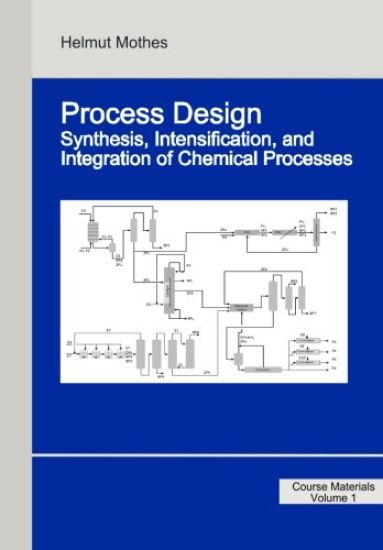
Process Design: Synthesis, Intensification, and Integration of Chemical Processes
This book promotes process design strategies and methods to chemical engineering students and encourages experienced engineers to reflect on - and perhaps challenge - their daily approach to process design.The production facilities and supply chains of the chemical industry represent complex, global systems built on sophisticated technological processes. While process design of the past could rely on steadily growing economies creating a predictable framework of product demand, raw material availability, and technological progress, today global competition, shorter product cycles, unreliable raw material supplies, and emerging, disruptive technologies create new challenges to the design of efficient, flexible, and sustainable processes. A holistic design methodology has to take care of these challenges.Process design can build on many excellent chemical engineering textbooks focusing on unit operations, process intensification, or process integration. Only a few books address the creative step finding an initial process structure. Process design mehodologies constitute the main topic of this book. A special focus is given to the search for an optimal process structure (process synthesis), since an inferior process structure cannot be "upgraded" into an optimal process during later extensive optimization of process parameters regardless of the effort. The design methodology illustrated in the textbook first outlines alternate strategies to find an initial process structure (hierarchical approach or superstructure concepts with heuristic rules or mixed integer non-linear programming). The role of design targets to guide a process designer is shown for energy integration and capital investment.In a next design step, process intensification and integration are used to improve the initial process structure with respect to unit operation efficiencies (heating, cooling, and mixing) and process synergies (heat-power integration, reaction distillation, dividing wall column, etc.) resulting in superior processes. The last step of the process design methodology introduces the concept of "no-regret"- solutions. These "no-regret"-solutions aim at process designs offering a robust performance in different, future scenarios (fluctuating or unexpected product demand). Modular designs offer a powerful tool to esatablish highly flexible, chemical processes.The design methodology is demonstrated in a comprehensive design case dealing with 6 chemical processes integrated into a production site. The design procedure to derive process and plant structures is illustrated in a step by step approach.To a large extend, this book on process design builds on experiences of the author at Bayer Technology Services. The book includes the input of many Bayer people - technical contributions, exciting suggestions, and enlightening discussions. The book summarizes courses on "Process Intensification" and "Process Design" given by the author at the Technical University Dresden (TU Dresden - 2008), East China University of Science and Technology (ECUST Shanghai - 2012-2014) and Ruhr University Bochum (RUB - 2014-2015).
On the Class Number of Abelian Number Fields
With this translation, the classic monograph Über die Klassenzahl abelscher Zahlkörper by Helmut Hasse is now available in English for the first time.The book addresses three main topics: class number formulas for abelian number fields; expressions of the class number of real abelian number fields by the index of the subgroup generated by cyclotomic units; and the Hasse unit index of imaginary abelian number fields, the integrality of the relative class number formula, and the class number parity. Additionally, the book includes reprints of works by Ken-ichi Yoshino and Mikihito Hirabayashi, which extend the tables of Hasse unit indices and the relative class numbers to imaginary abelian number fields with conductor up to 100. The text provides systematic and practical methods for deriving class number formulas, determining the unit index and calculating the class number of abelian number fields. A wealth of illustrative examples, together with corrections and remarks on the original work, make this translation a valuable resource for today’s students of and researchers in number theory.
Pulmonary Pathology

Pulmonary Pathology

Helmut Popper; Bruno Murer

Springer Nature Switzerland AG
2020
sidottu
This book provides an up-to-date overview of diagnostics in lung and pleura pathology. It helps surgical and clinical pathologist solve problem cases in lung and pleura tumor pathology as well as in other fields of pulmonary/pleura pathology such as interstitial lung disease, rare tumors, metabolic diseases, infectious pneumonias, pneumoconiosis, drug induced lung diseases, developmental and pediatric pulmonary pathology. Focusing on practical issues and providing numerous illustrated examples of typical and atypical cases, it guides residents as well as experienced pathologists through the problems and pitfalls in pulmonary and pleura pathology. References have been kept to a minimum.
Pathology of Lung Disease

Pathology of Lung Disease

Helmut Popper

Springer Nature Switzerland AG
2021
sidottu
This well-illustrated book covers the full range of lung and pleural diseases from the pathologic standpoint. It has been updated from the first edition by including the most recent molecular data for the different lung diseases, tumor as well as non-tumor ones. New diagnostic tests are included, new aspects for the understanding of diseases have been added. Both diseases of adults and pediatric lung diseases are presented. The chapter on lung development has been expanded due to the many new findings being reported since the first edition.The book will serve as an excellent guide to the diagnosis of these diseases, but in addition it explains the disease mechanisms and etiology. Genetics and molecular biology are also discussed whenever necessary for a full understanding. The author is an internationally recognized expert who runs courses on lung and pleural pathology attended by participants from all over the world. In compiling this book, he has drawn on more than 30 years’ experience in the field.
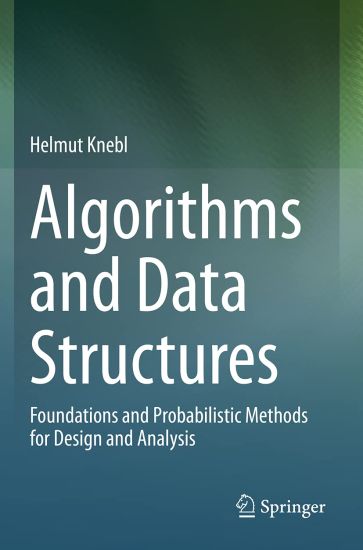
Algorithms and Data Structures

Algorithms and Data Structures

Helmut Knebl

Springer Nature Switzerland AG
2020
sidottu
This is a central topic in any computer science curriculum. To distinguish this textbook from others, the author considers probabilistic methods as being fundamental for the construction of simple and efficient algorithms, and in each chapter at least one problem is solved using a randomized algorithm. Data structures are discussed to the extent needed for the implementation of the algorithms. The specific algorithms examined were chosen because of their wide field of application.This book originates from lectures for undergraduate and graduate students. The text assumes experience in programming algorithms, especially with elementary data structures such as chained lists, queues, and stacks. It also assumes familiarity with mathematical methods, although the author summarizes some basic notations and results from probability theory and related mathematical terminology in the appendices. He includes many examples to explain the individual steps of the algorithms, and he concludes each chapter with numerous exercises.
Algorithms and Data Structures

Algorithms and Data Structures

Helmut Knebl

Springer Nature Switzerland AG
2021
nidottu
This is a central topic in any computer science curriculum. To distinguish this textbook from others, the author considers probabilistic methods as being fundamental for the construction of simple and efficient algorithms, and in each chapter at least one problem is solved using a randomized algorithm. Data structures are discussed to the extent needed for the implementation of the algorithms. The specific algorithms examined were chosen because of their wide field of application.This book originates from lectures for undergraduate and graduate students. The text assumes experience in programming algorithms, especially with elementary data structures such as chained lists, queues, and stacks. It also assumes familiarity with mathematical methods, although the author summarizes some basic notations and results from probability theory and related mathematical terminology in the appendices. He includes many examples to explain the individual steps of the algorithms, and he concludes each chapter with numerous exercises.
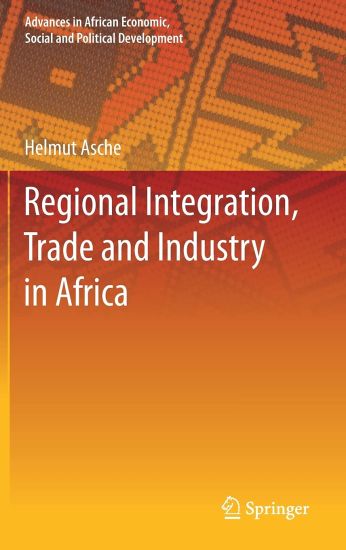
Regional Integration, Trade and Industry in Africa

Regional Integration, Trade and Industry in Africa

Helmut Asche

Springer Nature Switzerland AG
2021
sidottu
This book examines the past, present and prospects of regional economic integration in Africa. The empirical analysis ranges from unions formed during the years following independence, to the proposed African Continental Free Trade Area (AfCFTA), which aims to remove trade barriers between all 55 African states. In addition, the book explores to what extent Africa’s Regional Economic Communities (RECs) have advanced in accordance with a linear integration model of goods, labor and capital markets.The book subsequently evaluates the suitability of the European model of deep integration with costly institutions for the conditions specific to Africa, considering, for example, the role of informal and non-recorded trade. Stylized cases of regional division of labour with increasing returns and imperfect competition are introduced to support the economic integration logic. Past and current economic policies in Africa are scrutinized to answer the question: how can African regions best foster new manufacturing industries and value chains across the continent? In conclusion, the book outlines content and processes of Common Industrial Policy in the African regions. The book also addresses the controversial issue of international trade agreements between developing countries and the European Union or the USA and investigates whether these agreements impede or promote economic development in Africa. The book includes a detailed roadmap describing how to improve key clauses of agreements for economic partnership in the interest of African countries. In closing, it outlines a new vision of joint sustainable development for Africa and Europe.
Regional Integration, Trade and Industry in Africa

Regional Integration, Trade and Industry in Africa

Helmut Asche

Springer Nature Switzerland AG
2022
nidottu
This book examines the past, present and prospects of regional economic integration in Africa. The empirical analysis ranges from unions formed during the years following independence, to the proposed African Continental Free Trade Area (AfCFTA), which aims to remove trade barriers between all 55 African states. In addition, the book explores to what extent Africa’s Regional Economic Communities (RECs) have advanced in accordance with a linear integration model of goods, labor and capital markets.The book subsequently evaluates the suitability of the European model of deep integration with costly institutions for the conditions specific to Africa, considering, for example, the role of informal and non-recorded trade. Stylized cases of regional division of labour with increasing returns and imperfect competition are introduced to support the economic integration logic. Past and current economic policies in Africa are scrutinized to answer the question: how can African regions best foster new manufacturing industries and value chains across the continent? In conclusion, the book outlines content and processes of Common Industrial Policy in the African regions. The book also addresses the controversial issue of international trade agreements between developing countries and the European Union or the USA and investigates whether these agreements impede or promote economic development in Africa. The book includes a detailed roadmap describing how to improve key clauses of agreements for economic partnership in the interest of African countries. In closing, it outlines a new vision of joint sustainable development for Africa and Europe.
Polyfold and Fredholm Theory

Polyfold and Fredholm Theory

Helmut Hofer; Krzysztof Wysocki; Eduard Zehnder

Springer Nature Switzerland AG
2021
sidottu
This book pioneers a nonlinear Fredholm theory in a general class of spaces called polyfolds. The theory generalizes certain aspects of nonlinear analysis and differential geometry, and combines them with a pinch of category theory to incorporate local symmetries. On the differential geometrical side, the book introduces a large class of `smooth’ spaces and bundles which can have locally varying dimensions (finite or infinite-dimensional). These bundles come with an important class of sections, which display properties reminiscent of classical nonlinear Fredholm theory and allow for implicit function theorems. Within this nonlinear analysis framework, a versatile transversality and perturbation theory is developed to also cover equivariant settings. The theory presented in this book was initiated by the authors between 2007-2010, motivated by nonlinear moduli problems in symplectic geometry. Such problems are usually described locally as nonlinear elliptic systems, and they haveto be studied up to a notion of isomorphism. This introduces symmetries, since such a system can be isomorphic to itself in different ways. Bubbling-off phenomena are common and have to be completely understood to produce algebraic invariants. This requires a transversality theory for bubbling-off phenomena in the presence of symmetries. Very often, even in concrete applications, geometric perturbations are not general enough to achieve transversality, and abstract perturbations have to be considered. The theory is already being successfully applied to its intended applications in symplectic geometry, and should find applications to many other areas where partial differential equations, geometry and functional analysis meet. Written by its originators, Polyfold and Fredholm Theory is an authoritative and comprehensive treatise of polyfold theory. It will prove invaluable for researchers studying nonlinear elliptic problems arising in geometric contexts.