Kirjojen hintavertailu. Mukana 12 016 292 kirjaa ja 12 kauppaa.

Kirjahaku

Etsi kirjoja tekijän nimen, kirjan nimen tai ISBN:n perusteella.

1000 tulosta hakusanalla Herman Tester

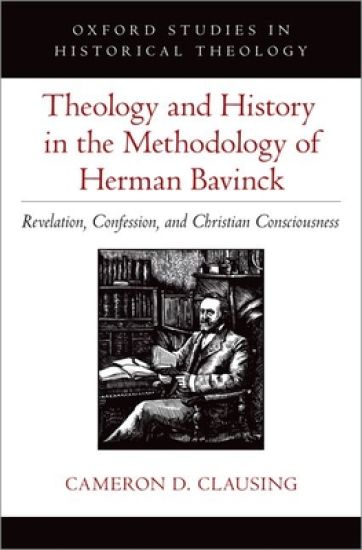
Theology and History in the Methodology of Herman Bavinck

Theology and History in the Methodology of Herman Bavinck

Cameron D. Clausing

OXFORD UNIVERSITY PRESS INC
2023
sidottu
Dutch theologian Herman Bavinck (1854--1921) found himself between two eras. The end of the "long nineteenth century" and the experience of World War I marked how much the world around him had changed. This book examines Bavinck's theological methodology with a particular focus on its influence by the German historicist movement. Author Cameron D. Clausing uses Bavinck's doctrine of the Trinity to test the argument that while not embracing all of the relativizing implications of the movement, the role of history as a force that both shapes the present and allows for development into the future has a demonstrable influence on Bavinck's theological methodology. To make this argument Clausing considers Bavinck's larger nineteenth-century context. He traces the development of both history and theology being understood as sciences in the university and how this required a reimagining of both disciplines. It could be said that theology was thoroughly historicized in the nineteenth century. The book considers the three principia of Bavinck's theological methodology: Revelation; Confession; and Christian Consciousness. When considering revelation, Clausing focuses on Bavinck's argument that revelation takes its shape from the Triune God. He demonstrates how Bavinck understood the incarnation and Pentecost to be the pinnacles of divine self-revelation. When looking at confession, the author argues that Bavinck retrieved theological insights from early modern Reformed orthodoxy, particularly in the way Bavinck engaged with the Synopsis Purioris Theologiae. Finally, the book examines how Bavinck did not think that a particular time in the past was a "golden age" of theology, but that theology had to continue to develop. Therefore, as Clausing investigates Bavinck's understanding of the Christian consciousness, he demonstrates how Bavinck saw the need for theology to continue to develop and change. He demonstrates this in all parts by an examination of Trinitarian theology showing that Bavinck engaged with and developed his Trinitarian theology in light of nineteenth-century philosophical categories, particularly the language of "absolute divine personality".
Solitude and Society in the Works of Herman Melville and Edith Wharton
The interplay between solitude and society was a particularly persistent theme in nineteenth-century American literature, though writers approached this theme in different ways. Poe explored the metaphysical significance of isolation and held solitude in high esteem; Hawthorne viewed the theme in moral terms and examined the obligation of each individual to the larger community; and Emerson maintained that the contradictory states of self-reliance and solidarity are fundamental to human happiness. Herman Melville emerged with an ontological response to this issue. Questioning the nature of being, he argued that humans are essentially isolated creatures. While he grants that we are free to choose how we conduct our lives, whether in solitude or in society, we cannot escape the essential condition of our alienation. Thus in Moby-Dick, he coins the term Isolato to signify the inherent separateness of all individuals. Writing some fifty years later, Edith Wharton reached the same conclusion. This book argues that Wharton's views on solitude and society were strongly parallel to those of Melville.Scholars have generally held that Wharton was primarily influenced by the great English, French, and Russian writers of the nineteenth century; and that with the exception of Walt Whitman, Ralph Waldo Emerson, and Henry James, she neglected the influence of American literature almost entirely. This study demonstrates that Wharton read a significant portion of Melville's writings, that she reflected on the nature and achievement of his works, and that her consideration of his importance emerged during very significant moments in her life, when she was forced to grapple with her own place as an individual in relation to a larger community. Though Melville and Wharton initially seem disparate, this book shows that they had much in common. By studying the two authors side by side, this volume reveals that they shared a similar way of seeing the world, particularly with respect to their considerations of solitude and society. Through their solitary characters, Melville and Wharton question the relationship of self and society and thus engage a universal problem of special interest to the nineteenth century.
Hidden in Plain Sight: The Herman Klein Phono-Vocal Method Based upon the Famous School of Manuel García
An Englishman and Londoner, Hermann Klein (1856-1934) was a prolific writer, voice teacher, and student of the legendary voice teacher Manuel Garc a (1805-1906). After arriving in New York City in 1901 to teach Garc a's method, Klein became the Chairman of the newly-formed National Association of Teachers of Singing. To further the organization's goal of bringing standards and certification to the singing teacher profession, Klein wrote an 84-page singing manual utilizing the new technology of the gramophone. In doing so, Klein documented the studio teaching of the father of voice science, revealing details of Garc a's method for the first time. However, Klein's manual was subsequently lost for more than a century after the quest for certification failed, Klein returned to England, and the recordings perished in a fire--twice. In a well-documented introduction, the author recounts how he discovered Klein's manual hidden in plain sight, discusses its history and significance for modern students and teachers of singing, and addresses Garc a's controversial teaching of voice placement. While this historic manual was originally published for four voice types, this publication is a facsimile of the tenor voice edition. Please note that it does not contain the tenor recordings, which, despite a decade of searching, have not been found. However, in a curious twist of fate, the contralto recordings were discovered during the book's publication and can be heard at YouTube and Soundcloud. We owe their existence to the foresight and generosity of John Wolfson, a record collector and patron of the arts in New York City.
Alcohol in the Writings of Herman Melville

Alcohol in the Writings of Herman Melville

Corey Evan Thompson

McFarland Co Inc
2015
pokkari
In early to mid-19th century America, there were growing debates concerning the social acceptability of alcohol and its consumption. Temperance reformers publicly decried the evils of liquor, and America's greatest authors began to write works of temperance fiction, stories that urged Americans to refrain from imbibing. Herman Melville was born in an era when drunkenness was part of daily life for American men but came of age at a time when the temperance movement had gained social and literary momentum. This first full-length analysis of alcohol and intoxication in Melville's novels, short fiction and poetry shows how he entered the debate in the latter half of the 19th century. Throughout his work he cautions readers to avoid alcohol and consistently illustrates negative outcomes of drinking.
A Reader's Guide to Herman Melville

A Reader's Guide to Herman Melville

James E. Miller Jr.

Syracuse University Press
1998
nidottu
This guide contains a comprehensive study of Melville's fiction and poetry. James E. Miller, Jr. in addition to analyzing each of Melville's works, traces this author's principal themes and shows how his art and thought developed. A Reader's Guide to Herman Melville also includes a brief note on Melville's life, an evaluative bibliography, and an index.
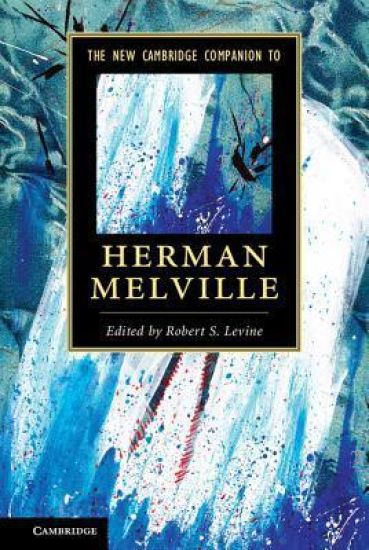
The New Cambridge Companion to Herman Melville
The New Cambridge Companion to Herman Melville provides timely, critical essays on Melville's classic works. The essays have been specially commissioned for this volume and provide a complete overview of Melville's career. Melville's major novels are discussed, along with a range of his short fiction and poetry, including neglected works ripe for rediscovery. The volume includes essays on such new topics as Melville and oceanic studies, Melville and animal studies, and Melville and the planetary, along with a number of essays that focus on form and aesthetics. Written at a level both challenging and accessible, this New Companion brings together a team of leading international scholars to offer students of American literature the most comprehensive introduction available to Melville's art.
The New Cambridge Companion to Herman Melville
The New Cambridge Companion to Herman Melville provides timely, critical essays on Melville's classic works. The essays have been specially commissioned for this volume and provide a complete overview of Melville's career. Melville's major novels are discussed, along with a range of his short fiction and poetry, including neglected works ripe for rediscovery. The volume includes essays on such new topics as Melville and oceanic studies, Melville and animal studies, and Melville and the planetary, along with a number of essays that focus on form and aesthetics. Written at a level both challenging and accessible, this New Companion brings together a team of leading international scholars to offer students of American literature the most comprehensive introduction available to Melville's art.
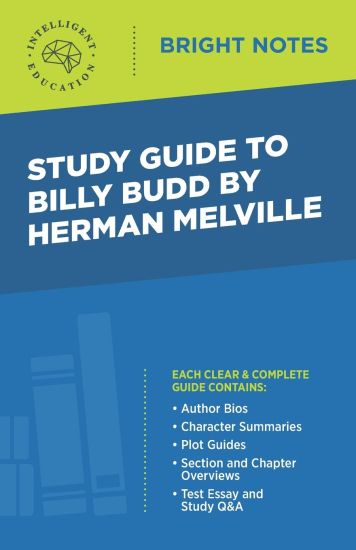
Study Guide to Billy Budd by Herman Melville
A comprehensive study guide offering in-depth explanation, essay, and test prep for Herman Melville's Billy Budd, his final novel. As a book of the twentieth-century, Melville focused on society's limiting forces on people's individuality. Moreover, Billy Budd has two versions as it was completed by different authors after Melville's death. This Bright Notes Study Guide explores the context and history of Herman Melville's classic work, helping students to thoroughly explore the reasons it has stood the literary test of time. Each Bright Notes Study Guide contains: - Introductions to the Author and the Work - Character Summaries - Plot Guides - Section and Chapter Overviews - Test Essay and Study Q&As The Bright Notes Study Guide series offers an in-depth tour of more than 275 classic works of literature, exploring characters, critical commentary, historical background, plots, and themes. This set of study guides encourages readers to dig deeper in their understanding by including essay questions and answers as well as topics for further research
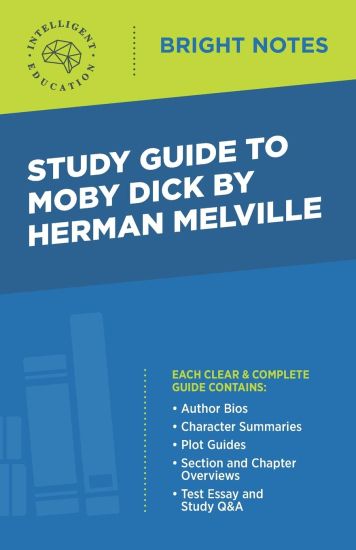
Study Guide to Moby Dick by Herman Melville
A comprehensive study guide offering in-depth explanation, essay, and test prep for Herman Melville's Moby Dick, deemed by author Raymond Weaver as "indisputably the greatest whaling novel." As an 1851 tragic epic, Moby Dick tells the story of a captain's expedition to track down and seek revenge on a whale from the point of view of one of the sailors. Moreover, Melville uses allusion, simile, and metaphor to showcase themes such as revenge, sanity, and human limitations. This Bright Notes Study Guide explores the context and history of Melville's classic work, helping students to thoroughly explore the reasons it has stood the literary test of time. Each Bright Notes Study Guide contains: - Introductions to the Author and the Work - Character Summaries - Plot Guides - Section and Chapter Overviews - Test Essay and Study Q&As The Bright Notes Study Guide series offers an in-depth tour of more than 275 classic works of literature, exploring characters, critical commentary, historical background, plots, and themes. This set of study guides encourages readers to dig deeper in their understanding by including essay questions and answers as well as topics for further research.
A Reader's Guide to Chomsky and Herman's Manufacturing Consent
Noam Chomsky and Edward Herman's 1988 "Manufacturing Consent" was a seminal tract in media studies. As Matt Taibbi suggested, after thirty years, it could use an update. This Readers' Guide updates Chomsky and Herman's observations, a re-examines their propaganda model. Manufacturing Consent weighs in at 500 pages. This Readers' Guide clocks in at 20k words, which takes about 90 minutes to read. It is not a substitute for reading Manufacturing Consent, but it will give the curious a pretty good idea of Manufacturing Consent's main theses, its critics views, and an analysis of its themes in today's media environment.The second edition appends a review and analysis of Matt Taibbi's 2019 "Hate Inc."