Kirjojen hintavertailu. Mukana 12 016 292 kirjaa ja 12 kauppaa.

Kirjahaku

Etsi kirjoja tekijän nimen, kirjan nimen tai ISBN:n perusteella.

1000 tulosta hakusanalla Jacques Derrida

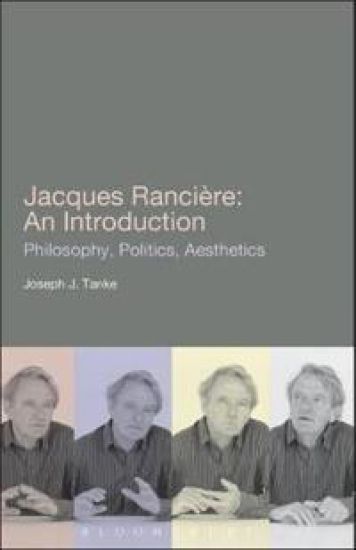
Jacques Ranciere: An Introduction

Jacques Ranciere: An Introduction

Joseph J. Tanke

Continuum Publishing Corporation
2011
nidottu
The first comprehensive introduction to one of the most influential French thinkers writing today, exploring Ranciere's ideas on philosophy, aesthetics, and politics. "Jacques Ranciere: An Introduction" offers the first comprehensive introduction to the thought of one of today's most important and influential theorists. Joseph Tanke situates Ranciere's distinctive approach against the backdrop of Continental philosophy and extends his insights into current discussions of art and politics. Tanke explains how Ranciere's ideas allow us to understand art as having a deeper social role than is customarily assigned to it, as well as how political opposition can be revitalized. The book presents Ranciere's body of work as a coherent whole, tracing key notions such as the distribution of the sensible, the aesthetics of politics, and the supposition of equality from his earliest writings through to his most recent interventions. Tanke concludes with a series of critical questions for Ranciere's work, indicating how contemporary thought might proceed after its encounter with him. The book provides readers new to Ranciere with a clear overview of his enormous intellectual output and develops his major. Engaging with many un-translated and unpublished sources, the book will also be of interest to Ranciere's long-time readers.
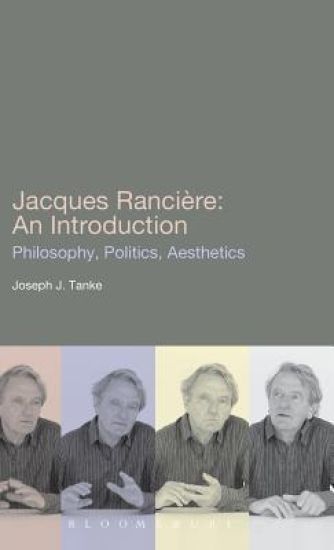
Jacques Ranciere: An Introduction

Jacques Ranciere: An Introduction

Joseph J. Tanke

Continuum Publishing Corporation
2011
sidottu
Jacques Ranciere: An Introduction offers the first comprehensive introduction to the thought of one of today's most important and influential theorists. Joseph Tanke situates Ranciere's distinctive approach against the backdrop of Continental philosophy and extends his insights into current discussions of art and politics. Tanke explains how Ranciere's ideas allow us to understand art as having a deeper social role than is customarily assigned to it, as well as how political opposition can be revitalized. The book presents Ranciere's body of work as a coherent whole, tracing key notions such as the distribution of the sensible, the aesthetics of politics, and the supposition of equality from his earliest writings through to his most recent interventions. Tanke concludes with a series of critical questions for Ranciere's work, indicating how contemporary thought might proceed after its encounter with him. The book provides readers new to Ranciere with a clear overview of his enormous intellectual output. Engaging with many un-translated and unpublished sources, the book will also be of interest to Ranciere's long-time readers.
Jacques Ranciere: Education, Truth, Emancipation

Jacques Ranciere: Education, Truth, Emancipation

Charles Bingham; Gert Biesta

Continuum Publishing Corporation
2010
sidottu
Winner - AERA 2011 Outstanding Book Award Jacques Rancire: Education, Truth, Emancipation demonstrates the importance of Rancires work for educational theory, and in turn, it shows just how central Rancires educational thought is to his work in political theory and aesthetics. Charles Bingham and Gert Biesta illustrate brilliantly how philosophy can benefit from Rancires particular way of thinking about education, and go on to offer their own provocative account of the relationship between education, truth, and emancipation. Including a new essay by Rancire himself, this book is a must-read for scholars of social theory and all who profess to educate.
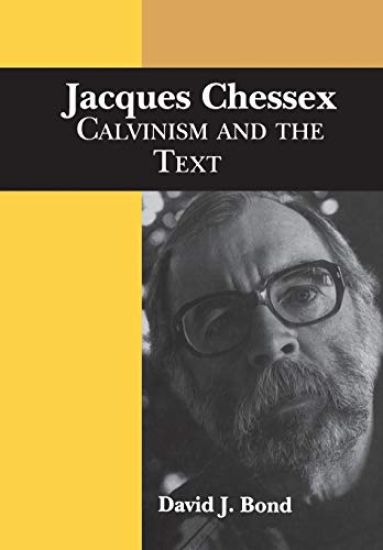
Jacques Chessex

Jacques Chessex

David Bond

University of Toronto Press
1994
pokkari
Despite an impressive body of poems, novels, short stories, and literary criticism; high praise for his writing by French and Swiss critics; and a collection of honours that includes the prestigious Prix Goncourt, awarded for his novel L’Ogre in 1973, Jacques Chessex is relatively unknown outside France and Switzerland. With this book, David J. Bond provides the first comprehensive study of his work in any language-a study that reveals Chessex’s deep ambivalence towards his Calvinist heritage and his efforts to resolve this dilemma through his texts. Born in 1934 in Payerne, in the region of French-speaking Switzerland known as the Vaud, Chessex grew up amid the pervasive influence of the Calvinist church. His writing, which tells of Vaud society and the hypocrisy of many of its leading members, reveals his preoccupation with a rigid morality, sin, remorse, and death. Bond shows that while Chessex uses his texts to escape this heritage and affirm alternative values, particularly sexual pleasure and enjoyment of life, his writing reveals a deep nostalgia for the stability and security of a strict religious system in a world that he finds unstable and even absurd without it. Chessex looks to the text as a univocal organizing principle that might impose order and sense. Bond sees in Chessex’s writing an attempt to find unity in opposing values, to establish contact with others, and to overcome an obsession with death and the passing of time.
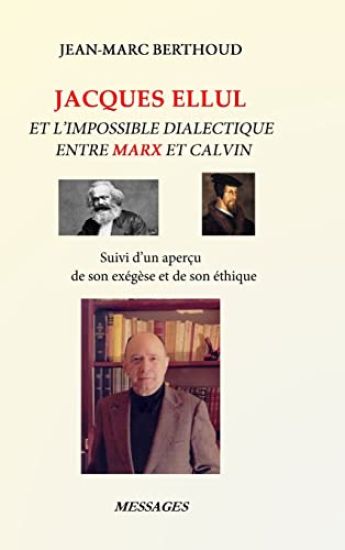
Jacques Ellul Et l'Impossible Dialectique Entre Marx Et Calvin
Ce petit livre sur un sujet d'une grande importance eut son origine lors de la participation de l'auteur une conf rence internationale de philosophes calvinistes au d but des ann es 1980 Zeist aux Pays-Bas. On lui offrit alors un livre d'entretiens de Jacques Ellul avec une journaliste, ouvrage traitant tr s librement et avec une grande franchise du cheminement personnel et intellectuel de ce remarquable penseur fran ais de conviction protestante d'une renomm e internationale. Le but tait d'en faire une ample recension. Il en est sorti la premi re partie de ce livre, un compte-rendu d'abord publi dans La revue r form e, texte o l'on d crit le parcours intellectuel de Jacques Ellul. On y voit les param tres personnels qui ont conduit Ellul devenir l'un des auteurs protestants francophones les plus prolifiques et souvent les plus perspicaces de sa g n ration. Il fut d'abord marqu par une exp rience religieuse tr s forte qui le conduisit tudier la pens e de Jean Calvin. Les circonstances tr s difficiles de sa jeunesse, o il fut appel subvenir aux besoins de ses parents, le mena d couvrir la pens e de Karl Marx. Ce dualisme de positions si contraires fut r solu pour lui par la d couverte de la dialectique de Karl Barth, lui permettant pour un temps de r soudre le conflit si violent au coeur de sa pens e. Par la suite, son sociologisme marxisant eut le dessus et sa pens e chr tienne devint de plus en plus fantaisiste. Les deux derni res parties de ce livre examinent les effets d sastreux qu'eut sur son thique et son ex g se l'irrationalit de la dialectique barthienne. Elles eurent pour origine une demande faite l'auteur de compl ter son premier crit biographique, cela pour un volume collectif consacr l'oeuvre de Jacques Ellul. L'ampleur de ces tudes ne permit pas qu'elles soient publi es dans ce volume. L'influence de l'irrationalisme barthien rendit impossible pour lui de pratiquer une ex g se fid le aux critures ainsi que la formulation d'une thique conforme la Loi de Dieu et l'ordre stable de la cr ation. Terminons par une citation tir e d'une lettre r cente d'un pasteur am ricain, Joel Saint qui crit: Votre texte fait comprendre au lecteur, non seulement que l'approche dualiste, pourrait-on dire, m me schizophr ne de Jacques Ellul, n'est pas seulement ind fendable par rapport la Loi de Dieu mais est une source de danger mortel pour l' glise de J sus-Christ.
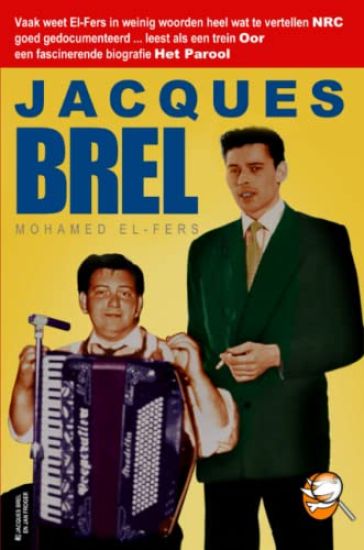
Jacques Brel

Jacques Brel

Mohamed El-Fers

Lulu Press Inc
2006
pokkari
De kwaliteit van dit boek staat boven elke kritiek. De manier waarop El-Fers de jeugd en de carri re van Brel schildert doet ademloos lezen. Goed gekozen informatie wordt telkens als een stukje van een grote puzzel gepresenteerd. Zo ontstaat langzaam een duidelijk beeld van deze rasartiest. JAKS SCHUIT (Opscene)... Dit Brelverhaal is goed gedocumenteerd en het leest als een trein. El-Fers is gefascineerd door Brels geschop tegen zere benen en is ongetwijfeld ook een groot liefhebber van diens muziek. LUT MUTSAERS (Oor)... Mijn aardigste boek van het afgelopen jaar is Jacques Brel van de Nederlandse schrijver Mohamed El-Fers. Het is een fascinerende biografie van de flamingant die hij niet was... MATTIAS DUYVES (Het Parool)... El-Fers schrijft met plezier en hartstocht over Brel en je leest zijn boek in gestrekte ganzepas door. AREND EVENHUIS (Trouw)... Vaak weet El-Fers in weinig woorden heel wat te vertellen. HENK VAN GELDER (NRC)
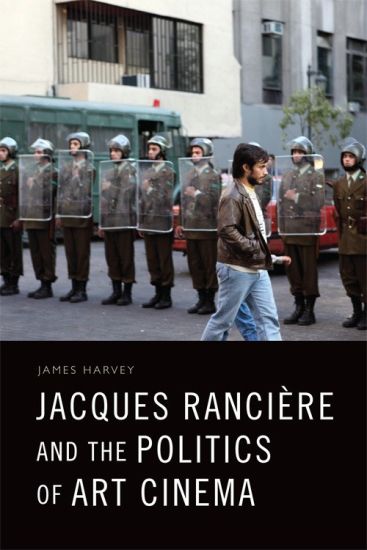
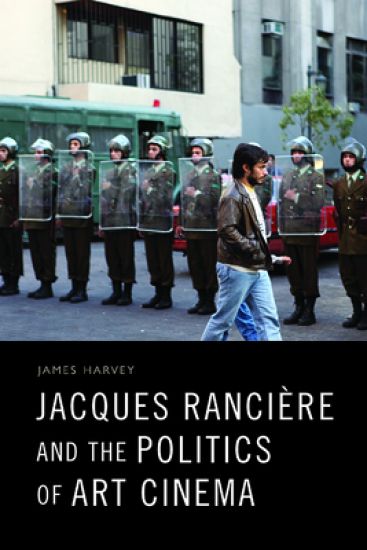
Jacques Ranciere and the Politics of Art Cinema
In Jacques Ranciere and the Politics of Art Cinema, James Harvey contends that Ranciere's writing allows us to broach art and politics on the very same terms: each involves the visible and the invisible, the heard and unheard, and the distribution of bodies in a perceivable social order. Between making, performing, viewing and sharing films, a space is constructed for tracing and realigning the margins of society, allowing us to consider the potential of cinema to create new political subjects. Drawing on case studies of films including Charlie Kaufman's Synecdoche, New York, Nuri Bilge Ceylan's Climates and John Akomfrah's The Nine Muses, this books asks to what extent is politics shaping art cinema? And, in turn, could art cinema possibly affect the political structure of the world as we know it?
Jacques Ranciere and the Politics of Art Cinema

Jacques Ranciere and the Politics of Art Cinema

James Harvey

Edinburgh University Press
2020
nidottu
In Jacques Ranciere and the Politics of Art Cinema, James Harvey contends that Ranciere's writing allows us to broach art and politics on the very same terms: each involves the visible and the invisible, the heard and unheard, and the distribution of bodies in a perceivable social order. Between making, performing, viewing and sharing films, a space is constructed for tracing and realigning the margins of society, allowing us to consider the potential of cinema to create new political subjects. Drawing on case studies of films including Charlie Kaufman's Synecdoche, New York, Nuri Bilge Ceylan's Climates and John Akomfrah's The Nine Muses, this books asks to what extent is politics shaping art cinema? And, in turn, could art cinema possibly affect the political structure of the world as we know it?
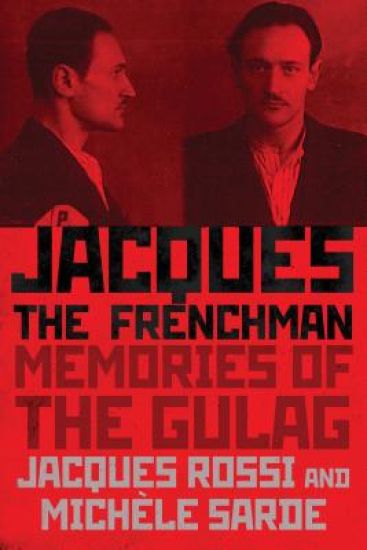
Jacques the Frenchman

Jacques the Frenchman

Jacques Rossi; Michele Sarde

University of Toronto Press
2020
sidottu
Jacques Rossi is one of Stalin’s most well-known victims. Author of The Gulag Handbook, a fascinating encyclopedia of the Soviet forced labor camps, Rossi spent twenty years in interrogation, prison, and Gulag detention. Born to a prominent Polish father and French mother, the young Jacques became attracted to communism as a blueprint for radical social reform. He spent years in the communist underground in interwar Europe, agitating for the revolution, but he was arrested during Stalin’s Great Purges in 1937. This book represents a conversation between Jacques Rossi and Michèle Sarde, professor emerita at Georgetown University, and weaves together personal reflections and historical analysis. Rossi’s remarkable life (1909–2004) spanned the twentieth century and sheds important light on the tumultuous history of Europe – the appeal of communism in the interwar period and beyond, the mentality of party members, the effects of mass repression, everyday life in Stalin’s Gulag, and the problem of rights for former prisoners during the Khrushchev era. As he abandoned his internationalist communist beliefs, Rossi increasingly identified as French, embracing the name his fellow prisoners gave him in the Gulag, "Jacques the Frenchman." Rossi’s reflections on his own political beliefs, his frustrations with those who could not accept the truth of his brutal experiences in the Soviet Union, and his life as a witness to one of the twentieth century’s worst crimes offer a fascinating history of Stalinism and its legacies.
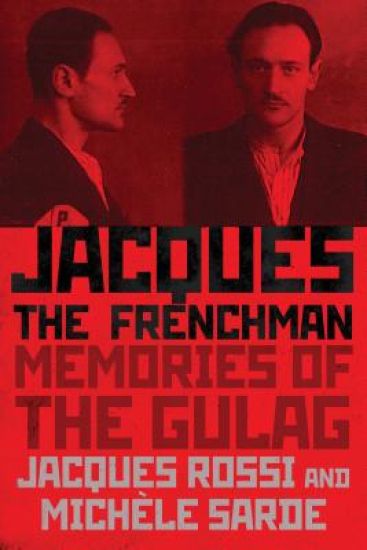
Jacques the Frenchman

Jacques the Frenchman

Jacques Rossi; Michele Sarde

University of Toronto Press
2020
pokkari
Jacques Rossi is one of Stalin’s most well-known victims. Author of The Gulag Handbook, a fascinating encyclopedia of the Soviet forced labor camps, Rossi spent twenty years in interrogation, prison, and Gulag detention. Born to a prominent Polish father and French mother, the young Jacques became attracted to communism as a blueprint for radical social reform. He spent years in the communist underground in interwar Europe, agitating for the revolution, but he was arrested during Stalin’s Great Purges in 1937. This book represents a conversation between Jacques Rossi and Michèle Sarde, professor emerita at Georgetown University, and weaves together personal reflections and historical analysis. Rossi’s remarkable life (1909–2004) spanned the twentieth century and sheds important light on the tumultuous history of Europe – the appeal of communism in the interwar period and beyond, the mentality of party members, the effects of mass repression, everyday life in Stalin’s Gulag, and the problem of rights for former prisoners during the Khrushchev era. As he abandoned his internationalist communist beliefs, Rossi increasingly identified as French, embracing the name his fellow prisoners gave him in the Gulag, "Jacques the Frenchman." Rossi’s reflections on his own political beliefs, his frustrations with those who could not accept the truth of his brutal experiences in the Soviet Union, and his life as a witness to one of the twentieth century’s worst crimes offer a fascinating history of Stalinism and its legacies.
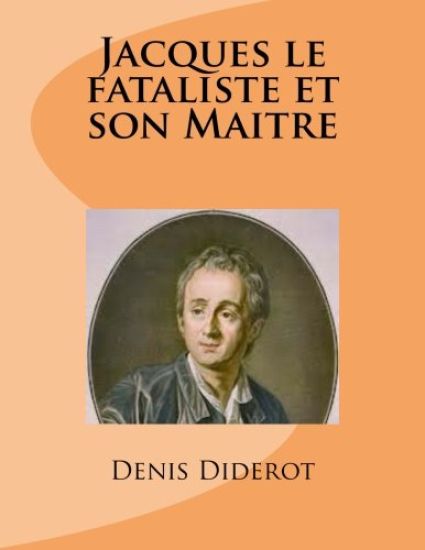
Jacques le fataliste et son Maitre

Jacques le fataliste et son Maitre

Denis Diderot

Createspace Independent Publishing Platform
2014
nidottu
Extrait: tout hasard, commence toujours... Jacques commen a l'histoire de ses amours. C' tait l'apr s-d ner: il faisait un temps lourd; son ma tre s'endormit. La nuit les surprit au milieu des champs; les voil fourvoy s. Voil le ma tre dans une col re terrible et tombant grands coups de fouet sur son valet, et le pauvre diable disant chaque coup: Celui-l tait apparemment encore crit l -haut... Vous voyez, lecteur, que je suis en beau chemin, et qu'il ne tiendrait qu' moi de vous faire attendre un an, deux ans, trois ans, le r cit des amours de Jacques, en le s parant de son ma tre et en leur faisant courir chacun tous les hasards qu'il me plairait. Qu'est-ce qui m'emp cherait de marier le ma tre et de le faire cocu d'embarquer Jacques pour les les d'y conduire son ma tre de les ramener tous les deux en France sur le m me vaisseau Qu'il est facile de faire des contes Mais ils en seront quittes l'un et l'autre pour une mauvaise nuit, et vous pour ce d lai. L'aube du jour parut. Les voil remont s sur leurs b tes et poursuivant leur chemin. Et o allaient-ils Voil la seconde fois que vous me faites cette question, et la seconde fois que je vous r ponds: Qu'est-ce que cela vous fait Si j'entame le sujet de leur voyage, adieu les amours de Jacques... Ils all rent quelque temps en silence. Lorsque chacun fut un peu remis de son chagrin, le ma tre dit son valet: Eh bien, Jacques, o en tions-nous de tes amours