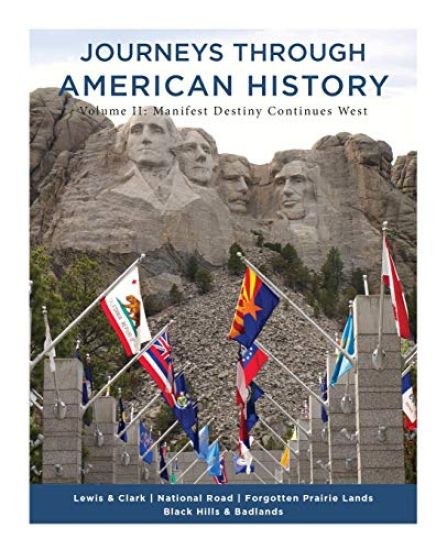
This book is the first volume of a collection of RoadRUNNER travelogues written by James T. Parks, which focus on locations and routes steeped in American history. Jim's original articles are scattered piecemeal throughout various RoadRUNNER bimonthly issues, spanning more than a decade of time. With that in mind, we have updated information, where feasible, that appeared in the original articles. Readers, who are interested in how America came to be what it is today, will find this integrated collection of historically themed adventures of particular interest, regardless of your mode of transportation. Volume I focuses on Native American history and several revolutionary events that helped win our independence and build America's industrial might. Come along with us and enjoy these journeys through American history.
Our Country's Founding Fathers, and successive generations of national leaders, believed it was the God-given destiny of America to expand its geographic dominion by spreading democracy and capitalism across the North American continent. Advocates of Manifest Destiny, however, also used it to justify the forceful removal of Native Americans from their homelands in the east and relocate them to reservations in the west, which was profiled in Volume I's "The Cherokee Trail of Tears." We begin this volume by retracing the steps of the Lewis and Clark Expedition, which President Jefferson tasked with exploring the newly acquired Louisiana Purchase. This acquisition of some 828,000 square miles of territory from the French approximately doubled the size of the United States.The Louisiana Purchase was followed in later years by armed annexations of Florida and most of America's present day southwest and West Coast from Spain and Mexico. As the Nation's geographic footprint expanded, more emigrants flooded into western lands. Treaties previously negotiated between the Federal Government and Native Americans were frequently broken to make room for the new settlers. Volume II also retraces the historic National Road west, the opening of Unassigned Lands in Indian Territory to settlement, the forgotten Kansas prairie lands, covered bridges and mills in Indiana, and the historic Black Hills region in present day South Dakota.
When Peek saw a way out of his servitude he took it. He paddled with all his might to a distant island protected by fierce currents where aged monks kept the secrets of The Melody. But his arrival tore at their spells and left them vulnerable. When the seafaring raiders attacked, Peek witnessed the monk's magic in force. But it wasn't enough. Peek drove off the raiders with a chaotic power he didn't know he possessed. From the ashes of his new home Peek glimpsed the flames of his old. The monks were without protection and the village without provision. Only together could they survive the coming winter. Now Peek must stand with the monks against the relentless berserkers who want to claim the power of The Melody for their own dark purposes. But he must also control the forbidden, blasphemous magic within him or face exile from the only people who have ever cared for him.
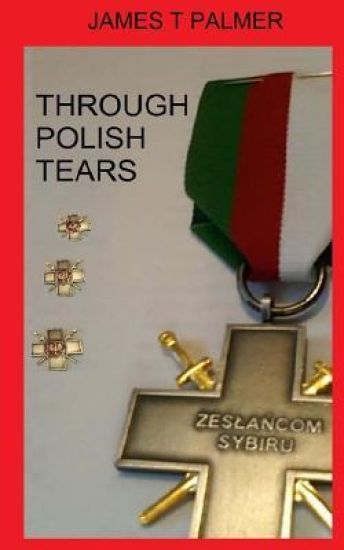
This is a novel or creative non-fiction, whichever you prefer, about war, the Second World War. It is based on facts and eye-witness accounts. The vast majority of the characters existed and did do what the novel details. If an exact date is given, the event is factual. All of the peripheral characters are fictional as is the vast majority of the dialogue. The main exceptions being many of Winston Churchill's speeches, anecdotes and comments, plus Chapter 42 which is based on the Hansard transcription of the Parliamentary debate. The cover photo shows the medal awarded to Alina Margareta Kibilski, nee Andrzejewska, in August 2014. It was awarded at a small ceremony at the Polish Embassy in London, and recognises her suffering in the camps of Siberia from 1940 to 1942. The other side of the family, who lived throughout the war in Poland, experienced equally harrowing times. I was born in England, the son of an Irish immigrant, and was interested to hear the stories of Polish immigrants, who arrived in England like my father, but on a far more complicated journey. I had missed the war by just a few years, but with my friends I played in the bombed out buildings, which didn't get replaced until the 1960's. We were fascinated by the conflict that we had only just missed. With my friends I collected a series of war comics from a second-hand shop, until we had them almost right up to date. By then we were twelve years old and decided to grow up. However the fascination has never left me. The book deals in particular with the contrasting experiences of the Polish families of my wife Irena, or Irenka as her aunt still calls her. Both of her grandfathers served in the Polish Army, were captured and sent to the Gulags and subsequently served as part of the Polish Corps assigned to the British 8th Army. How could that be? Well, read on. I have contrasted the experiences of ordinary people with that of the politicians and the senior military leaders, such as Felix Steiner a Waffen SS General, who was born in Stallupoenen (now Nesterov and part of Russian enclave on the Baltic), and Marshal Konstantin Rokossovski, born to a Polish father and a Russian mother, who grew up in Warsaw when it was the capital of a region of Russia. The borders of Poland had always been fluid and yet again proved to be so in the 20th Century. In the war years Poland suffered the loss of over six million citizens, over 90% of whom were civilians. It was a battlefield in 1939, 1941, 1944 and 1945 and the country where horrific crimes were committed against the Jews of Europe. In all over ten million people died in Poland between 1939 and 1945, and it didn't stop then due to the partisan wars. It is a tragedy, which I will try to explain, but no one could ever justify. The award of the medal in 2014 gave me the impetus to write this novel, which I hope you will thoroughly enjoy.
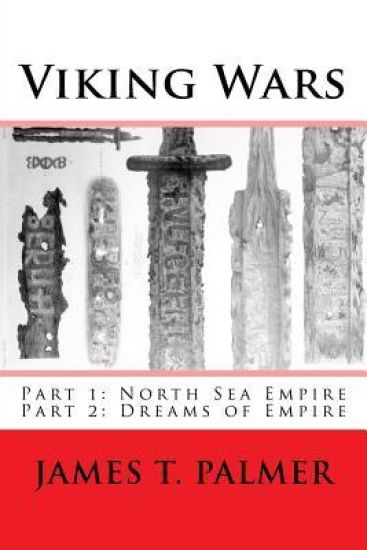
This is an historical novel about a Norwegian king, Harald III, who is renowned in Scandinavia but almost unknown elsewhere. He was popularised in a saga written some 150 years after his death, by Snorri Sturluson, which is considered as history by many Scandinavians. I have based this novel on historical facts, which I have embroidered extensively. The dates are correct for the campaigns and events, and all of the major characters existed and made their contribution to history. What sparked my interest in the first place was that if Harald had not invaded just three weeks before William the Conqueror in 1066, the English language would probably be totally different today. Harald decimated Earl Morcar's English northern army and inflicted a lethal blow on Harold II's army of the south. The army that faced William was a shadow of what it would have been without Harald III's untimely invasion.One of my aims is to rebalance people's view of history. For example most people even the Greeks haven't heard of the Varangian Guard, of five thousand Norsemen (and Anglo-Saxons after 1066), who formed the core of the Byzantine army for over five centuries. The Russians and Ukrainians think of themselves as Slavic and tend to ignore their Scandinavian heritage. The British also tend to forget their Scandinavian heritage. Half of England was Danish throughout the 9th, 10th and 11th centuries, and all the Scottish islands until the 15th century. English has a large number of Danish words, for example: happy, call, window. Furthermore, the beneficiary of Harald's failed invasion of England, William the Conqueror, was himself of Danish descent.Part One of the novel covers the period from 1026, when Harald was eleven years old, to 1045 when he decides to leave behind Byzantium and Kiev and return to Scandinavia, to claim his throne. During this period of his warrior life he gained the epithet "Thunderbolt", due to his enormous physique and his courageous leadership. Part Two of the novel continues until his death in September 1066, in the battle near Stamford Bridge, Yorkshire. During this second period of his life he became known as Harald Hardrada, which translates as Harald the Ruthless. Perhaps "The Unrelenting", would be a better epithet, as he certainly was persistent in his claim to all of Cnut's lands, including England.Part 3 deals with the accession of William the Conqueror to the English throne and the subsequent rebellions and invasions.I trust you will agree that it is a story worth retelling.
based upon a most user-friendly and flexible NUMBER-LETTER CODE COMPATIBLE WITH THAT OF MEMORY MASTER DOMINIC O'BRIEN and optioning all letters in the alphabet to personal preference * many techniques based upon a basic favorite Person-Action-Object formula, easily expandable from (or revertible to) Dominic's work* complete list of all possible one-and two-letter combos from A to Z and AA to ZZ with generous suggestions for the people, animals and creatures you find most interesting and how to effortlessly interchange these with numbers* how to build "memory palaces" using any favorite environments (real or fantastic) and objects * suggested ways to make the use of the traditional memory journey system even more interesting and efficient including an ordered series of your favourite smells and tastes* many suggestions for engaging interest with and recalling material initially found dull * many suggested "fluid intelligence" exercises that can be done at any time and without the need for a computer or a book* optimum study tips such as when to study and revise, and Mind Mapping * thorough dietary (essentially food combining and Omega-3 intake), exercise and optimum study environment recommendations * the most sensible "make the most of your life" recommendations including the "compound interest" investment strategy * ample further reading recommendations * You may also preview and purchase my eBook co-authored with Phil Chambers, HOW TO REMEMBER EQUATIONS AND FORMULAE here: http: //www.rememberequations.co.uk/ and in a Kindle edition from most Amazon sites, at Apple's iTunes bookstore, live on Google Play and at Apple's iTunes bookstore. Our GCSE adaptation is also available at all the preceding outlets except Google Play
Button on Taxis: Licensing Law and Practice is the only specialist text on taxi licensing law in the UK. This title encompasses changes to legislation, case law and guidance since the publication of the fourth edition in 2017.Key features of the Fifth Edition include:- Clarification of the meaning of plying for hire from the High Court and Court of Appeal in Reading Borough Council v Ali [2019] EWHC 200 (Admin), [2019] 1 WLR 2635 Admin Crt, and R (on the application of United Trade Action Group Ltd) v Transport for London [2022] EWCA Civ 1026, [2023] 1 WLR 367 CA - The Court of Appeal position on hackney carriage and private hire licence fees in R (on the application of Rehman) v Wakefield City Council and The Local Government Association [2019] EWCA Civ 2166, [2020] RTR 11 CA- Alterations to the Rehabilitation of Offenders Act 1974 and associated regulations and guidance- The Supreme Court decision on costs in licensing appeals in Competition and Markets Authority v Flynn Pharma Ltd and Pfizer [2022] UKSC 14- The effect of updated guidance from the Department for Transport- New duties for licensees under the Equality Act 2010 and clarification of what is meant by ‘mobility assistance’ in relation to the Equality Act in McNutt v Transport for London [2019] LLR 332 Admin CrtThis new edition provides a timely update to what is acknowledged as an essential handbook for the taxi licensing practitioner.This title is included in Bloomsbury Professional's Licensing Law online service.
Reconocimientos Este estudio se enfoca en mis notas y en mi investigaci n personal. Pero cierto cr dito y reconocible debe ir m s all de cualquier cosa que yo haber escrito a la esencial persona de este estudio espiritual-Cristo. En verdaderamente a transformado mi vida y mi expresi n y pensamiento en este estudio hay algunos peque os intento para retratar el honor y reverencia debido a l. Este libro marca una Bibliograf a su escritor ha sido tenido particularmente y espec ficamente til. Mientras le a y le a parte de este libro, yo empec un ancho y profundo foto (retrato) en el crecimiento espiritual que puede venir durante la Oraci n: Pidiendo y Recibiendo de Dios. Donde yo cito directo de cualquier libro yo haber dado espec ficos cr ditos, pero yo se que han habido veces mientras escriba una idea "me vino a mi" el principio el cual sali este libro. El cual yo recomiendo a todo quien desea ir m s profundo en los or genes y pr cticas de la fe Cristiana. Cualquier descuido sobre la notificaci n, ser corregida y subsiguiente en el asunto.