Kirjojen hintavertailu. Mukana 12 052 389 kirjaa ja 12 kauppaa.

Kirjahaku

Etsi kirjoja tekijän nimen, kirjan nimen tai ISBN:n perusteella.

1000 tulosta hakusanalla John L Cook

Racial Americana

Racial Americana

John L. Jackson

Duke University Press
2005
pokkari
If sociologist and cultural critic W. E. B. Du Bois proved prophetic about the twentieth century and its color lines, the beginning of the twenty-first century has given rise to divergent pronouncements about the potential of race relations and racial discourse in American society. Older categories of black victims and white victimizers hardly seem up to the task of making social sense out of today’s complex racial issues. Racial Americana explores new modes of racial theorizing that provide a more nuanced framework for understanding the social facts that underpin race (as belief system, as common sense, and as biological mythmaking), examining what those underpinnings forewarn about the future of social difference in the United States.Imagining America’s racialist future, the diverse contributors to this special issue-anthropologists, sociologists, historians, poets, and literary critics-offer their conceptualizations of race today, discuss how racial ideology has changed through the years, and explain its continuing ability to morph according to geopolitical, cultural, and economic strictures. Essays focus on how notions of race have helped constitute varied definitions of Americanness in the past and the present; offer critiques and recuperations of antiessentialist efforts; excavate the affective links between racism and patriotism after September 11; examine how race and gender intersect in the lives of African American jazz musicians; and determine what Du Bois's earlier arguments say about contemporary representations of “Latinidad.” Contributors. Elizabeth Alexander, Amiri Baraka, Tess Chakkalakal, Theodore A. Harris, John Hartigan Jr., Sharon P. Holland, John L. Jackson Jr., Marcyliena Morgan, Vijay Prashad, Don Robotham, Nichole T. Rustin, Brackette F. Williams
The Logic of Passion

The Logic of Passion

John L. Mahoney

Fordham University Press
1981
pokkari
Hazlitt is easily the most representative of the major British critics writing during the period of 'High Romanticism' (1790-1830), as well as one of the two greatest…No other critic is so central and in so many ways…The Logic of Passion is a book that distils over twenty years of thinking not only about Hazlitt but also about three more general subjects without which a first-class book on Hazlitt as a critic could hardly be written. (1) The English romantics generally; (2) what is rarer, in our academic specialization, a grasp of the eighteenth-century intellectual (and critical) legacy; (3) what is still rarer, a knowledge of the history of criticism as a whole…Professor Mahoney's credentials are impeccable. He has taught and written in all of these fields - English romanticism, the eighteenth century, and the history of criticism. His book is therefore rich in what is usually called 'background.' Yet his learning is carried lightly, as befits a mature scholar who is distilling a complex subject without confronting us with the fatigues of self-display and nit-picking. With the sureness of authority, he moves quickly and cleanly to the essentials. His method is rightly thematic rather than chronological…Professor Mahoney is able, without tedious length, to give a truly comprehensive interpretation…Professor Mahoney's Logic of Passion is one of those rare books one can warmly recommend both to the beginning and the advanced scholar. For its clarity of style and structure, its pace and verve make it as readable as any discussion of any major critic I have encountered. Yet…the subject is so richly nuanced that the mature scholar of both romanticism and the history of criticism will time and again see the implications with a union of freshness and penetration, 'herrlich,' as Goethe said, 'wie am ersten Tage.'
The Church and Social Reform

The Church and Social Reform

John L. Boojamra

Fordham University Press
1993
sidottu
The Church and Social Reform studies the nature and extent of Athanasios' social reforms and political involvement during his two tenures on the patriarchal throne of Constantiople. The traditional influence, power, and authority that resided in the patriarchate of Constantinople made the involvement of an aggressive patriarch in the social affairs of the empire virtually inevitable.
The Church and Social Reform

The Church and Social Reform

John L. Boojamra

Fordham University Press
1993
pokkari
The Church and Social Reform studies the nature and extent of Athanasios' social reforms and political involvement during his two tenures on the patriarchal throne of Constantiople. The traditional influence, power, and authority that resided in the patriarchate of Constantinople made the involvement of an aggressive patriarch in the social affairs of the empire virtually inevitable.
William Wordsworth

William Wordsworth

John L. Mahoney

Fordham University Press
1996
sidottu
Wordsworth: A Poetic Life is a new biography of the great father of British Romanticism. It is new in several ways, most notably in the way it approaches the life of the poet. Paying its proper respect to the classic lives of Wordsworth by Mary Moorman and Stephen Gill, it attempts to tell the story of the life through a more rigorous reading of key and representative works of the poet, through careful blending of life and poetry. Wordsworth offers the story of the literariness of the poet's life - childhood and adolescence in the Lake District, education at Cambridge, love and political radicalism in France, the long period of residence in Grasmere and Rydal, celebrity, and national and international recognition. Its reading of the poems, in tune with current theoretical practice, offers a sense of the continuities in Wordsworth's career as it moves away from familiar theories of a Golden Decade of creativity and a period of long decline. The book also works closely and rigorously with Wordsworth's poetry as a method of dramatizing the essentially poetic character of the poet's life.
William Wordsworth

William Wordsworth

John L. Mahoney

Fordham University Press
1996
pokkari
Wordsworth: A Poetic Life is a new biography of the great father of British Romanticism. It is new in several ways, most notably in the way it approaches the life of the poet. Paying its proper respect to the classic lives of Wordsworth by Mary Moorman and Stephen Gill, it attempts to tell the story of the life through a more rigorous reading of key and representative works of the poet, through careful blending of life and poetry. Wordsworth offers the story of the literariness of the poet's life - childhood and adolescence in the Lake District, education at Cambridge, love and political radicalism in France, the long period of residence in Grasmere and Rydal, celebrity, and national and international recognition. Its reading of the poems, in tune with current theoretical practice, offers a sense of the continuities in Wordsworth's career as it moves away from familiar theories of a Golden Decade of creativity and a period of long decline. The book also works closely and rigorously with Wordsworth's poetry as a method of dramatizing the essentially poetic character of the poet's life.
Seeing into the Life of Things

Seeing into the Life of Things

John L. Mahoney

Fordham University Press
1997
sidottu
As the discourse of contemporary cultural studies brings questions of race, nationality, and gender to the center of critical attention nowadays, there is a strong sense that religious, or perhaps religious experience, should command the attention of the academic and wider reading community. Seeing into the Life of Things is a response to that need. By combining the theoretical and the practical, this book serves as both a pioneering scholarly contribution to a devleoping field and a valuable guide for those who read, reflect on, and discuss points of intersection of religion and literature. The contributors to this pioneering study represent a range of voices and viewpoints, some of them established leaders in their fields, others in the process of becoming new leaders. E. Dennis Taylor, Joseph Appleyard, Philip Rule, John Boyd, and Jane and Charles Rzepka work toward the development of a discourse that can take its place with discourses that have developed around a New Historicism and Feminism. Robert Kiely, Stephen Fix, Keven Van Anglen, J. Robert Barth, Richard Kearney, Henry Louis Gates Jr., Judith Wilt, John L. Mahoney, David Leigh, Melinda Ponder, John Anderson, and Michael Raiger offer more focused approaches to writers as varied as Gerard Manley Hopkins, Katherine Lee Bates, Flannery O'Connor, Wallace Stevens, T.S. Eliot, and Seamus Heaney and to special genres like spritual autobiography and film.
Seeing into the Life of Things

Seeing into the Life of Things

John L. Mahoney

Fordham University Press
1997
pokkari
As the discourse of contemporary cultural studies brings questions of race, nationality, and gender to the center of critical attention nowadays, there is a strong sense that religious, or perhaps religious experience, should command the attention of the academic and wider reading community. Seeing into the Life of Things is a response to that need. By combining the theoretical and the practical, this book serves as both a pioneering scholarly contribution to a devleoping field and a valuable guide for those who read, reflect on, and discuss points of intersection of religion and literature. The contributors to this pioneering study represent a range of voices and viewpoints, some of them established leaders in their fields, others in the process of becoming new leaders. E. Dennis Taylor, Joseph Appleyard, Philip Rule, John Boyd, and Jane and Charles Rzepka work toward the development of a discourse that can take its place with discourses that have developed around a New Historicism and Feminism. Robert Kiely, Stephen Fix, Keven Van Anglen, J. Robert Barth, Richard Kearney, Henry Louis Gates Jr., Judith Wilt, John L. Mahoney, David Leigh, Melinda Ponder, John Anderson, and Michael Raiger offer more focused approaches to writers as varied as Gerard Manley Hopkins, Katherine Lee Bates, Flannery O'Connor, Wallace Stevens, T.S. Eliot, and Seamus Heaney and to special genres like spritual autobiography and film.
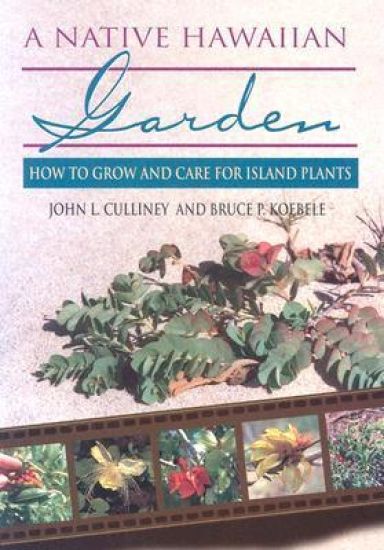
A Native Hawaiian Garden

A Native Hawaiian Garden

John L. Culliney; Bruce P. Koebele

University of Hawai'i Press
1999
nidottu
Hawai‘i is home to some of the rarest plants in the world, many of them now threatened by extinction. Despite a benign and nurturing climate, native species are declining almost everywhere in the Islands. Human-introduced pests, the spread of competing alien plants, wildfires, urban and agricultural development, and other disturbances of modern life are eliminating native species at an alarming pace. In fact, 38 percent of all plants on the U.S. endangered species list are native Hawaiian plants.A Native Hawaiian Garden is an effort to help stem the tide. Until recent years, few people attempted to raise native plants in their gardens, in schoolyards and parks, or around public buildings. But this situation is changing as essential information about raising native plants becomes more readily available. A Native Hawaiian Garden offers the most in-depth treatment yet on cultivating and propagating native Hawaiian plants. Following an overview of Hawaiian natural history and conservation, the book treats 63 species (many for the first time), giving detailed information on all stages of gardening: from preparing seeds for germination to the care and tending of the young plants in the landscape. Habitats where the plants are most likely to thrive are also described, as well as the uses that native Hawaiians made of the plants. Over 90 color photographs enhance the book.A Native Hawaiian Garden has much to offer professional horticulturists, landscapers, and botanists, and gives reason to hope that more spaces around housing developments, shopping malls, and other commercial buildings will soon include native plants. But the book will prove especially valuable to those gardeners who wish to grow and nurture something truly Hawaiian in their own backyards. Among the many rewards of growing natives, the authors make clear, is the opportunity to contribute your own experiences and findings to a vital preservation effort.
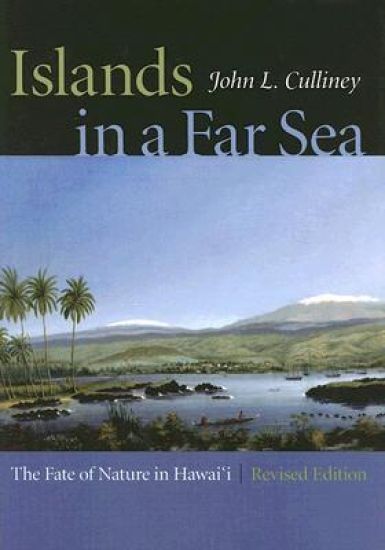
Islands in a Far Sea

Islands in a Far Sea

John L. Culliney

University of Hawai'i Press
2005
sidottu
First published in 1988, ""Islands in a Far Sea"" offers a comprehensive environmental history of Hawai'i. This thoroughly revised edition begins with an up-to-date account of the geological formation and shaping of the Islands, their colonization by plants and animals, and the patterns of ecology and evolution that unfolded in nurturing seas and on breath-taking landscapes. This book tells the story of human interaction with Hawai'i's native landscapes and rich biological heritage. The author's accessible language allows readers to grasp basic geological and biological principles and to understand the perhaps surprising vulnerability of Hawaiian ecosystems - which have coevolved with volcanoes - to human impact. ""Islands in a Far Sea"" includes many well-documented historical examples of such impacts, featuring growth and greed, fears and foibles as humans confronted endemic nature in Hawai'i. Citing a large array of sources, the author makes it possible for interested readers to probe more deeply the changes in natural systems that have ensued on all of the Hawaiian Islands. To date the result has been the tragic reduction of a unique and benign biota. However, the book holds out hope that current efforts to protect what is left of Hawai'i's flora and fauna in their remaining wild settings may yet succeed.
The Fractal Self

The Fractal Self

John L. Culliney; David Jones

University of Hawai'i Press
2017
sidottu
Our universe, science reveals, began in utter simplicity, then evolved into burgeoning complexity. Starting with subatomic particles, dissimilar entities formed associations—binding, bonding, growing, branching, catalyzing, cooperating—as “self” joined “other” following universal laws with names such as gravity, chemical attraction, and natural selection. Ultimately life arose in a world of dynamic organic chemistry, and complexity exploded with wondrous new potential.Fast forward to human evolution, and a tension that had existed for billions of years now played out in an unprecedented arena of conscious calculation and cultural diversity. Cooperation interleaving with competition; intimacy oscillating with integrity—we dwell in a world where yin meets yang in human affairs on many levels. In The Fractal Self, John Culliney and David Jones uncover surprising intersections between science and philosophy. Connecting evidence from evolutionary science with early insights of Daoist and Buddhist thinkers, among others, they maintain that sagely behavior, envisioned in these ancient traditions, represents a pinnacle of human achievement emerging out of our evolutionary heritage. They identify an archetype, “the fractal self,” a person in any walk of life who cultivates a cooperative spirit. A fractal self is a sage in training, who joins others in common cause, leads from within, and achieves personal satisfaction in coordinating smooth performance of the group, team, or institution in which he or she is embedded. Fractal selves commonly operate with dedication and compassionate practice in the service of human society or in conserving our planet.But the competitive side of human nature is susceptible to greed and aggression. Self-aggrandizement, dictatorial power, and ego-driven enforcement of will are the goals of those following a self-serving path—individuals the authors identify as antisages. Terrorist leaders are an especially murderous breed, but aggrandizers can be found throughout business, religion, educational institutions, and governments. Humanity has reached an existential tipping point: will the horizon already in view expand with cooperative progress toward godlike emergent opportunities or contract in the thrall of corrupt oligarchs and tribal animosities? We have brought ourselves to a chaotic edge between immense promise and existential danger and are even now making our greatest choice.
The Fractal Self

The Fractal Self

John L. Culliney; David Jones

University of Hawai'i Press
2018
nidottu
Our universe, science reveals, began in utter simplicity, then evolved into burgeoning complexity. Starting with subatomic particles, dissimilar entities formed associations—binding, bonding, growing, branching, catalyzing, cooperating—as “self” joined “other” following universal laws with names such as gravity, chemical attraction, and natural selection. Ultimately life arose in a world of dynamic organic chemistry, and complexity exploded with wondrous new potential.Fast forward to human evolution, and a tension that had existed for billions of years now played out in an unprecedented arena of conscious calculation and cultural diversity. Cooperation interleaving with competition; intimacy oscillating with integrity—we dwell in a world where yin meets yang in human affairs on many levels. In The Fractal Self, John Culliney and David Jones uncover surprising intersections between science and philosophy. Connecting evidence from evolutionary science with early insights of Daoist and Buddhist thinkers, among others, they maintain that sagely behavior, envisioned in these ancient traditions, represents a pinnacle of human achievement emerging out of our evolutionary heritage. They identify an archetype, “the fractal self,” a person in any walk of life who cultivates a cooperative spirit. A fractal self is a sage in training, who joins others in common cause, leads from within, and achieves personal satisfaction in coordinating smooth performance of the group, team, or institution in which he or she is embedded. Fractal selves commonly operate with dedication and compassionate practice in the service of human society or in conserving our planet.But the competitive side of human nature is susceptible to greed and aggression. Self-aggrandizement, dictatorial power, and ego-driven enforcement of will are the goals of those following a self-serving path—individuals the authors identify as antisages. Terrorist leaders are an especially murderous breed, but aggrandizers can be found throughout business, religion, educational institutions, and governments. Humanity has reached an existential tipping point: will the horizon already in view expand with cooperative progress toward godlike emergent opportunities or contract in the thrall of corrupt oligarchs and tribal animosities? We have brought ourselves to a chaotic edge between immense promise and existential danger and are even now making our greatest choice.
Whither the Waters

Whither the Waters

John L. Kessell

University of New Mexico Press
2017
nidottu
Bernardo de Miera y Pacheco (1713–1785) is remembered today not only as colonial New Mexico’s preeminent religious artist, but also as the cartographer who drew some of the most important early maps of the American West. His “Plano Geographico” of the Colorado Plateau and Great Basin, revised by his hand in 1778, influenced other mapmakers for almost a century. This book places the man and the map in historical context, reminding readers of the enduring significance of Miera y Pacheco. Later Spanish cartographers, as well as Baron Alexander von Humboldt, Captain Zebulon Montgomery Pike, and Henry Schenck Tanner, projected or expanded upon the Santa Fe cartographer’s imagery. By so doing, they perpetuated Miera y Pacheco’s most notable hydrographic misinterpretations. Not until almost seventy years after Miera did John Charles Frémont take the field and see for himself whither the waters ran and whither they didn’t.
Genesis 1–11

Genesis 1–11

John L. Thompson

Inter-Varsity Press,US
2012
sidottu
The first chapters of Genesis are the bedrock of the Jewish and Christian traditions. In these inaugural pages of the canon, the creation of the world, the fall of the human creature, the promise of redemption and the beginning of salvation history are found. Interwoven in the text are memorable stories of the ancient biblical patriarchs and matriarchs. Throughout the history of commentary, interpreters have lavished attention on the rich passages recounting the six days of creation, the tragic fall of God's creature--from the expulsion of the first parents to Cain's fratricide and the catastrophe of the Flood--as well as the allegorical sign of hope in the ark of Noah. Commentators in the Reformation continued this venerable tradition of detailed focus on these primordial stories, finding themselves and their era deeply connected to the tragedies and promises, the genealogies and marvels of God's providential election and governance. Above all, Reformation-era interpreters found anchor for their teaching, preaching and hope in the promise of Christ running through these first chapters, from creation to the calling of Abraham. While following the precedent of patristic and medieval commentators on Scripture, as well as Rabbinic midrash, the Reformers provide insightful and startling fresh readings of familiar passages, inviting readers to see the ancient text with new eyes. This volume collects the comments of not only the monumental thinkers like Luther, Calvin and Melancthon, but also many important figures of the time who are lesser-known today. Here we find rich fare from Johannes Brenz, Wolfgang Capito, Hans Denck, Wolfgang Musculus, Johannes Oecolampadius and Peter Martyr Vermigli. Readers will encounter comments from a wide array of perspectives, from the magisterial Reformers to radical Protestants like Balthasar Hubmaier, Menno Simons, Pilgram Marpeck and Dirk Philips, as well as some Catholic thinkers, such as Desiderius Erasmus and Cardinal Cajetan. Important contributions from female voices, like Katharina Schütz Zell and Anna Maria van Schurman are included also. The wealth of Reformation interpretation is brought together here for study and reflection, much appearing in English for the first time.
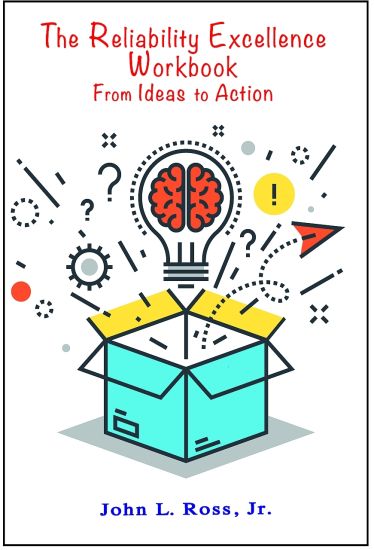
The Reliability Excellence Workbook

The Reliability Excellence Workbook

John L. Ross

Industrial Press Inc.,U.S.
2018
nidottu
The Reliability Excellence Workbook covers reliability (and other 4-letter words) in the context of creating a master strategy of continuous improvement. Think of it as a truly interactive workbook-like MadLibs for maintenance and reliability professionals. Reading this book is like having a seasoned reliability consultant sitting across the table, helping to drive your organization along a continuum of reliability improvement. The author introduces a concept, provides space for readers to record their experiences and observations, offers anecdotal and tried and tested examples and approaches, and drives readers to potential customizable solutions. This work helps maintenance and reliability professionals clearly understand their current situation, plan a route to improvement and high performance, and enables them to develop the path forward, including how to articulate a compelling case for change to their supervisors. With the combination of forms, tables, and discussions in this workbook along with readers’ own vision, they will create a working strategy they can continually use to grow and improve their business.
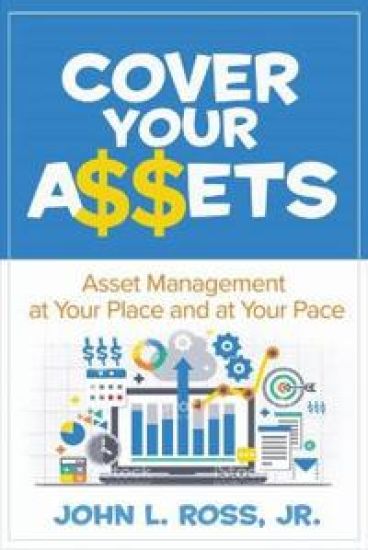
Cover Your A$$ets

Cover Your A$$ets

John L. Ross

Industrial Press Inc.,U.S.
2019
nidottu
Assets are the resources a company manipulates and uses to make income. This book helps to ensure your assets are always available to make income. It describes how to design for and care for production and facility assets. In his fun and informative second work, Cover Your A$$ets: Asset Management at Your Place and at Your Pace, John Ross breaks down the concept of asset management into relevant working elements. With ample space to jot down your thoughts and own experiences, this work is like Mad Libs for anyone wanting to implement Asset Management. In the end, readers can review, edit, compile, and pull together their own recorded thoughts and ideas to form a very obtainable vision for the future. There are many technical references on asset management, but what is truly needed in the field is a step-by-step process for taking care of the assets and equipment that makes the company profitable. By reading this guide, users will feel as if they are personally working with a seasoned, experienced asset management professional to put together a customized strategy for how asset management could and should be implemented at their own location. FEATURES - Focuses on physical industrial assets (manufacturing, service, and facilities) and creating an asset management strategy to help generate revenue. Reviews the ISO 55000 standards and explains how to implement them with your personal asset management strategy in mind. Takes a deep dive into designing equipment for optimum maintainability and reliability.Includes a section on Bill of Materials and Spare Parts, two topics that are often misunderstood. Each chapter ends with a review of the main points. The synopses will form segments of your overarching approach to asset management.
Contemporary Theories of Knowledge

Contemporary Theories of Knowledge

John L. Pollock; Joseph Cruz

Rowman Littlefield
1999
nidottu
This exciting new edition of the classic Contemporary Theories of Knowledge has been significantly updated to include analyses of the recent literature in epistemology. In addition, a new case is made for the strong connection between epistemology and artificial intelligence, as Pollock and Cruz argue that a necessary condition for the correctness of any epistemological theory is that it be possible to build an implemented artificial intelligence system on the basis of it. Like the first edition, Contemporary Theories of Knowledge, Second Edition is an excellent teaching tool, introducing the reader to the fundamental issues and approaches in the field of epistemology.
Assigning Structures to Ions in Mass Spectrometry

Assigning Structures to Ions in Mass Spectrometry

John L. Holmes; Christiane Aubry; Paul M. Mayer

CRC Press Inc
2006
sidottu
Summarizing our present knowledge of the structures and chemistry of small organic cations in the gas phase, Assigning Structures to Ions in Mass Spectrometry presents the methods necessary for determining gas-phase ion structures. It is a comprehensive resource of background material that is essential for the interpretation and understanding of organic mass spectra. Following a historical introduction of chief discoveries, the book surveys current experimental methods for ion production and separation as well as those designed to reveal qualitative and quantitative aspects of gas-phase ions. It also examines the computational chemistry and theoretical calculations that provide complementary thermochemical, structural, and mechanistic information. Five selected case studies illustrate specific challenges associated with ion structure assignment and thermochemical problems. The last major section of the book contains the data for describing or identifying all ions containing C alone and C with H, O, N, S, P, halogens, and small organic cations. Presenting material written by leading researchers in the field, Assigning Structures to Ions in Mass Spectrometry underscores the importance of understanding the behavior of small organic ions and gas-phase ion chemistry for making new ion structure assignments