Kirjojen hintavertailu. Mukana 11 453 788 kirjaa ja 12 kauppaa.

Kirjahaku

Etsi kirjoja tekijän nimen, kirjan nimen tai ISBN:n perusteella.

1000 tulosta hakusanalla Jon Stratton

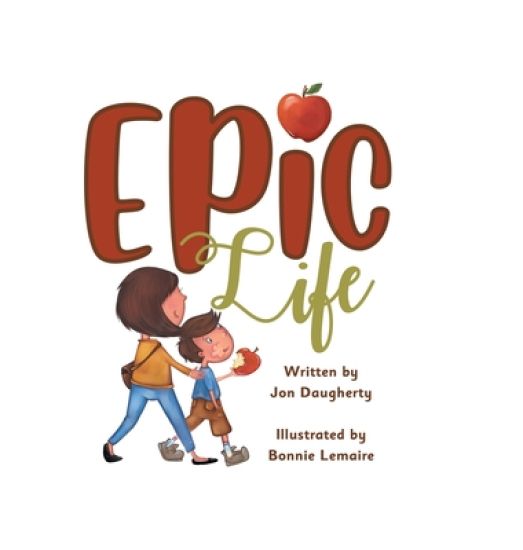
Epic Life

Epic Life

Jon Daugherty

Tellwell Talent
2020
sidottu
Teaching our next generation about financial freedom so that they can have an epic life is so important. Tatum and his mom are going to show you how to get there in a fun and creative way. Follow them on this journey by planting your own money trees so that we can grow wealth. Let us break old financial habits and create new ones. By doing this we must act differently than everyone else in order to have an epic life.
Collaboration for Change

Collaboration for Change

Jon Huggett

Palgrave Macmillan
1999
sidottu
Social enterprises are by nature social organizations that require collaboration and cooperation with a wide range of individuals, organizations, governments, networks, and other businesses. They build a more just, sustainable world by applying market-based strategies to today's social problems. This book will highlight the need-to-knows regarding why collaboration is important, how to do it, and the challenges to be encountered.It is about collaboration for social enterprises: why it is hot, why it is not as easy as it looks, and how it can often become counter-productive. The book will help leaders pick and craft collaboration that drives social change, and avoid efforts that, in practice, cement problems, despite the best of intent.
Governance, Politics and the State

Governance, Politics and the State

Jon Pierre; B. Guy Peters

Red Globe Press
2020
sidottu
Having started out as a new and alternative way of thinking about policy making and governing more broadly, governance is now established as a dominant paradigm in understanding national, subnational and global politics.The long-awaited second edition of this textbook takes into account the significant growth and proliferation of the field in recent years and offers a state of the art introduction to how governance is being theorised and studied today.Written by two leading political scientists, Governance, Politics and the State considers how societies are being, and can be, steered in a complex world where states must increasingly interact with and influence other actors and institutions to achieve results. It is a valuable book for all students of governance.New to this Edition:- A fully updated and revised set of chapters, including four new chapters – on multilevel governance, global governance, metagovernance and populism and governance. - A postscript on how to study governance
Governance, Politics and the State

Governance, Politics and the State

Jon Pierre; B. Guy Peters

Red Globe Press
2020
nidottu
Having started out as a new and alternative way of thinking about policy making and governing more broadly, governance is now established as a dominant paradigm in understanding national, subnational and global politics.The long-awaited second edition of this textbook takes into account the significant growth and proliferation of the field in recent years and offers a state of the art introduction to how governance is being theorised and studied today.Written by two leading political scientists, Governance, Politics and the State considers how societies are being, and can be, steered in a complex world where states must increasingly interact with and influence other actors and institutions to achieve results. It is a valuable book for all students of governance.New to this Edition:- A fully updated and revised set of chapters, including four new chapters – on multilevel governance, global governance, metagovernance and populism and governance. - A postscript on how to study governance
Traditional, Complementary and Integrative Medicine

Traditional, Complementary and Integrative Medicine

Jon Adams; Gavin Andrews; Joanne Barnes

Red Globe Press
2012
nidottu
This authoritative collection is the first wide-ranging overview dedicated to traditional, complementary and integrative medicine (TCIM) and its scientific study. Compiled by an expert editorial team, it is an essential guide to the vast and ever-growing international literature on TCIM.Contributions come from practitioners and academics drawn from a diverse range of disciplines and professions across the globe. From perspectives on the significance of TCIM within public health policy to discourses on its influence in fields such as psychiatry and sociology, discrete chapters come together to provide an international map of the contemporary research, key debates and core issues which shape the field.Carefully structured to ensure easy navigation, the reader is divided into three parts:- Part A focuses on the consumption of TCIM, including chapters on its use through the life-cycle and within the context of disease and health management- Part B covers considerations for practitioners across the world, taking in issues over ethics, communication and education- Part C features chapters on the role of evidence, research and knowledge production in TCIM and looks at what lies ahead for the fieldWith its thought-provoking insights and suggestions for further reading, this comprehensive resource provides guidance and inspiration for anyone embarking on study, practice or research within health, nursing or medicine.
Clown

Clown

Jon Davison

Red Globe Press
2013
sidottu
This rich collection of readings offers a wide-ranging and authoritative survey of clown practices, history and theory, from the origins of the word clown through to contemporary clowning. Covering clowns in theatre, circus, cinema, TV, street and elsewhere, the author's stimulating narrative challenges assumptions and turns orthodoxy on its head.
Clown

Clown

Jon Davison

Red Globe Press
2013
nidottu
This rich collection of readings offers a wide-ranging and authoritative survey of clown practices, history and theory, from the origins of the word clown through to contemporary clowning. Covering clowns in theatre, circus, cinema, TV, street and elsewhere, the author's stimulating narrative challenges assumptions and turns orthodoxy on its head.
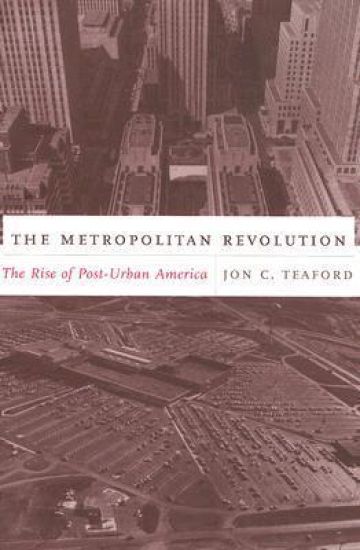
The Metropolitan Revolution

The Metropolitan Revolution

Jon Teaford

Columbia University Press
2006
sidottu
In this absorbing history, Jon C. Teaford traces the dramatic evolution of American metropolitan life. At the end of World War II, the cities of the Northeast and the Midwest were bustling, racially and economically integrated areas frequented by suburban and urban dwellers alike. Yet since 1945, these cities have become peripheral to the lives of most Americans. "Edge cities" are now the dominant centers of production and consumption in post-suburban America. Characterized by sprawling freeways, corporate parks, and homogeneous malls and shopping centers, edge cities have transformed the urban landscape of the United States. Teaford surveys metropolitan areas from the Rust Belt to the Sun Belt and the way in which postwar social, racial, and cultural shifts contributed to the decline of the central city as a hub of work, shopping, transportation, and entertainment. He analyzes the effects of urban flight in the 1950s and 1960s, the subsequent growth of the suburbs, and the impact of financial crises and racial tensions. He then brings the discussion into the present by showing how the recent wave of immigration from Latin America and Asia has further altered metropolitan life and complicated the black-white divide. Engaging in original research and interpretation, Teaford tells the story of this fascinating metamorphosis.
The Metropolitan Revolution

The Metropolitan Revolution

Jon Teaford

Columbia University Press
2006
pokkari
In this absorbing history, Jon C. Teaford traces the dramatic evolution of American metropolitan life. At the end of World War II, the cities of the Northeast and the Midwest were bustling, racially and economically integrated areas frequented by suburban and urban dwellers alike. Yet since 1945, these cities have become peripheral to the lives of most Americans. "Edge cities" are now the dominant centers of production and consumption in post-suburban America. Characterized by sprawling freeways, corporate parks, and homogeneous malls and shopping centers, edge cities have transformed the urban landscape of the United States. Teaford surveys metropolitan areas from the Rust Belt to the Sun Belt and the way in which postwar social, racial, and cultural shifts contributed to the decline of the central city as a hub of work, shopping, transportation, and entertainment. He analyzes the effects of urban flight in the 1950s and 1960s, the subsequent growth of the suburbs, and the impact of financial crises and racial tensions. He then brings the discussion into the present by showing how the recent wave of immigration from Latin America and Asia has further altered metropolitan life and complicated the black-white divide. Engaging in original research and interpretation, Teaford tells the story of this fascinating metamorphosis.
Lovelock and Gaia

Lovelock and Gaia

Jon Turney

Columbia University Press
2004
sidottu
How is it possible that Earth's atmospheric temperature has remained perfectly suited to supporting life for billions of years? Why do oxygen levels in the atmosphere remain relatively stable when only a minuscule increase would cause everything on Earth to spontaneously combust? Why are the oceans salty, but not salty enough to make them uninhabitable? In the 1960s, an English scientist names James Lovelock formulated a groundbreaking and highly controversial explanation: Earth is alive. Naming his theory after the ancient Greek earth goddess, Lovelock's "Gaia hypothesis" argued that everything on the planet-air, water, soil, and living organisms-somehow act together in a global, self-organizing system to maintain conditions suitable to sustaining and perpetuating life. Lovelock speculated that the geosphere and biosphere were interdependent and that every part of the Earth system worked in symbiotic harmony with every other part. Once considered more science fiction than legitimate science, the Gaia hypothesis was met with indifference, and even hostility, when it was first revealed. The theory only started to gain widespread attention when emerging issues such as environmental degradation and global warming proved that a single species-humans-could radically upset the ecological and atmospheric balance of the planet. While Gaia attracted a quasi-religious following among environmentalists and New Age spiritualists, it was still largely viewed with skepticism by the scientific community. But over the past few decades, many of Lovelock's ideas have led to significant breakthroughs. In fact, the Gaia hypothesis has developed into a guiding principle for a vast range of discrete inquiries into how the Earth works, often referred to as "Earth system science" or "geophysiology." Telling the story of this maverick pioneer and his long struggle to gain respectability, Lovelock and Gaia explains how Lovelock's remarkable hypothesis is gradually ushering in a scientific revolution.
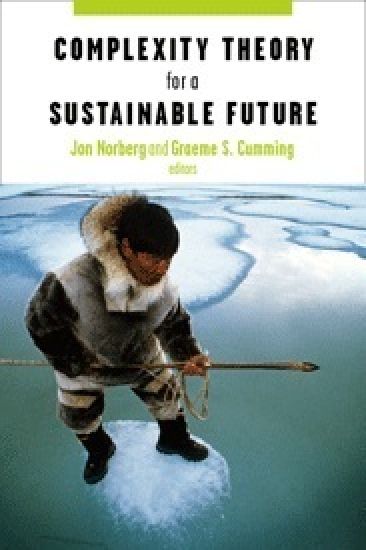
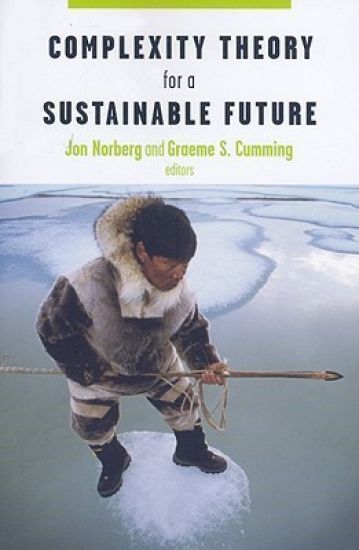
Complexity Theory for a Sustainable Future

Complexity Theory for a Sustainable Future

Jon Norberg; Graeme Cumming

Columbia University Press
2008
sidottu
Complexity theory illuminates the many interactions between natural and social systems, providing a better understanding of the general principles that can help solve some of today's most pressing environmental issues. Complexity theory was developed from key ideas in economics, physics, biology, and the social sciences and contributes to important new concepts for approaching issues of environmental sustainability such as resilience, scaling, and networks. Complexity Theory for a Sustainable Future is a hands-on treatment of this exciting new body of work and its applications, bridging the gap between theoretical and applied perspectives in the management of complex adaptive systems. Focusing primarily on natural resource management and community-based conservation, the book features contributions by leading scholars in the field, many of whom are among the leaders of the Resilience Alliance. Theoreticians will find a valuable synthesis of new ideas on resilience, sustainability, asymmetries, information processing, scaling, and networks. Managers and policymakers will benefit from the application of these ideas to practical approaches and empirical studies linked to social-ecological systems. Chapters present new twists on such existing approaches as scenario planning, scaling analyses, and adaptive management, and the book concludes with recommendations on how to manage natural resources, how to involve stakeholders in the dynamics of a system, and how to explain the difficult topic of scale. A vital reference for an emerging discipline, this volume provides a clearer understanding of the conditions required for systems self-organization, since the capacity of any system to self-organize is crucial for its sustainability over time.
Complexity Theory for a Sustainable Future

Complexity Theory for a Sustainable Future

Jon Norberg; Graeme Cumming

Columbia University Press
2008
pokkari
Complexity theory illuminates the many interactions between natural and social systems, providing a better understanding of the general principles that can help solve some of today's most pressing environmental issues. Complexity theory was developed from key ideas in economics, physics, biology, and the social sciences and contributes to important new concepts for approaching issues of environmental sustainability such as resilience, scaling, and networks. Complexity Theory for a Sustainable Future is a hands-on treatment of this exciting new body of work and its applications, bridging the gap between theoretical and applied perspectives in the management of complex adaptive systems. Focusing primarily on natural resource management and community-based conservation, the book features contributions by leading scholars in the field, many of whom are among the leaders of the Resilience Alliance. Theoreticians will find a valuable synthesis of new ideas on resilience, sustainability, asymmetries, information processing, scaling, and networks. Managers and policymakers will benefit from the application of these ideas to practical approaches and empirical studies linked to social-ecological systems. Chapters present new twists on such existing approaches as scenario planning, scaling analyses, and adaptive management, and the book concludes with recommendations on how to manage natural resources, how to involve stakeholders in the dynamics of a system, and how to explain the difficult topic of scale. A vital reference for an emerging discipline, this volume provides a clearer understanding of the conditions required for systems self-organization, since the capacity of any system to self-organize is crucial for its sustainability over time.
Creamy and Crunchy

Creamy and Crunchy

Jon Krampner

Columbia University Press
2012
sidottu
More than Mom's apple pie, peanut butter is the all-American food. With its rich, roasted-peanut aroma and flavor; caramel hue; and gooey, consoling texture, peanut butter is an enduring favorite, found in the pantries of at least 75 percent of American kitchens. Americans eat more than a billion pounds a year. According to the Southern Peanut Growers, a trade group, that's enough to coat the floor of the Grand Canyon (although the association doesn't say to what height). Americans spoon it out of the jar, eat it in sandwiches by itself or with its bread-fellow jelly, and devour it with foods ranging from celery and raisins ("ants on a log") to a grilled sandwich with bacon and bananas (the classic "Elvis"). Peanut butter is used to flavor candy, ice cream, cookies, cereal, and other foods. It is a deeply ingrained staple of American childhood. Along with cheeseburgers, fried chicken, chocolate chip cookies (and apple pie), peanut butter is a consummate comfort food. In Creamy and Crunchy are the stories of Jif, Skippy, Peter Pan; the plight of black peanut farmers; the resurgence of natural or old-fashioned peanut butter; the reasons why Americans like peanut butter better than (almost) anyone else; the five ways that today's product is different from the original; the role of peanut butter in fighting Third World hunger; and the Salmonella outbreaks of 2007 and 2009, which threatened peanut butter's sacred place in the American cupboard. To a surprising extent, the story of peanut butter is the story of twentieth-century America, and Jon Krampner writes its first popular history, rich with anecdotes and facts culled from interviews, research, travels in the peanut-growing regions of the South, personal stories, and recipes.
Creamy and Crunchy

Creamy and Crunchy

Jon Krampner

Columbia University Press
2014
pokkari
More than Mom's apple pie, peanut butter is the all-American food. With its rich, roasted-peanut aroma and flavor; caramel hue; and gooey, consoling texture, peanut butter is an enduring favorite, found in the pantries of at least 75 percent of American kitchens. Americans eat more than a billion pounds a year. According to the Southern Peanut Growers, a trade group, that's enough to coat the floor of the Grand Canyon (although the association doesn't say to what height). Americans spoon it out of the jar, eat it in sandwiches by itself or with its bread-fellow jelly, and devour it with foods ranging from celery and raisins ("ants on a log") to a grilled sandwich with bacon and bananas (the classic "Elvis"). Peanut butter is used to flavor candy, ice cream, cookies, cereal, and other foods. It is a deeply ingrained staple of American childhood. Along with cheeseburgers, fried chicken, chocolate chip cookies (and apple pie), peanut butter is a consummate comfort food. In Creamy and Crunchy are the stories of Jif, Skippy, Peter Pan; the plight of black peanut farmers; the resurgence of natural or old-fashioned peanut butter; the reasons why Americans like peanut butter better than (almost) anyone else; the five ways that today's product is different from the original; the role of peanut butter in fighting Third World hunger; and the Salmonella outbreaks of 2007 and 2009, which threatened peanut butter's sacred place in the American cupboard. To a surprising extent, the story of peanut butter is the story of twentieth-century America, and Jon Krampner writes its first popular history, rich with anecdotes and facts culled from interviews, research, travels in the peanut-growing regions of the South, personal stories, and recipes.
The Freedom Schools

The Freedom Schools

Jon Hale

Columbia University Press
2016
sidottu
Created in 1964 as part of the Mississippi Freedom Summer, the Mississippi Freedom Schools were launched by educators and activists to provide an alternative education for African American students that would facilitate student activism and participatory democracy. The schools, as Jon N. Hale demonstrates, had a crucial role in the civil rights movement and a major impact on the development of progressive education throughout the nation. Designed and run by African American and white educators and activists, the Freedom Schools counteracted segregationist policies that inhibited opportunities for black youth. Providing high-quality, progressive education that addressed issues of social justice, the schools prepared African American students to fight for freedom on all fronts. Forming a political network, the Freedom Schools taught students how, when, and where to engage politically, shaping activists who trained others to challenge inequality. Based on dozens of first-time interviews with former Freedom School students and teachers and on rich archival materials, this remarkable social history of the Mississippi Freedom Schools is told from the perspective of those frequently left out of civil rights narratives that focus on national leadership or college protestors. Hale reveals the role that school-age students played in the civil rights movement and the crucial contribution made by grassroots activists on the local level. He also examines the challenges confronted by Freedom School activists and teachers, such as intimidation by racist Mississippians and race relations between blacks and whites within the schools. In tracing the stories of Freedom School students into adulthood, this book reveals the ways in which these individuals turned training into decades of activism. Former students and teachers speak eloquently about the principles that informed their practice and the influence that the Freedom School curriculum has had on education. They also offer key strategies for further integrating the American school system and politically engaging today's youth.
The Freedom Schools

The Freedom Schools

Jon Hale

Columbia University Press
2018
pokkari
Created in 1964 as part of the Mississippi Freedom Summer, the Mississippi Freedom Schools were launched by educators and activists to provide an alternative education for African American students that would facilitate student activism and participatory democracy. The schools, as Jon N. Hale demonstrates, had a crucial role in the civil rights movement and a major impact on the development of progressive education throughout the nation. Designed and run by African American and white educators and activists, the Freedom Schools counteracted segregationist policies that inhibited opportunities for black youth. Providing high-quality, progressive education that addressed issues of social justice, the schools prepared African American students to fight for freedom on all fronts. Forming a political network, the Freedom Schools taught students how, when, and where to engage politically, shaping activists who trained others to challenge inequality. Based on dozens of first-time interviews with former Freedom School students and teachers and on rich archival materials, this remarkable social history of the Mississippi Freedom Schools is told from the perspective of those frequently left out of civil rights narratives that focus on national leadership or college protestors. Hale reveals the role that school-age students played in the civil rights movement and the crucial contribution made by grassroots activists on the local level. He also examines the challenges confronted by Freedom School activists and teachers, such as intimidation by racist Mississippians and race relations between blacks and whites within the schools. In tracing the stories of Freedom School students into adulthood, this book reveals the ways in which these individuals turned training into decades of activism. Former students and teachers speak eloquently about the principles that informed their practice and the influence that the Freedom School curriculum has had on education. They also offer key strategies for further integrating the American school system and politically engaging today's youth.
The Eye of the Needle

The Eye of the Needle

Jon Sobrino

Darton,Longman Todd Ltd
2008
pokkari
In this powerful book the great Latin American theolgian Jon Sobrino shows that global capitalism is driven by a cruel dynamic of oppression and greed, which inevitably dehumanises people, destroys the human family, and threatens mother earth. He argues it is the poor who, paradoxically, offer the only way to salvation for the World. We must work for a new civilisation that will give everyone access to material and cultural goods that make for a truly human life.
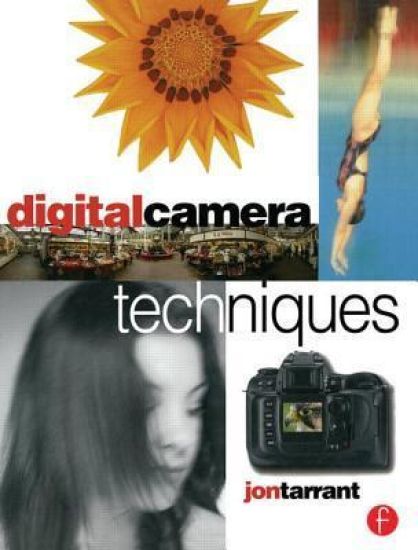
Digital Camera Techniques

Digital Camera Techniques

Jon Tarrant

Focal Press
2002
nidottu
The best photographs start with proper attention behind the camera before you take them. Jon Tarrant shows you how to achieve this by fully explaining how digital cameras work so you too can achieve professional-looking results without having to resort to image manipulation on a computer. Jon explains all the basics of digital cameras: their anatomy; an outline of broad classes, indicated by price bands and features offered; a comparison with existing families of film cameras as a useful guide to newcomers. He also provides an invaluable buyer's guide pointing out features to look for on a digital camera before you make your purchase.Coverage includes detail on lenses, exposure basics, 'correct' exposure, using flash, the chip and the implications of this 'restriction', image quality and retaining this quality, as well as discussion of the difficulties of digital cameras and sections on specific types of photography with digital cameras. Complete coverage is ensured with information on printing, storage and filing, the Internet as a medium of images, picture software and digital enhancement, always keeping the emphasis on the fact that the most important consideration is how you take the photographs and the vision you had then and knowing when to stop tinkering with your image!This inspirational, full colour guide is what all digital camera owners have been waiting for. Jon Tarrant shows all keen digital photographers how to improve their photography and make the most of the latest technology.
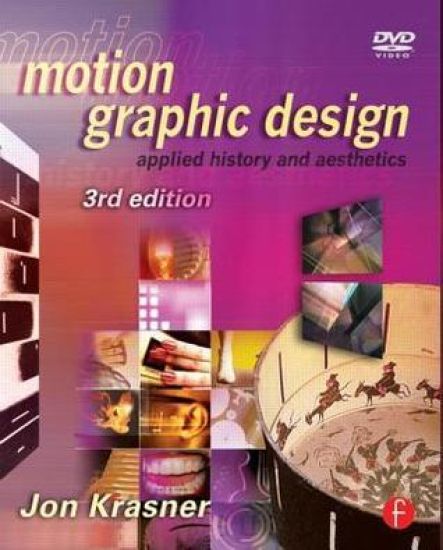
Motion Graphic Design

Motion Graphic Design

Jon Krasner

Focal Press
2013
nidottu
Enhance your knowledge of motion graphic design aesthetics and history with this authoritative look at the evolution of the art form. Motion Graphic Design, Third Edition provides a historical and critical overview of how the language of traditional graphic design is combined with the dynamic visual language of cinema in film, television, and interactive media. It features works from highly acclaimed animators and motion graphics studios from across the globe. This new edition has been updated to include:Thorough analysis of motion graphics designed for websites, informational kiosks, desktop and mobile touchscreen applications, DVD menus, and games Inspiring examples of how motion graphics continue to shape our visual landscape by transforming interior and exterior spaces into more engaging, immersive environments Coverage of conventional frame-by-frame animation techniques including stop-motion, cutout, and freehand by contemporary animators and motion design studios Instruction in how to create continuity or discontinuity and maintain the interest of viewers with frame mobility and rhythmic editing Discussion of pictorial and sequential aspects of motion graphics compositions and how they are choreographed to enhance messages and enrich stories downloadable resources featuring new professional and student work from around the globe, as well as figures from the textbook This is a must-have whether you are a student who is learning the principles of motion graphics or a professional in need of inspiration and new ways to impress your clients. Anyone working in or aspiring to work in the motion media industry will benefit greatly from this valuable resource.