Kirjojen hintavertailu. Mukana 12 390 323 kirjaa ja 12 kauppaa.

Kirjahaku

Etsi kirjoja tekijän nimen, kirjan nimen tai ISBN:n perusteella.

1000 tulosta hakusanalla Joyce Rodgers

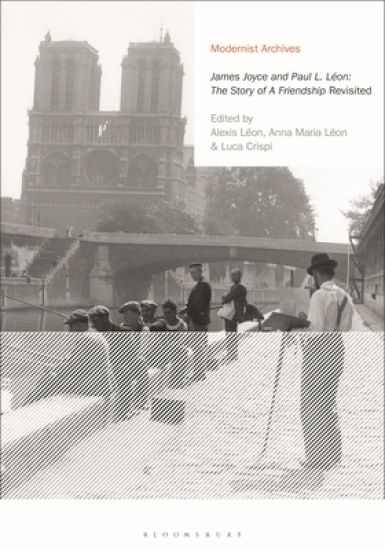
'James Joyce and Paul L. Léon: The Story of a Friendship' Revisited
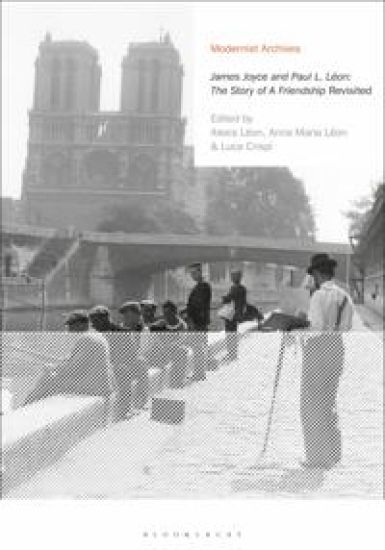
James Joyce spent the last decade of his life in Paris, struggling to finish his great final work Finnegans Wake amidst personal and financial hardship and just as Europe was being engulfed by the rising tide of fascism. Bringing together new archival discoveries and personal accounts, this book explores one of the central relationships of his final years: that with his friend, confidant and adviser Paul L. Léon. Providing first-hand accounts of Joyce’s Paris circle – which included Samuel Beckett and Vladimir Nabokov – the book makes available again the text of Lucie (Léon) Noel’s personal memoir of the relationship between her husband and the Irish writer (published as James Joyce and Paul L. Léon: The Story of Friendship in 1950), including his valiant rescue of Joyce’s Paris archives from occupying Nazi forces. The book also collects for the first time Leon’s clandestine letters to his wife from August to December 1941, chronicling his desperate state of body and mind while interned in Drancy, France’s main Nazi transit camp, and then in Compiègne, just before he was deported to Auschwitz-Birkenau. Joyce died suddenly on 13 January 1941 in Zurich and Léon was murdered by the Nazis on 4 April 1942 in Silesia. Annotated throughout with contextual commentary by Luca Crispi and Mary Gallagher, this is an essential resource for scholars of James Joyce and of the literary culture of Paris in the 1930s and first years of World War II in France.
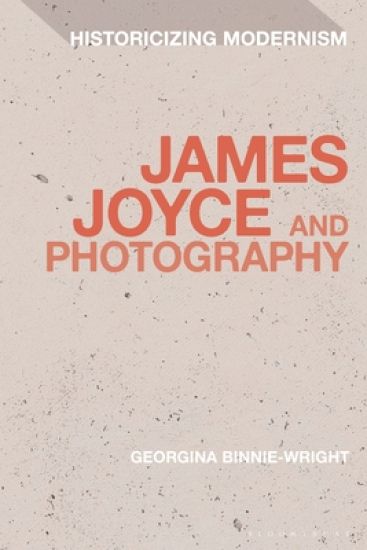
James Joyce and Photography

James Joyce and Photography

Georgina Binnie-Wright

BLOOMSBURY PUBLISHING PLC
2022
sidottu
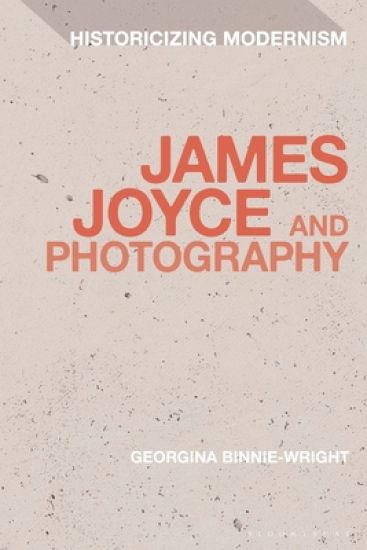
James Joyce and Photography is the first book to explore in-depth James Joyce's personal and professional engagement with photography. Photographs, photographic devices and photographically-inspired techniques appear throughout Joyce’s work, from his narrator's furtive proto-photographic framing in Silhouettes (c. 1897), to the aggressively-minded 'Tulloch-Turnbull girl with her coldblood kodak' in Finnegans Wake (1939).Through an exploration of Joyce's manuscripts and photographic and newspaper archival material, as well as the full range of his major works, this book sheds new light on his sustained interest in this visual medium. This project takes Joyce’s intention in Dubliners (1914) to ‘betray the soul of that hemiplegia or paralysis which many consider a city’ as key to his interaction with photography, which in his literature occupies a dual position between stasis and innovation.
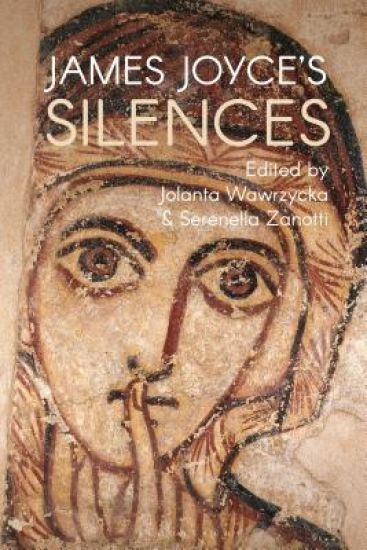
James Joyce's Silences

James Joyce's Silences

Bloomsbury Academic
2019
nidottu
In this landmark book, leading international scholars from North America, Europe and the UK offer a sustained critical attention to the concept of silence in Joyce’s writing. Examining Joyce’s major works, including Ulysses, Portrait of the Artist as a Young Man and Finnegans Wake, the critics present intertextual and comparative interpretations of Joyce’s deployment of silence as a complex overarching narratological strategy.Exploring the many dimensions of what is revealed in the absences that fill his writing, and the different roles – aesthetic, rhetorical, textual and linguistic – that silence plays in Joyce’s texts, James Joyce’s Silences opens up important new avenues of scholarship on the great modernist writer.This volume is of particular interests to all academics and students involved in Joyce and Irish studies, modernism, comparative literature, poetics, cultural studies and translation studies.
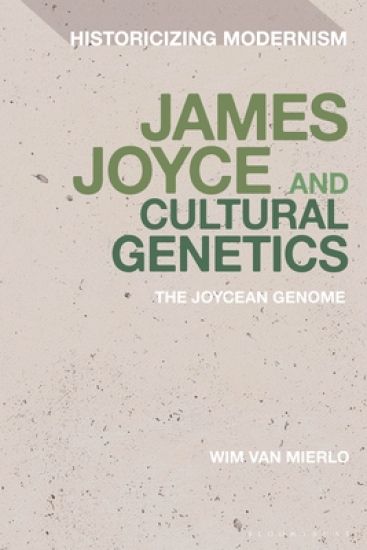
James Joyce and Cultural Genetics

James Joyce and Cultural Genetics

Wim Van Mierlo

BLOOMSBURY PUBLISHING PLC
2023
sidottu
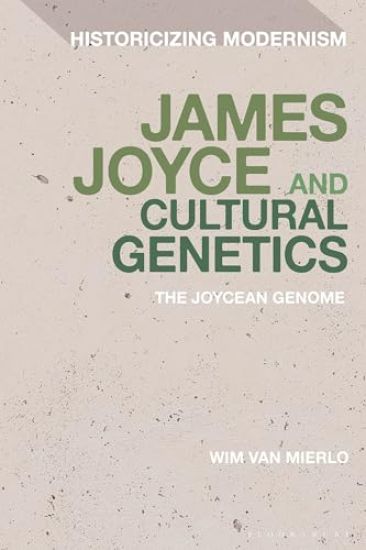
As a genetic study, this book uncovers the creative DNA of James Joyce’s oeuvre by looking at the cultural forces that shaped him and that he in turn shaped in the creation of his books, developing a two-way relationship with history, memory and national identity. Following his development as an author, it revisits and redirects Joyce’s attitudes towards the Irish Revival. From Chamber Music, through Ulysses to Finnegans Wake Joyce sought to define a cultural identity that went, in many respects, against the mainstream, but that nonetheless belonged to the wider Revivalist project with which it shared certain characteristics and aspirations. Joyce’s historical and genealogical imagination is read through a careful investigation of the cultural materials that went into his work. Based on evidence from his personal library and the extensive archive of reading notes, ideas, sketches and drafts, this book investigates how Joyce used, absorbed and repurposed these materials creatively in his writing; it does so by bringing for the first time the methods of genetic criticism into the domain of cultural memory and the sociology of the text. Thus this books defines “cultural genetics” as an exploration of the textual material that are Joyce’s sources interacts with the culture that produced and received them.
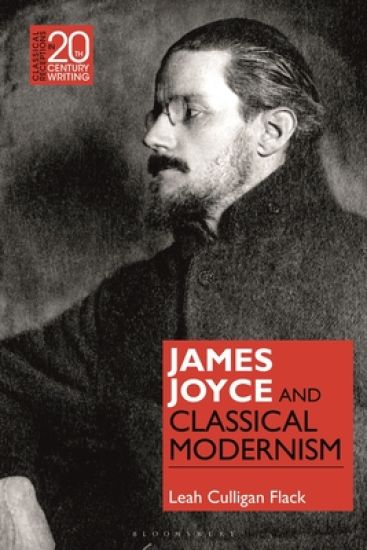
James Joyce and Classical Modernism

James Joyce and Classical Modernism

Leah Culligan Flack

Bloomsbury Academic
2021
nidottu
James Joyce and Classical Modernism contends that the classical world animated Joyce’s defiant, innovative creativity and cannot be separated from what is now recognized as his modernist aesthetic. Responding to a long-standing critical paradigm that has viewed the classical world as a means of granting a coherent order, shape, and meaning to Joyce’s modernist innovations, Leah Flack explores how and why Joyce’s fiction deploys the classical as the language of the new. This study tracks Joyce’s sensitive, on-going readings of classical literature from his earliest work at the turn of the twentieth century through to the appearance of Ulysses in 1922, the watershed year of high modernist writing. In these decades, Joyce read ancient and modern literature alongside one another to develop what Flack calls his classical modernist aesthetic, which treats the classical tradition as an ally to modernist innovation. This aesthetic first comes to full fruition in Ulysses, which self-consciously deploys the classical tradition to defend stylistic experimentation as a way to resist static, paralyzing notions of the past. Analysing Joyce's work through his career from his early essays, Flack ends by considering the rich afterlives of Joyce’s classical modernist project, with particular attention to contemporary works by Alison Bechdel and Maya Lang.
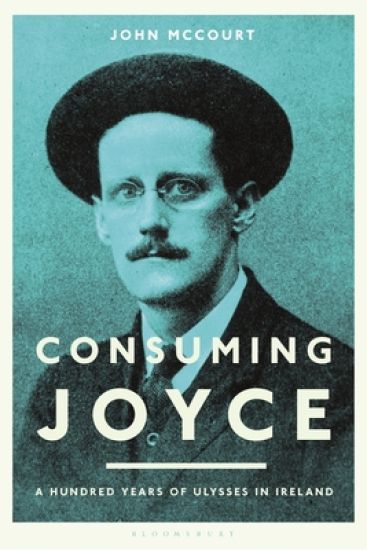
Consuming Joyce

Consuming Joyce

John McCourt

Bloomsbury Academic
2022
sidottu
"This book was crying out to be written." The Irish Times"Scandalously readable." Literary ReviewJames Joyce's relationship with his homeland was a complicated and often vexed one. The publication of his masterwork Ulysses - referred to by The Quarterly Review as an "Odyssey of the sewer" - in 1922 was initially met with indifference and hostility within Ireland. This book tells the full story of the reception of Joyce and his best-known book in the country of his birth for the first time; a reception that evolved over the next hundred years, elevating Joyce from a writer reviled to one revered. Part reception study, part social history, this book uses the changing interpretations of Ulysses to explore the concurrent religious, social and political changes sweeping Ireland. From initially being a threat to the status quo, Ulysses became a way to market Ireland abroad and a manifesto for a better, more modern, open and tolerant, multi-ethnic country.
Consuming Joyce

Consuming Joyce

John McCourt

Bloomsbury Academic
2022
nidottu
"This book was crying out to be written." The Irish Times"Scandalously readable." Literary ReviewJames Joyce's relationship with his homeland was a complicated and often vexed one. The publication of his masterwork Ulysses - referred to by The Quarterly Review as an "Odyssey of the sewer" - in 1922 was initially met with indifference and hostility within Ireland. This book tells the full story of the reception of Joyce and his best-known book in the country of his birth for the first time; a reception that evolved over the next hundred years, elevating Joyce from a writer reviled to one revered. Part reception study, part social history, this book uses the changing interpretations of Ulysses to explore the concurrent religious, social and political changes sweeping Ireland. From initially being a threat to the status quo, Ulysses became a way to market Ireland abroad and a manifesto for a better, more modern, open and tolerant, multi-ethnic country.
James Joyce and Photography

James Joyce and Photography

Georgina Binnie-Wright

BLOOMSBURY PUBLISHING PLC
2023
nidottu
James Joyce and Photography is the first book to explore in-depth James Joyce's personal and professional engagement with photography. Photographs, photographic devices and photographically-inspired techniques appear throughout Joyce’s work, from his narrator's furtive proto-photographic framing in Silhouettes (c. 1897), to the aggressively-minded 'Tulloch-Turnbull girl with her coldblood kodak' in Finnegans Wake (1939).Through an exploration of Joyce's manuscripts and photographic and newspaper archival material, as well as the full range of his major works, this book sheds new light on his sustained interest in this visual medium. This project takes Joyce’s intention in Dubliners (1914) to ‘betray the soul of that hemiplegia or paralysis which many consider a city’ as key to his interaction with photography, which in his literature occupies a dual position between stasis and innovation.
'James Joyce and Paul L. Léon: The Story of a Friendship' Revisited
James Joyce spent the last decade of his life in Paris, struggling to finish his great final work Finnegans Wake amidst personal and financial hardship and just as Europe was being engulfed by the rising tide of fascism. Bringing together new archival discoveries and personal accounts, this book explores one of the central relationships of his final years: that with his friend, confidant and adviser Paul L. Léon. Providing first-hand accounts of Joyce’s Paris circle – which included Samuel Beckett and Vladimir Nabokov – the book makes available again the text of Lucie (Léon) Noel’s personal memoir of the relationship between her husband and the Irish writer (published as James Joyce and Paul L. Léon: The Story of Friendship in 1950), including his valiant rescue of Joyce’s Paris archives from occupying Nazi forces. The book also collects for the first time Leon’s clandestine letters to his wife from August to December 1941, chronicling his desperate state of body and mind while interned in Drancy, France’s main Nazi transit camp, and then in Compiègne, just before he was deported to Auschwitz-Birkenau. Joyce died suddenly on 13 January 1941 in Zurich and Léon was murdered by the Nazis on 4 April 1942 in Silesia. Annotated throughout with contextual commentary by Luca Crispi and Mary Gallagher, this is an essential resource for scholars of James Joyce and of the literary culture of Paris in the 1930s and first years of World War II in France.
James Joyce and Cultural Genetics

James Joyce and Cultural Genetics

Wim Van Mierlo

BLOOMSBURY PUBLISHING PLC
2025
nidottu
As a genetic study, this book uncovers the creative DNA of James Joyce’s oeuvre by looking at the cultural forces that shaped him and that he in turn shaped in the creation of his books, developing a two-way relationship with history, memory and national identity. Following his development as an author, it revisits and redirects Joyce’s attitudes towards the Irish Revival. From Chamber Music, through Ulysses to Finnegans Wake Joyce sought to define a cultural identity that went, in many respects, against the mainstream, but that nonetheless belonged to the wider Revivalist project with which it shared certain characteristics and aspirations. Joyce’s historical and genealogical imagination is read through a careful investigation of the cultural materials that went into his work. Based on evidence from his personal library and the extensive archive of reading notes, ideas, sketches and drafts, this book investigates how Joyce used, absorbed and repurposed these materials creatively in his writing; it does so by bringing for the first time the methods of genetic criticism into the domain of cultural memory and the sociology of the text. Thus this books defines “cultural genetics” as an exploration of the textual material that are Joyce’s sources interacts with the culture that produced and received them.
James Joyce's Early Works in Ireland's Textual Cultures
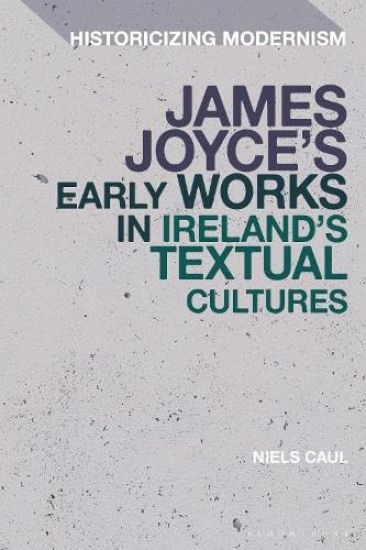
Putting Joyce back into dialogue with other Irish writers of his generation, this book shows that his experiments with narrative styles and structures were a renegotiation rather than a rejection of earlier Irish conventions. While Joyce is undoubtedly the best known, other Irish writers were also influenced by European movements in naturalism and decadence that were shaping European Modernism as it emerged in the 1890s. Reading Joyce's works in the context of often forgotten contemporaries such as George Moore, George Egerton, Hannah Lynch, Shan Bullock, Forrest Reid and Charlotte O’Conor Eccles enhances our understanding of their works as well as Joyce’s, both thematically and stylistically, and shines a much-needed light on previously critically underexamined writers. By focusing on the transformation of Joyce from Irish writer to Modernist artist we gain crucial insights into why many of Joyce’s contemporaries are not read today despite their initial popularity. This book utilises Joyce’s troubled publication and reception history to identify the wider trends of the Irish short story cycle and Bildungsroman, thereby enhancing readers’ understanding of the literary marketplace for Irish books in this period.”
The Joyce Archive at Reading

The Joyce Archive at Reading

BLOOMSBURY PUBLISHING PLC
2026
sidottu
A fully contextualised catalogue of one of the most significant archival Joyce acquisitions of recent times. When Stephen James Joyce died on 23 January 2020, he and his wife Solange bequeathed an archival collection and library to the University of Reading, comprising a wealth of documents, photographs, and rare books relating to James Joyce and his literary work. Some of this material has not been read by anyone outside the family, or was only shown to select scholars in the 1950s and 1960s and thereafter was kept private. This book contains a detailed catalogue of the Solange and Stephen James Joyce Collection, in order to organise the collection's contents in an accessible fashion for public readers and academic researchers, as well as introductory material and headnotes that draw on the rich history of Joyce scholarship and contextual essays from four well-known Joyce scholars. Together, this material shows how this groundbreaking new collection has the potential to revise and reinvigorate understandings of Joyce and modernist literature for decades to come.
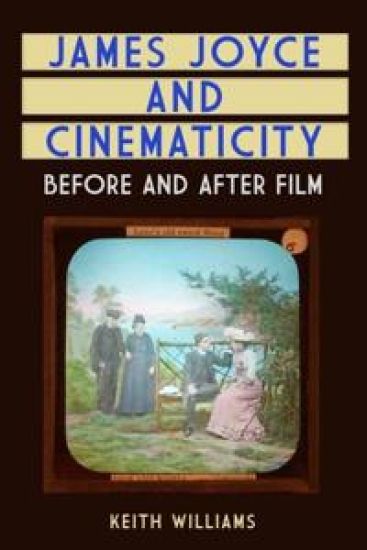
James Joyce and Cinematicity

James Joyce and Cinematicity

Keith Williams

EDINBURGH UNIVERSITY PRESS
2022
nidottu
Investigates how the cinematic tendency of Joyce's writing developed from media predating film In this book, Keith Williams explores Victorian culture's emergent 'cinematicity' as a key creative driver of Joyce's experimental fiction, showing how Joyce's style and themes share the cinematograph's roots in Victorian optical entertainment and science. The book reveals Joyce's references to optical toys, shadowgraphs, magic lanterns, panoramas, photographic analysis and film peepshows. Close analyses of his works show how his techniques elaborated and critiqued their effects on modernity's 'media-cultural imaginary'.
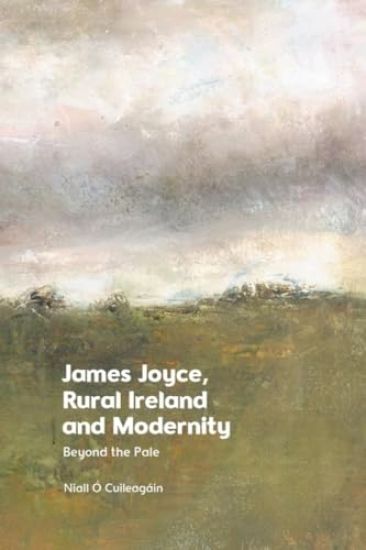
James Joyce, Rural Ireland and Modernity

James Joyce, Rural Ireland and Modernity

Niall Cuileagin

EDINBURGH UNIVERSITY PRESS
2025
sidottu
James Joyce, Rural Ireland, and Modernity: Beyond the Pale offers a fundamental reappraisal of the dominant Dublin-centric readings of James Joyce by delving into his depiction of rural Ireland. The title takes its name from 'the Pale', the area around Dublin that has historically been most subject to British influence. As the first full-length study of its kind, it shows how Joyce, often considered the urban modernist par excellence, in fact went beyond this particular pale in his work. This monograph takes its place alongside other recent criticism relating to 'alternative modernities' by foregrounding rurality as a vital context to any discussion of modernity. An inherently interdisciplinary work, this book draws on theories relating to postcolonialism, ecocriticism and cultural geography, and includes chapters on cosmopolitanism/provincialism, the Irish peasantry, Dublin's semi-rurality, and Joyce's literal and literary journeys west.
Reading Joyce

Reading Joyce

Pierce David

Longman
2007
nidottu
`Is there one who understands me?' So wrote James Joyce towards the end of his final work, Finnegans Wake. The question continues to be asked about the author who claimed that he had put so many enigmas into Ulysses that it would `keep the professors busy for centuries' arguing over what he meant. For Joyce this was a way of ensuring his immortality, but it could also be claimed that the professors have served to distance Joyce from his audience, turning his writings into museum pieces, pored over and admired, but rarely touched. In this remarkable book, steeped in the learning gained from a lifetime's reading, David Pierce blends word, life and image to bring the works of one of the great modern writers within the reach of every reader. With a sharp eye for detail and an evident delight in the cadences of Joyce's work, Pierce proves a perfect companion, always careful and courteous, pausing to point out what might otherwise be missed. Like the best of critics, his suggestive readings constantly encourage the reader back to Joyce's own words. Beginning with Dubliners and closing with Finnegans Wake, Reading Joyce is full of insights that are original and illuminating, and Pierce succeeds in presenting Joyce as an author both more straightforward and infinitely more complex than we had perhaps imagined. T. S. Eliot wrote of Joyce's masterpiece, Ulysses, that it is `a book to which we are all indebted, and from which none of us can escape'. With David Pierce as a guide, the debt we owe to Joyce becomes clearer, and the need to flee is greatly reduced.
James Joyce's 'Work in Progress'

James Joyce's 'Work in Progress'

Dirk van Hulle

Ashgate Publishing Limited
2016
sidottu
The text of Finnegans Wake is not as monolithic as it might seem. It grew out of a set of short vignettes, sections and fragments. Several of these sections, which James Joyce confidently claimed would "fuse of themselves", are still recognizable in the text of Finnegans Wake. And while they are undeniably integrated very skillfully, they also function separately. In this publication history, Dirk Van Hulle examines the interaction between the private composition process and the public life of Joyce's 'Work in Progress', from the creation of the separate sections through their publication in periodicals and as separately published sections. Van Hulle highlights the beautifully crafted editions published by fine arts presses and Joyce's encouragement of his daughter's creative talents, even as his own creative process was slowing down in the 1930s. All of these pre-book publications were "alive" in both bibliographic and textual terms, as Joyce continually changed the texts in order to prepare the book publication of Finnegans Wake. Van Hulle's book offers a fresh perspective on these texts, showing that they are not just preparatory versions of Finnegans Wake but a 'Work in Progress' in their own right.