Kate Remington is living a seemingly normal life in Maryland with her husband, Jake, and two grown children. But what no one knows is that four years earlier, Kate was beaten, kidnapped, and left for dead by two thugs. While suffering from amnesia, Kate found work-and love-on a Wyoming ranch until Jake found her and brought her home. As her memory loss lingers, Kate and Jake are still facing seemingly insurmountable obstacles. She cannot remember loving him-only the Wyoming ranch owner, Brad Crawford. When Jake is run over and killed by a disgruntled employee who snatches his wallet out of his pocket before leaving the body, Kate has no idea he is about to go after her. As she grieves and relies on her faith for strength, the killer lurks in the shadows and waits for the perfect moment to exact his revenge. When he finally finds the right time to confront Kate, she is left with no other choice than to kill in self-defense. Traumatized, Kate returns to the ranch in Wyoming where she learns the power of gossip and her faith as she attempts to find a new path to happily-ever-after. Kate's Journey is a story of hope and strength through faith as a Christian woman attempts to move forward after two tragedies rock her world and propel her toward a new beginning.
Kate Remington is living a seemingly normal life in Maryland with her husband, Jake, and two grown children. But what no one knows is that four years earlier, Kate was beaten, kidnapped, and left for dead by two thugs. While suffering from amnesia, Kate found work-and love-on a Wyoming ranch until Jake found her and brought her home. As her memory loss lingers, Kate and Jake are still facing seemingly insurmountable obstacles. She cannot remember loving him-only the Wyoming ranch owner, Brad Crawford. When Jake is run over and killed by a disgruntled employee who snatches his wallet out of his pocket before leaving the body, Kate has no idea he is about to go after her. As she grieves and relies on her faith for strength, the killer lurks in the shadows and waits for the perfect moment to exact his revenge. When he finally finds the right time to confront Kate, she is left with no other choice than to kill in self-defense. Traumatized, Kate returns to the ranch in Wyoming where she learns the power of gossip and her faith as she attempts to find a new path to happily-ever-after. Kate's Journey is a story of hope and strength through faith as a Christian woman attempts to move forward after two tragedies rock her world and propel her toward a new beginning.
Rev. John Watson (3 November 1850 - 6 May 1907), known by his pen name Ian Maclaren, was a Scottish author and theologian.He was the son of John Watson, a civil servant. He was born in Manningtree, Essex, and educated at Stirling and at Edinburgh University, later studying theology at New College, Edinburgh, and at T bingen. In 1874 he became a minister of the Free Church of Scotland and became assistant minister of Edinburgh Barclay Church. Subsequently, he was minister at Logiealmond in Perthshire and at Glasgow, and in 1880 he became minister of Sefton Park Presbyterian Church, Liverpool, from which he retired in 1905.
Frank Richard Stockton (April 5, 1834 - April 20, 1902) was an American writer and humorist, best known today for a series of innovative children's fairy tales that were widely popular during the last decades of the 19th century.Born in Philadelphia in 1834, Stockton was the son of a prominent Methodist minister who discouraged him from a writing career. After marrying Mary Ann Edwards Tuttle, he and his wife moved to Burlington, New Jersey, where he produced some of his first literary work. The couple then moved to Nutley, New Jersey. For years he supported himself as a wood engraver until his father's death in 1860. In 1867, he moved back to Philadelphia to write for a newspaper founded by his brother. His first fairy tale, "Ting-a-ling," was published that year in The Riverside Magazine; his first book collection appeared in 1870. He was also an editor for Hearth and Home magazine in the early 1870s. Around 1899, he moved to Charles Town, West Virginia.
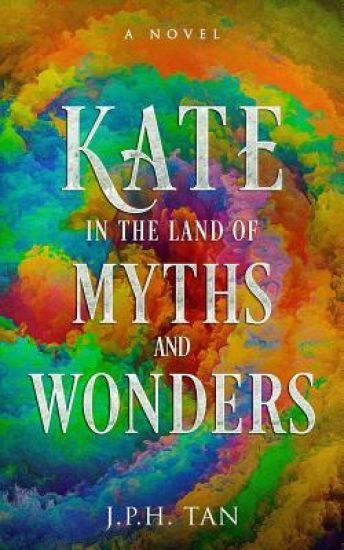
On Kate's fifteenth birthday, she decides to celebrate with her best friend, Gus, but a cataclysmic flood sweeps through the city streets and sends her tumbling into a world completely different from her own. In this land, lightning bolts act as magical staircases...mythical creatures come to life...and stars fall from the galaxies as battalions, all in search of 'The Pisces Eye', a powerful precious stone.. It is here that Kate will finally be forced to grow up and confront some hard truths about herself.Kate runs into someone unexpected, and the teens are about to have the adventure of a lifetime They will be whisked to a distant place full of dangers and disasters where the evil queen Evrisx sets her sights on the young girl. Evrisx, with her unnatural powers is set to doom the world and the constellation of stars...Will the teens be able to escape and find their way home? Join them in the land of myths and wonders to find out "The setting is an important device in this novel, and TAN deftly weaves together technology and mythology to create a world that is both original and intriguing. Kate may not know or understand what is happening around her, but the world she is thrust into is beautifully described and loaded with allegorical meaning." - Booklife
Kate Bright lost the love of her life to tragedy. Now all she wants is to pick up the pieces and shelter herself from further pain. The last thing she needs is the attention ofa handsome, arrogant politician who hungers for publicity. But Kate has a hunger of her own, whether she likes it or not. Being with Blake will require her to step into the limelight in spite of her private torment. Do his feelings for her extend beyond the public stage?Kate's Congressman is the first standalone novel in the Bright Sisters Romance series. Watch for other volumes, including June's Arresting Officer, coming soon.
The Awakening is a novel by Kate Chopin, first published in 1899. Set in New Orleans and on the Louisiana Gulf coast at the end of the 19th century, the plot centers on Edna Pontellier and her struggle between her increasingly unorthodox views on femininity and motherhood with the prevailing social attitudes of the turn-of-the-century American South. It is one of the earliest American novels that focuses on women's issues without condescension. It is also widely seen as a landmark work of early feminism, generating a mixed reaction from contemporary readers and critics. The novel's blend of realistic narrative, incisive social commentary, and psychological complexity makes The Awakening a precursor of American modernist literature; it prefigures the works of American novelists such as William Faulkner and Ernest Hemingway and echoes the works of contemporaries such as Edith Wharton and Henry James. It can also be considered among the first Southern works in a tradition that would culminate with the modern masterpieces of Faulkner, Flannery O'Connor, Eudora Welty, Katherine Anne Porter, and Tennessee Williams. Summary edit] The novel opens with the Pontellier family-L once, a New Orleans businessman of Louisiana Creole heritage; his wife Edna; and their two sons, Etienne and Raoul-vacationing on Grand Isle at a resort on the Gulf of Mexico managed by Madame Lebrun and her two sons, Robert and Victor. Edna spends most of her time with her close friend Ad le Ratignolle, who cheerily and boisterously reminds Edna of her duties as a wife and mother. At Grand Isle, Edna eventually forms a connection with Robert Lebrun, a charming, earnest young man who actively seeks Edna's attention and affections. When they fall in love, Robert senses the doomed nature of such a relationship and flees to Mexico under the guise of pursuing a nameless business venture. The narrative focus moves to Edna's shifting emotions as she reconciles her maternal duties with her desire for social freedom and to be with Robert. When summer vacation ends, the Pontelliers return to New Orleans. Edna gradually reassesses her priorities and takes a more active role in her own happiness. She starts to isolate herself from New Orleans society and to withdraw from some of the duties traditionally associated with motherhood. L once eventually talks to a doctor about diagnosing his wife, fearing she is losing her mental faculties. The doctor advises L once to let her be and assures him that things will return to normal. When L once prepares to travel to New York City on business, he sends the boys to his mother. Left home alone for an extended period gives Edna physical and emotional room to breathe and reflect on various aspects of her life. While her husband is still away, she moves out of their home and into a small bungalow nearby and begins a dalliance with Alc e Arobin, a persistent suitor with a reputation for being free with his affections. Edna is shown as a sexual being for the first time in the novel, but the affair proves awkward and emotionally fraught....................... Kate Chopin, born Katherine O'Flaherty (February 8, 1850 - August 22, 1904), was an American author of short stories and novels based in Louisiana. She is now considered by some scholars to have been a forerunner of American 20th-century feminist authors of Southern or Catholic background, such as Zelda Fitzgerald...............
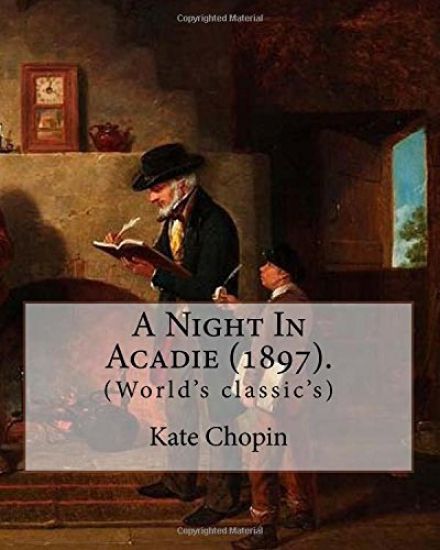
Short fiction by much-more-than-local-color-writer Kate Chopin. Includes Ma'ame Pelagie, a character who shows up again later....... Kate Chopin, born Katherine O'Flaherty (February 8, 1850 - August 22, 1904), was an American author of short stories and novels based in Louisiana. She is now considered by some scholars to have been a forerunner of American 20th-century feminist authors of Southern or Catholic background, such as Zelda Fitzgerald. Of maternal French and paternal Irish descent, Chopin was born in St. Louis, Missouri. She married and moved with her husband to New Orleans. They later lived in the country in Cloutierville, Louisiana. From 1892 to 1895, Chopin wrote short stories for both children and adults that were published in such national magazines as Atlantic Monthly, Vogue, The Century Magazine, and The Youth's Companion. Her stories aroused controversy because of her subjects and her approach; they were condemned as immoral by some critics. Her major works were two short story collections: Bayou Folk (1894) and A Night in Acadie (1897). Her important short stories included "D sir e's Baby" (1893), a tale of miscegenation in antebellum Louisiana, "The Story of an Hour" (1894), and "The Storm"(1898)."The Storm" is a sequel to "At the Cadian Ball," which appeared in her first collection of short stories, Bayou Folk. Chopin also wrote two novels: At Fault (1890) and The Awakening (1899), which are set in New Orleans and Grand Isle, respectively. The characters in her stories are usually residents of Louisiana. Many of her works are set in Natchitoches in north central Louisiana, a region where she lived. Within a decade of her death, Chopin was widely recognized as one of the leading writers of her time.In 1915, Fred Lewis Pattee wrote, "some of Chopin's] work is equal to the best that has been produced in France or even in America. She displayed] what may be described as a native aptitude for narration amounting almost to genius."..............
Kate Chopin, born Katherine O'Flaherty (February 8, 1850 - August 22, 1904), was an American author of short stories and novels based in Louisiana. She is now considered by some scholars to have been a forerunner of American 20th-century feminist authors of Southern or Catholic background, such as Zelda Fitzgerald. Of maternal French and paternal Irish descent, Chopin was born in St. Louis, Missouri. She married and moved with her husband to New Orleans. They later lived in the country in Cloutierville, Louisiana. From 1892 to 1895, Chopin wrote short stories for both children and adults that were published in such national magazines as Atlantic Monthly, Vogue, The Century Magazine, and The Youth's Companion. Her stories aroused controversy because of her subjects and her approach; they were condemned as immoral by some critics. Her major works were two short story collections: Bayou Folk (1894) and A Night in Acadie (1897). Her important short stories included "D sir e's Baby" (1893), a tale of miscegenation in antebellum Louisiana, "The Story of an Hour" (1894), and "The Storm"(1898)."The Storm" is a sequel to "At the Cadian Ball," which appeared in her first collection of short stories, Bayou Folk. Chopin also wrote two novels: At Fault (1890) and The Awakening (1899), which are set in New Orleans and Grand Isle, respectively. The characters in her stories are usually residents of Louisiana. Many of her works are set in Natchitoches in north central Louisiana, a region where she lived. Within a decade of her death, Chopin was widely recognized as one of the leading writers of her time.In 1915, Fred Lewis Pattee wrote, "some of Chopin's] work is equal to the best that has been produced in France or even in America. She displayed] what may be described as a native aptitude for narration amounting almost to genius."
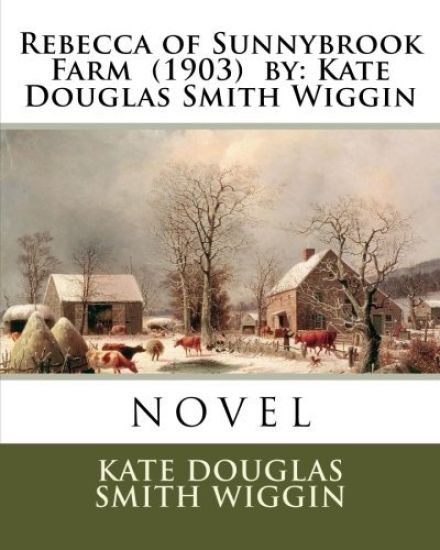
Kate Douglas Wiggin (September 28, 1856 - August 24, 1923) was an American educator and author of children's stories, most notably the classic children's novel Rebecca of Sunnybrook Farm. She started the first free kindergarten in San Francisco in 1878 (the Silver Street Free Kindergarten). With her sister during the 1880s, she also established a training school for kindergarten teachers. Kate Wiggin devoted her adult life to the welfare of children in an era when children were commonly thought of as cheap labor. Wiggin went to California to study kindergarten methods. She began to teach in San Francisco with her sister Nora Smith assisting her, and the two were instrumental in the establishment of over 60 kindergartens for the poor in San Francisco and Oakland. She moved from California to New York, and having no kindergarten work on hand, devoted herself to literature. She sent The Story of Patsy and The Bird's Christmas Carol to Houghton, Mifflin & Co. who accepted them at once. Besides the talent for story-telling, she was a musician, sang well, and composed settings for her poems. She was also an excellent elocutionist. Her first literary work was Half a Dozen Housekeepers, a serial story which she sent to St. Nicholas. After the death of her husband in 1889, she returned to California to resume her kindergarten work, serving as the head of a Kindergarten Normal School. Some of her other works included Cathedral Courtship, A Summer in a Canon, Timothy's Quest, The Story Hour, Kindergarten Chimes, Polly Oliver's Problem, and Children's Rights
KATE Name Tracing Workbook - Preschoolers Kindergarten Practice Workbook - Toddlers Writing Notebook - Learn How to Write KATE - Preschoolers Activities Teaching your child the basics of writing is a difficult task especially if he or she is full of energy and finds it more difficult to focus. In order to give him a push in the first years of school or kindergartner, we are presenting a revolutionary way of teaching your baby the basics of the alphabet: the name tracing workbook for children. Why our workbook? The name tracing workbook has been designed specifically to teach children the basic of spelling and writing. By learning to write his own name, your child will develop the abilities and skills needed in the first years of schools while having fun. The 100 pages activity book is the perfect choice if you are searching to invest in your child's education from the beginning so don't hesitate and get him the only workbook he needs LEARNING THE FIRST LETTERS teaching your toddler the first letters and how to spell his or her name is difficult, which is why we have designed a special workbook that will make the learning process easier and a lot more fun, adding to the baby's educational fund. PERSONALIZED WORKING: the name is the first word any child should learn how to spell, but it is almost impossible to find special help for that task. KATE Name Tracing Workbook is divided in 12 themed chapters that will teach your toddler how to spell his or her name in a fun and interactive way. WHAT IT CONTAINS: KATE Name Tracing Workbook counts no less than 100 pages divided in 12 themed sheets that propose recognition activities, letter tracing practice and letter games, that are sure to teach your child the basics of writing and spelling. FOR TODDLERS: KATE Name Tracing Workbook is made especially for children aged 3 to 6 so your son or daughter will be well prepared for both kindergarten and first grade Learning the alphabet will be a piece of cake if your kid will already have the foundation letter tracing so why not give him a head start in school. THE PERFECT GIFT: offering a present to a toddler that is both fun and parents-approved is an almost impossible task, but the name tracing workbook has it all: it is educational, personalized and made especially for youngsters ages 3 to 6 so, if you're trying to bring a smile on a kid's face, this is it
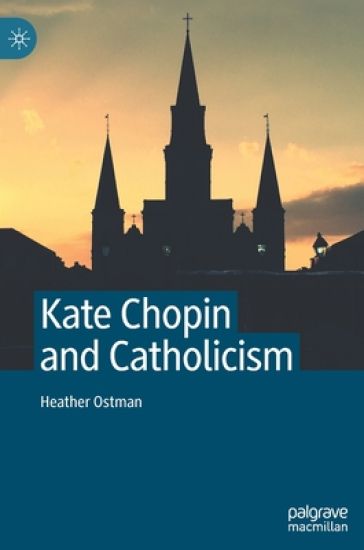
This book explores the Catholic aesthetic and mystical dimensions in KateChopin’s fiction within the context of an evolving American Catholicism in thelate nineteenth and early twentieth centuries. Through a close reading of hernovels and numerous short stories, Kate Chopin and Catholicism looks at theways Chopin represented Catholicism in her work as a literary device that servedon multiple levels: as an aesthetic within local color depictions of Louisiana, as atrope for illuminating the tensions surrounding nineteenth-century women’sstruggles for autonomy, as a critique of the Catholic dogma that subordinatedauthenticity and physical and emotional pleasure, and as it pointed to thedistinction between religious doctrine and mystical experience, and enabled thearticulation of spirituality beyond the context of the Church. This book revealsChopin to be not only a literary visionary but a writer who saw divinity in thenatural world.
This book explores the Catholic aesthetic and mystical dimensions in KateChopin’s fiction within the context of an evolving American Catholicism in thelate nineteenth and early twentieth centuries. Through a close reading of hernovels and numerous short stories, Kate Chopin and Catholicism looks at theways Chopin represented Catholicism in her work as a literary device that servedon multiple levels: as an aesthetic within local color depictions of Louisiana, as atrope for illuminating the tensions surrounding nineteenth-century women’sstruggles for autonomy, as a critique of the Catholic dogma that subordinatedauthenticity and physical and emotional pleasure, and as it pointed to thedistinction between religious doctrine and mystical experience, and enabled thearticulation of spirituality beyond the context of the Church. This book revealsChopin to be not only a literary visionary but a writer who saw divinity in thenatural world.
This book examines selected short stories and novels by Kate Chopin through the lens of the city of New Orleans. Chopin’s depictions of and references to New Orleans celebrate the vibrancy of this unique American city, but also illustrate the complex, interdependent relationships defined within its coded system of racial, gendered, and class designations. These stories feature canny depictions of the complexity of human struggles for freedom as well as love within this nineteenth-century southern city. While Chopin has been highly regarded as a local color writer and especially as a feminist literary icon, this book shows how the author’s “city” stories also point to her sophistication as an author who perceived the shifting literary landscape, and it identifies the ways many of these stories’ protomodernist elements anticipate the advent of the Modern era.
K te Hamburger - deren Todestag sich im April 2012 zum zwanzigsten Mal gej hrt hat - z hlt zu den bedeutenden Anregerinnen der modernen Literaturwissenschaft. Ihre theoretischen Arbeiten sind immer wieder als innovative, radikal mit der Tradition brechende Impulse gewertet worden, die die Modernisierung und Szientifizierung der Philologien ma geblich vorangebracht h tten. Zugleich waren ihre Schriften aber auch Anlass heftiger Kritik: Hamburgers Darstellungsstil, vor allem in "Die Logik der Dichtung," wurde als schwer- und missverst ndlich, ihre Argumentation als zu apodiktisch und monologisch bezeichnet. Dabei wei die literaturwissenschaftliche Fachgeschichte immer noch ausnehmend wenig ber die theoriegeschichtlichen und systematischen Kontexte, aus denen sich Hamburgers Werk speist. Den in ihre Texte eingestreuten Referenzen auf beispielsweise die allgemeine Kunstwissenschaft der 1920er Jahre, die philosophische sthetik des Neukantianismus, die Ph nomenologie, die Gestalttheorie, die Denkpsychologie oder auch die Sinn- und Existenzphilosophie der 1930er und 1940er Jahre ist bislang nur sehr vereinzelt Aufmerksamkeit geschenkt worden. Der Band macht einen Vorsto , dieses Desiderat aufzuarbeiten und in der Zusammenf hrung verschiedener literaturtheoretischer und philosophiehistorischer Perspektiven K te Hamburgers Denkansatz im Kontext seiner Entstehung zu rekonstruieren. Es handelt sich um die erweiterte Publikation der Beitr ge zum Workshop "K te Hamburger im Kontext," der am 8. November 2012 an der Universit t Stuttgart stattfand. Die Beitr ge umfassen ein weites Feld der Kontexte von Hamburgers Laufbahn, die Frage nach dem Verh ltnis von Theorie und Praxis in ihren Arbeiten sowie Aspekte der Aktualit t ihrer Denkans tze.