

Kirjahaku
Etsi kirjoja tekijän nimen, kirjan nimen tai ISBN:n perusteella.
1000 tulosta hakusanalla Kelly Reames


Narrative of My Captivity Among the Sioux indians. by Fanny Kelly. With A Brief Account of General Sully'S indian Expedition in 1864, Bearing Upon Events Occurring in My Captivity.
Fanny (Wiggins) Kelly
University of Michigan Library
2006
pokkari

The Mambi-Land, or, Adventures of A Herald Correspondent in Cuba. by James J. O'Kelly.
James J O'Kelly
University of Michigan Library
2006
pokkari



Loose Cannon: The Tom Kelly Novels
Baen Books
2011
nidottu
David Drake’s two Tom Kelly technothrillers in one volume — Skyripper and Fortress! Loose Cannon features day-after-tomorrow technothriller action with a raw, gritty, and extremely effective hero you might want to forget, but can’t, fending off Soviet aggression and alien attack.




The first book-length study of Reichardt's career and worksOver her six-film career, including works like 'Old Joy, Meek's Cutoff' and 'Certain Women', the independent filmmaker Kelly Reichardt has established a highly individual perspective on questions of gender, feminism, socioeconomics and sexual orientation, set within an aesthetic framework that is guided by the low-budget techniques of 'slow cinema', minimalism and neorealism. In this close reading of her films and production methods, E. Dawn Hall defines Reichardt's auteur characteristics, arguing that she offers a contemporary and sustainable model for independent filmmakers in America.Key FeaturesSynthesizing the contemporary feminist debate surrounding auteur theory, this book explores Reichardt's cinematic characteristics as an auteurElucidates the environmental and ecofeminist concerns in Reichardt's filmsDiscusses Reichardt's three experimental short films in detailIncludes an original interview with Reichardt

Over her six-film career, including works like Old Joy, Meek's Cutoff and Certain Women, the independent filmmaker Kelly Reichardt has established a highly individual perspective on questions of gender, feminism, socioeconomics and sexual orientation, set within an aesthetic framework that is guided by the low-budget techniques of 'slow cinema', minimalism and neorealism. In this close reading of her films and production methods, E. Dawn Hall defines Reichardt's auteur characteristics, arguing that she offers a contemporary and sustainable model for independent filmmakers in America.
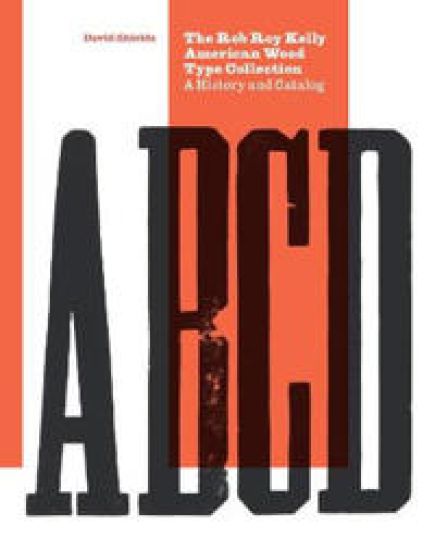
The Rob Roy Kelly American Wood Type Collection
David Shields
University of Texas Press
2022
sidottu
2023 50 Books 50 Covers Award, The American Institute of Graphic Arts (AIGA) 2024 Honorable Mention, Design Awards, Graphis 2024 Finalist, Typography Competition, Communication Arts Magazine A beautifully illustrated exploration of the Rob Roy Kelly American Wood Type Collection. The Rob Roy Kelly Wood Type Collection is a comprehensive collection of wood type manufactured and used for printing in nineteenth-century America. Comprising nearly 150 typefaces of various sizes and styles, it was amassed by noted design educator and historian Rob Roy Kelly starting in 1957 and is now held by the University of Texas. Although Kelly himself published a 1969 book on wood type and nineteenth-century typographic history, there has been little written about the creation of the wood type forms, the collection, or Kelly. In this book, David Shields rigorously updates and expands upon Kelly’s historical information about the types, clarifying the collection’s exact composition and providing a better understanding of the stylistic development of wood type forms during the nineteenth century. Using rich materials from the period, Shields provides a stunning visual context that complements the textual history of each typeface. He also highlights the non-typographic material in the collection-such as borders, rules, ornaments, and image cuts-that have not been previously examined. Featuring over 300 color illustrations, this written history and catalog is bound to spark renewed interest in the collection and its broader typographic period.

Where Does Music Come From?: 19 songs by Jim 'Poppa' Kelly
Jim 'Poppa' Kelly
Createspace Independent Publishing Platform
2012
nidottu


Eternal Light: The Whitney Kelly Story
Brandi Laplante
Createspace Independent Publishing Platform
2013
nidottu

Perpetual Darkness: The Whitney Kelly Story
Brandi Laplante
Createspace Independent Publishing Platform
2013
nidottu
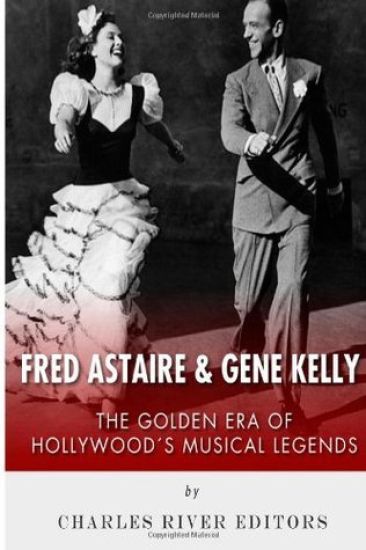
Fred Astaire and Gene Kelly: The Golden Era of Hollywood's Musical Legends
Charles River
Createspace Independent Publishing Platform
2014
nidottu
*Includes pictures. *Includes quotes about both men's lives and careers. *Includes bibliographies of both men. Virtually all famous actors are regaled by the public, but even still, Fred Astaire occupies a privileged position in American pop culture. The specific films in which Astaire acted may not be especially famous in their own right - most people likely cannot recall the title of Top Hat (1935), his most decorated film - but Astaire's dancing prowess invariably creates a lasting impact on viewers. Instead of tying his fame to a single film, Astaire's genius lay in constructing his star persona around a specific set of iconographic imagery that has become embedded within American culture. Across his films, the recurring iconic images of the top hat, cane, and coat tails, as well as the image of Astaire dancing with Ginger Rogers, all constitute a timeless symbol for elegance that continues to captivate viewers who are unfamiliar with the plots of his films. There have been other film musical actors who were proficient dancers, Gene Kelly chief among them, but none were able to perform with the seamless elegance of Astaire, and none have been remembered nearly as well. Astaire's popularity can in large part be tied to the escapism that his films offered to impoverished Depression-era American audiences, and yet Astaire was a working man, albeit one who labored in the studios of Hollywood rather than the factories of America. Considering the quiet life that he led off the movie set, it can be difficult to disassociate Astaire from his films, and while he may have attempted to project the same image off the screen, the era and his personal background were extremely important. As someone who was born just before the start of the 20th century, Astaire's life sheds light on the developments that occurred in American entertainment, from the stage (where he first performed during his youth) to cinema (the site of his greatest triumphs) and finally to television (a medium Astaire entered at the end of his career.) Astaire's career tends to obscure his all-American success story, one in which hard work transformed a Nebraska boy from a working-class family into America's most prominent symbol of grace. Although they did collaborate on two occasions, in many ways Gene Kelly's rise to popularity in the 1940s amounted to a changing of the guard, because Astaire's career had begun to wane by the mid-1940s. For film historians and fans of the musical, however, even if they weren't contemporaries, Astaire and Kelly will forever be viewed as rivals, with each having left an indelible stamp on the genre that defined their careers. Regardless of which dancer viewers film, there is no denying the cultural significance of some of Kelly's most famous films, including An American in Paris (1949) and Singin' in the Rain (1952), movies that occupy a central position within the pantheon of Hollywood musicals. While it is true that a comparison between Astaire and Kelly is indispensible to any study of Kelly's life, much can also be gained simply by focusing mostly on his life and career. What made Kelly unusual for actors of that era is that he did not actually arrive in Hollywood until he was nearly 30 years old, so his early life and work before film had a crucial influence on his star image. Furthermore, given that he came to prominence after Astaire, Kelly's career offers a valuable lens through which to chart the evolution of the musical genre, as well as a look at the prevailing standards of masculinity within Hollywood at the time. Fred Astaire and Gene Kelly examines the lives and careers of two of Hollywood's most iconic dancers, tracing their rise to stardom and the forces within Hollywood and American popular culture that would ultimately lead to the end of their careers.